Backend Engineer | Go
I build systems that handle scale, failures, and real users — not just happy paths.
• Go (Golang)
• Microservices & REST APIs
• Concurrency, performance tuning
• AWS, Docker, Kubernetes
Open to Backend / Go roles 🚀
#Hiring#Golang#BackendEngineer
Gratitude changes the way we see life. It helps us notice what is going right, appreciate what we have and find something positive even in difficult days. A grateful mind often carries a lighter heart.
I agree with the idea, but with one caveat.
Giving a few interviews is a great way to understand your current level and identify what the market expects. After each one, note down what you couldn't answer, learn it, and improve for the next.
But after a point, I think it's better to be selective about where you interview.
Repeated rejections can affect confidence, even when you're actually improving. If you can handle that well, great. If not, there’s nothing wrong with choosing interviews more carefully.
Interview → identify gaps → learn → improve → then be selective.
Interviews are a useful feedback mechanism, but they shouldn't become the only measure of your ability.
Whatever your goal, give yourself some time every day to be alone with your thoughts. That quiet time to think, reflect and focus is often where your best ideas, best decisions and real growth will come from.
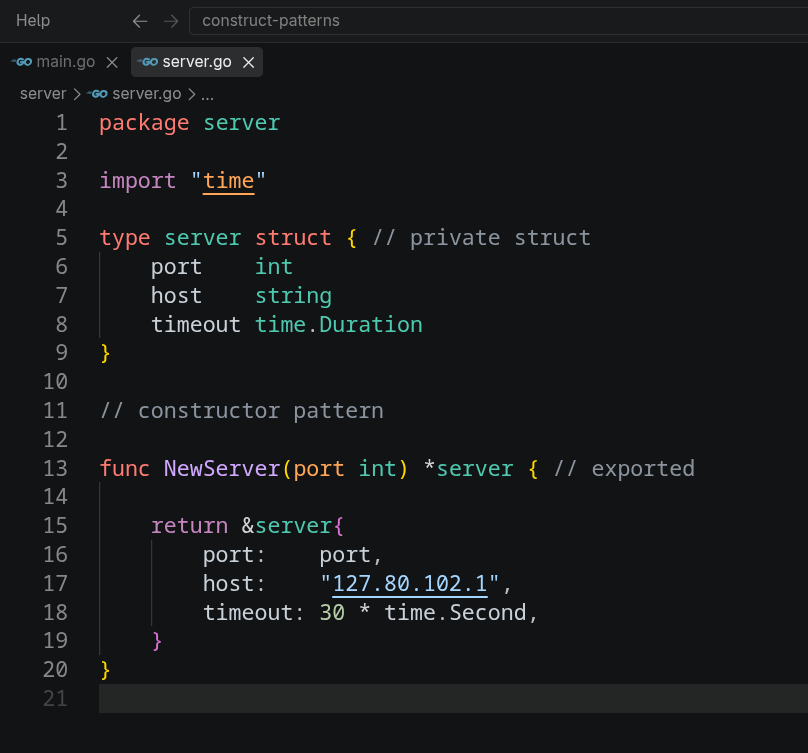
Constructor Pattern in Go.
Go doesn't have constructors like Java/C++, but we commonly use NewXxx() functions.
I created an unexported server struct and exposed only:
NewServer(port int)
Why?
Instead of letting callers worry about every initialization detail, the constructor becomes one place to handle:
• Default values
• Validation
• Configuration
• Dependencies
In my example, the caller only does:
server.NewServer(8000)
while NewServer() internally sets the host and timeout.
Remember - lowercase names in Go are package-private/unexported, so another package can't directly use server{}.
Small Go concept, but very useful when designing clean packages.
#golang
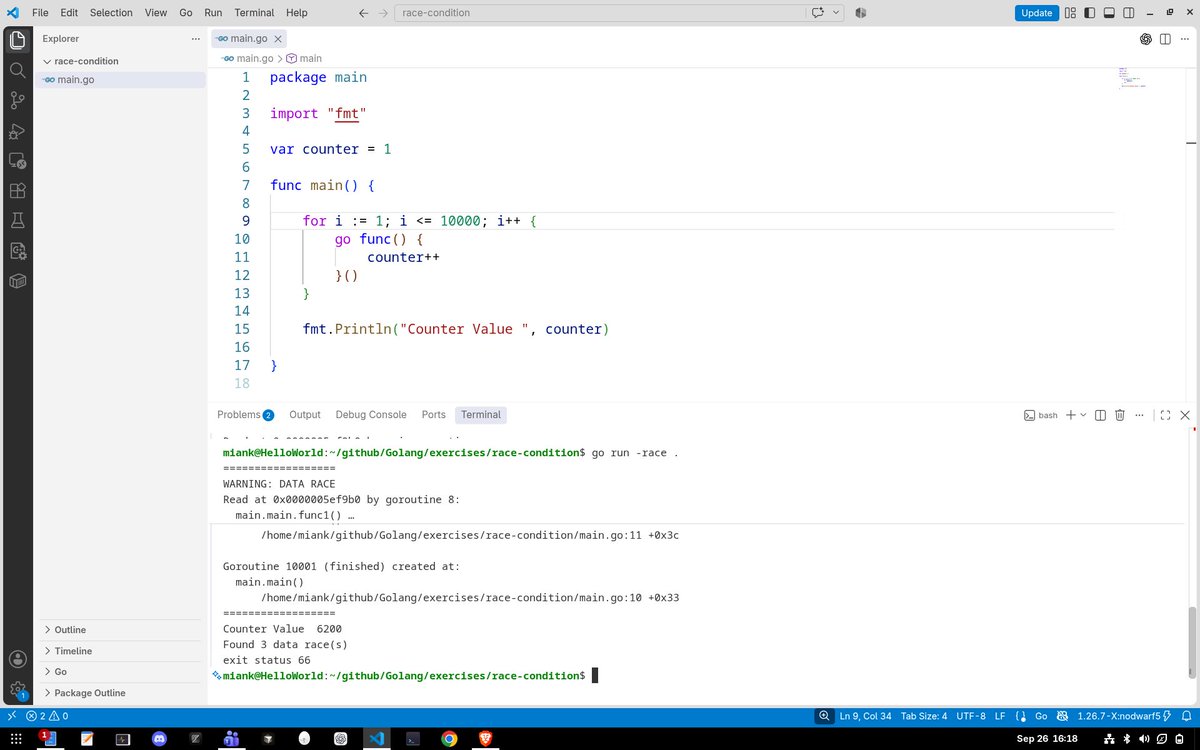
Data race in #golang
If you're writing concurrent code in Go, make the race detector part of your workflow.
Run:
go run -race .
And for tests:
go test -race ./...
Why?
Your concurrent code might work correctly 99 times and still contain a data race. These bugs depend on timing, which makes them extremely difficult to reproduce and catch manually.
Go's race detector watches for unsafe concurrent access to shared memory and warns you when it detects a race.
It doesn't fix the race—it tells you where to look.
Working output doesn't always mean race-free code.
@pouncetwice@adxtyahq Look at BRICS summit currency changes stock market all AI companies need to show the profit in the books - every company say "We are powered by AI".