🔥 Introducing the New Tenset Protectron Launchpad! 💎🚀
Get ready for some thrilling news! Tenset, the epitome of innovation and quality, is proud to present the Tenset Protectron Launchpad (TPL). 🌟
🚨🇵🇰 PAKISTAN: ANOTHER DEMOCRACY HAS JUST FALLEN
Pakistan, one of the world's largest democracies with a population of 240 million people, is down.
This wasn’t a sudden constitutional crisis.
This was Pakistan’s democracy being hollowed out over 2 bruising years - censored, carved, and cornered - until the final blow landed with a smile and the word “reform.”
Before the amendment, there was the erasure.
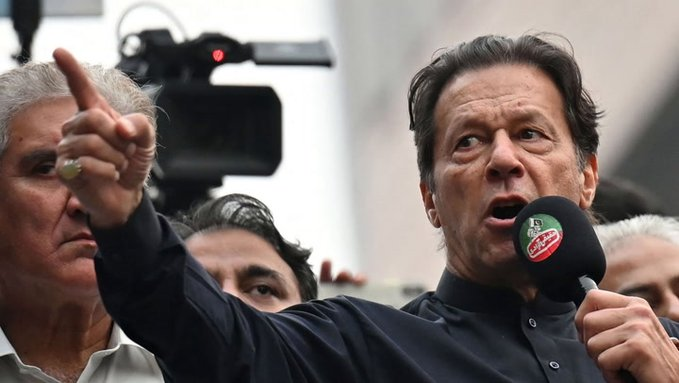
Former Prime Minister Imran Khan’s name vanished from TV broadcasts. Anchors LITERALLY spoke in metaphors. Newsrooms tiptoed around a former prime minister as if he were Voldemort with a cricket bat.
You were banned from mentioning the name of the former Prime Minister on TV.
PTI - once the country’s largest party - became a case study in political disassembly:
Its election symbol removed, atomizing its vote.
Leaders jailed, disappeared, or forced into televised “confessions.”
Its digital teams raided, equipment seized, channels throttled.
It’s leader Imran Khan cut off from visitors, even his own sisters relying on scraps of information.
February 2024’s election turned into a scavenger hunt where voters didn't know which “independent” candidate was actually theirs.
And all of this happened before the amendment that broke the camel’s back.
Then came the moment Pakistan crossed a line it can’t uncross.
The constitution wasn’t just amended - it was reprogrammed, rerouting power like a circuit board and plugging it straight into one man:
Army Chief, Field Marshal Asim Munir.
Lifetime immunity. Expanded command.
A “constitutional court” designed and assembled by the executive, replacing the Supreme Court on constitutional matters.
Not a coup. Something subtler.
A firmware upgrade for permanent military primacy.
The UN says: accountability gutted, separation of powers collapsing, judicial independence replaced by “press 1 for constitutional review.”
Islamabad’s answer? Relax. It’s "modernization."
Just like how cutting the brakes is “modernizing the vehicle.”
PTI - speaking through prison bars and VPN livestreams - calls the new court what it is: a conveyor belt engineered to process one man.
If you can’t beat Imran Khan at the ballot box, you bend the entire constitutional structure until it snaps into a shape that can.
And the government insists this isn’t Ayub, Zia, or Musharraf all over again.
But when generals start receiving lifetime immunity, those ghosts don’t whisper - they crash the party.
Expect 3 things:
A deep freeze on dissent – not loud, not flashy, just… clinical.
A judiciary split against itself, with resignations turning into open revolt.
A political vacuum if Khan stays locked up - and vacuums in Pakistan never stay empty; they get filled by the same institution that now has immunity baked into its constitution.
Pakistan calls this a “hybrid system.” Hybrid between what and what?
Democracy and the terms & conditions.
And in the fine print: The army wins by default.
Source: The Economic Times, The Independent, DW
@BinanceHelpDesk@cz_binance This is just general p2p guidence. In pakistan banks are freezing account that are related to crypto transactions. Even banks are clearly saying that they do not support crypto transactions. https://t.co/ZzX397sfWv
🇵🇰 OPINION: THE PAKISTANI MILITARY JUST DECLARED WAR ON DISSENT, AND IMRAN KHAN IS GROUND ZERO
Something dangerous just happened in Pakistan, and the world should not look away.
The country’s military DGISPR, through its official spokesperson, held one of the most aggressive, unprecedented press conferences in modern Pakistani history. Without naming him directly, the entire briefing was aimed at one man, jailed former Prime Minister Imran Khan.
The military, now led by General Asim Munir and the powerful establishment behind him, accused Imran, the former leader and the most popular political figure in the country, of inciting anti-state sentiment, working against national security, and even encouraging foreign media and intelligence agencies to undermine the army. They called him mentally unstable, a national security threat, and implied he was a tool of foreign powers. His supporters were labeled conspirators, traitors, and agents of chaos.
Let that sink in.
A man who won the votes of tens of millions is allegedly being publicly criminalized for criticizing Asim Munir, the current army chief, and Qamar Bajwa, the former army chief. Not for treason, not for terrorism, but for challenging the narrative.
This isn't just a clash of personalities, this is the full force of a military institution silencing a democratic movement.
And it’s getting worse.
The military has now banned Imran Khan’s own sister, a prominent doctor, from visiting him in jail simply because she reportedly carried a message from her brother criticizing the army chief.
A family member is being denied access for passing on words. Not weapons. Not plans. Words.
They’ve also openly threatened to cut off all visits, even from lawyers, if any political message is conveyed.
This is not justice, this is not due process, this is authoritarian muscle cloaked in national security rhetoric.
And the truth is, none of this is new.
Since 1947, Pakistan’s military has repeatedly inserted itself into civilian politics, removing elected leaders, shaping foreign policy, and deciding the limits of political debate. Every time a civilian leader rises with genuine public backing, the generals move to break them.
For people unfamiliar with Pakistan’s deep state politics, Imran Khan is not some fringe figure. He’s a former cricket legend turned anti-corruption reformer who challenged the old political order, and allegedly, for that, the military has targeted him relentlessly. Arrests, assassination attempts, media blackouts, now total erasure.
The message is clear, either you support the military or you are the enemy.
This moment matters far beyond Pakistan.
When a nuclear-armed country silences its most popular civilian leader, brands political speech as sedition, and begins dismantling the boundary between security and governance, the entire region becomes more unstable.
It also reveals the cracks in the global democratic order.
As Muhammad Ali Jinnah, the founder of Pakistan, once warned, the armed forces are the servants of the people. Not the masters.
Imran Khan’s battle is no longer just a domestic one, it’s a test of whether a political movement powered by the people can survive the wrath of an entrenched military elite.
Today it’s banning lawyers, tomorrow, it may be banning elections.
It’s heartbreaking to watch yet another democracy crumble from within.
🚨🇵🇰 PAKISTAN: ANOTHER DEMOCRACY HAS JUST FALLEN
Pakistan, one of the world's largest democracies with a population of 240 million people, is down.
This wasn’t a sudden constitutional crisis.
This was Pakistan’s democracy being hollowed out over 2 bruising years - censored, carved, and cornered - until the final blow landed with a smile and the word “reform.”
Before the amendment, there was the erasure.
Former Prime Minister Imran Khan’s name vanished from TV broadcasts. Anchors LITERALLY spoke in metaphors. Newsrooms tiptoed around a former prime minister as if he were Voldemort with a cricket bat.
You were banned from mentioning the name of the former Prime Minister on TV.
PTI - once the country’s largest party - became a case study in political disassembly:
Its election symbol removed, atomizing its vote.
Leaders jailed, disappeared, or forced into televised “confessions.”
Its digital teams raided, equipment seized, channels throttled.
It’s leader Imran Khan cut off from visitors, even his own sisters relying on scraps of information.
February 2024’s election turned into a scavenger hunt where voters didn't know which “independent” candidate was actually theirs.
And all of this happened before the amendment that broke the camel’s back.
Then came the moment Pakistan crossed a line it can’t uncross.
The constitution wasn’t just amended - it was reprogrammed, rerouting power like a circuit board and plugging it straight into one man:
Army Chief, Field Marshal Asim Munir.
Lifetime immunity. Expanded command.
A “constitutional court” designed and assembled by the executive, replacing the Supreme Court on constitutional matters.
Not a coup. Something subtler.
A firmware upgrade for permanent military primacy.
The UN says: accountability gutted, separation of powers collapsing, judicial independence replaced by “press 1 for constitutional review.”
Islamabad’s answer? Relax. It’s "modernization."
Just like how cutting the brakes is “modernizing the vehicle.”
PTI - speaking through prison bars and VPN livestreams - calls the new court what it is: a conveyor belt engineered to process one man.
If you can’t beat Imran Khan at the ballot box, you bend the entire constitutional structure until it snaps into a shape that can.
And the government insists this isn’t Ayub, Zia, or Musharraf all over again.
But when generals start receiving lifetime immunity, those ghosts don’t whisper - they crash the party.
Expect 3 things:
A deep freeze on dissent – not loud, not flashy, just… clinical.
A judiciary split against itself, with resignations turning into open revolt.
A political vacuum if Khan stays locked up - and vacuums in Pakistan never stay empty; they get filled by the same institution that now has immunity baked into its constitution.
Pakistan calls this a “hybrid system.” Hybrid between what and what?
Democracy and the terms & conditions.
And in the fine print: The army wins by default.
Source: The Economic Times, The Independent, DW
🇵🇰 IMRAN KHAN: THE MAN WHO DEFIED PAKISTAN’S DEEP STATE - AND MAY HAVE PAID WITH HIS LIFE
Rumours of Imran Khan’s death in Adiala Jail have cracked open the darkest fear in Pakistani politics:
that a former Prime Minister - the country’s most popular in a generation - may have been erased in silence.
The: charismatic, flawed, brilliant, stubborn - and ultimately swallowed by the same military system he once rode to power.
This is the part the world forgets:
He wasn’t manufactured by the establishment - he outgrew it.
He wasn’t just a cricketer-turned-PM - he was a political force who refused to bend.
And unlike most Pakistani politicians, he did inspire real, populist loyalty.
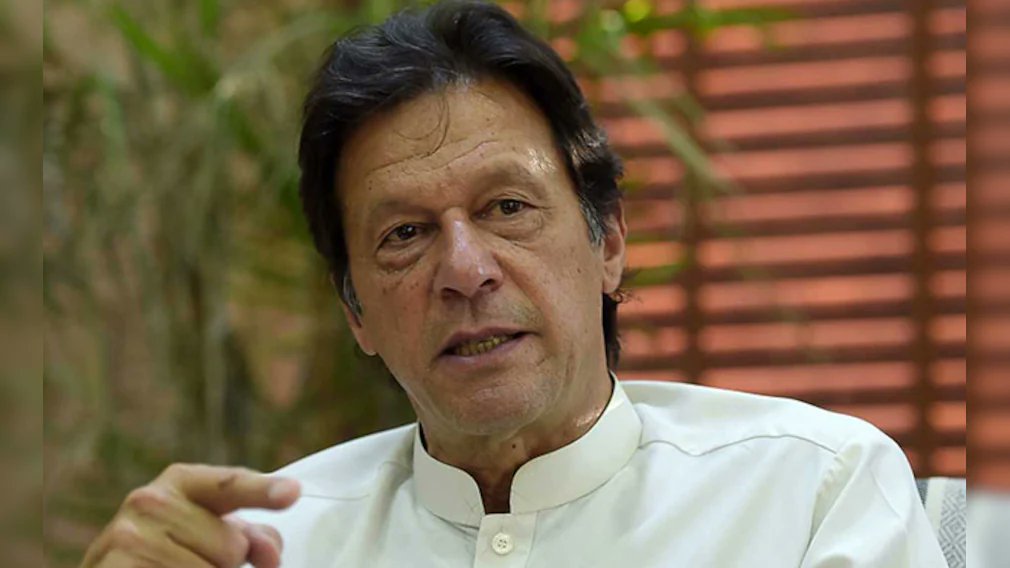
Khan in 2017 - dodging state paranoia to meet an Indian MP and discuss history, not politics - is the clearest snapshot of the man behind the myth: curious, sharp, and unafraid of ideological landmines.
If the rumours are true, his death isn’t just a personal tragedy.
It’s an indictment of a system that destroys those it cannot control.
Whether Imran Khan is alive, silenced, or gone forever, this moment becomes Pakistan’s political point of no return.
His supporters won’t accept quiet explanations.
His opponents won’t escape the shadow of suspicion.
And the military can’t contain the fallout forever.
Imran Khan’s story was always larger than cricket or politics.
Now it may define Pakistan’s future - for better or worse.
Source: NDTV
Giveaway Alert ⭐️
I am giving away 0.35 $SOL to one lucky winner 🏆
Three simple steps:
1. Follow me and @Jai0xCrypto ✅️
2. Retweet
3. Tag 2 of your friends in the comments ✍️
Winner will be announced in 24 hours using theXpicker – Good luck!