Kicking off my #PGY1 specialization into #Ophthalmology today at #UofT!
Ready to "see" my dreams come into focus and help patients look towards a brighter future.
Grateful for this opportunity and excited for the challenges ahead.
#Toronto#Residency#EyeCanDoIt#eye#surgeon
How safe are intravitreal anti-VEGF agents from a cardiovascular perspective?
Our newly published meta-analysis of 20 RCTs found low rates of cardiac adverse events and broadly comparable risks across agents, with some important nuances.
https://t.co/aDuzum07fB
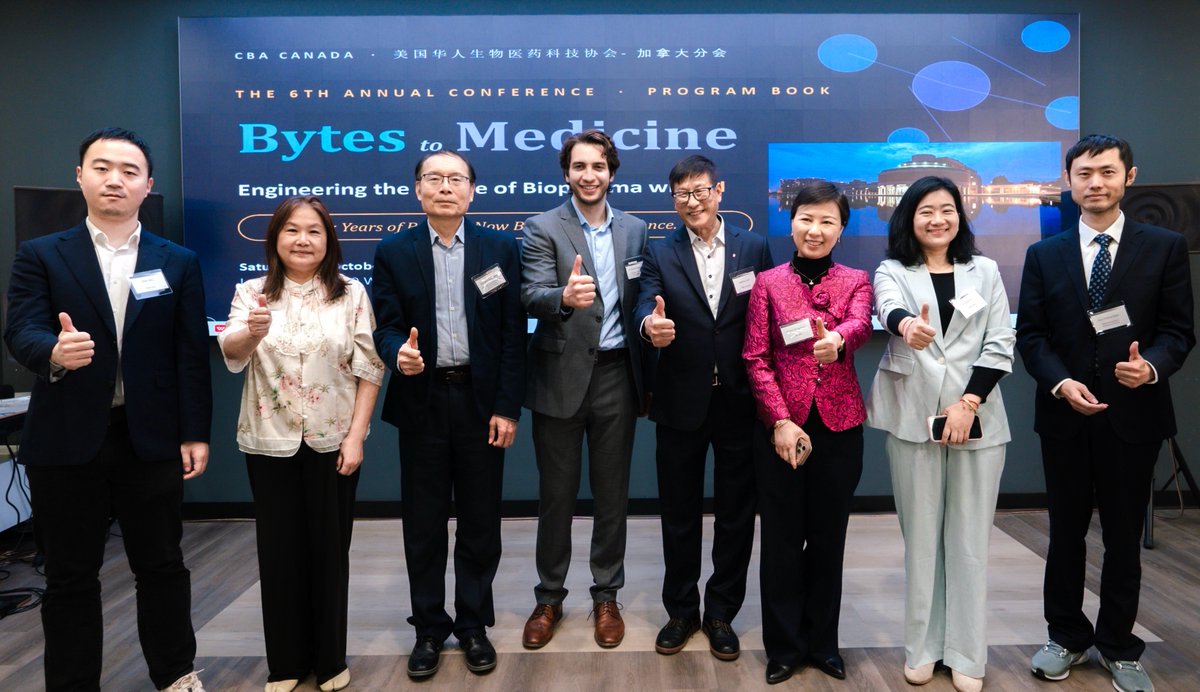
Great to join CBA Canada’s 6th Annual Conference, “Bytes to Medicine,” representing Orbis.
Enjoyed sharing perspectives on AI in ophthalmology and global eye care alongside an impressive group of innovators. Thanks to the organizers for having me!
@AAOjournal The practical use is counselling: a photo-measured CDR of 0.20 or less carried 46x the odds of NAION vs a CDR above 0.40, and 0.20 to 0.40 carried 6.8x. Absolute risk is still low. Whether GLP-1s are an independent risk factor is a separate question
@elonmusk The most interesting part isn't the value of one share today. It's the idea that children should have a stake in the technological future they're inheriting, rather than simply being its consumers
We measure IOP sitting up. Patients spend a third of their lives lying down.
Our new #Ophthalmology#Glaucoma meta-analysis found a ~3 mmHg rise in supine IOP among glaucoma-spectrum eyes.
Whether this increases translaminar stress or drives progression remains unknown for now.
https://t.co/moda5G2PdU
An IOP of 16 on iCare isn't necessarily 16 on Goldmann.
Our new meta-analysis of 5,593 eyes found a small average difference between devices, but substantial variability in agreement.
A useful reminder when interpreting IOP in clinic.
https://t.co/KLHb2kUsxA
@JOGJournal
@EricTopol@JACCJournals@ACCinTouch It's remarkable how much of modern medicine involves trying to pharmacologically compensate for what we've engineered out of everyday life: movement
@OpenAI One fascinating risk: if thousands of labs use the same models to decide what to investigate, we may accelerate discovery while narrowing scientific curiosity. A thousand researchers guided by one hypothesis engine might explore less than we expect.
@AnthropicAI@METR_Evals The next frontier in AI safety may be institutional rather than technical. Not just building models that can be corrected, but building organizations that cannot quietly ignore the corrections
@simisola10 Pre-AI trainees can fall back on handwriting when the scribe fails. The open question is cohorts that learn documentation through AI first, since you can't erode a skill that was never built. I worry about the resident who never had to write them
First Wnt-pathway biologic to clear noninferiority in DME (+9.1 and +8.7 vs +11.8 letters at year 1), but no secondary endpoint beat ranibizumab and PDR AEs were 6.7%/6.1% vs 0.9%. If it repairs the barrier rather than suppressing neovascularization, it may end up as a combo, not a swap
Today at #AAO2026, we’re presenting data from our Phase 2b/3 trial of an investigational drug in patients with diabetic macular edema (DME).
Learn more: https://t.co/OQ0Fv8F5nc
@SciNatureNews There's something beautiful about creating an entire universe to produce a mind capable of understanding it, then immediately deleting both