Art for Free #BaiZhaoDong
Journalist Bai Zhaodong at imminent risk of forced return to China: More than 50 NGOs, including RSF, urge Thailand not to bow to Beijing's pressure.
Relieved to hear that Dong Guangping is safely in Canada. Everyone who writes some version of “I went to China for two weeks and was amazed” should read Dong’s story to understand just how sickening the CCP’s punishment of its critics can be.
Excited to share our new book, "Outsourcing Surveillance: Online Public Management in China", has just been published online @CUP_PoliSci . Available for free download in the next two weeks.
We study outsourcing of digital surveillance by the Chinese Party-state to private enterprises and for-profit subsidiaries of state-owned corporations. We ask why, how, and what are the implications of outsourcing of digital surveillance to monitor and moderate online public discourse. An extension of my earlier research on OUTSOURCING REPRESSION to the digital realm.
"The digital age has afforded autocrats new technologies of control, allowing them to co-opt, pre-empt and repress dissent. But, what if they lack the technical capacity to access digital tools of control? In what ways have digital technologies altered the way autocrats conduct statecraft? Based on an analysis of thousands of public procurement documents, and a dozen elite interviews with various stakeholders, we found that the Chinese state has outsourced various functions of online surveillance to private and for-profit arms of state-owned corporations. We found that outsourcing surveillance is intended to augment state technical capacity to moderate and fine-tune the conduct of digital repression. Outsourcing digital repression opens a Pandora's box of state-business collaborations. This Element contributes to the literature on outsourcing repression, state‒business relations, and conduct of digital statecraft."
@munkschool@TorontoSRI@UofTArtSci
https://t.co/ENj6cUyzB9
Drawing is not only about expressing an opinion. Sometimes it means slowing down. Looking more carefully. Making visible the nuances in a world that seems willing to accept only black or white.
https://t.co/V1v8p6oL31
NEW: The Pentagon accused some of China’s biggest companies including Alibaba, Baidu and BYD of supporting the Chinese military, doubling down on an earlier decision to label crown jewels of the country’s corporate world as threats to US national security:
https://t.co/XnUPCLDSnB
Beijing is officially weaponizing artificial intelligence to punish citizens for thoughts they have not even voiced yet.
A bombshell New York Times report has unmasked a terrifying evolution in digital tyranny, detailing the shift from punishing dissent to predicting it before it happens. Analyzed by researchers at Vanderbilt University, a massive data leak from the Beijing-based tech firm Geedge Networks reveals that China is actively developing AI-driven predictive surveillance to neutralize political risks. The company has deep ties to Fang Binxing, the infamous father of China's Great Firewall, and is moving far beyond passive internet censorship into the realm of preemptive control.
The leaked documents show that these new systems utilize Large Language Models to synthesize data at scale. By aggregating real-time internet browsing histories, tracking physical movements via cell tower records, and mapping out social media connections, the AI builds comprehensive citizen profiles. It then generates political risk scores to flag individuals who might become critics of the government, allowing the state to intervene based entirely on inferred intent rather than actual actions.
This dystopian toolkit is already being exported as a commercialized service to authoritarian regimes aligned with Beijing's Belt and Road Initiative. The leak exposed that Geedge’s flagship product, which functions as the Great Firewall in a box, was deployed by the military junta in Myanmar to locate pro-democracy activists, block social media, and trigger regional internet blackouts that led to targeted arrests. Similar mass surveillance deployments capable of deep packet inspection and tracking citizen reputation scores have been uncovered in Pakistan and Kazakhstan.
Fortunately, the leaked files also reveal a critical vulnerability in Beijing's digital panopticon. United States export controls on advanced semiconductors have successfully starved Geedge of the high-end computing power required to scale these predictive AI models. Forced to pivot to less efficient tech due to chip shortages, their progress has been significantly slowed. This serves as a stark reminder to Western policymakers that maintaining tight semiconductor sanctions is the primary line of defense keeping this predictive surveillance grid from expanding globally.
#UnveiledChina #PredictiveSurveillance #DigitalAuthoritarianism #GeedgeNetworks #GreatFirewall #Geopolitics #AICensorship #NationalSecurity
Great profile of the prolific and fascinating Chinese social media poster/news source - Teacher Li (@whyyoutouzhele), by @LiYuan6👇
“He’s like the loudspeaker through which all the other voices” — Chinese voices — “come out into the world.” - @LauraHarth
https://t.co/O13Fk2ilB5
“Teacher Li” has become one of the most prominent targets of China’s #transnationalrepression campaign. Yet he continues documenting dissent, amplifying censored voices, and pushing back against authoritarian intimidation.
Freedom House is proud to collaborate with Li Ying through the China Dissent Monitor to better inform the public about protest in China. Read this profile of Li Ying in @nytimes from @LiYuan6: https://t.co/4agjeb1BwE
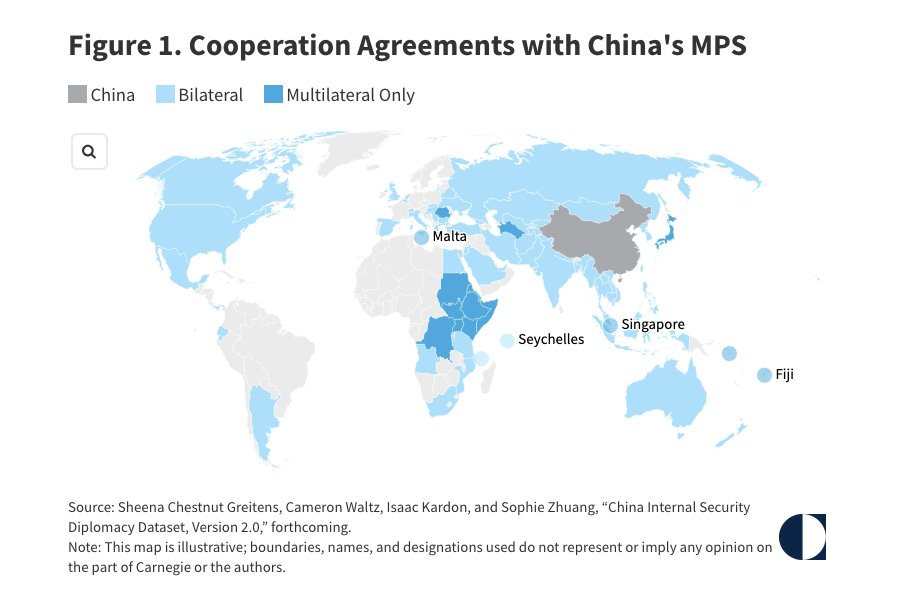
Sharing a new paper on an understudied tool used by China's Ministry of Public Security to expand its global reach: formal law enforcement & security cooperation agreements. China has signed at least 205 of these since 2006: 170 bilateral, 35 multilateral. 1/n
Canada *still* not moving to pass the completed trade deal it finalized with Taiwan more than a year ago, presumably to avoid upsetting China.
More background in this piece by @tchau01 from last October: https://t.co/ou8GwsUwcn
🔔New .@chrdnet report documents children’s rights and labor rights violations in mandatory vocational school internships and hiring children under 16 to work across 11 provinces between 2019 and 2025. The findings are alarming 🆘 !
👉 https://t.co/ffzbnNwMyl
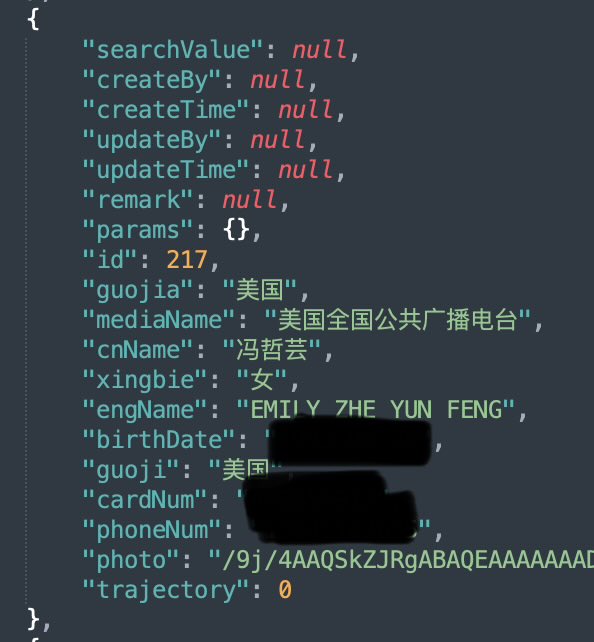
EXCLUSIVE: How the track foreigners in China - We got rare access to demo system developed by the Ministry of Public Security in China for the prefecture of Zhangjiakou, to track and surveil foreigners visiting or being residents ( actually it applies to most nationals as well, but in this case it seems to be aimed at foreigners ). It is officially known as "Dynamic control platform for overseas personnel". 1/12
Absolutely not surprising but a limited leak of a Chinese local surveillance platform drawing off an apparently large national one has a special drop down for tracking for tracking foreign journalists in China… including me. @NetAskari found the data https://t.co/z6v9TrFiPe
Demo of a Chinese 🇨🇳 video surveillance portal that purports to track all foreign visitors, including journalists, integrating video feeds w other data (e.g., pictures from ski passes) to conduct mass surveillance & social network analysis 👇
https://t.co/IIry3xIHzu
Fareed Zakaria has lost it in this latest oped. Abandoning democratic Taiwan as a bargaining chip with authoritarian China is not pragmatism! Zakaria also sprinkles in a little Uyghur genocide denialism for good measure.
President Trump’s foreign policy in his second term has been reckless, chaotic and deeply destabilizing.
But he might well turn out to have the right instincts — and perhaps even the right policy — in one crucial arena: the U.S.-China relationship.
My latest column:
https://t.co/vMjiu3WGDQ
Pleased to see that Anthropic's new policy paper on China cites the @ASPI_CTS China team's research as foundational evidence for their position.
Links to Anthropic's paper and our research below
I’m in Taipei this week examining how shifting US-China relations are reshaping Taiwan’s business environment and the broader regional economy.
I’ll be publishing takeaways for companies assessing supply chains, investment risk, and cross-border partnerships through @nuoraglobal's newsletter.
Subscribe to receive the full report. https://t.co/39on9xeEUH