Watch this video. Amnesty International’s Evidence Lab verified witness testimony, video and photos showing Indian police used pellet-firing shotguns, tear gas, grenades, batons and electric shock devices against peaceful protesters including children in Delhi from 20–24 July.
“It’s very unfortunate that neither has the trial started nor has he been granted bail. Six years of a man’s life have been wasted just like that.” — S.Q.R. Ilyas, Umar Khalid’s father
#sharjeelimam#umarkhalid
Join us for a discussion with leading lawyers and civil rights voices on the cases of Umar Khalid and Sharjeel Imam.
📍 Press Club of India, New Delhi
📅 August 25, 2026 | 4 PM
Organised by Association for Protection of Civil Rights (APCR).
The NCERT has reconstituted the textbook development team for classes 11 and 12 political science with a mandate to integrate cultural rootedness, Indian knowledge systems and inclusion, with at least four of the members having direct or indirect links with the RSS.
https://t.co/a8qTLHKiKt
“If we do not defeat Savarkar’s ideology, we will have to face the suffering experienced by the Germans,” said noted Gandhian and theatre person Prasanna.
https://t.co/Ofw5jYVsq3
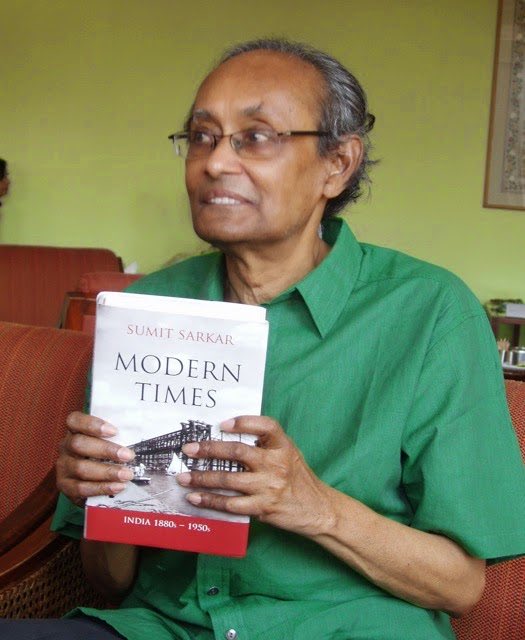
Prof Sumit Sarkar never taught me. He had left DU much before my time. I got opportunities to interact with him during my PhD in Gottingen. He always welcomed new ideas. His writings, particularly The Decline of Subaltern Studies, has been crucial for my own work.
The Sohbat Collective is organising a special screening of Prisoner No. 626710 is Present this Independence Day, followed by a Q&A with director Lalit Vachani.
August 15 | 6 PM
Trialogue Studio, Mayur Vihar
#UmarKhalid
A day after Jawaharlal Nehru University (JNU) cancelled permission to hold an auditorium discussion on a book by former student Umar Khalid, the students’ union went ahead with the plan and held the talk outdoors on Monday. Despite the rain, students turned out in large numbers for the event held from 3 p.m. to 5 p.m. outside the School of Social Sciences.
✍️Ashna Butani
https://t.co/IJkjeutDft
A review of Spectacle State by @zahirjanmohamed in the Wire. "Throughout the book, Prakash’s writing is eloquent, erudite and accessible." Please read.
@thewire_in@HarperCollinsIN https://t.co/mSfIV0mrlv
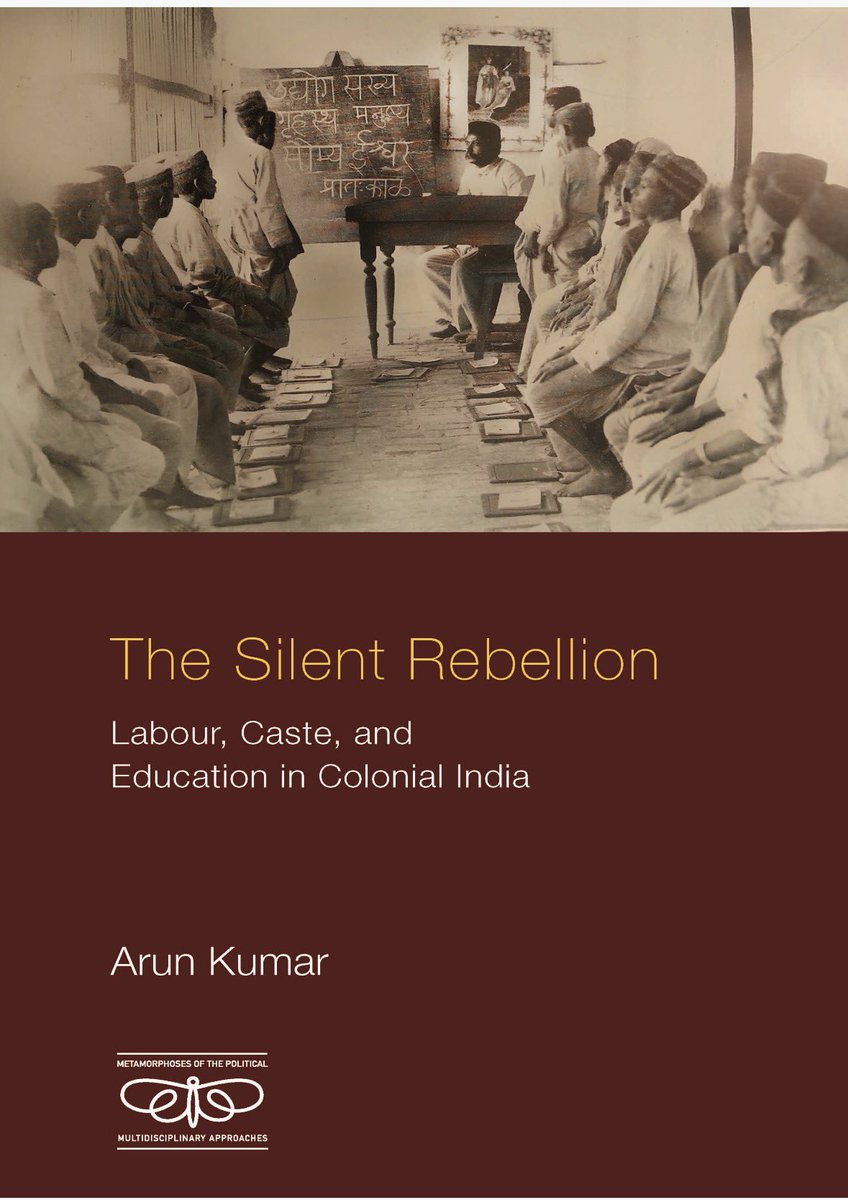
I’m very excited to announce that my first book, The Silent Rebellion, published by the Cambridge University Press is now available globally for order.
Book brings a non-working & intellectual history of labouring caste communities.
Amazon India link:
https://t.co/Y57zM2oZ9M
Amidst cracks in the spectacle, Spectacle State is moving slowly but steadily. Thanks @scroll_in
For listing in the six nonfictions to take a closer look at 79 years of Indian Republic. https://t.co/EJ0Zy6hCmc
How and where does one locate a homeland? Does it exist on maps or in our imaginations? How are our identities shaped by history, memory, migration, and the borders we inherit? Can the lines drawn on a map ever truly define where we belong?
@GhoshAmitav's The Shadow Lines, a seminal postcolonial text, dwells on these questions and discusses belonging and identity against the backdrop of historical events like the Second World War, the Partition of 1947, and the communal riots of 1963-64 in Calcutta and East Pakistan.
More than three decades after its first publication, the novel continues to resonate with readers across generations, offering a powerful insight into the borders that shape our lives.
As Ghosh celebrates his 70th birthday this month, @zainabbqazi in conversation with Amrita Bhalla, an academician, author and literary critic, to unpacks and discusses the moving themes of the novel like migration, memory, identity, and nationalism.
Wildfires raging across Europe and Canada. Heat domes baking the US. Temperatures reaching 50°C in Tunisia. Extreme heat across the globe is being exacerbated by the continued burning of fossil fuels and authoritarian tactics that attack climate science, restrict protest and spread climate disinformation.
Heatwaves can kill directly, and they also fuel wildfires, worsen air pollution, dry out land and disrupt rainfall patterns. This deepens drought in some places and makes floods more dangerous elsewhere.
Governments must act now to protect people from the dire and worsening effects of the climate crisis. Big fossil fuel polluters must be held accountable and pay for their role in causing extreme heat and other climate harms.