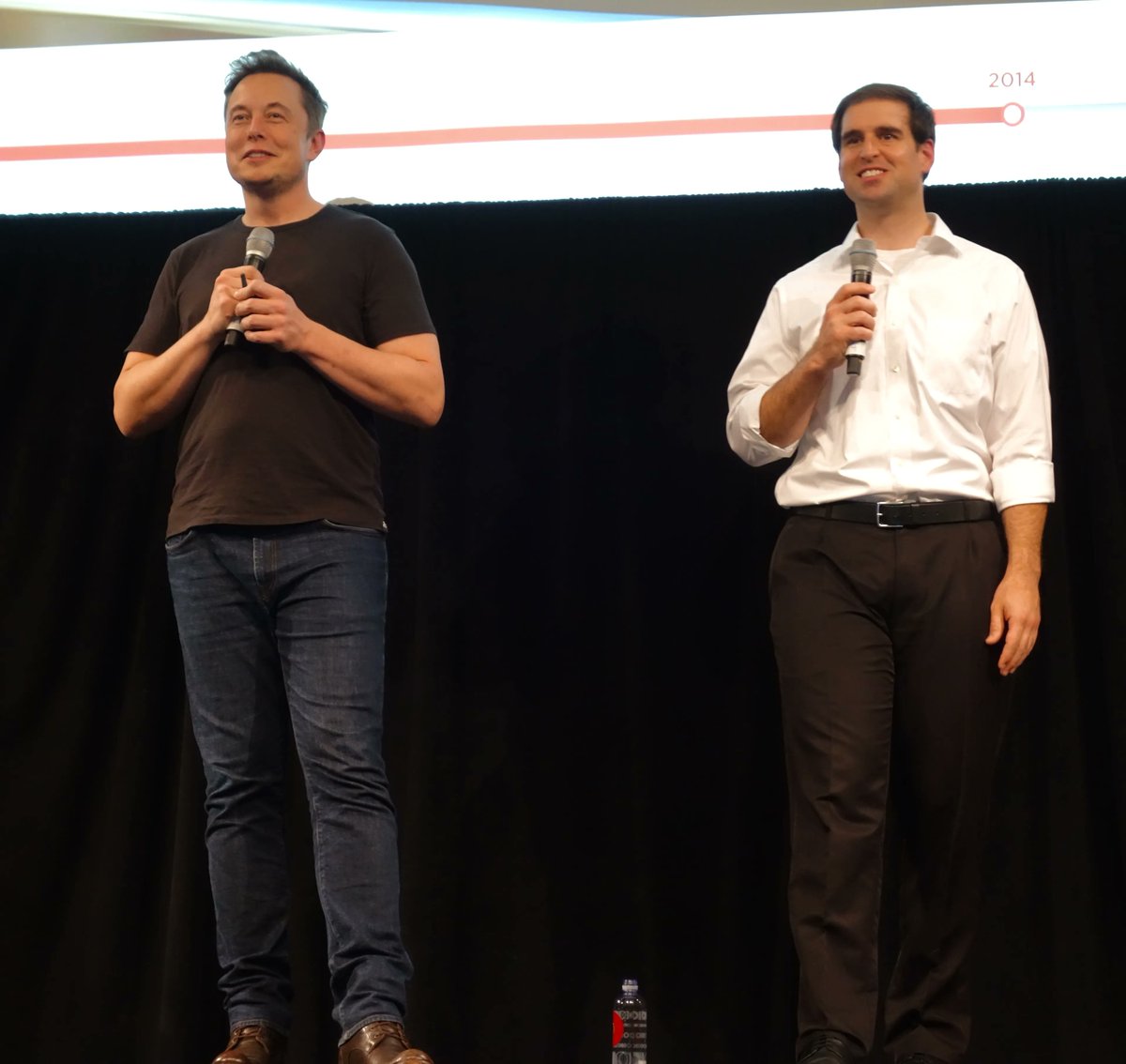
Elon Musk literally sat down for a 45-minute talk with Y Combinator that explains how to build world-changing companies better than any business school on earth. This is the advice he gave a room full of young founders:
1. Don't try to build something great. Try to build something useful.
Everyone obsesses over greatness. Musk says that's the wrong target. "I didn't originally think I would build something great. I wanted to try to build something useful. I didn't think I would build anything particularly great. Seemed unlikely, but I wanted to at least try." Aim for useful first. Greatness, if it comes, is a byproduct.
2. When you can't get in the front door, build your own door.
Before Musk started his first company, he tried to get a job at Netscape. "I sent my resume into Netscape and nobody responded. I tried hanging out in the lobby to see if I could bump into someone, but I was too shy to talk to anyone. So I'm like, this is ridiculous, I'll just write software myself." He didn't set out to be a founder. He became one because no one would hire him.
3. He slept in the office and showered at the YMCA.
The origin of his first company was not glamorous. "We couldn't even afford a place to stay. The office was 500 bucks a month, so we just slept in the office and showered at the YMCA." He couldn't afford proper internet either, so he drilled a hole through the office floor and ran a cable to the internet provider downstairs. That was the founder of the future richest man on earth.
4. Keep the chips on the table.
When Musk sold his first company, he received a $20 million cheque. His bank balance went from $10,000 to $20 million overnight. Most people would have stopped. He put almost all of it straight back into his next company. "I kept the chips on the table." He did the same thing decades later, over and over. He hates money sitting idle. Money is fuel for the next mission.
5. Start with the mission, then work backwards to make it a business.
Musk didn't start SpaceX to make money. He went on the NASA website to find out when humans were going to Mars, and there was no plan. So he decided to build one. "There had been no prior example of a rocket startup succeeding. A small chance of success is better than no chance of success." The mission came first. The business model came later.
6. He started SpaceX expecting to fail.
He is brutally honest about the odds. "SpaceX started in mid-2002 expecting to fail. Probably 90% chance of failing. When recruiting people, I said, we're probably going to die, but small chance we might not die." The first three launches failed. The fourth one worked with no money left. "If the fourth launch hadn't worked, it would have been curtains. We made it by the skin of our teeth."
7. Break every problem down to physics.
This is the core of how Musk thinks. "First principles means break things down to the fundamental elements that are most likely to be true, then reason up from there, as opposed to reasoning by analogy." His example is rockets. Everyone priced them based on what old rockets cost. Musk asked what a rocket is actually made of, priced the raw metals, and found the materials were only 1-2% of the historical price. The rest was inefficiency he could attack.
8. When told something takes 24 months, break it down and do it in six.
Last year xAI needed a giant computer to train its AI. Suppliers said it would take 18 to 24 months. "It's like, well, we need to get that done in six months or we won't be competitive." So he broke it into parts. Needed a building, so he found an old factory. Needed power, so he rented generators. Needed cooling, so he rented a quarter of America's mobile cooling capacity. He slept in the data centre and ran cabling himself. It got done.
9. Watch your ego-to-ability ratio.
Musk's single sharpest piece of advice for young founders is about staying honest with yourself. "A major failure mode is when your ego-to-ability ratio gets too high. Then you break the feedback loop to reality." Keep the ego small, internalise responsibility for everything, and stay ruthlessly connected to what's actually true. "You want to close the loop on reality hard. That's a super big deal."
10. Chase work, not glory.
His closing philosophy ties it all together. "It's so hard to be useful. The area under the curve of total utility is how useful you've been to your fellow human beings times how many people. If you aspire to do true work, your probability of success is much higher. Don't aspire to glory, aspire to work."
He was ridiculed for years. The press called him "internet guy attempting to build a rocket company." He agreed it sounded absurd. He did it anyway, because a small chance of doing something useful beat no chance at all.
Here's the thing though....
Musk became the most followed founder alive because everything he does happens in public. The launches, the failures, the talks like this one. The companies made him powerful. The personal brand made his every word travel around the world before he finishes saying it.
We build massive distribution and grow personal brands on X and beyond without our clients lifting a finger.
If you're a founder or VC looking for that kind of exposure, book a call below.
We average 1.5M views a week.
https://t.co/UoXuYlkBQq
We believe it's important to give people the ability to fix things themselves if they prefer to do so
You can find service manuals for all of our cars, buy parts, access info on diagnostic tools & more via https://t.co/243adViPj1
Unitree G1 has mastered more quirky skills 🤩
Unitree G1 has learned the "Anti-Gravity" mode: stability is greatly improved under any action sequence, and even if it falls, it can quickly get back up.
Tesla's former CTO just did the impossible.
He solved the world's power crisis.
AI data centers need power faster than the grid can provide it.
Here's exactly how he did it (it's not what you think):
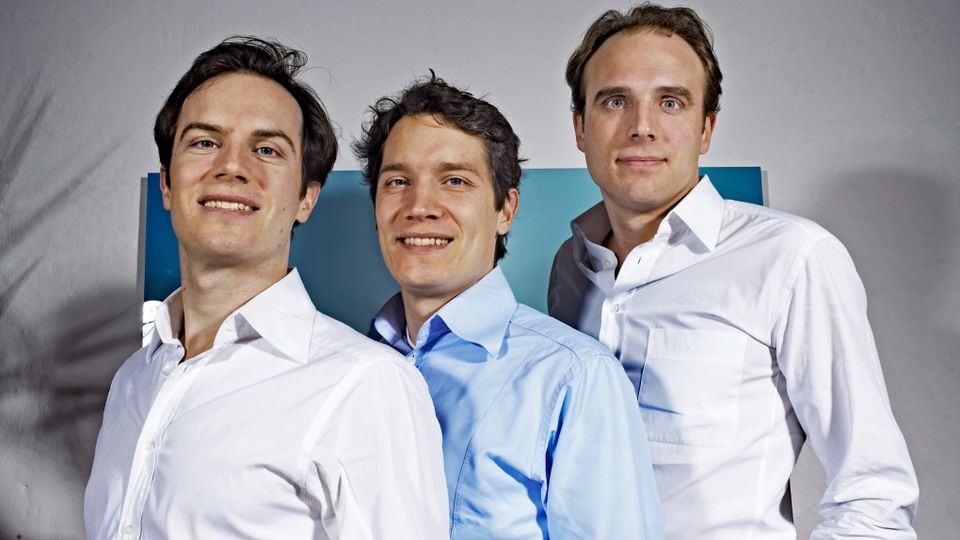
These 3 men emailed eBay 200 times begging for jobs.
eBay ignored every single one.
So they stole eBay's entire business model and sold it back to them for $43 million.
Then they did it again. And again. And again.
Here's how they became the most hated billionaires:
On the latest Fridman episode, this Chinese economist just dropped a bombshell:
"The harder America tries to contain us, the more innovative we become."
The worst part? She could back it with data.
Here's what every American needs to know:🧵
1. Scientists in South Korea created a shape-shifting liquid robot. It can pass through metal grates, aiding disaster rescue, surveillance, and medical procedures.
https://t.co/Yjd8HUEDlu
I don’t know where to begin, so I’ll start here: my view from one Dragon to another. I don’t have words yet for the whole experience, so a picture will have to do.
This was my first attempt at a time-lapse (thank you, @Astro_Ayers, for many great tips). Aurora over the South Pacific, Orion rising, satellites in the distance, and my favorite planet, all from a wild new perspective.
That Dragon undocked and returned to Earth a few days ago with Crew-10. It was a bittersweet farewell but marked the start of a new chapter in what feels already like a great story.
Just went through the numbers on Tech layoffs and it’s so much worse than you can imagine.
75,000 jobs cut year to date, close to 40% increase YoY from an already sky-high number in 2024.
Meanwhile H-1B petitions hit the yearly cap in 6 months and 82% of all new tech jobs have gone to foreigners.
Off-shoring has hit record highs with entire shadow economies popping up all over the world replacing American tech jobs and leading to office closures in America. Eerily similar to the wave of manufacturing jobs we sent overseas to China and Mexico that ended up hollowing out our middle class.
The great tech replacement is here. Silicon Valley is playing a very dangerous game.
I’d master AI storytelling for customer acquisition.
If you can tell a story, sell with data, and control CAC, you’ll print money. It’s the most measurable skill in business today.