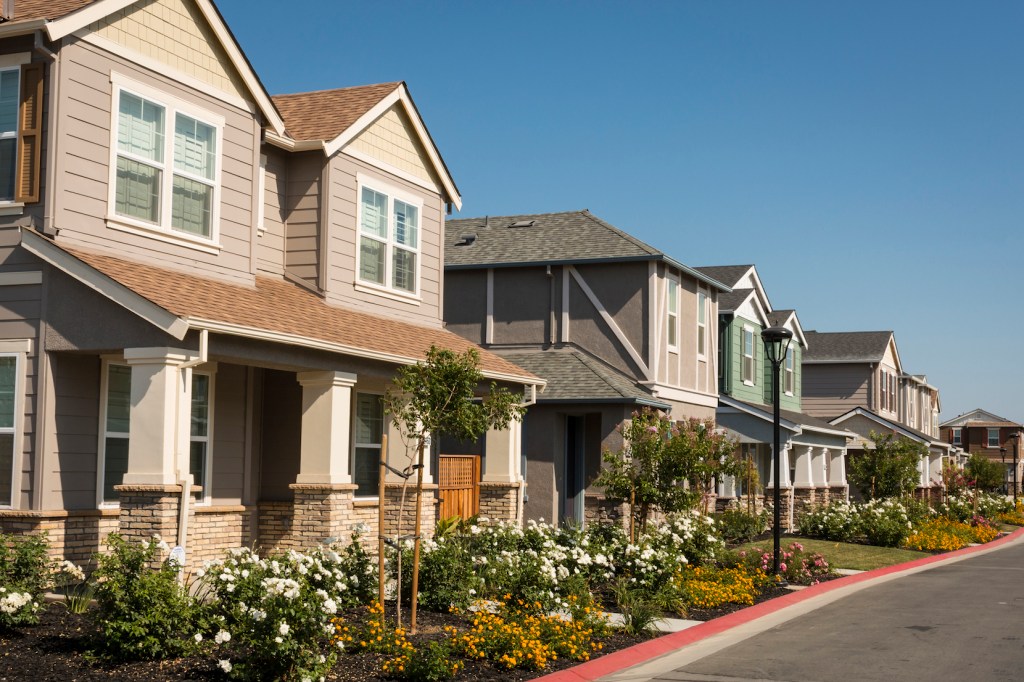
When you're policy goal is to raise demand (new buyers and more capital to purchase), and you think the effect will be lower prices.
And then the State owns 45% of a bunch of houses bought at the top of a RE bubble.
The California Assembly & Senate unveiled a joint spending plan that proposes a program in which the state would pay for, and own, up to 45% of a home.
That would cut the purchase price nearly in half, allowing more families to buy homes & build wealth https://t.co/m4W2z1HNOV
@IamNurseTrish @hopefulresident@DavidBegnaud What do you gain from this? from hoping people live in hatred and fear because you lie about what happens? You don't care about black lives, you don't care about truth, you care about your own image selfishly. Sit down self-promoter.
@binneystreetbio@ckwars@chamath Well, i'd probably keep the units the same "%"
Inequality reduced on a $ because everyone was poorer and has less PP to cover basic needs.
Everything @chamath says is a disaster. I'm not sure what game this is, but if he builds a whole 8 tweet thread by confusing "$" and "%," maybe don't trust him?
Inequality only went down in the absolute, not a %. Also, poverty and extreme poverty rose sharply in the 70s (~15%). 70s policy was a disaster for the poor, which continues through today.
Here is something I learned today:
1. 1979 was peak inflation. It was also when the gap between rich and poor was the smallest.
2. It was preceded by a big wealth inequality b/w rich and poor like today.
3. Solution started in late 1960s with LBJs war on poverty.