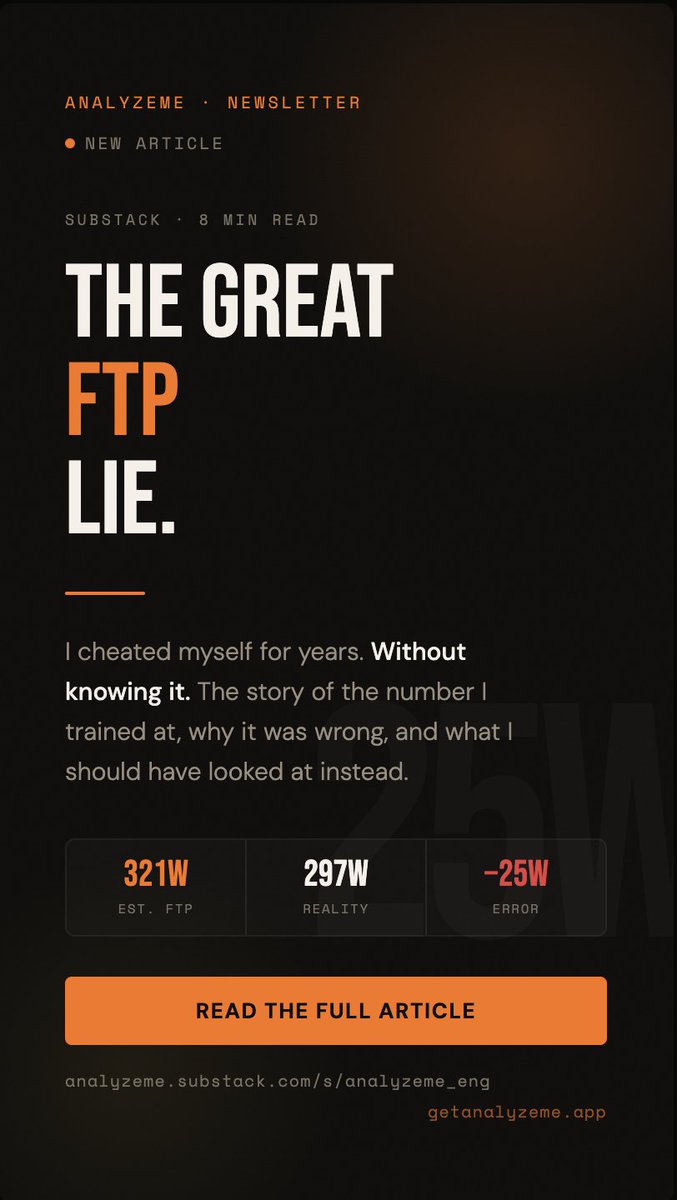
I went full gas, hit 338W, applied the 0.95 multiplier, and proudly gave myself a 321W FTP.
But I wasn’t measuring my physiology. I was just measuring my ability to game a protocol.
My actual 60-minute power? 297W. A massive 25-watt difference.
I cheated myself for years without even realizing it.
Back in 2012, I bought my first power meter, did a 20-minute test, and scored a 321W FTP (5.4 W/kg). I felt like an absolute pro.
Turns out, that number was completely wrong. And it basically ruined my season. 🧵
I’ve been working on a side project to better understand cycling and running performance. It’s called AnalyzeMe, and it digs deeper than just FTP or Pace. I’d love some feedback from the endurance community! 🧵👇 https://t.co/Vgw3GxY3SY
- Power Profiling & Critical Power: Leo, P., Spragg, J., Podlogar, T., Lawley, J. S., & Mujika, I. (2022). Power profiling and the power-duration relationship in cycling: a narrative review
I’ve finally brought my little project to life! 🚴♂️
It’s a tool for endurance performance analysis and physiological profiling. I’d love for coaches, athletes, and data nerds to give it a try and share some feedback!
Check it out here: https://t.co/JpxmIyaDCI
#sportscience
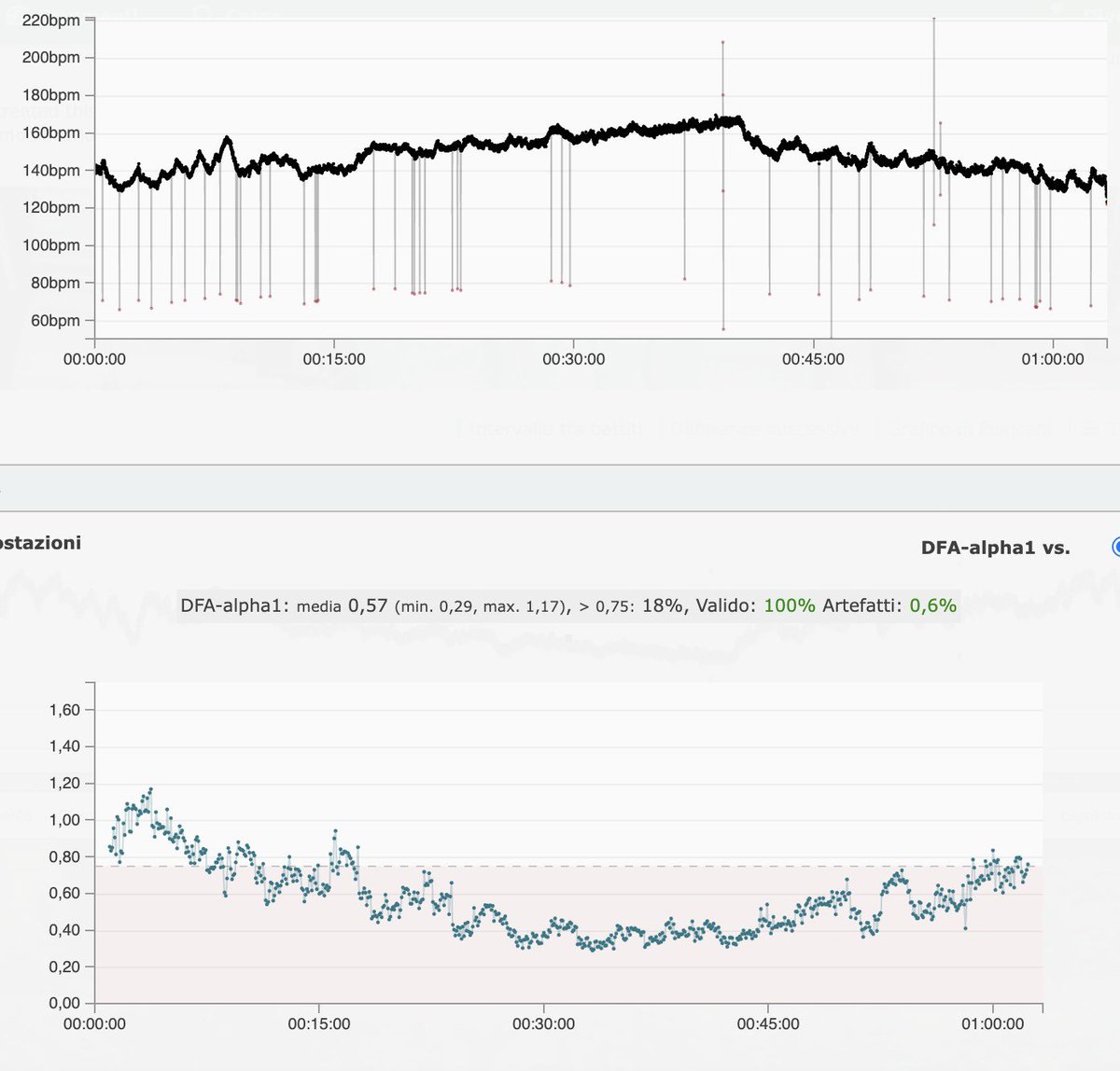
Have you ever had athletes with always low DFAa1 values? is it a heart rate monitor error (polar h9)? this workout is an easy steady ride at 76% hrmax. thank you for your help @SeanSeale@Karoly_Spy
@Karoly_Spy@SeanSeale Thank you both , it was an indoor ride.. I tried to monitor dfa a1 at different intensities but the indice 0.75 or 0.5 never match with RPE of this athlete.. thank you also for the content you share 💪🏻