Explore a brilliant future era in this coming-of-age sci-fi tale that provides an insightful journey to higher levels of education, spirituality, philosophy &..
Robert O’Neill, the man who shot Osama bin Laden, just stated on national television that he does not believe the official narrative around the death of Charlie Kirk. If you didn’t already have questions, you certainly should now.
@realannapaulina We do need to stop the clock changing nonsense and get back to Standard Time year round which is the best and most healthy rhythm for human beings...
Ooooh, so wait... our government ...? This is dark. 👀
🚨 US House Rules Committee yesterday voted 6–4 to advance the Sunshine Protection Act to the floor. It would mandate permanent Daylight Saving Time and immediately prohibit future state-level exemptions. 👉 Tell Congress to replace it with the Sunshine for Our Kids Act!
I agree with the "stupid clock changes twice a year" but we need to be on Standard Time year round. Who is paying you for this post?
According to Grok:
The most recent (and only post-WWII) attempt at year-round Daylight Saving Time (DST) in the U.S. began on January 6, 1974.
Background and Implementation
This was enacted via the Emergency Daylight Saving Time Energy Conservation Act of 1973, signed by President Richard Nixon in late December 1973.
It was a response to the 1973 oil embargo by OPEC, which caused an energy crisis. The goal was to conserve fuel by extending evening daylight (reducing the need for artificial lighting) for a planned two-year trial.
Clocks sprang forward nationwide at 2 a.m. on January 6, 1974 (most of the country observed it; some states like Arizona and Hawaii opted out or had exemptions).
(Note: The U.S. had also used year-round "War Time" DST during WWII—from February 9, 1942, to September 30, 1945—but that was much earlier and tied directly to wartime needs.)
What Happened: Public Backlash and Early End
Initial support was high: A December 1973 poll showed about 79% of Americans in favor.
Problems emerged quickly:Dark winter mornings: In many places, especially northern latitudes, children went to school and people commuted in the dark (e.g., sunrise around 8:27 a.m. in the D.C. area in early January).
Safety concerns: Reports of increased traffic accidents involving schoolchildren in the morning dark; some states saw spikes in incidents.
Public opinion plummeted: Support dropped to around 42% by February 1974.
Energy savings were minimal at best (estimates around 100,000 barrels of oil per day early on, but overall impact was debated and not transformative).
By late 1974, Congress acted to end the experiment early. President Gerald Ford signed legislation restoring standard time for the winter months, effective October 27, 1974. The country briefly returned to a modified schedule (DST resumed in early 1975), then went back to the standard seasonal pattern after the trial.
This episode is often cited today in debates about permanent DST (or permanent standard time), as it highlights trade-offs like morning darkness in winter versus evening light benefits. Hawaii and most of Arizona remain on standard time year-round and do not observe DST.
We already made this mistake in the 70's. Must we make the same mistake twice?
According to Grok:
The most recent (and only post-WWII) attempt at year-round Daylight Saving Time (DST) in the U.S. began on January 6, 1974.
Background and Implementation
This was enacted via the Emergency Daylight Saving Time Energy Conservation Act of 1973, signed by President Richard Nixon in late December 1973.
It was a response to the 1973 oil embargo by OPEC, which caused an energy crisis. The goal was to conserve fuel by extending evening daylight (reducing the need for artificial lighting) for a planned two-year trial.
Clocks sprang forward nationwide at 2 a.m. on January 6, 1974 (most of the country observed it; some states like Arizona and Hawaii opted out or had exemptions).
(Note: The U.S. had also used year-round "War Time" DST during WWII—from February 9, 1942, to September 30, 1945—but that was much earlier and tied directly to wartime needs.)
What Happened: Public Backlash and Early End
Initial support was high: A December 1973 poll showed about 79% of Americans in favor.
Problems emerged quickly: Dark winter mornings: In many places, especially northern latitudes, children went to school and people commuted in the dark (e.g., sunrise around 8:27 a.m. in the D.C. area in early January).
Safety concerns: Reports of increased traffic accidents involving schoolchildren in the morning dark; some states saw spikes in incidents.
Public opinion plummeted: Support dropped to around 42% by February 1974.
Energy savings were minimal at best (estimates around 100,000 barrels of oil per day early on, but overall impact was debated and not transformative).
By late 1974, Congress acted to end the experiment early. President Gerald Ford signed legislation restoring standard time for the winter months, effective October 27, 1974. The country briefly returned to a modified schedule (DST resumed in early 1975), then went back to the standard seasonal pattern after the trial.
This episode is often cited today in debates about permanent DST (or permanent standard time), as it highlights trade-offs like morning darkness in winter versus evening light benefits. Hawaii and most of Arizona remain on standard time year-round and do not observe DST.
I'm not a legal expert so I asked Grok who supported the answer with firm examples so there is no confusion nor doubt in the accuracy of this AI response. Please see below:
The defense was allowed to (and did) call and put their own witnesses on the stand in addition to cross-examining the prosecution's witnesses.
In Utah, under Rule 7B of the Utah Rules of Criminal Procedure, after the prosecution presents its case at a preliminary hearing, "the defendant may testify under oath, call witnesses, and present evidence. The defendant may also cross-examine adverse witnesses." The hearing's purpose is a low-threshold probable cause determination (not a full trial on the merits), so rules are more relaxed than at trial—including greater use of reliable hearsay—but the defense still has this affirmative right to present its own case.
In Tyler Robinson's preliminary hearing (July 6–10, 2026, before 4th District Judge Tony Graf in Provo):
The prosecution called law enforcement witnesses (e.g., UVU officers, state investigators) and presented evidence like surveillance footage, and the defense cross-examined them extensively.
The defense affirmatively called its own witnesses, primarily forensic experts from the FBI and ATF (e.g., DNA analyst Amanda Bakker on Day 2; ATF witnesses Caitlin Oliver and others on later days). These experts testified about limitations and subjectivity in DNA testing to challenge the reliability of the prosecution's evidence linking Robinson to the scene.
This matches reports that both sides called witnesses over the multi-day hearing, with the defense using its witnesses to poke holes in the DNA/forensic evidence while cross-examining on other points (e.g., investigation thoroughness). The defense also tried (unsuccessfully) to compel live testimony from certain witnesses like Lance Twiggs, but was able to subpoena and present its chosen forensic experts.
In short, it was not limited to cross-examination only—the defense actively put on its own case, as permitted by Utah rules and as occurred in practice. Final arguments were later scheduled for September 2026.
@5149jamesli Wouldn't it be weird if all the Israel First folks around here started dropping like flies?
~ God is not mocked, for whatsoever a man sows that shall he also reap.
ReePete: You are correct but some people don't care about the truth so they will spread whatever lie they think will get them more likes and generate engagement. There was noo slam dunk in this preliminary hearing which is why you see so many on the TPUSA payroll freaking out and lying.
The video of somebody running across the roof is the same one the public has already seen. It just has red circles added and shows zoomed sections of the video. You still cannot identify who it was nor do we see anybody actually taking a shot. For actual journalism, please read this article which includes nonbiased reporting of all of the highlights and new evidence presented at the preliminary hearing this week:
https://t.co/RMQLR4eP9T
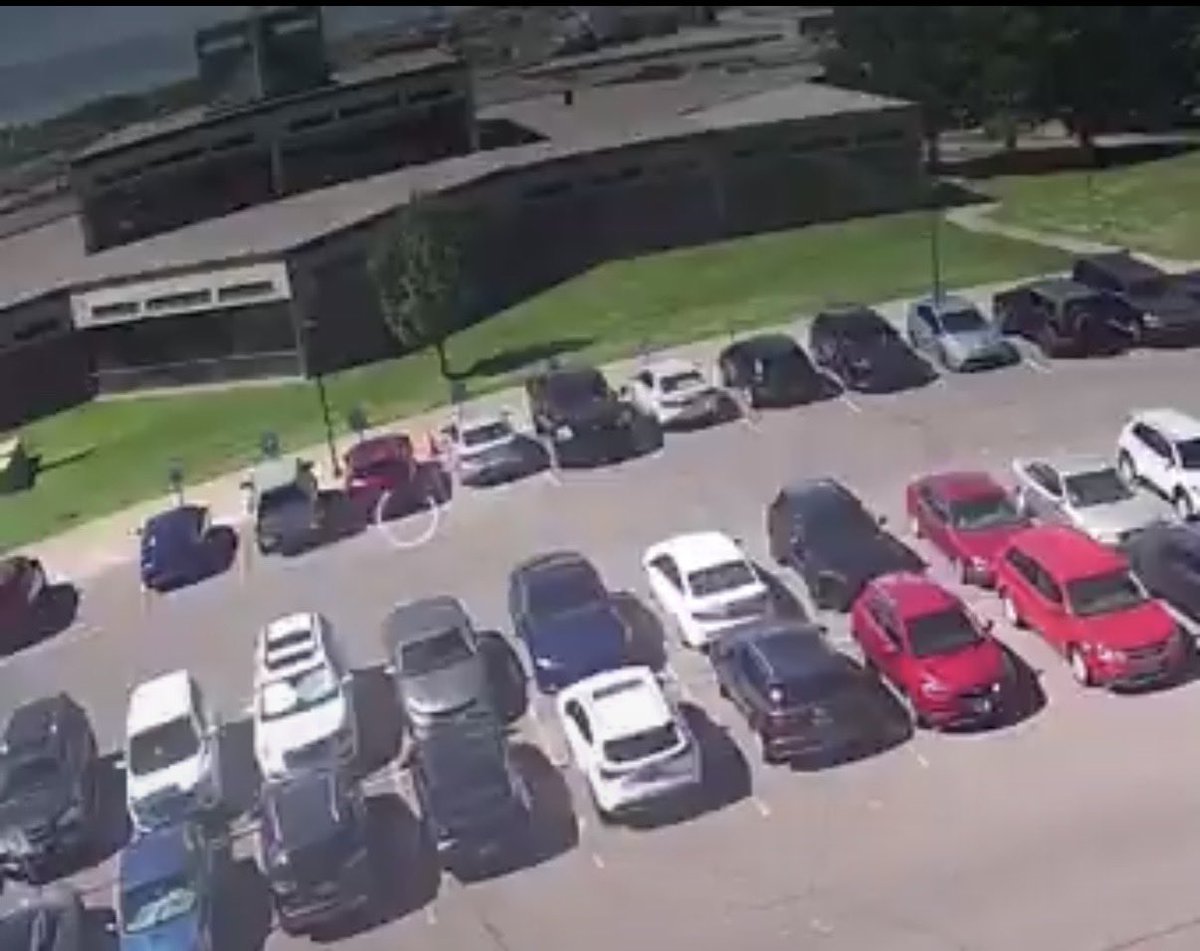
I was in the courtroom today. There is no high-quality, zoomed-in footage showing anyone taking a shot. The video shown is the same distance as the footage of “Tyler” jumping off the roof shown in this screen shot.
I have no idea why people are claiming otherwise. They know the video isn’t going to be released publicly, so they’re misrepresenting what was actually shown in court.
Japan Lights Up Red, White & Blue for America’s 250th 4th of July — While Parts of the US Cancel Fireworks
As millions of Americans prepare for Independence Day tomorrow, a striking contrast is playing out across the Pacific: Japan is enthusiastically celebrating America’s 250th anniversary of independence, complete with fireworks, landmark illuminations, and large public events — even as several U.S. states and cities are forced to cancel or severely restrict traditional fireworks due to extreme wildfire danger.
US Military Bases in Japan Go All Out
U.S. bases across Japan — including Yokota Air Base, Camp Zama, Yokosuka Naval Base, Misawa, and Sasebo — are hosting major open-to-the-public 4th of July celebrations. These events typically feature:
Food trucks and American classics
Live music and performances
Games and family activities
Fireworks finales
Japanese locals are not only invited but turn out in big numbers.
Past events have drawn over 16,000 visitors at Camp Zama alone. These “Good Neighbor” celebrations have become annual traditions that strengthen ties between U.S. service members and Japanese communities.
Tokyo Tower and Rainbow Bridge Go Red, White & Blue
The U.S. Embassy in Tokyo is marking America’s semiquincentennial (250th anniversary) with special illuminations of Tokyo Tower and the Rainbow Bridge in patriotic colors from 7 p.m. to midnight on July 4. A related Tokyo Aqua Symphony event is also running. The embassy encouraged photos with the hashtag #A250inJapan, highlighting the deep historical and strategic friendship between the two nations — including Japan’s historic gift of cherry blossom trees to Washington, D.C.
With roughly 55,000 U.S. troops stationed in Japan, the alliance remains one of America’s most important in the Indo-Pacific.
Meanwhile, Back Home: Fireworks Getting Cancelled
While Japan embraces the celebrations, large parts of the United States are scaling back or outright cancelling fireworks due to dangerous conditions:
Utah — Governor Spencer Cox issued a statewide emergency order banning personal fireworks through July 5 amid extreme wildfire risk and recent blazes.
Colorado — Colorado Springs cancelled all permitted fireworks displays because of extreme dry conditions and ongoing fires.
Multiple counties in Nebraska, parts of New Mexico, Oregon, Washington, and drought-hit areas of Florida have imposed local bans or restrictions on consumer fireworks.
Officials across the drought-stricken West and Great Plains are urging people to skip personal fireworks and attend only professional, permitted shows — or find alternatives.
The national wildfire forecast shows above-normal fire risk continuing into July in much of the western U.S.
The Contrast and What It Says
This juxtaposition is hard to ignore:
On one side of the Pacific, a close ally with historically strict domestic fireworks regulations is proudly lighting up its capital and opening military bases to celebrate America’s birthday — including the very fireworks many Americans can’t safely enjoy this year.
On the other side, environmental realities (drought, heat, and wildfire risk) are forcing communities to dial back one of the most iconic parts of the 4th of July tradition.
It underscores both the strength of the U.S.-Japan relationship in 2026 and the growing domestic challenges around traditional holiday celebrations in fire-prone regions of America.
Japan’s embrace of the holiday also serves as a reminder that American culture and values still resonate strongly abroad — even as some parts of the U.S. itself face practical limits on how they can mark the occasion this year.