Honestly, you can build a @GitHub Copilot canvas for anything. It is glorious. I now a full writing studio for my blog all powered by canvases. I can view, schedule, write, preview, and see everything in realtime.
Here is how I built it -> https://t.co/IibWvcwKHR
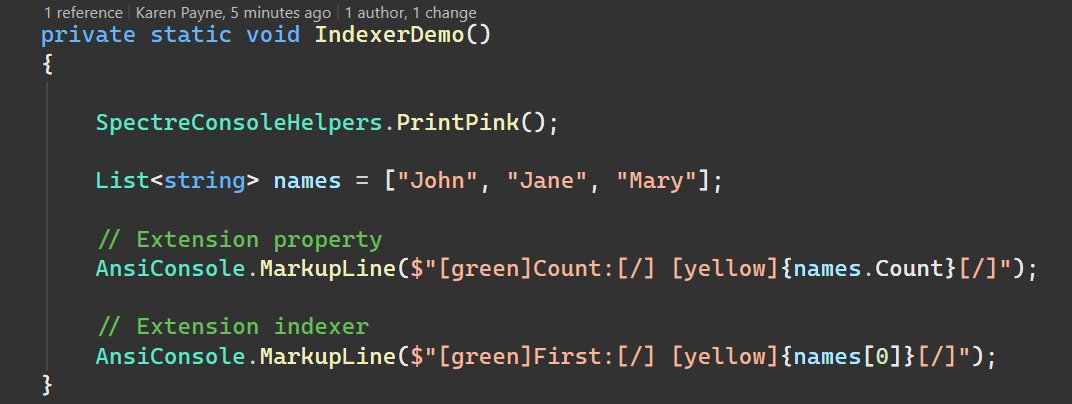
NET 11 C# 15
Now allows indexer in extension blocks
Because indexers are always instance members, an extension block declaring an indexer must explicitly specify a named receiver parameter. [1]
Extension indexers follow standard extension member rules—they are only considered by the compiler if no matching instance indexer exists on the target type itself.
They support features like ranges (^1), indexer slices, and list patterns on types that previously lacked indexer definitions.
[1]
https://t.co/8pZOW7lJBC
CSS tip: stop showing form errors before the user has typed anything.
input:user-invalid {
border-color: red;
}
:invalid turns fields red the moment the page loads. :user-invalid waits until the user has actually interacted with the field. Works in all major browsers.
Microsoft just made Claude Code and Codex cheaper without touching the agent.
TokenEconomizer is a free, open-source plugin that learns from the sessions your agent already ran in a repo:
- Remembers the repo facts your agent keeps rediscovering
- Stops loading tools that never get used, since every tool definition is sent with every request
- Works with Claude Code, Codex, Copilot CLI and Pi
- 18.4% to 30.9% lower cost across 5 agent-model setups on SWE-Bench
If you hit your usage limits every week, this is free money.
Save your tokens.
https://t.co/kqVGSZS8Dd
𝗜 𝗳𝗼𝘂𝗻𝗱 𝘁𝗵𝗲 𝘀𝗮𝗺𝗲 𝗝𝗪𝗧 𝘀𝗲𝗰𝘂𝗿𝗶𝘁𝘆 𝘃𝘂𝗹𝗻𝗲𝗿𝗮𝗯𝗶𝗹𝗶𝘁𝘆 𝗶𝗻 𝟭𝟰 𝗔𝗦𝗣 .𝗡𝗘𝗧 𝗖𝗼𝗿𝗲 𝗮𝗽𝗽𝘀
Your authentication is broken 👇
During security audits for enterprise clients, I kept seeing the same JWT configuration mistake.
It allows attackers to bypass authentication completely.
The problem? Missing token validation parameters.
Most developers copy JWT configuration from tutorials without understanding what's missing.
Here is what happens:
𝟭. 𝗡𝗼 𝗜𝘀𝘀𝘂𝗲𝗿 𝗩𝗮𝗹𝗶𝗱𝗮𝘁𝗶𝗼𝗻
→ Your API accepts tokens from ANY authentication server
→ An attacker creates their own auth server and issues valid tokens
→ Complete authentication bypass
𝟮. 𝗡𝗼 𝗔𝘂𝗱𝗶𝗲𝗻𝗰𝗲 𝗩𝗮𝗹𝗶𝗱𝗮𝘁𝗶𝗼𝗻
→ Tokens meant for different APIs work on yours
→ A token for staging works on production
→ Cross-application token reuse
𝟯. 𝗡𝗼 𝗟𝗶𝗳𝗲𝘁𝗶𝗺𝗲 𝗩𝗮𝗹𝗶𝗱𝗮𝘁𝗶𝗼𝗻
→ Expired tokens work forever
→ A stolen token from 2 months ago still grants access
→ No token expiration enforcement
𝟰. 𝗗𝗲𝗳𝗮𝘂𝗹𝘁 𝗖𝗹𝗼𝗰𝗸𝗦𝗸𝗲𝘄
→ ASP .NET Core adds 5 minutes to token expiration by default
→ Extends the window for stolen tokens
→ Most developers don't know this exists
Here is the secure configuration you need:
↳ Set ValidateIssuer = true and specify your auth server
↳ Set ValidateAudience = true and define your API identifier
↳ Set ValidateLifetime = true to enforce expiration
↳ Set ClockSkew = https://t.co/QaHykDid1Q to remove the 5-minute grace period
The framework defaults are safe.
The copied tutorial code often isn't: many samples set these to false "to make it work" or leave ValidIssuer and ValidAudience empty.
𝗧𝗵𝗲 𝗯𝗶𝗴𝗴𝗲𝘀𝘁 𝗿𝗶𝘀𝗸?
Security through ignorance.
The framework protects you only when the config is right.
Want to test your API right now?
Send an expired token to your endpoint.
If it works, you have this vulnerability.
Fixing validation is step one. Here is what comes next:
→ How refresh tokens work and how to implement them
→ Security rules for refreshing tokens
→ How to revoke tokens to update user permissions on the fly
📌 I explained it step by step in this guide:
↳ https://t.co/dRwCHsjg83
Updated .NET SqlClient versions are here - with latest dependency fixes and multiple bug fixes - 7.1.2, 7.0.4 and 6.1.8
#dotnet#sqlserver
https://t.co/Osmc5XhnKF
I mock everything I do - design, API, docs - everything.
You may not read the code, but you should still be in control of how it all gets put together. That's...that's your real job now.
CSS tip: Enable scroll snapping with "scroll-snap-type" to make a scroll view snap to specific child points based on the defined rules.
Use "scroll-snap-align" on child elements to define the reference point the parent scroll view snaps to.
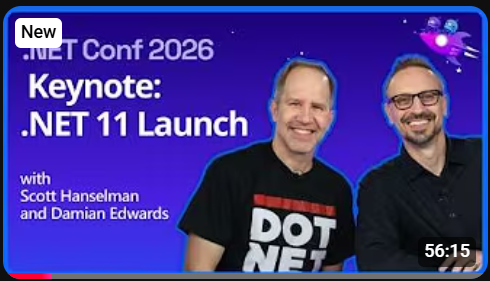
Ed being positive... somewhat positive. Excited for Day 2 of .NET Conf and you should be too!
When I sat with Ed we had a great chat about the future of .NET and hopefully this year the team showcased where it is heading in this new era. I couldn't be more exicted.
.NET 11 is here.
Top updates across 8 key areas:
𝗖# 𝟭𝟱
Union types, closed hierarchies with exhaustive switch checks, extension indexers, collection expression arguments, and labeled break and continue for nested loops.
Model an operation's possible outcomes with a union, then let the compiler flag missing cases in your switch.
𝗔𝗦𝗣 .𝗡𝗘𝗧 𝗖𝗼𝗿𝗲
Async validation for Minimal APIs, OpenAPI 3.2 by default, native OpenTelemetry tracing, client cancellation of SignalR hub invocations, and a new [ShortCircuit] attribute.
Validation can await a database check before your handler runs. HTTP traces include OpenTelemetry attributes without a separate instrumentation package.
𝗘𝗙 𝗖𝗼𝗿𝗲
FullJoin support, MinByAsync and MaxByAsync, keys and indexes on complex-type properties, better SQL for joins, and JSON path existence checks.
Query rows from both sides of a join, find the entity with the highest value, or index a nested address property.
𝗥𝘂𝗻𝘁𝗶𝗺𝗲
Runtime-native async, JIT compiler improvements, faster NativeAOT interface dispatch, in-process crash reports, and hardware FP16 support on compatible CPUs.
With Runtime Async enabled, your async methods appear directly on live call stacks in the debugger.
𝗟𝗶𝗯𝗿𝗮𝗿𝗶𝗲𝘀
C# and F# union support in System.Text.Json, JSON Lines output, Zstandard compression, Process run-and-capture APIs, and built-in MemoryCache OpenTelemetry metrics.
Capture a child process's output and exit status in one call, or track cache hits, misses and evictions through OpenTelemetry.
𝗦𝗗𝗞
Smaller Linux/macOS installers, a NativeAOT CLI entry point, new dotnet test run controls, multi-architecture container builds with Podman, and the MSBuild server enabled by default.
With Microsoft.Testing.Platform, set one timeout or failure limit for the whole run. A warm MSBuild worker cuts repeated startup overhead.
𝗪𝗶𝗻𝗱𝗼𝘄𝘀 𝗙𝗼𝗿𝗺𝘀
Modern visual styles, toggle switches, a SuspendPainting API, built-in kiosk mode, and deferred form reveal.
Batch control updates with one disposable scope. Deferred form reveal waits for layout and theming before showing the window.
.𝗡𝗘𝗧 𝗠𝗔𝗨𝗜
CoreCLR as the default runtime, an opt-in NativeAOT publishing path, on-device testing templates, themed splash screens, and iOS notification permissions.
Run tests on devices and simulators with dotnet test, and use the same API to request notification permissions on Android and iOS.
Get my free .NET 11 Cheat Sheet 👇
https://t.co/N4vJWMIk8z
Explore the power of small AI models running locally with .NET! Join the session for demos on Foundry Local, balancing speed, cost, and capability—all from a C# developer's perspective.
🎥 Watch here: https://t.co/SqNEZ4ZDac #dotnet#dotnetconf
CSS tip: stop hand-picking a darker hex for every hover state.
.button:hover {
background: color-mix(in oklch, var(--brand), black 15%);
}
Change --brand and the hover shade follows. Works in every modern browser.
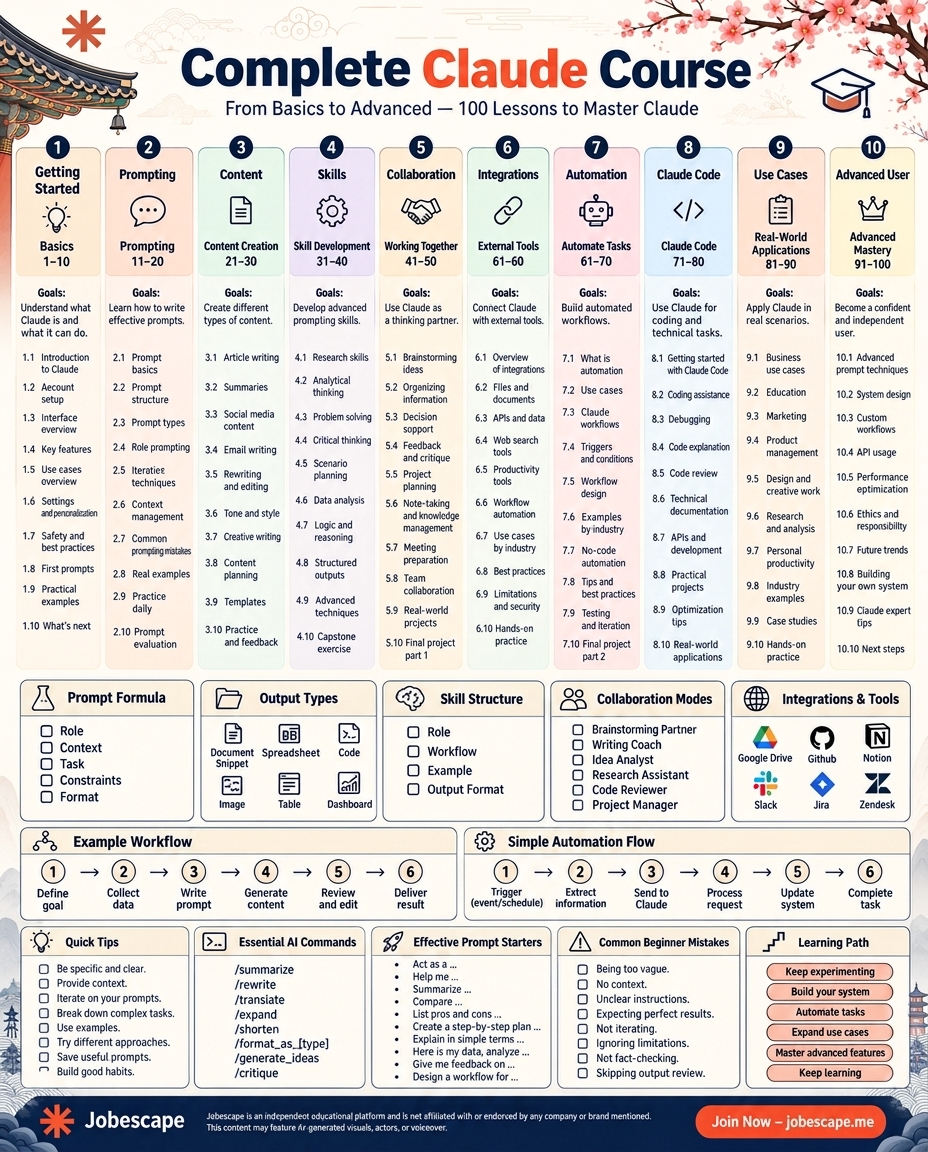
AI is rewriting every job. Don’t get left behind.
Jobescape builds you a personalized plan to master Claude and real AI workflows — no tech background needed. Take the free quiz, learn by doing, earn a certification you can put on LinkedIn.