My breakdown of how I benefit from ASX broker transactional data for trading struck a chord on HotCopper a few months ago. Thought the Twitter/X community would appreciate these 12 practical strategies below
1/ 👇
@Dimitrios_1963 No one needs to justify this percentage - it's a market where bid and ask meet. Right now, someone is willing to pay 55 cents to win 45 cents if there's a 25bp hike, while the counterparty is willing to bet 45 cents to win 55 cents if rates stay unchanged.
It's predicting the market reaction to today's new information, making the assessment in the context of everything previously known.
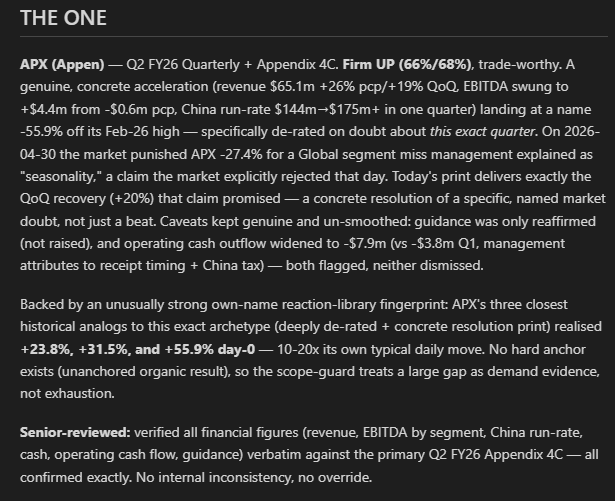
Since earnings are a difficult archetype, I ran three agents on different models in parallel - and for the sake of future improvements, basically more advanced models called DOWN. The orchestrator then read all three assessments, decided that Opus and Fable were more likely to be right, and provided the supporting evidence.
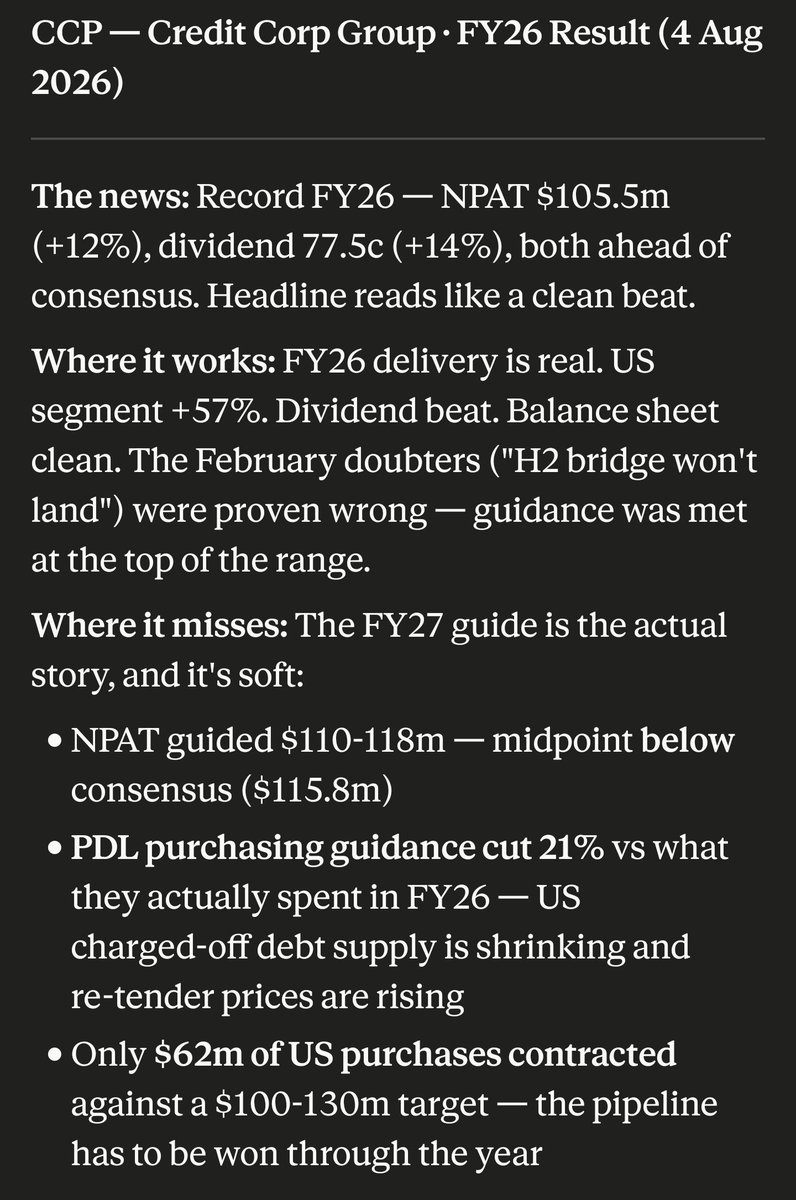
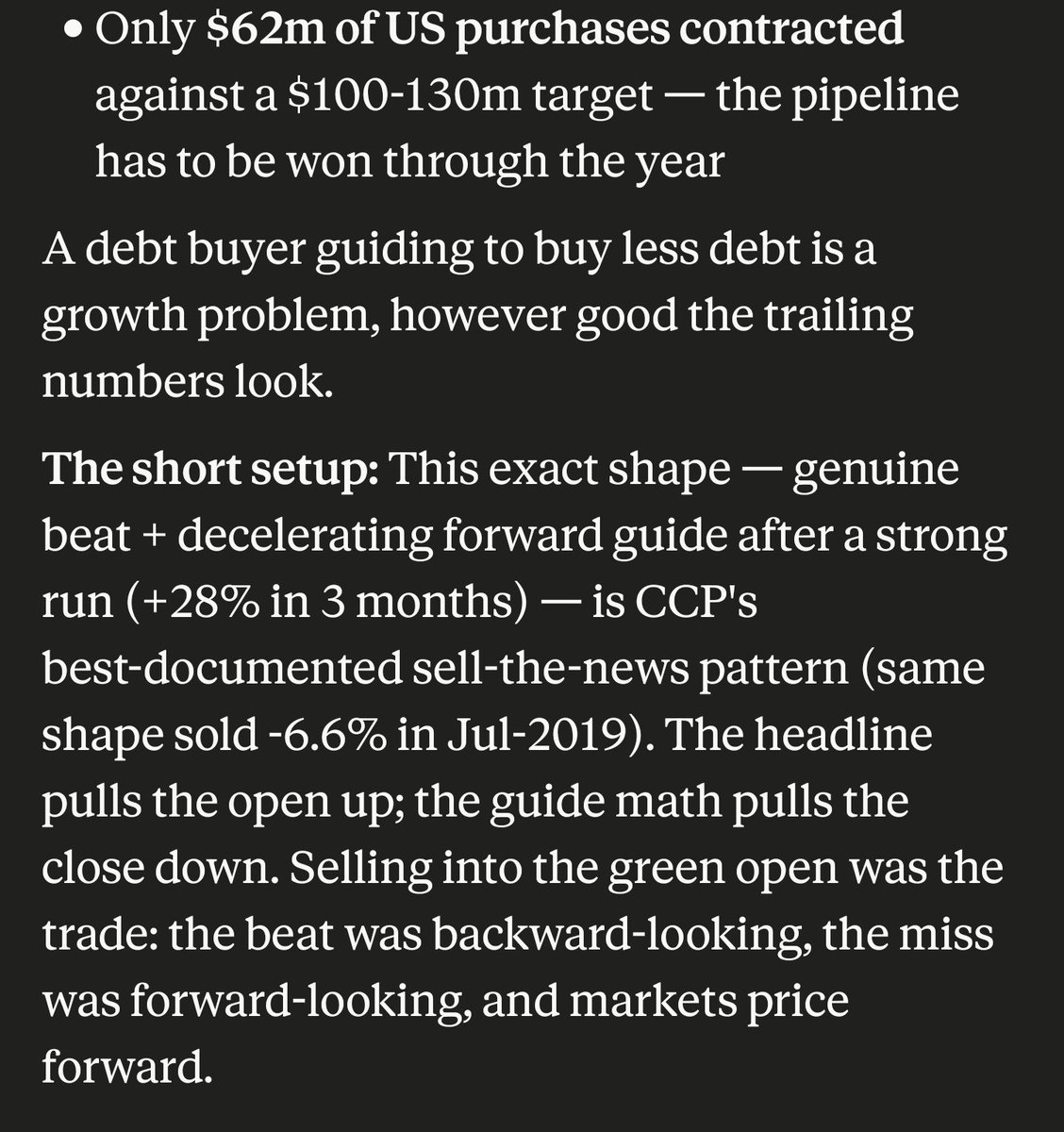
This is purely built for me - it's the brief I want to see. Behind the scenes, much more information is produced, of course, but the data on this screenshot helps me quickly make trading decisions in the morning.
I'm leaning more and more towards short-term trading. I don't care much about the long-term thesis, just to be clear. Basically, I trade short-term price adjustments triggered by new information becoming available.
Medium- and long-term trading has become less profitable for me because there are just too many parameters constantly changing - rates, wars, SaaS apocalypse, governance, etc. A company can be making good money but it can still be very hard to make money investing in it.
Another great call from my agentic system - $WTC DOWN on earnings today - it picked up a really good fade-prone candidate today.
Still working on calibrating the ladder but the HEADLINE vs SUBSTANCE call is precise.
And yeah, unfortunately this works especially well in retail-heavy stocks. Big players use promotional headlines as an opportunity to distribute into retail.
$WTC
@blackswan2023 What matters is what the market expected before the announcement, not how it performed on a year-on-year basis. And, of course, the guidance.
Case by case. It depends on the news - some announcements take a few days to be fully digested.
I can also simply close if the price approaches decent support, like a trendline or channel. I'm equally happy to close after five minutes if it overshoots and I know the move is too much - this usually happens within the first 15 minutes.
But most of the time, I hold for 1–2 days. Maximum 5.
$ELV - my agentic system called a buy at the open today.
$NST - firmly down yesterday. The system gave a very nice breakdown of why; maybe I'll share it later.
The system is still new, and I'm trading it with quite aggressive money management over reporting season. I've allocated $50k to it, and so far it has nearly tripled, with a maximum drawdown from the peak of around 25%.
There's still a lot of work every day to process the completed trades and feed the learnings back into the system. We now have a document tracking reporting-season patterns,for example, around 70% of clean beats tend to continue outperforming over the next three days on a market-adjusted basis. The daily runner now knows about these patterns and flags them.
I also learned the hard way that opening auctions can be extremely thin, even in some fairly big names. As Claude put it: "You didn't participate in the auction—you were the auction." More than 50% of the opening auction volume was mine. 😄
$SUN.AX - what was that at the open today?
Did some algos think it was ex-dividend today instead of Monday and sell it down to "fair" price? Or maybe not algos - just some idiots making the same mistake.
Overall, I'm seeing a very interesting pattern around dividend stocks right now, especially special dividends.
My understanding is that they're a nice way to extract cash through dividends while potentially recording a capital loss on the stock, which may ultimately be tax-efficient given the CGT changes.
That's correct, but for me personally it's negligible. Broker data is just another indicator built not on price action but on a different type of data that comes from the exchange. And as any indicator - it's probabalistic.
When I say "retail buying", I just need to see retail contributing to the buying direction, even if it's only 10% of volume while instos are doing 20-30%.
What matters is a clear trend over days or weeks. I don't need retail to be the leading buyers, I just need to see the direction and read the mood. Share by share, are they drifting from pros to retail or the other way around? That drift is the signal, because statistically retail lose money.
The scenario you described is possible, but quite unlikely. It's not a strong enough reason to dismiss the whole idea of reading broker data, when in the majority of cases it reflects real buying and selling between different market participants.
To be honest, it's not really long-term analysis or anything like that. It's purely focused on reacting to company announcements, which is what I'm improving now.
Personally, I'm leaning more and more towards day trading or holding positions for just a few days. That's where I think the edge is in today's fast-changing markets.
$FMG.AX - DOWN - Today's call from my agentic system.
Looks like another great call. This type of setup has been one of the most profitable so far - when the headline sounds positive, but the caveat is hidden in the details: confident short on opening.
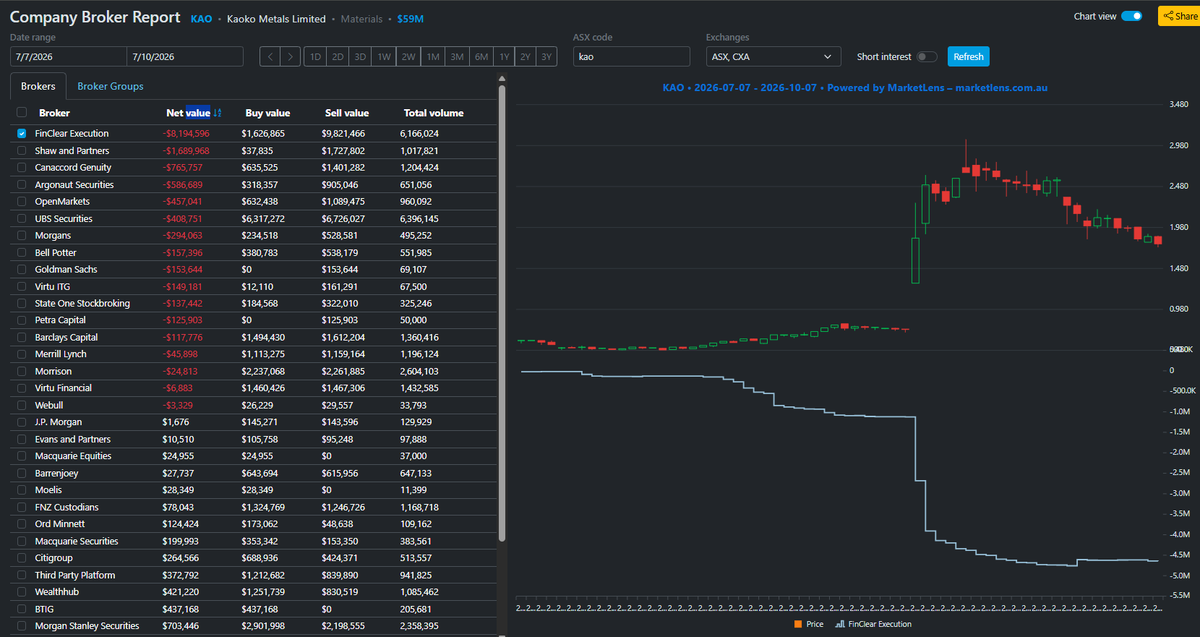
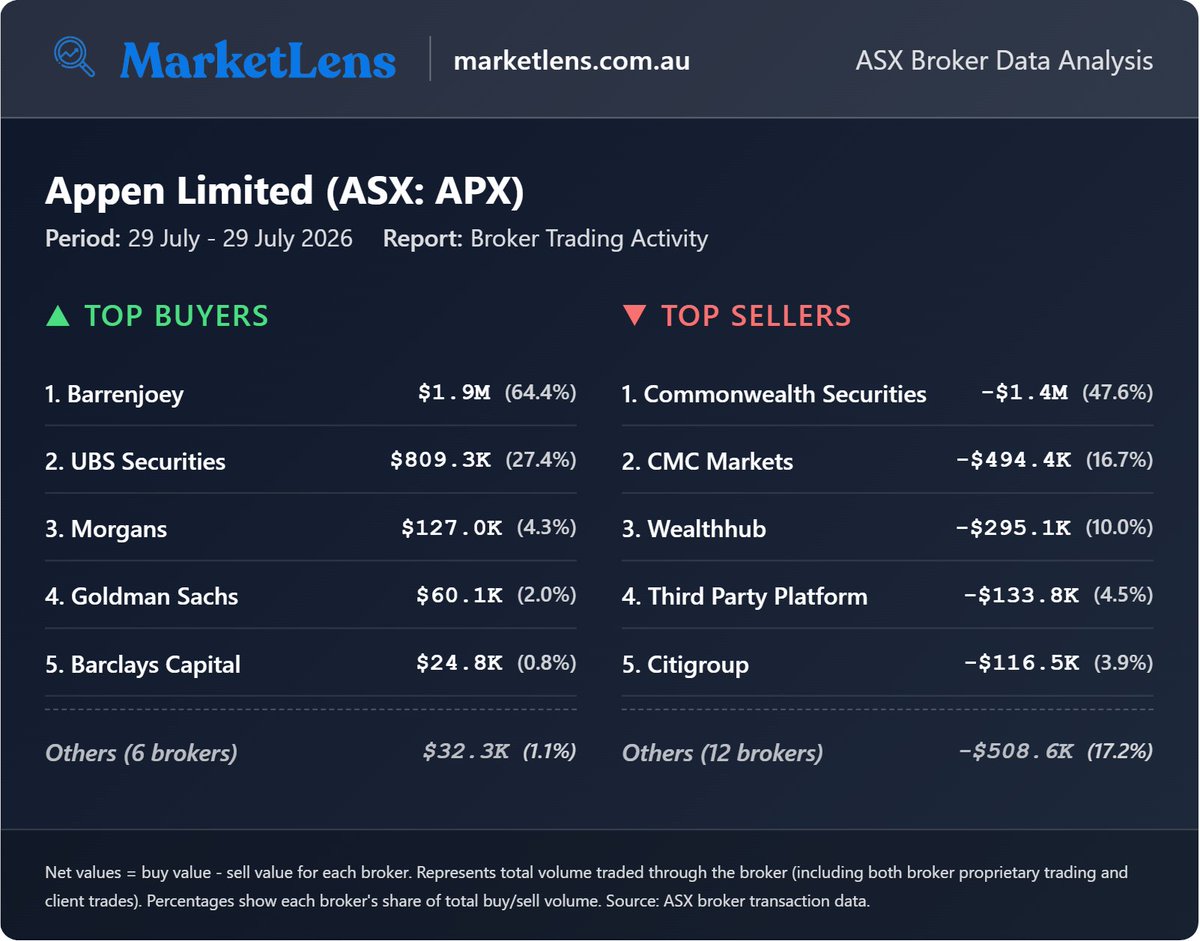
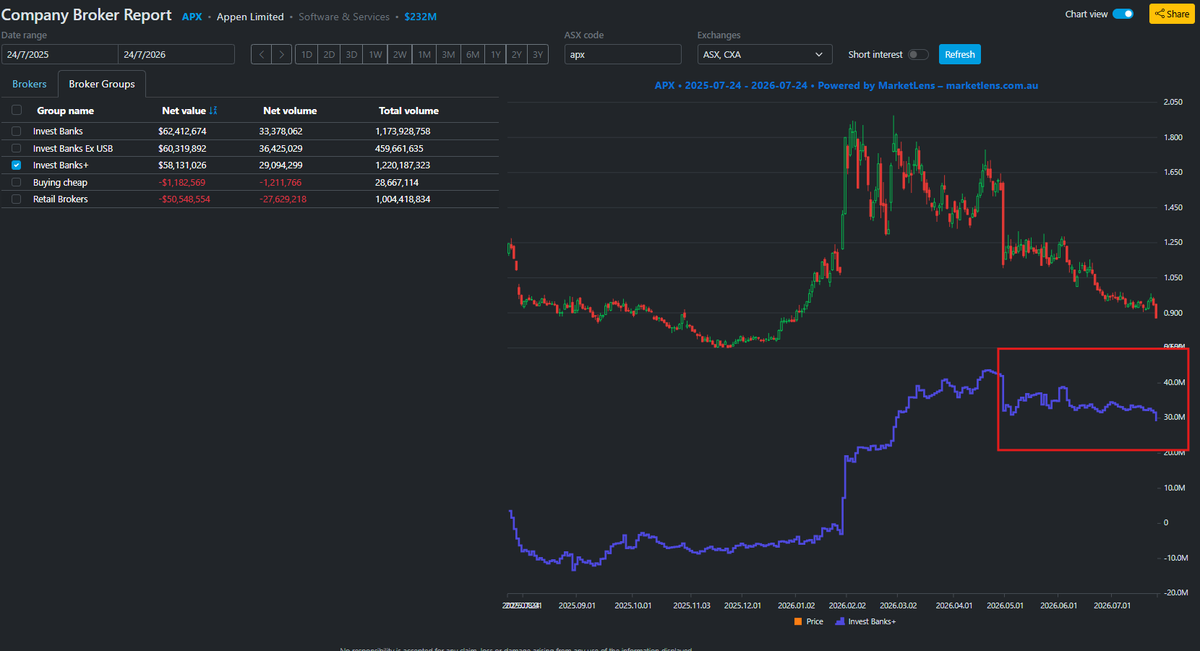
Here's the broker data. Investment banks had been steadily adding to their positions.
My assumption is that this announcement could trigger model revisions by some large institutional investors. They hold significant positions, which means there could be a lot of selling if those models are revised downward.
Looking at broker data as a reference: investment banks have been fairly neutral recently, with no consistent selling.
So I don't expect them to sell into good news. Quite the opposite - it could reinforce further buying.
$APX.AX