Fe(III) oxide respiration by a Desulfovibrio species lacking canonical outer-membrane electron transfer systems | mBio https://t.co/HNAZ1g5kjr
No outer-surface cytochromes?
No conductive pili?
No problem!
Implications for molecular ecology analysis of Fe(III) reduction.
Iterative engineering of heterologous conductive nanowire enhances bid… https://t.co/PO3tsb7WQV
Shewanella further optimized for current generation by iteratively improving heterologous expression of Geobacter metallireducens pilin assembly into nanowires.
@ISMETsociety
Growth of Desulfovibrio strain JY on stainless steel reveals a previously unrecognized sulfate-reducer corrosion mechanism
https://t.co/U0WKGiyliU
Sulfate reducers don’t only corrode iron by producing sulfide.
Introducing elecrobiocorrosion by an electroactive sulfate reducer.
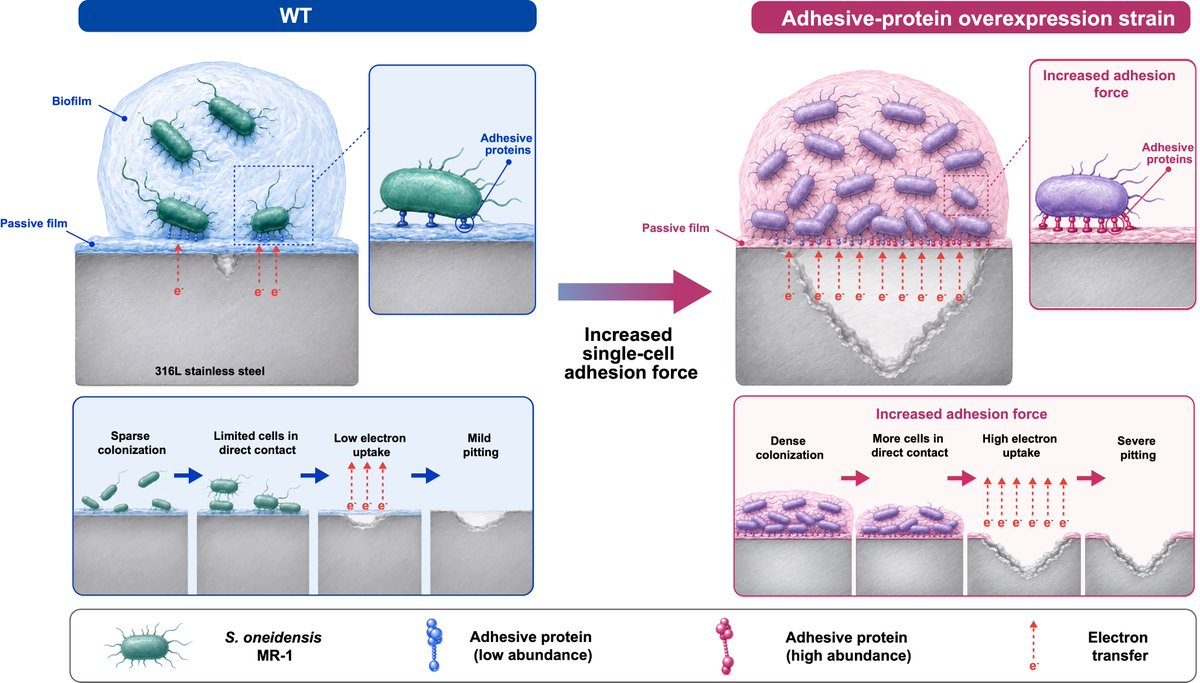
Single-cell adhesion force predicts electrobiocorrosion rates of stainless steel
https://t.co/m4oxBUFHwP
Let the force be with Shewanella! Genetically manipulating adhesive protein expression modifies corrosion rates.
#electromicrobiology#electrobiocorrosion
Fe(III) Oxide Reduction Bypassing Outer-Surface Cytochromes in a Marine Respiratory Anaerobe | Environmental Science & Technology https://t.co/scXH311J97
Genetic analysis of the ins and outs of extracellular electron transfer in Desulfovibrio ferrophilus
@ACSPublications
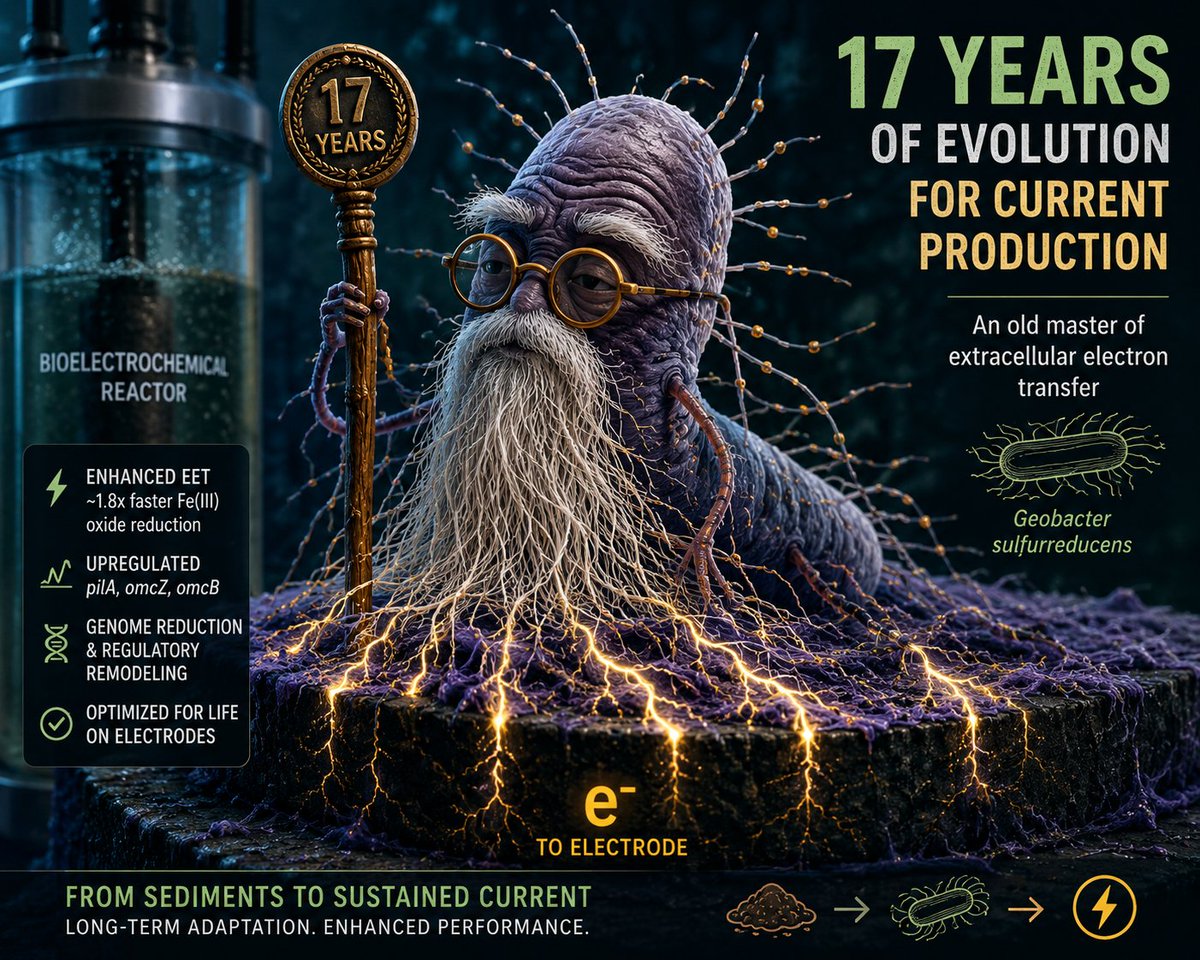
Evolution of Geobacter for enhanced extracellular electron transfer over 17 years...
https://t.co/UC2gnqkdMt
How to live long and prosper growing on an electrode- genome remodeling enhances expression of nanowires
@FrontMicrobiol@UMassAmherst@ISMETsociety@CEMAarhus
Extracellular Electron Transfer: From Early Life to Modern Biogeochemistry and Applications
https://t.co/NUSxI7ETWs
Review of the growing field of electromicrobiology with over 600 references
#electromicrobiology@ISMETsociety@CEMAarhus@ISME_microbes
"Preemptive biofilm colonization blocks microbial metal corrosion"
https://t.co/jbJvn3esxj
“Rust never sleeps”- but engineered E. coli biofilms stop even the most aggressive microbial corrosion of steel.
Towards effective, sustainable corrosion mitigation
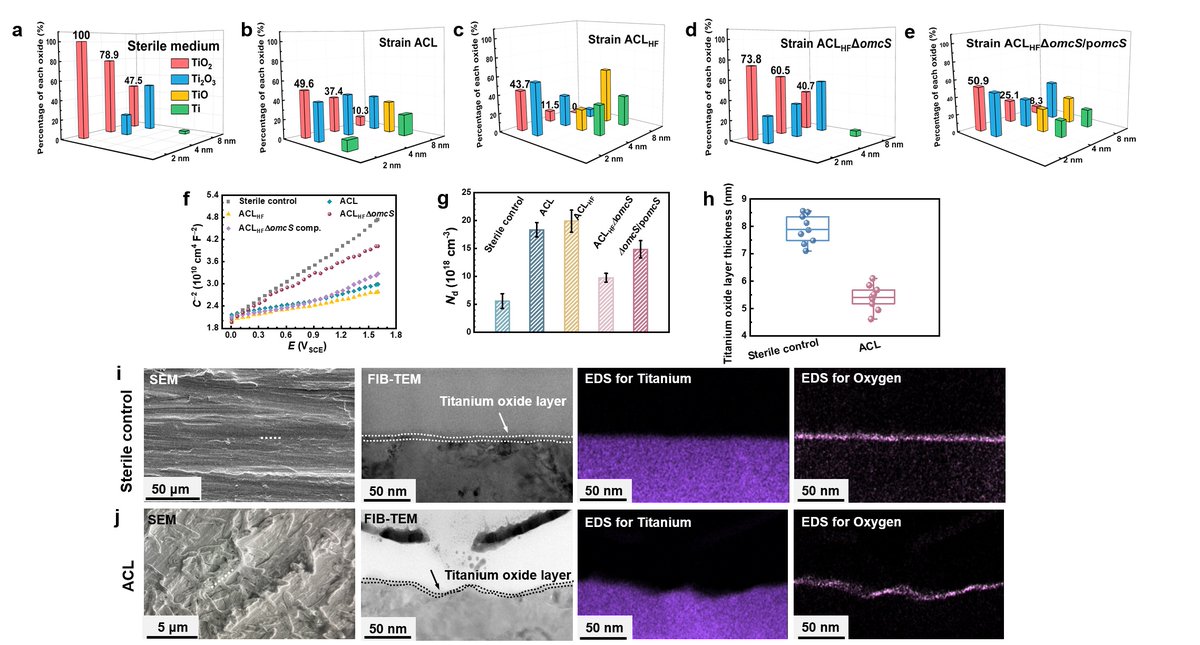
Bioelectrochemical reduction of TiO2....
https://t.co/UHcnGzYlxQ
Titanium meets its match in Geobacter
Microbe strips off the metal’s natural protective oxide coating during respiration, exposing the underlying metal to corrosion.
#Electromicrobiology
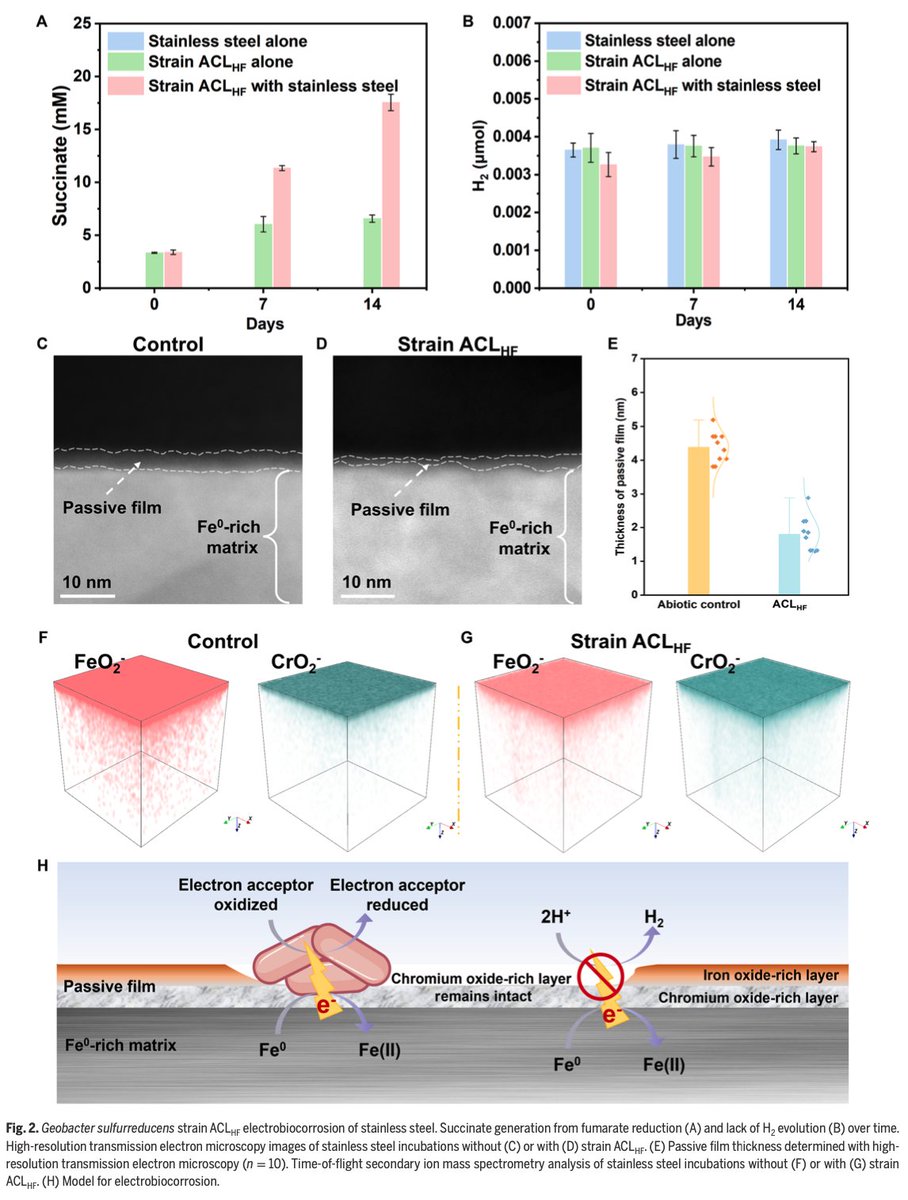
Electroactive Microbes Short-Circuit the Passive Film to Corrode Stainless Steel | Research https://t.co/iF4ysjLAdH
Microbial corrosion has an enormous economic impact.
Learn how electroactive microbes can even extract electrons from “corrosion-resistant” stainless steel.
Commentary: Electron transport across the cell envelope via multiheme c-type cytochromes in Geobacter sulfurreducens
https://t.co/sDmsbLQDTM
Calling out the need to consider all the available data when reviewing extracellular electron transfer mechanisms
@ISMETsociety
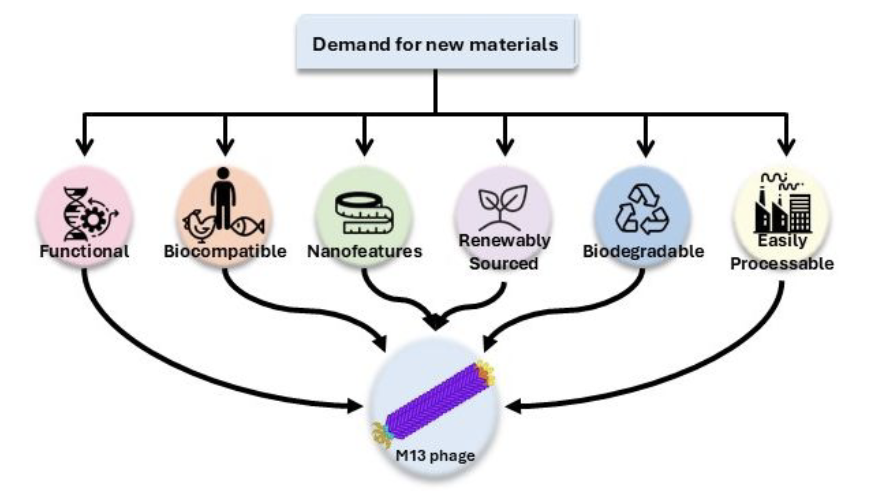
Check out the Dorval Lab's latest publication - 'M13 bacteriophage as a versatile platform for the creation of new materials via genetic engineering' in the Canadian Journal of Microbiology!
Congratulations to Julia, Reefah, Beyza, and Daniel for their review on phage materials!
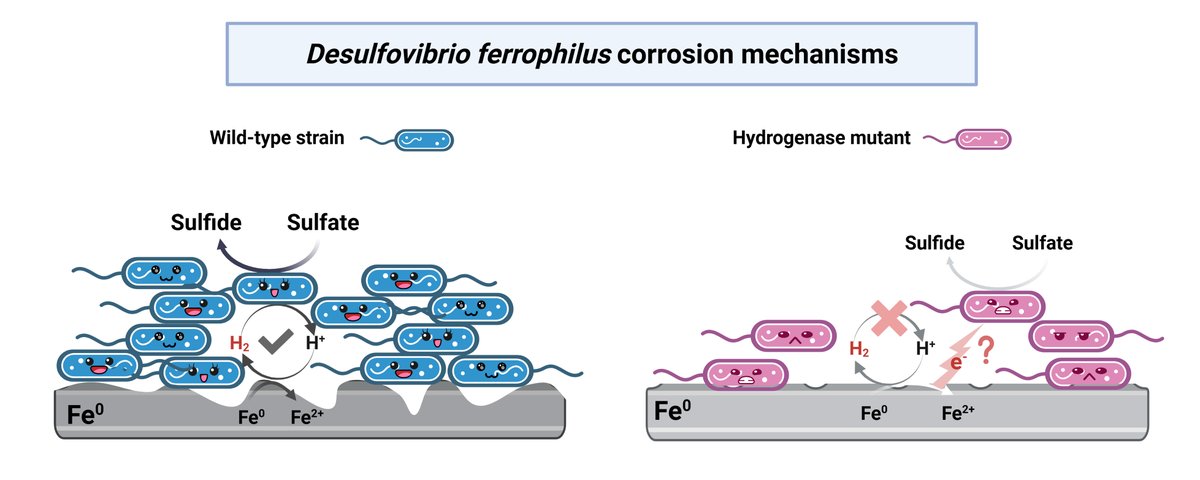
Desulfovibrio ferrophilus corrosion mechanisms revealed!
https://t.co/R7Htf7Io5u
Gene deletion study demonstrates the importance of H2 as an electron shuttle, rather than direct electron uptake, overturning a 20-year misconception in the field of microbial corrosion.
#Corrosion
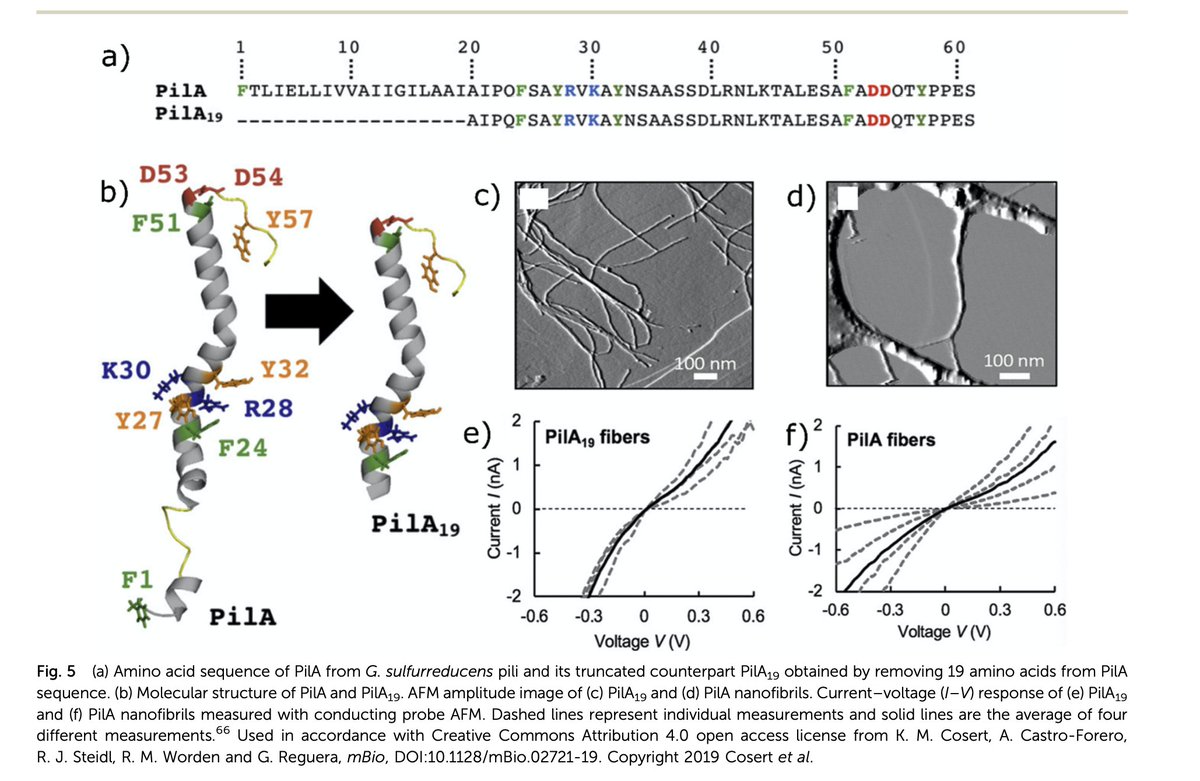
Long-range electron transport in self-assembled fibrils of peptides rich in aromatic residues https://t.co/zODzpMSzIY
@_IamRamesh_
Excellent overview of this topic.
#electrobiomaterials
Sensing devices fabricated with Escherichia coli expressing genetically tunable nanowires incorporated into a water-stable polymer
https://t.co/rFo2CWoY7h
Fabricating wearable sensors by mixing whole cells & their attached pilin-based nanowires into flexible polymer composite.
The worldwide economic cost of microbial corrosion is likely to exceed a trillion dollars a year. A new #mLife study by @microbeelectric et al. shows that Desulfovibrio vulgaris promotes corrosion by producing sulfide during sulfate reduction. https://t.co/6tEkVytTTa