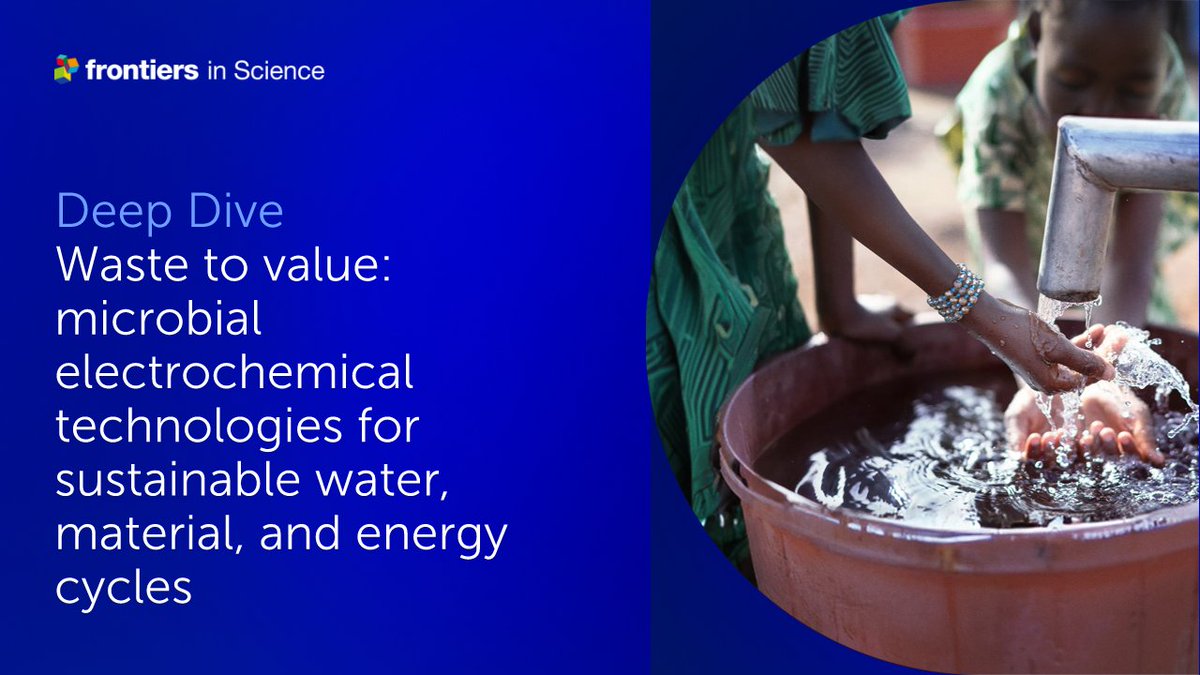
Missed our deep dive webinar on turning wastewater into a valuable resource? Watch the recording ➡️ https://t.co/L9NeCbqz5Z
Experts discussed how microbial electrochemical technologies can generate energy, recover nutrients & support circular economy solutions.
#FrontiersIn
200 Quadratmeilen Wüste. 15.000 Arbeiter. Eine eigene Entsalzungsanlage, ein eigenes Glasfasernetz, Roboter, die zweimal am Tag staubfrei wischen. Und Solarmodule, so weit das Auge reicht.
Willkommen im Khavda Renewable Energy Park in Indien. Dem größten Kraftwerk, das die Menschheit je gebaut hat.
30 Gigawatt. Solar und Wind kombiniert, auf einer Salzwüste in Gujarat, betrieben vom Adani-Konzern. 13 Gigawatt sind bereits am Netz. Das allein wäre schon mehr als die gesamte installierte Solarleistung mancher europäischer Länder.
Aber es wird noch verrückter. Weil tagsüber mehr Strom produziert wurde als verkauft werden konnte, hat Adani in neun Monaten die vermutlich größte Netzbatterie der Welt gebaut. 1,1 Gigawatt Leistung, 3,5 Gigawattstunden Kapazität. Offiziell in Betrieb seit diesem Monat. Bis April 2027 sollen weitere 10 Gigawattstunden dazukommen. 13,5 Gigawattstunden Batteriespeicher an einem einzigen Standort.
Der Grund für die Batterie: Tagsüber ist der Strom billig, weil die Sonne scheint und alle Solaranlagen gleichzeitig liefern. Abends wird der Strom teuer, weil die Nachfrage steigt und Solar wegfällt. Adani speichert jetzt den billigen Tagesstrom und verkauft ihn abends zu Marktpreisen. Das ist kein Subventionsmodell. Das ist ein Geschäftsmodell.
Adani-Nachhaltigkeitschef Arun Sharma sagt es so: "Wir machen nichts auf Megawatt-Ebene. Auch nicht auf Hunderte-Megawatt-Ebene. Wenn es nicht Gigawatt ist, haben unsere CEOs nicht die Aufmerksamkeitsspanne dafür."
Und Khavda ist nicht allein. In der chinesischen Provinz Qinghai, auf dem Tibetischen Plateau in 3.000 Metern Höhe, steht der Talatan-Solarpark. Über 17 Gigawatt, auf einer Fläche von sieben Manhattan. Die Höhe ist kein Nachteil, sondern ein Vorteil: Die Sonne strahlt intensiver als auf Meereshöhe, und die kalte Luft macht die Solarmodule effizienter. Unter den Modulen grasen Schafe.
In Kalifornien plant der Westlands Water District einen 21-Gigawatt-Solarpark auf brachliegenden Agrarflächen im Central Valley, deren Wasser versiegt ist. Aus einem Wasserproblem wird ein Energieprojekt.
Stellt euch das vor: 30 Gigawatt Erzeugung plus 13,5 Gigawattstunden Speicher an einem einzigen Standort in Indien. 17 Gigawatt auf dem Dach der Welt in China. 21 Gigawatt auf ehemaligem Farmland in Kalifornien. Vor fünf Jahren galten Projekte mit einigen hundert Megawatt als Rekorde.
Die Solarenergie hat die Gigawatt-Schwelle durchbrochen. Und sie kommt nicht wieder zurück.
Quellen: Canary Media / New York Times / Adani Green Energy / https://t.co/kMQChukfVD
A joyous moment for every Indian!
Chola Copper Plates dating back to the 11th Century will be repatriated to India from the Netherlands. Took part in the ceremony for the same in the presence of Prime Minister Rob Jetten.
The Chola Copper Plates are a set of 21 large plates and 3 small plates and largely contain texts in Tamil, one of the most beautiful languages of the world. They relate to the great Rajendra Chola I formalising an oral commitment made by his father, King Rajaraja I. They also showcase the greatness of the Cholas. We in India are immensely proud of the Cholas, their culture and their maritime prowess.
I thank the Government of the Netherlands and Leiden University in particular, where the Copper Plates were kept since the mid-19th century.
@MinPres
Half of global wastewater is discarded, with the rest expensively and inefficiently treated for re-use. Register for our webinar with Frontiers in Science lead article authors and other experts to explore wastewater treatment solutions ➡️ https://t.co/toMPZZNQQw
#FrontiersIn
Excited to share our latest work in @ChemSusChem as part of @Ecomates_MSCA! 🎉
We demonstrate efficient CO2RR to formic acid in acidic media using a Bi–Sn eutectic GDE:
🔹81% FE at −100 mA/cm²
🔹Stable over 100 h
🔹Key interfacial alloy effects
https://t.co/ra1HUT9b8f
Heading back home after a few fruitful days at @VITO, warmly hosted by @pantonline, within the scope of the EU project @Trampoline_MSCA .
It’s truly inspiring to see the great progress being made by the PhD fellows working on BES. Looking forward to the next steps!
𝙄𝙎𝙈𝙀𝙏 2028 𝘾𝙤𝙣𝙛𝙚𝙧𝙚𝙣𝙘𝙚 - 𝘾𝙖𝙡𝙡 𝙛𝙤𝙧 𝙥𝙧𝙤𝙥𝙤𝙨𝙖𝙡𝙨
Are you willing to host the 10th World Conference of the ISMET Society #ISMET10?
Open for ISMET community. Send a 2-page proposal to 𝙖𝙣𝙣𝙚𝙢𝙞𝙚𝙠.𝙩𝙚𝙧𝙝𝙚𝙞𝙟𝙣𝙚@𝙬𝙪𝙧.𝙣𝙡
Microbial electrochemical technologies (METs) clean wastewater and generate energy at the same time.
They harness bacteria that break down pollutants and release electrons, capturing that energy to produce electricity, hydrogen, or methane.
Read more ➡️ https://t.co/VZPPgeQJEH
Could electrochemically active microorganisms help solve global sanitation challenges? ⚡
A new review in Frontiers in Science explores how wastewater could become a source of energy and resources ➡️ https://t.co/SFtMADY3ss
Can flushing the toilet could help power homes and grow food? 💡
Wastewater isn’t just waste, it contains energy and nutrients. Electricity-generating bacteria can clean water and turn those nutrients into fertilizer.
Read the @FrontYoungMinds article ➡️ https://t.co/ihbpiVeptC
At Glastonbury Festival, bacteria-powered tech turned waste into electricity.
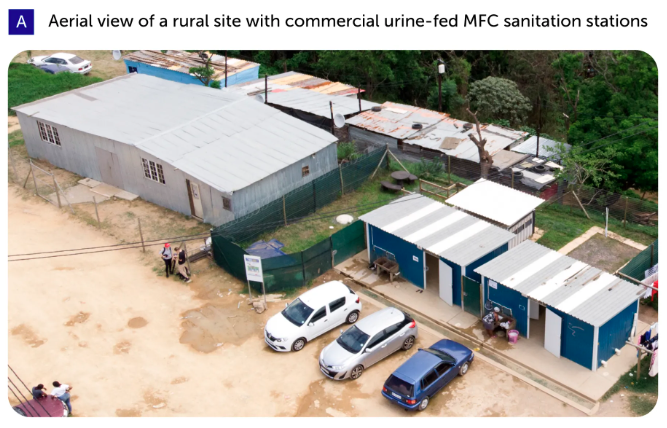
The same tech is being trialed in Uganda, Kenya, and South Africa to power lighting and improve sanitation where grid access is limited.
Read more in Frontiers in Science ➡️ https://t.co/aUWLrbYIku
Can wastewater's untapped resources help address global sanitation challenges?
Explore the potential of microbial electrochemical technologies in the lead article in Frontiers in Science ➡️https://t.co/VZPPgeQJEH by @Uwechemie, @pantonline, @sebastia_puig, and more.