SQL Injection: The Bug That Still Pays in 2026
SQLi isn't dead. It's hiding behind APIs, forgotten endpoints, and poorly written database queries.
7 things every bug bounty hunter should test:
1. Login forms – Authentication bypass
2. Search parameters – Error-based SQLi
3. Numeric IDs – Boolean-based blind SQLi
4. Filters & sorting – Dynamic query injection
5. API endpoints – JSON parameter injection
6. Headers & cookies – Hidden injection points
7. Time-based testing – Detect blind SQLi
Pro tip: Don't just test id=1. Understand how the application builds SQL queries.
Tools: Burp Suite + SQLMap
One vulnerable parameter can expose an entire database.
Test only authorized targets. Follow responsible disclosure.
#BugBounty #SQLInjection #WebSecurity #CyberSecurity
Windows keeps a thumbnail of every photo you've ever deleted.
It sits in a file called thumbcache_256.db, and forensic examiners pull it routinely. There are 15 more stores like it.
Here's how to find them and wipe them:
From Admin to Owner: How I Discovered a Critical Full Organization Takeover — by Ankit Rathva
https://t.co/kBR7EYHuqQ
Join us on Telegram:
https://t.co/rpGHV3Yw7y
#bugbounty#bugbountytips#bugbountytip
cPanel mail privileges → SQLi → arbitrary file write → root RCE!!!
CVE-2026-67401 is the kind of privilege-boundary bug defenders should pay attention to.
An authenticated cPanel account with mail privileges can abuse EmailTrack to create arbitrary files, ultimately leading to code execution as root.
Affected: all supported cPanel/WHM versions.
Fixed builds:
• 11.110.0.143
• 11.134.0.55
• 11.136.0.39
• 11.138.0.4
• WP2 11.138.1.9
A public lab repo now includes detection and the exploitation chain!
https://t.co/VBImpOCtVa
#Cybersecurity #Infosec #AppSec #RCE #cPanel
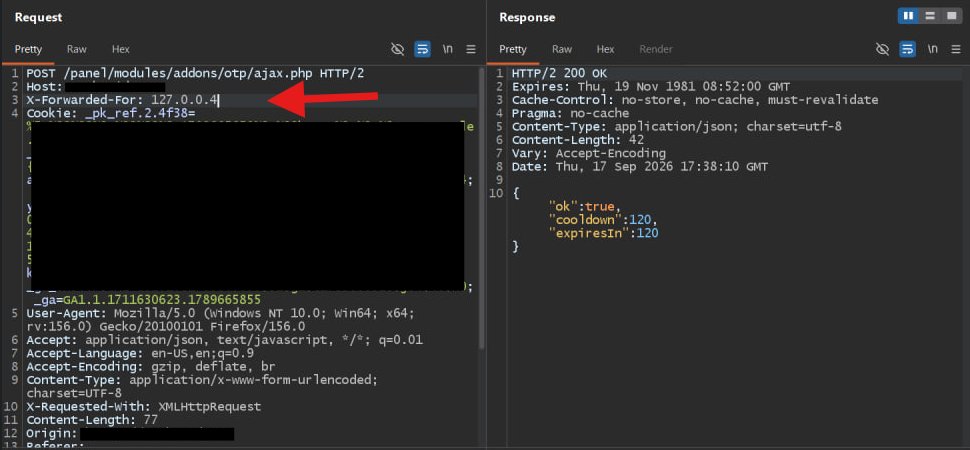
I discovered a new technique to bypass Rate Limits 👀
X-Forwarded-For: 127.0.0.1 ->Bypassed, then rate limited again...
X-Forwarded-For: 127.0.0.2 -> Bypassed.
Just keep changing the IP and continue :)
Web cache deception tricks 🪄
GET /api/me → returns PII
Run these to trick the CDN into caching a sensitive endpoint:
🟥 GET /api/me;.css
🟥 GET /api/me/foo.css
🟥 GET /static/..%2fapi/me
🟥 GET /api/me%00.css
🟥 GET /profile%2f%2e%2e%2fstatic
Your ideal scenario: the origin ignores the trailing junk (; param, extra path segment, encoded traversal) and returns private data anyway, but the CDN only sees the .css suffix and caches it as static.
NOTE: Also try other delimiters, file extensions, and static directories.
Katana
Finds hidden API, .js files, admin paths and parameters, which are often poorly secured. It's pretty common to see APIs that are not auth gated.
==> katana -u https://target[.]com -d 5 -c 10 -o saveR.txt
#bugbountytips#bugbountytip#bugbounty#hackerone
Did you know that some exposed Google Maps API keys also have access to Gemini Models? 👀
geminiHunter by @devploit is a new tool that finds and validates exposed Google Gemini API keys across web assets, source maps, Wayback snapshots, and even Android APKs. It deduplicates findings, checks if keys are actually valid, and even attempts bypass variations on restricted ones! 🤠
Check it out! 👇
https://t.co/r38vApfDei






![ethical_h4ck3r_'s tweet photo. .env leaks
How to find : /FUZZ all Endpoints to find leaks. 🔥
Wordlist: https://t.co/E8NMMgwjdn
Tool: https://t.co/OKpyf9qUYD
Command: ffuf -u https://target[.]com/FUZZ -w wordlist.txt -mc all -e .env, .bak, .db, .7z, .zip, .md, .txt, .tar.gz
#bugbountytips #bugbountytip https://t.co/0EWagdcGr6](https://pbs.twimg.com/media/HTMlo19WUAAAiqp.jpg)

![ethical_h4ck3r_'s tweet photo. Katana
Finds hidden API, .js files, admin paths and parameters, which are often poorly secured. It's pretty common to see APIs that are not auth gated.
==> katana -u https://target[.]com -d 5 -c 10 -o saveR.txt
#bugbountytips #bugbountytip #bugbounty #hackerone https://t.co/FAPrn2Qv8Q](https://pbs.twimg.com/media/HSr5Z_ZWkAAZ1mM.jpg)


