Andrej Karpathy makes a good point: as AI does more of the work, more of your job becomes reading what it produces.
His first tip caught my eye. Ask the model to explain things in ASD-STE100.
ASD-STE100 is a controlled English standard built for aircraft maintenance manuals. A mechanic anywhere in the world should read a step once and get it right.
The core rules:
1. Keep sentences short
2. One action per step
3. Say who does what
4. Give each thing one name and stick to it
AI output breaks that last rule all the time. It says "worker," then "agent," then "executor," and you can't tell if it means one component or three.
The full spec is strict. Karpathy asks for "80% of the way," and that works for daily use.
Someone turned it into an open-source skill:
https://t.co/FFqEehqVl2
people who laugh and say karpathy's latest tips are outdated - i suspect the vast majority of them have not even tried the tips yet
i just tested the ASD-STE100 wording rule and it's surprisingly good at helping increase clarity of model response, even within html artifacts. but the trick is that the full ruleset is a bit too strict and you need to pick a subset
one prompt you can run super easily:
"randomly sample 10 session transcripts where i worked with you interactively within the past week. apply ASD-STE100 rules to assistant responses and analyze which rules would have increased clarity, reduced confusion and improved the conversations, then document those rules in my user level AGENTS.md"
you might be impressed!
Codex tip: once GPT-6.1 Sol is your main model, stop running Astra on every turn
put Astra on call as an architect agent
GPT-6.1 Sol keeps writing the code
Astra only gets spawned at three points:
→ before a plan: is this the right approach?
→ when the same error comes back: am I digging in the wrong place?
→ before "done": what did I miss?
Astra reviews. Sol ships
Jev engineering is the same move one layer down: the forks that need no thinker (which file, which tool, retry or stop) go to Jev in under half a second, and the big models only see the ones that split
- the full tree
> GPT-6.1 Sol on high runs the main session
> explorer reads the code on Luna
> worker edits and runs tests on Sol
> researcher pulls the docs on Luna
> all three on medium
> Astra on call as the architect
> auto_review checks every approval
paste the tree and this prompt into Codex ↓
"Rebuild my Codex setup around this tree:
1. Check ~/.codex/agents and .codex/agents for agents that already fit explorer, worker and researcher.
> Draft new TOML files only for missing roles
> explorer and researcher on gpt-6-luna, worker on gpt-6.1-sol, all with model_reasoning_effort medium
> Add an architect agent on gpt-6-astra, model_reasoning_effort high, whose only job is reviewing plans, repeated errors and finished work
> Skip any that pin a different model and list them
2. In ~/.codex/config.toml set model to gpt-6.1-sol, model_reasoning_effort to high and approvals_reviewer to auto_review
3. Find anything that would override this (active profiles, flags in my shell aliases, agents.default_subagent_model). Report it, change nothing
4. Add one rule to AGENTS.md: spawn the architect before a large plan, when an error repeats, and before calling a long task done
Show me every change as a diff first. No edits until I say go."
↳ https://t.co/eyMF8gZKLE
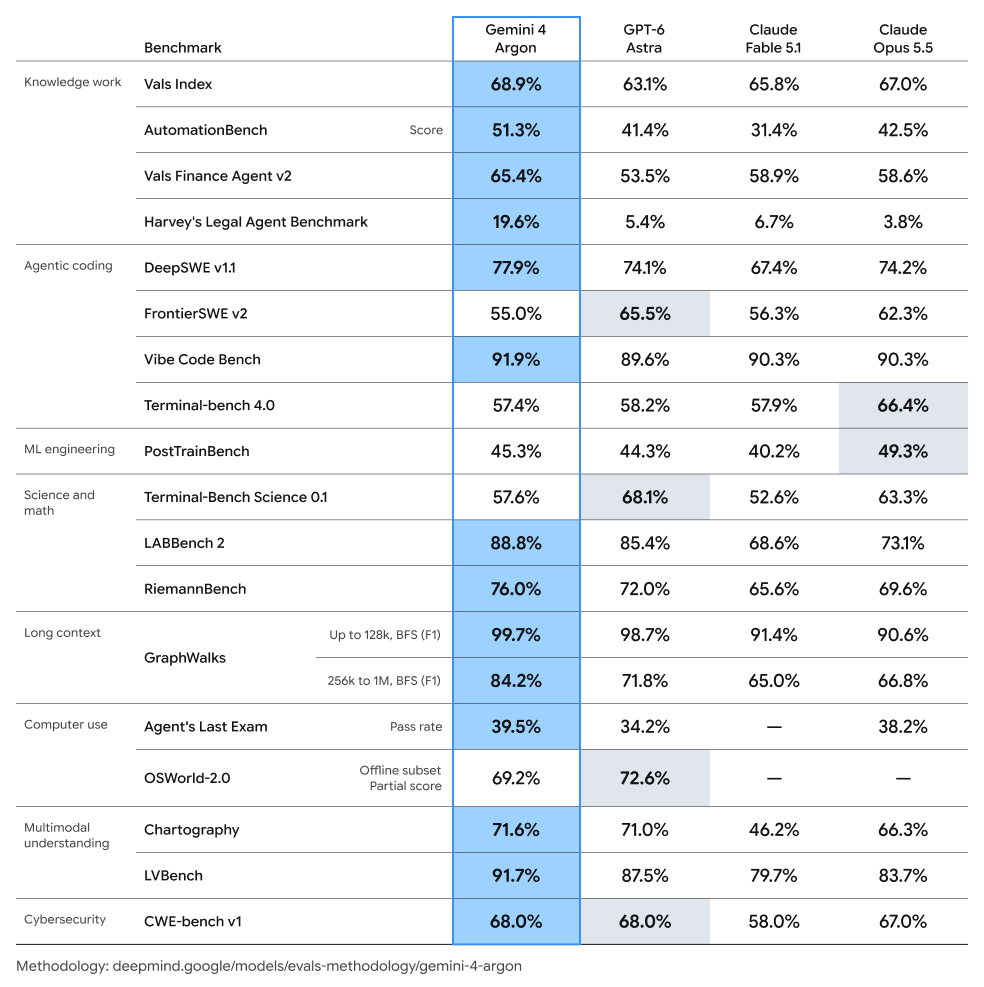
Introducing Gemini 4 Argon – our new frontier model.
It’s built for complex workflows across coding, enterprise knowledge work, and cybersecurity defense – rolling out today to a set of trusted testers through our Fairwind Program.
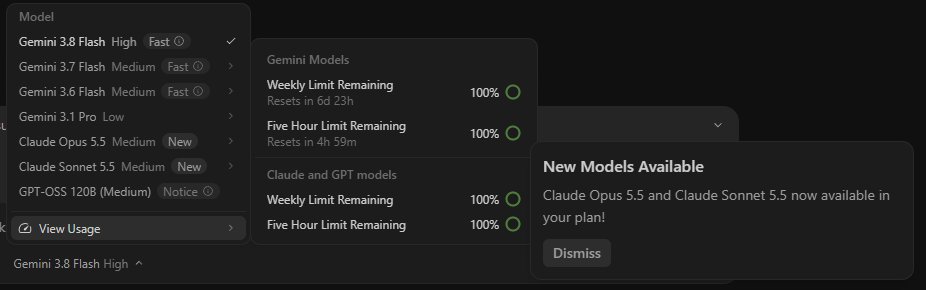
For Plus users: give GPT-6.1 Sol a real shot through ChatGPT Work or Codex.
The model is seriously good, extremely capable, and barely eats through your usage.
That means even on Plus, you can actually get a lot of real work done with it without constantly worrying about burning through your limits.
(@OpenAI) Give a man a dollar every day for a hundred days, and on the 101st day give him nothing - he’ll curse you.
(@claudeai) Beat a man every day for a hundred days, and on the 101st day don’t beat him - he’ll thank you.
OpenAI Just Killed the Need for Jev
- OpenAI launched the Decisions API, built on Luna for fast, focused decision-making instead of generating full responses.
- You give it text or images + a fixed set of possible answers, and it returns the decision for things like classification, routing, moderation, or choosing an agent's next action.
- it can return results in around 150ms, making it roughly 10x faster than using Luna through the regular API.
- Its basically OpenAI’s answer to TypeSafe’s Jev, but focused specifically on turning model intelligence into fast decisions.
this could be way more useful than it sounds for agentic systems. Instead of wasting tokens making Luna explain a decision and then parsing the output, you get the decision directly.
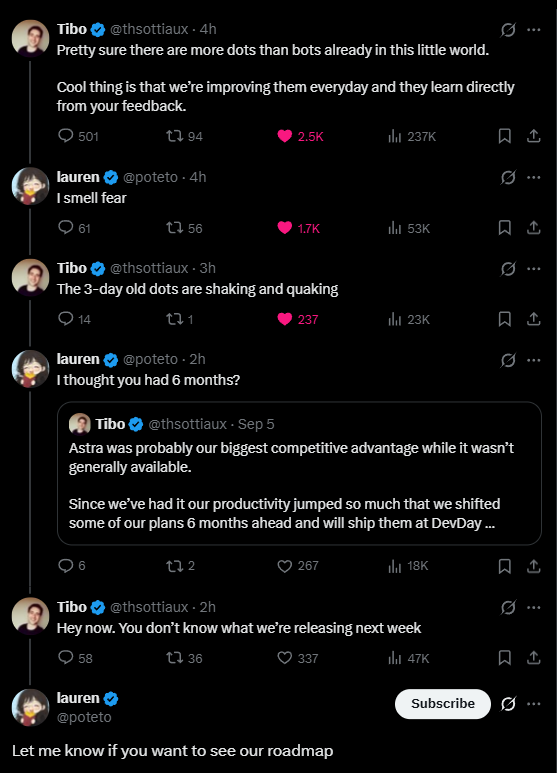
AHAHAHAHAHAHAHAHAHAHAHA NO WAY.
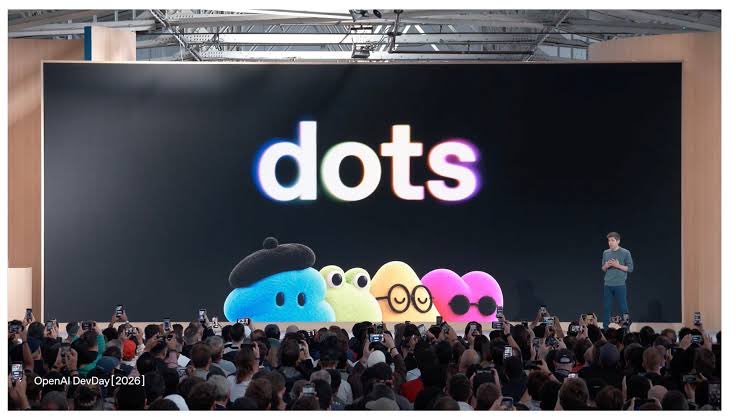
> OpenAI just announced Dots.
> SpaceXAI bought https://t.co/WdFqpl07IQ
it redirects straight to the Grok Bot download page. based lmao.