Bryan Johnson is spending $2,000,000/year to live until 120.
So I spent a full day researching his entire longevity blueprint.
Here’s a full breakdown of his routine & how anyone can use it:
(without spending $2M/year)
Best #bitcoin papers everyone should read.
1. The Bitcoin Whitepaper
What started it all. Satoshi Nakamoto once said, "I had to write all the code before I could convince myself that I could solve every problem, then I wrote the paper"
[Read here: https://t.co/kXJ49TdwQY]
I spent 10 years studying the best strategies & methods to build a lean, athletic body.
I'm a national strength & conditioning coach and have represented my country in 2 sports.
You can build an aesthetic, functional body in less than 3 hours/week.
Here’s the framework:
To save in Bitcoin, you need a MINUMUM 4-year time horizon.
Right now, the price of BTC (the currency used on the Bitcoin network) is volatile in terms of all assets and fiat currencies because it's not yet widely used as money. Keep in mind that more countries and businesses are adopting it over time.
Two months from now, 1 BTC may be worth a lot less than it is today. In ten years, the purchasing power will very likely increase because:
1) The supply is fixed at 21,000,000 BTC.
2) The amount being issued will decrease by 50% every 4 years until ~2140 (the next "halving" is sometime in 2024).
3) 92% (~19,000,000 BTC) of the total supply has already been issued, and a lot of it is locked away in cold storage.
4) A huge chunk of the issued supply of BTC is likely lost forever (people have lost the keys to their wallets or the wallet was damaged somehow and they didn't have a backup of the seed phrase). The lost supply is estimated to be around 4,000,000 coins.
5) Bitcoin adoption will increase over time. This will lead to an increase in demand. Increased demand + decreased supply = price is forced to go up.
Bitcoin and BTC provide the following utility:
1) The network is censorship resistant. This is so valuable because the current world reserve currency CAN be censored.
US sanctions on Russia have destroyed the trust the world had in the US Dollar. Any country that has problems with the US is in danger of losing its reserves.
2) Bitcoin is decentralized. Nobody controls Bitcoin. Nobody CAN control Bitcoin. Bitcoin is software that runs on computers spread around the world. It's simply a ledger of transactions. A record of who owns what.
That record can't be changed because there are now 16,939 computers running the Bitcoin software. These computers are confirming the validity of the ledger. You can shut down 1 or 2 or 10 or 100 or 1,000, but try shutting down every single one of them, because the locations of more than 10,000 of them is unknown.
3) Bitcoin is a form of secure base-layer money and is comparable to the SWIFT system the world currently uses.
Fees on BTC transactions are considered high, but it's important to consider that Bitcoin transactions are expensive because of the security. When compared to SWIFT, the transactions are NOT expensive... But they ARE much faster (30 mins to 1 hour vs 3 to 5 business days. These networks are used for LARGE transactions.
The lightning network is a layer two solution (its run "off-chain" using a new network of payment channels), and is built for SMALL transactions. Transactions cost 0.00000001 Bitcoin (1 Satoshi, or a fraction of a penny today) and take 1 second to complete. The lightning network requires trust in a third party, so it's not as secure as "on-chain" teansactions. The fees reflect this.
4) Bitcoin can be traded 24/7. Half of the world doesn't have to stand still because it's outside of banking hours in the US.
5) The entire world can use Bitcoin to store value, instead of just those who have access to a stable banking system.
You may say "I would rather invest in stocks," but you need to realize... most of the world can't buy US stocks, but most of the world can buy Bitcoin.
6) Bitcoin is secure. In the 14 years that Bitcoin software has been running, the network hasn't seen a single exploit (exploits are always at exchanges or on hot wallets that are always connected to the internet).
Take the time to learn about Bitcoin. You won't be disappointed!
I'm passionate about using my CFA to help more people become financially literate.
If you learned something new today, I would appreciate if you:
- Retweet the first tweet
- Follow me: @rajatsoni
- Subscribe to my newsletter: https://t.co/U1kW44xCil
Thanks for reading!
As a product manager in the field of AI/ML, it's crucial to have a strong grasp of key concepts
This knowledge will help you navigate the industry with confidence and make informed decisions.
Here are 15 important terms with examples from popular products👇
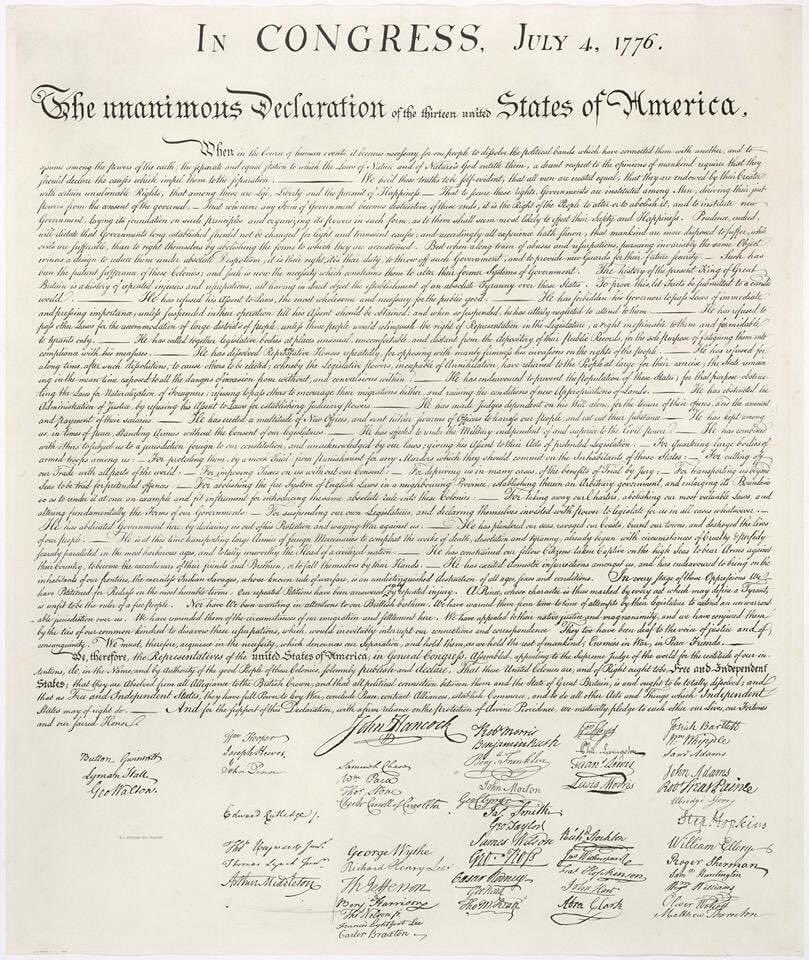
“Have you ever wondered what happened to the 56 men who signed the Declaration of Independence?
Five signers were captured by the British as traitors, and tortured before they died. Twelve had their homes ransacked and burned. Two lost their sons in the revolutionary army, another had two sons captured. Nine of the 56 fought and died from wounds or hardships of the revolutionary war.
They signed and they pledged their lives, their fortunes, and their sacred honor.
What kind of men were they? Twenty-four were lawyers and jurists. Eleven were merchants, nine were farmers and large plantation owners, men of means, well educated. But they signed the Declaration of Independence knowing full well that the penalty would be death if they were captured.
Carter Braxton of Virginia, a wealthy planter and trader, saw his ships swept from the seas by the British Navy. He sold his home and properties to pay his debts, and died in rags.
Thomas McKeam was so hounded by the British that he was forced to move his family almost constantly. He served in the Congress without pay, and his family was kept in hiding. His possessions were taken from him, and poverty was his reward.
Vandals or soldiers or both, looted the properties of Ellery, Clymer, Hall, Walton, Gwinnett, Heyward, Ruttledge, and Middleton.
At the battle of Yorktown, Thomas Nelson Jr., noted that the British General Cornwallis had taken over the Nelson home for his headquarters. The owner quietly urged General George Washington to open fire. The home was destroyed, and Nelson died bankrupt.
Francis Lewis had his home and properties destroyed. The enemy jailed his wife, and she died within a few months.
John Hart was driven from his wife’s bedside as she was dying. Their 13 children fled for their lives. His fields and his gristmill were laid to waste. For more than a year he lived in forests and caves, returning home to find his wife dead and his children vanished. A few weeks later he died from exhaustion and a broken heart. Norris and Livingston suffered similar fates.
Such were the stories and sacrifices of the American Revolution. These were not wild eyed, rabble-rousing ruffians. They were soft-spoken men of means and education. They had security, but they valued liberty more. Standing tall, straight, and unwavering, they pledged: ‘For the support of this declaration, with firm reliance on the protection of the divine providence, we mutually pledge to each other, our lives, our fortunes, and our sacred honor.’”
Michael W Smith
When someone you love has a problem, ask, "Do you want to be helped, heard, or hugged?
• Helped: Deconstruct the problem and identify potential solutions.
• Heard: Listen intently and allow the other person to vent.
• Hugged: Provide comforting physical touch.
That's it.
A big sign of progress.
https://t.co/5m0306BPXJ
I was recently asked by Financial Advisor magazine to write their first article on the topic of Bitcoin and the myths around it. It was an honor to write this article and a massive sign that Bitcoin cannot be ignored. This magazine serves about 400K financial/wealth advisors who have been very resistant to Bitcoin to date. Please take a look at the article, and let me know what you think. I'd love for them to see the traffic on their site so they know that Bitcoin content should be a regular part of their publication. And, if you can comment on the article there - even better.





![DocumentingBTC's tweet photo. Best #bitcoin papers everyone should read.
1. The Bitcoin Whitepaper
What started it all. Satoshi Nakamoto once said, "I had to write all the code before I could convince myself that I could solve every problem, then I wrote the paper"
[Read here: https://t.co/kXJ49TdwQY] https://t.co/QChHCBc3w8](https://pbs.twimg.com/media/F6UqLoiXQAACNo6.jpg)