Have you ever heard people say that agribusiness is a risky business?
Do you know why?
I believe one of the reasons the agricultural sector is considered risky is its lack of intelligence systems capable of making business operations more predictable and measurable.
And intelligence begins with clean, reliable and well-structured data.
Businesses that have successfully bridged their data gaps are better positioned to make informed decisions, manage uncertainty, improve efficiency and build profitable operations.
Business intelligence creates better visibility. Better visibility improves predictability. And predictability creates room for investment, development and innovation.
This is where I sit. @MikeAgrow
At the intersection of:
° Research
° Data Collection & Management
° Data Analysis
° Business Intelligence
° Decision-Making
With one major objective: Reducing agricultural and agribusiness risks through evidence-based insights and better decisions.
This is the kind of agricultural transformation I want to contribute to.
To everyone who has followed, engaged, challenged an idea, shared a post or contributed to this journey, thank you.
15,000 followers! 🎉
I'm in the business of Making agriculture more intelligent.
@MikeAgrow
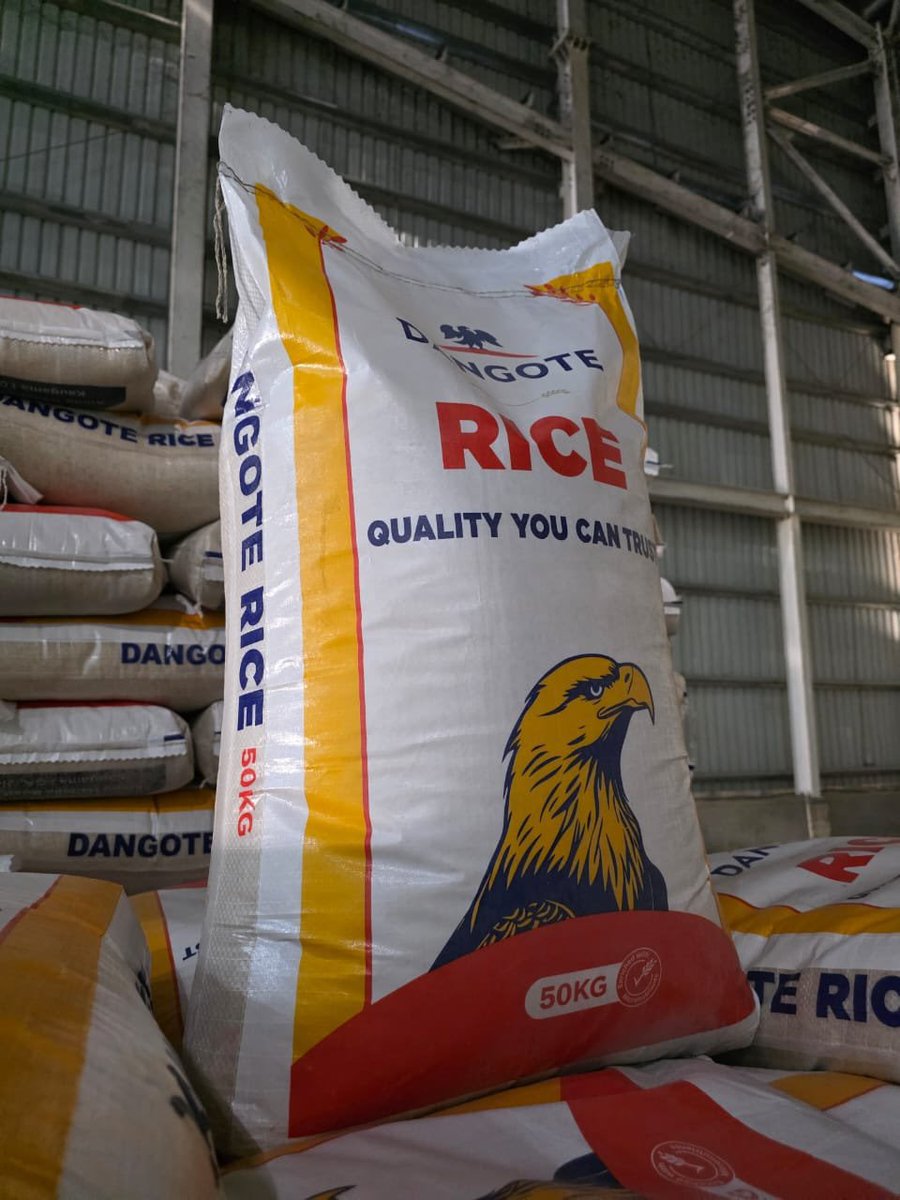
Dangote's investment in Nigeria's rice-processing industry presents an important development in the country's journey towards strengthening domestic rice production and agricultural industrialisation.
I took time to research the investment, its potential economic contributions and what it could mean for Nigeria's rice industry.
I have documented my findings in an independent research paper.
Read the research here: https://t.co/oXKhSpl0ER
@MikeAgrow
Remember Buhari's rice vision?
The Anchor Borrowers' Programme that was designed to:
1. Connect smallholder farmers. with processors
2. Increase local rice production,
3. Create jobs and reduce dependence on imported rice.
But imagine that vision being pursued through a more structured, commercially driven system.
Not just government intervention, but organised private-sector investment, industrial processing, structured farmer partnerships, reliable paddy supply and stronger market linkages.
I have been researching Dangote's investment in Nigeria's rice-processing industry, examining its processing capacity, farmer-sourcing arrangements, competition, potential economic contributions and what it could mean for the Nigerian rice market.
Something is changing not just Dangote entry alone, also with other brands like Rano, Bua, Gerawa & Mangal Rice. But what exactly does the evidence tell us?
I will be sharing my findings.
@MikeAgrow
Building an agribusiness around yourself alone is a recipe for struggle. This is one of the major problems I have identified among business owners, particularly in the agricultural sector.
You are the accountant.
You provide the capital.
You manage daily operations.
You handle procurement.
You oversee production.
You find customers and manage sales.
In the end, you become the entire business.
That is not a sustainable business structure.
Learn to build systems, delegate responsibilities and create structures that allow your business to function beyond your personal involvement.
The money you think you are saving by avoiding certain operational costs today may become the costliest decision you make tomorrow.
Build a business that can run on a system, not one that depends entirely on you.
Remember Buhari's rice vision?
The Anchor Borrowers' Programme that was designed to:
1. Connect smallholder farmers. with processors
2. Increase local rice production,
3. Create jobs and reduce dependence on imported rice.
But imagine that vision being pursued through a more structured, commercially driven system.
Not just government intervention, but organised private-sector investment, industrial processing, structured farmer partnerships, reliable paddy supply and stronger market linkages.
I have been researching Dangote's investment in Nigeria's rice-processing industry, examining its processing capacity, farmer-sourcing arrangements, competition, potential economic contributions and what it could mean for the Nigerian rice market.
Something is changing not just Dangote entry alone, also with other brands like Rano, Bua, Gerawa & Mangal Rice. But what exactly does the evidence tell us?
I will be sharing my findings.
@MikeAgrow
As an Agricultural student in Liberia, I think the reason why some agricultural businesses struggle and some succeed, is due to lack of infrastructure .
Despite this you need to have the mindset of finding a way out and getting it done. That’s how others succeed.
As an agribusiness owner or entrepreneur
You don't have to do everything yourself. You need to understand what you should do, what others should handle and who you need to work with.
Building an agribusiness around yourself alone is a recipe for struggle. This is one of the major problems I have identified among business owners, particularly in the agricultural sector.
You are the accountant.
You provide the capital.
You manage daily operations.
You handle procurement.
You oversee production.
You find customers and manage sales.
In the end, you become the entire business.
That is not a sustainable business structure.
Learn to build systems, delegate responsibilities and create structures that allow your business to function beyond your personal involvement.
The money you think you are saving by avoiding certain operational costs today may become the costliest decision you make tomorrow.
Build a business that can run on a system, not one that depends entirely on you.
Remember Buhari's rice vision?
The Anchor Borrowers' Programme that was designed to:
1. Connect smallholder farmers. with processors
2. Increase local rice production,
3. Create jobs and reduce dependence on imported rice.
But imagine that vision being pursued through a more structured, commercially driven system.
Not just government intervention, but organised private-sector investment, industrial processing, structured farmer partnerships, reliable paddy supply and stronger market linkages.
I have been researching Dangote's investment in Nigeria's rice-processing industry, examining its processing capacity, farmer-sourcing arrangements, competition, potential economic contributions and what it could mean for the Nigerian rice market.
Something is changing not just Dangote entry alone, also with other brands like Rano, Bua, Gerawa & Mangal Rice. But what exactly does the evidence tell us?
I will be sharing my findings.
@MikeAgrow
Agriculture is bigger than production. And food security requires us to understand the entire system.
I'm excited to share that I've been selected for the Africa Food Security & Development Course (AFSDC), Cohort 5, running from November 23 to December 5, 2026 organized by @farmeasyhq .
My experience in agricultural production has given me some practical exposure to the realities of farming. But over time, my curiosity has grown beyond what happens on the farm.
I've become increasingly interested in questions around agribusiness development, investment, agricultural finance, market access, food safety and the role of technology in transforming food systems.
One thing I have come to appreciate is that producing more food does not automatically translate into food security.
We must also consider whether farmers have access to quality inputs, whether agricultural businesses can attract sustainable investment, whether post-harvest losses are minimised, whether food is affordable and accessible, and whether the systems connecting production to consumption actually work.
This is part of what has shaped my growing interest in research, data analysis and business intelligence.
I believe agriculture can become more predictable and its investments more informed when decisions are supported by credible research, reliable data and a proper understanding of business performance and risk.
My long-term ambition is to contribute to improving African food systems through research, data and strategic interventions, while developing the capacity to understand and analyse agricultural businesses, their performance, risks and investment opportunities.
I see this programme as another opportunity to learn, challenge my assumptions, connect with people working across the African food system and strengthen the knowledge required to contribute meaningfully.
I'm looking forward to the learning journey!