Chaps!
(yes, ladies, you can scroll on now...)
Here is why you keep that timber.
25 years ago Scarborough Library decided that it's ancient oak shelving was not compliant with the latest UK Disability Discrimination Laws.
That Scarborough Library had been fitted out by public subscription in the 1880's. At the height of civic pride. If the Oak was workable in 1880... it might have come from a tree that was felled in 1850. And if it was felled in 1850.. .it may have been 500+ years old at that point. Maybe more.
The entire building was oak clad. All of the book shelves were of oak. I've been reliably informed it is Japanese oak.
I was lucky enough to hear that ANYONE could claim a shelving unit for £50. Rather than the council pay for them ending up in landfill.
The shelving units were 9 feet long by 6 feet wide. They weighed about 1 ton each.
I claimed two. For £100.
You had to dismantle them yourself and transport them away, yourself. You had 48 hours. Saturday morning until Sunday evening.
It was an immense job. They were not like units you get today. They were made, in situ, by craftsmen. In 1880.
We all knew we were vandalising the old stuff. But anything we didn't take would be put into the tip.
They were nailed. Not screwed. We took hammers to them.
I've carried that oak timber around the country since. I gave half of it to my Dad, who was a Chippy. He made things out of it that are still magnificent. The nail holes from its previous life give it more life.
I have many things my Dad made from it. I love them.
Sadly, my Dad died in 2010 and a cousin realised the value of the Oak and sold a lot of what was being stored in my Mum's cellar...
But I still got a lot of it back after my Mum died. Big bits. Bits you cannot buy any more. Wide bits of Japanese Oak. I have them stored under my sofa. And my bed. Upright behind doors.
I used one short bit as a grave marker for my cat. Oak doesn't rot in the ground. It preserves itself.
I still have about 1/2 a ton left. I think.
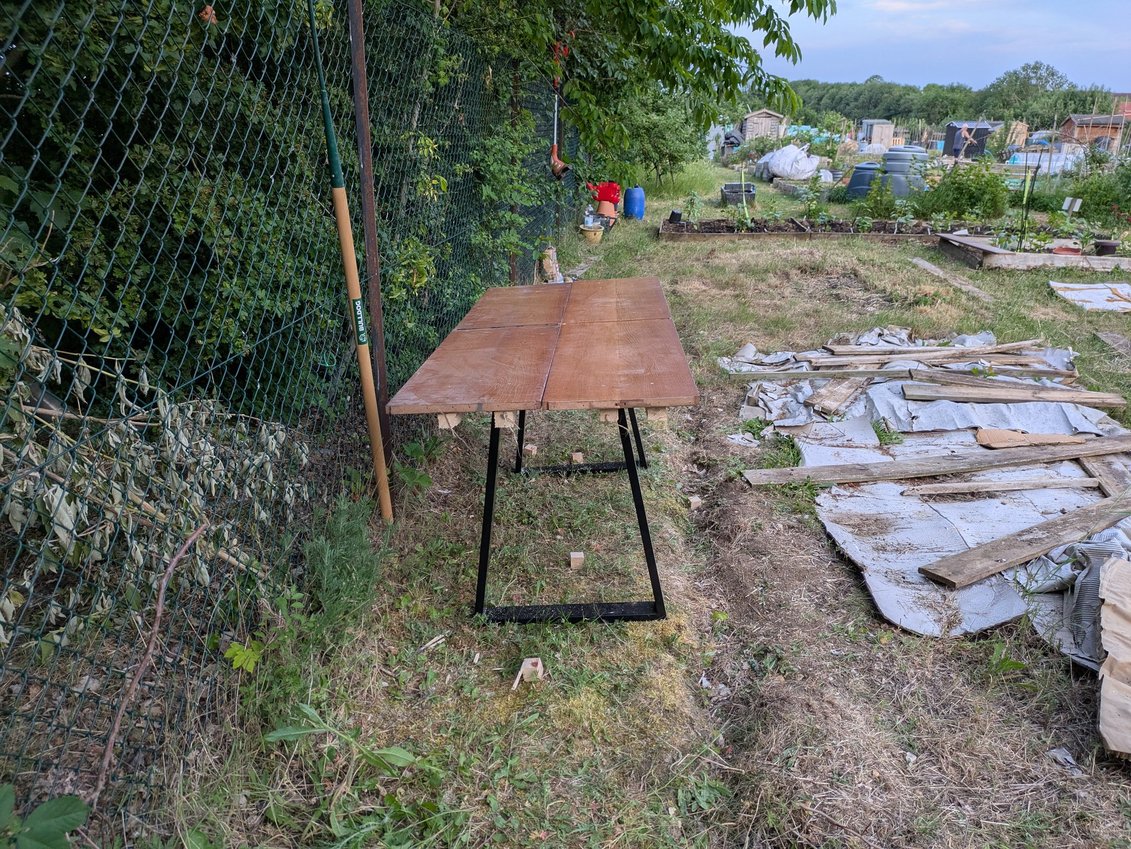
Of the two biggest bits, I made a table for my allotment.
Ironically, the legs of the table were found in the boot of my Mum's old car. I had those bits of table leg just hanging about for 3 years.
I now have a table. If the Oak cost me £100...in the year 2000, it is worth it.
I know this isn't everyone's post.. but... damn. 25 years of holding onto timber you got for a song! That's a blessing.
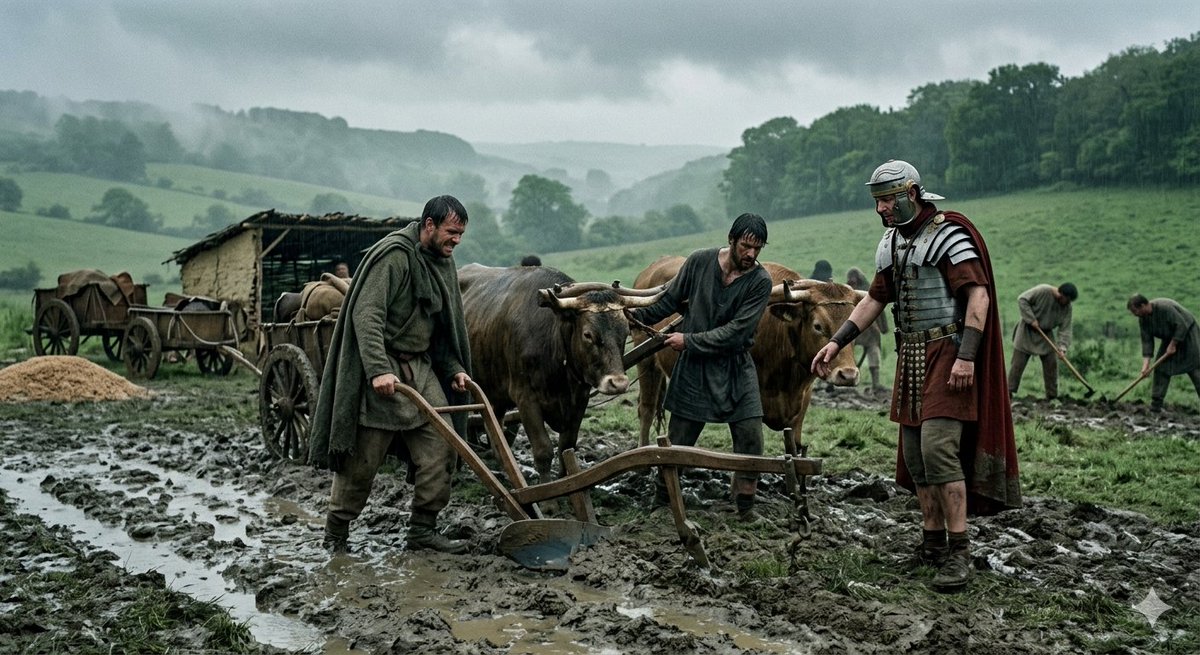
When the Romans came to Britain in 43 AD, they brought their farming with them.
Mostly grain. Wheat, barley, the kind of arable agriculture that worked in Italy and southern Gaul and required a lot of organised labour and the kind of climate where summer is reliable.
They discovered, fairly quickly, that Britain did not have that climate. The summer was a rumour. The winter was a threat. The rain was constant. The soil in most of the country was either acidic, waterlogged, or sitting on top of clay that turned to concrete in July and slop in January.
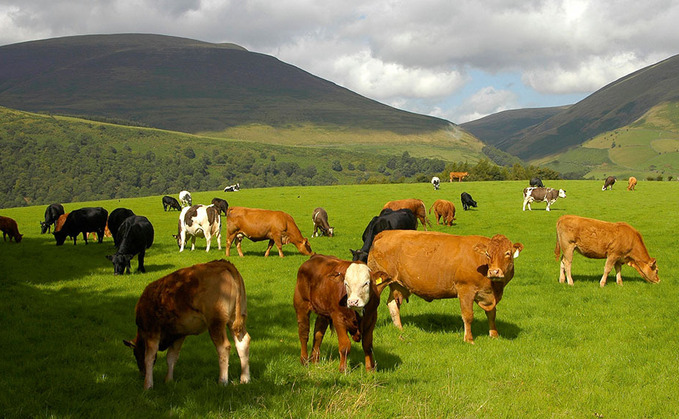
The native Britons, watching the Romans struggle, were running a different system. They had cattle. They had sheep. They had pigs that lived in the woodland and ate the acorns. They moved animals seasonally, between summer uplands and winter shelter. They built their food production around the things that Britain actually grew, which was grass and acorns and not very much else without an enormous amount of effort.
The Romans, eventually, adapted. The villas they built had grazing land attached. The estates were structured around livestock as well as grain. They learned, with some reluctance, that you cannot impose Mediterranean agriculture on a country that has decided to be Britain.
In 2026, a government policy unit in Westminster is suggesting that we should replace livestock with plant proteins.
The Romans got the message in two centuries.
We appear to have forgotten it in less than one.
The funniest maths in modern environmentalism.
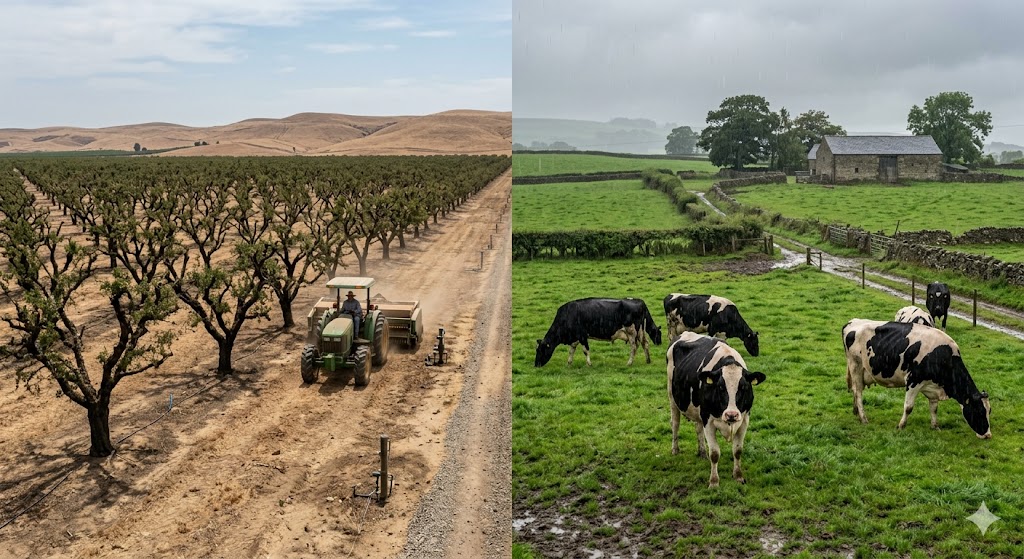
One almond requires 12 litres of irrigated water to produce. Peer-reviewed, ScienceDirect, 2017. A glass of almond milk contains roughly 50 of them. 600 litres of water before the carton is filled.
The water comes from the San Joaquin Valley in California, which sits over one of the most over-extracted aquifers on earth. The valley floor has subsided by up to nine metres in places due to groundwater depletion. The carton is then refrigerated, sailed across the Atlantic, refrigerated again, lorried to a Manchester Tesco, and bought by someone who is concerned about the environmental impact of dairy.
Meanwhile, in Cheshire.
A British dairy cow drinks roughly 70 to 100 litres of water a day and produces around 28 litres of milk. That's about 3.5 litres of water per litre of milk. The water is rainwater that fell on her field or came from a local stream fed by the same rainwater. The rain was going to fall on the field whether the cow stood in it or not. 80% of her moisture intake comes from the grass itself, which is also rain.
She converts the grass, free of charge, into a litre of milk containing seven times the protein and four times the calcium of almond milk, and shipped roughly 18 miles to the same Tesco.
To recap.
600 litres of stolen aquifer, flown halfway round the world for nutritionally worthless beige water.
Or 3.5 litres of rain that was already falling, converted by an animal you can pet, into actual food.
The shopper picks the almond.
She has been told this is the ethical position.
The aquifer would like a word.
A farmer dies in April 2026.
His son inherits the farm. The farm has been in the family since 1847.
The farm consists of: 300 acres of grazing pasture, a farmhouse built in 1892, a barn, a milking parlour, two tractors of varying ages, a Land Rover that runs about 70% of the time, and a herd of 180 Hereford-cross cattle.
On paper, the farm is worth approximately £3.2 million. This is because land near him has been bought recently by a London hedge fund looking for carbon credits, which has dragged the comparable value of every field within forty miles upward to a number nobody local can justify.
In cash, the farm produces a profit of about £28,000 a year in a good year. In a bad year it loses money. The son also works as a fencing contractor three days a week to keep the operation viable.
The inheritance tax bill on a £3.2 million estate, even at the reduced 20% rate, comes to approximately £140,000 after the increased threshold is applied. The son does not have £140,000. The son has never had £140,000. The son has £4,200 in his current account and an overdraft.
The son sells 60 acres to a developer to pay the tax. The developer puts solar panels on the 60 acres. The remaining herd cannot be sustained on the reduced land. The herd is sold. The barn becomes a holiday let.
A different family eats Brazilian beef this Christmas without knowing why the price went up.
The Treasury collects £140,000.
The land never produces British food again.
The British Vitamin D problem is not new.
Britain sits between 50 and 58 degrees north. London is on the same latitude as Calgary. Edinburgh is level with Moscow. From October to March, the sun does not rise high enough above the horizon for the UVB wavelength your skin needs to actually reach the ground. You can stand naked in February noon sunlight on the south coast and produce essentially zero vitamin D.
This is six months of the year, every year, for the entire history of human habitation on these islands.
The British have known this, in their bones, for ten thousand years.
Look at what was eaten in winter, before anyone had ever heard the term cholecalciferol:
Oily fish. Herring, mackerel, sprats, kippers. Three or four times a week from October to March. A single kipper carries roughly 250 IU of D3.
Cod liver oil. Spooned into every British child between 1850 and 1980, a teaspoon at a time. Distributed free by the Ministry of Food in the war on the explicit understanding that British children needed it through the dark months. Rickets fell by 90 per cent between 1940 and 1960. Cod liver oil was the reason.
Liver. Eaten weekly in working households until 1985.
Egg yolks from hens that had been outside in the summer.
Grass-fed butter, made from cream from cows on summer pasture, the fat-soluble vitamins banked into the cream and eaten through the winter.
The British solution to the British problem, evolved over centuries by people who could not articulate the biochemistry but knew, with absolute certainty, what kept the children growing through the dark months.
Then between 1955 and 2010, the British removed almost all of them.
Cod liver oil reduced to a niche supplement. Liver dropped from weekly to never. Oily fish consumption halved. Eggs rationed by the Department of Health on cholesterol grounds since retracted. Butter replaced with margarine carrying no fat-soluble vitamins at all.
Result, by 2020: roughly half of all British adults are vitamin D deficient by the end of winter. A third of children. Rickets has reappeared in British paediatric wards. The NHS now recommends every adult take a supplement from October to March.
This is the NHS recommending in 2026 what the British diet was doing automatically in 1926.
The geography has not changed. The latitude is the same. The sun is still inadequate from October.
The food used to handle it.
The kippers are still being smoked at Craster. The cod liver oil is on the chemist's shelf. The liver is at the butcher. The butter is in the dairy aisle, behind the spreads.
The sun was always seasonal.
The food was the backup.
The backup got thrown out.
Get it back.
There will be one working stonemason in this town. He will be 55 years old, work 2 hours per week, and by the way, his cousin is the Mayor. They will extort you for hundreds of thousands of euros to do anything to the property. Permits will take months. Every person in town will have an opinion on what you should do with the property and nobody will like your ideas. They will pretend not to speak English. They will pretend you aren't speaking Italian. Eventually you will get it up to code and try to put it on Airbnb. The first rental group will shit in the hot tub.
The local monsignor will insist on re-consecrating a chapel. If you say no, there will be community push back from women old enough to have babysat Mussolini. You will cave. "The chapel can host destination weddings," you think. The local monsignor will insist on performing all of them (for a fee) and he will busy every weekend in the summer. Eventually a Hollywood producer will contact you about filming a pilot there. It will turn out to be a scam run by a Czech pornographer. Your 3rd result in google will be nsfw. Bookings will double but the town council now thinks you are running an unlicensed brothel from their historic monastery. The monsignor will call the mayor. You will pretend not to speak Italian.
@Vincentt1987 Only discrepancy without an plausible explanation is the sun direction and shadow. Hills in back ground and trees on left indicate high and from the the right. Shadow on gate is from a different direction.
@ClintScotswood@Magpie24_7 My most vivid childhood memory of st James park is the brick wall forming the urinals at the back the gallowgate, beer farts and getting pissed on in the stands. Relative safety and a better view sat on the concrete barriers. I’ll definitely be getting this shirt 🤣
@davez2010 Watching Woltemade being bullied by every CB in the premiership and given a free pass to do so by the referees. My guilty pleasure was “put joelinton there” might not score more goals but at least would make them pay a price! (I think he would score more goals)!
@northumbriana I live in Norton opposite Billingham. Imagining a tidal estuary as far inland as Thorpe Thewels, marshland, a natural border facing south and east to the sea. Both outposts centred on the high points currently occupied by 1000 yr old churches.