Not a politician but it entertains me, I say am a christian but don't go to church as often... But life is too short so basically it is never that serious
@organ_app Exactly. If approval becomes a race against a timeout, people will eventually rubber-stamp it. Treating the request as durable state lets the agent continue safe work while waiting—and keeps human approval meaningful instead of turning it into a stall.
Built a Slack approval gate for my AI agents — they propose, a human approves in-thread, then they act. Had to be async (not blocking) to survive behind an ingress. The build + gotchas: https://t.co/Y4BL1FDGor #AI#Golang#Homelab
@datachad Exactly, three weeks just to reach the starting line, before the model itself even enters the picture. it is a good reminder that the "AI" part is often the easy layer compared with getting the underlying infrastructure stable
'Get a GPU working on my k8s cluster' sounds simple. It became a 3-week saga of kernel headers, incompatible runtimes, and a full cluster wipe. Part 1 of my local LLM series: https://t.co/JjGAII9CTV #Kubernetes#AI#GPU
@datachad Exactly, that ceiling makes the tradeoffs much more obvious. A smaller, well-chosen model that performs reliably for the actual workload is far more useful than squeezing in a large model just for the headline parameter count.
GPU's working — now what model fits a 16GB data-center card? Part 2 of my local LLM series: the benchmarking that led me to Qwen2.5-Coder-7B: https://t.co/36BtVJQg2j #AI#LLM#Homelab
@HaleyW98260719 Sorry for the very late reply, Haley and thank you for taking the time to investigate this so thoroughly. I appreciate you filing the issue and checking the SELinux behaviour on the VLAgent side.
I'll follow up with the CR I used, along with the generated resource YAML
Mimir OOM-looping trying to hold ~2M active series in 8GB on every WAL replay. A monolith was the wrong tool at that scale. Rebuilt the metrics stack on VictoriaMetrics instead: https://t.co/1Y9tjjAjwN #Observability#Homelab
Hardware work knocked out 2 Ceph OSDs. Recovery turned into BlueStore ghosts, a D-state losetup process, and a hard lesson about PNY SSDs and TRIM. Full writeup: https://t.co/5j0dMggz0N #Ceph#Storage#Linux
ODF: 62 pods, ~900m CPU, 20GiB RAM to serve 13GiB of actual data. Ripped it out overnight, replaced with Longhorn 1.12.0. It worked — here's the catalogue of things that failed silently: https://t.co/9Eepj4UVxp #Ceph#Longhorn
Wiped a 6-node Raspberry Pi CM4 cluster to bare metal and stood up real OpenStack on 8GB ARM boards. The wins, and a 3-hour TLS detour that taught me the most: https://t.co/c4xbGCGdBr #OpenStack#RaspberryPi#Homelab
Storage is the layer where 'it mostly worked' turns into 'restoring from backups.' My ODF 4.21→4.22 upgrade runbook, plus the pre/post-flight checks specific to this cluster: https://t.co/i2sqSFIE57 #Ceph#OpenShift
A dead CMOS battery, a dining-room workbench, and 20 RAM modules — diagnosing a dead control-plane node taught me a lot about secondhand hardware. Full story: https://t.co/OKVUDC72U2 #Homelab#Hardware
Cluster survived the hardware failure. Backups existed. And still — Postgres promoted the wrong instance and a dozen apps woke up to a fraction of their data. The CNPG failover post-mortem: https://t.co/m3K8RabnLQ #Postgres
One year, a lot of money, a few cuts on my hands, and one night an AI agent undid 3 days of work before coffee. The rebuild is done — a real private cloud living in a closet: https://t.co/jTvGfr2uja #Homelab#OpenShift
If your Home Assistant server's Bluetooth can't reach devices across the house, distribute the radios instead.
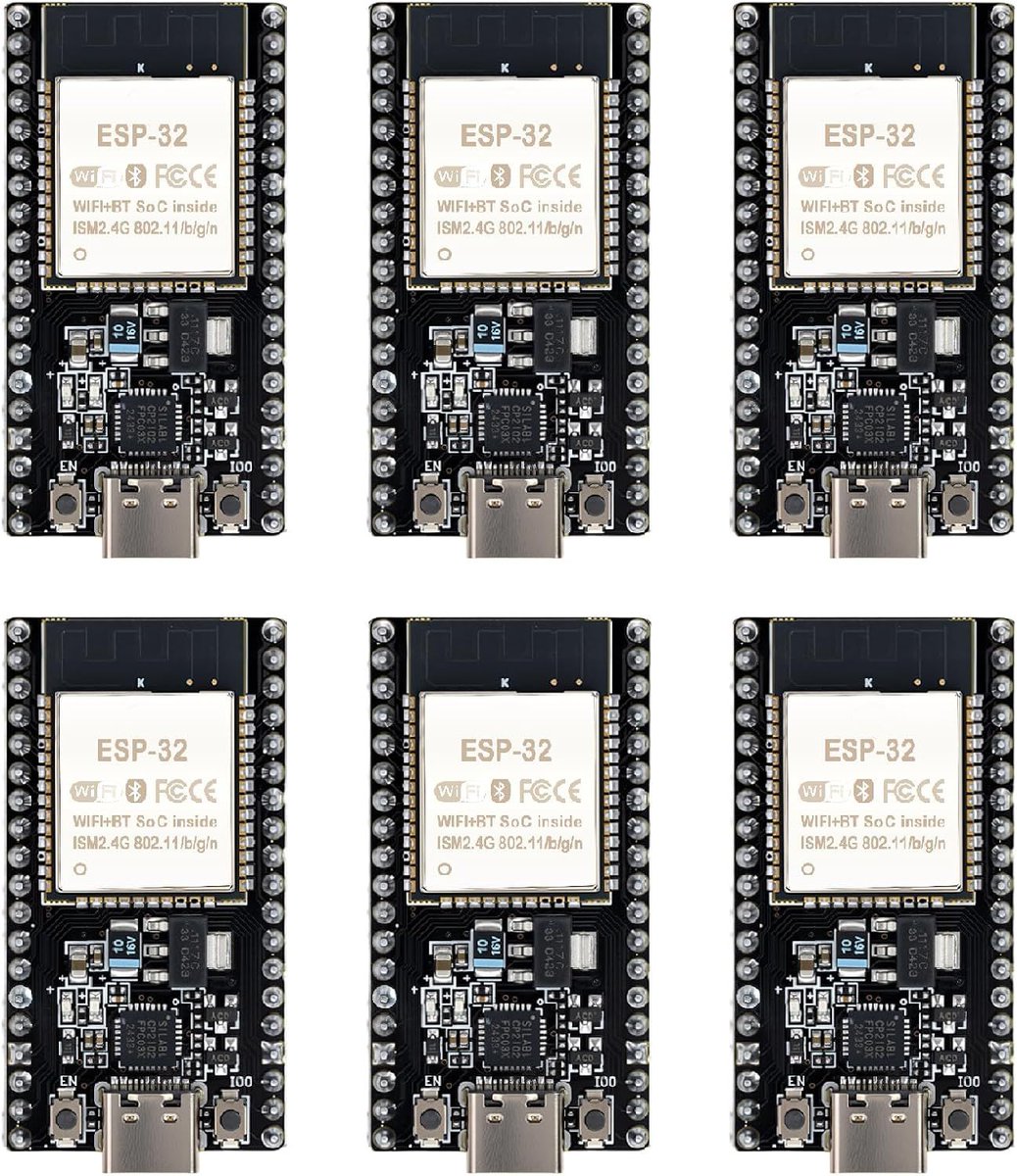
My first ESP32 build: setting up an ESP32 Bluetooth Proxy with ESPHome to relay BLE devices back over Wi-Fi:
https://t.co/TCCcimLstt #ESP32#HomeAssistant#IoT
Multiple vendor apps, half a dozen bridges, and one home that couldn’t agree with itself.
I audited my LAN, realized I had built a zoo of unmanaged IoT devices, and moved everything onto Home Assistant on an Intel NUC.
Breakdown:
https://t.co/OBEwSDBYzJ #HomeAssistant#IoT
PIR motion sensors are great until you sit still and the room goes dark.
Tested mmWave (Thirdreality R2) for presence detection in Home Assistant and the sensitivity is night & day.
Now building custom nodes with ESP32-C6 + HLK-LD2420 modules for local Zigbee/Thread control. 🔧
I’m replacing Wi-Fi IoT devices and vendor bridges with Home Assistant, Zigbee, and Z-Wave on an Intel NUC.
I also designed a custom 3D-printed assembly for the USB coordinators and published the STL files.
Build details: https://t.co/8NU0t44k5l
Deployed ERPNext on OpenShift via the official Helm chart — mostly smooth, except for 3 gotchas that cost me an afternoon. Writing them down: https://t.co/5yWFDIFalu #OpenShift#Kubernetes
A raw OpenAI-compatible endpoint isn't an agent — no memory, no tools, no safety. Part 3 of my local LLM series: building an actual agent platform on top of it: https://t.co/CqaoBGUDZX #AI#LLM#Homelab
SNO's two limits: anti-affinity blocks replicas, and a reboot takes the whole cluster down. Adding a worker node fixes both — the manual flow on OKD 4.22, no Assisted Installer: https://t.co/3NrVTcIutT #OpenShift
AI tools rewrote my timeline for what one engineer can build in a day. They also amplified a mistake at machine speed when I was too tired to catch it. Raw account of what happened: https://t.co/sByKdOYHyf #AI#DevOps