RedStone has partnered with @RadiantPrimeXYZ to provide a Proof of Reserve dashboard, giving investors independently verified insight into portfolio performance and capital deployment using data collected directly from underlying exchange accounts.
Full breakdown coming soon
120+ firms. 300+ participants. One conclusion: US tokenized money market funds work as institutional collateral under existing law.
GDF and ISDA just published the results of the largest tokenized MMF industry sandbox to date, powered by Ownera. BlackRock, Citi, JP Morgan, Franklin Templeton, Fidelity, State Street, CME and ICE were part of it.
So was RedStone.
We contributed to the working group and the report features RedStone as an oracle data provider. In the final simulation, Ownera showcased a RedStone connector to demonstrate how oracle infrastructure plugs directly into tokenized collateral workflows.
What the sandbox proved:
1. Settlement in minutes, not days
2. Intraday margining on live market data
3. Collateral moving across multiple custodians and multiple chains in single workflows
4. All three tokenization models fit within existing US legal and regulatory frameworks
Production pilots for the Open Collateral Network start September 2026. Live deployment targeted for Q4 2026. We will be there.
Importantly, none of this works in full sync without reliable data. Every tokenized fund used as collateral needs pricing and NAV feeds that institutions can trust. That is the infrastructure RedStone already runs for BlackRock BUIDL, VanEck VBILL, Franklin Templeton BENJI and many more MMFs.
By builders, for institutions.
$9 million borrowed against $5 of collateral due to oracle failure.
The whole attack took 8 seconds. Here's what happened over the weekend.
Why oracles are the most critical part of the system?
A blockchain is a closed world. A smart contract cannot check a price on its own. It knows exactly one thing: what its oracle tells it.
Every borrow limit, every liquidation, every collateral check in DeFi reduces to a single number delivered by an oracle. The code then executes with perfect obedience. If the feed says your $5 deposit is worth billions, the protocol will let you borrow against billions.
The scale of this trust is enormous. Oracles secure billions in value across DeFi today. Every dollar of it depends on price feeds being accurate and verifiers doing their job.
The design of the attack.
July 11, 00:51 UTC, according to Bonzo's incident report and onchain data:
1. The attacker funded a wallet with 1 ETH from Tornado Cash.
2. They deposited 250 SAUCE as collateral on Bonzo Lend. Value: a few dollars.
3. They submitted a price update to @SUPRA_Labs on-demand oracle contract, inflating SAUCE's price by roughly 12 orders of magnitude.
-> SAUCE traded near 0.2 HBAR (~$0.014). The fake update carried a value of 1 followed by 30 zeros.
4. The update was signed with a signature made entirely of zeros. A correctly working verifier rejects that instantly. Supra's verifier contract had a flaw in its signature check and accepted it as valid.
5. Eight seconds after the fake price landed onchain, the attacker borrowed 6.63M USDC and 34.5M wrapped HBAR against the near worthless deposit. Roughly $9.05 million.
6. Over $5.25 million was bridged to Ethereum via LayerZero and swapped into ETH within hours.
Read point 4 again. Nobody stole a signing key, that was not an OpSec bridge. The attacker submitted an obviously invalid update and the verifier waved it through.
The consequences.
Bonzo lost roughly $9.05 million in principal, with total abnormal borrowing at $10.06 million before a white hat returned about $1 million.
Bonzo's TVL dropped 77%. Hedera's entire ecosystem TVL fell nearly 40% in 24 hours. HBAR sold off and Korean exchanges Upbit, Bithumb and Coinone issued investor caution notices. Bonzo Lend remains paused while depositors wait for a recovery plan.
One broken signature check in one oracle contract took down the flagship lending market of an entire chain and cut the ecosystem's liquidity nearly in half overnight.
The conclusion.
Bonzo's own lending contracts were not compromised. Hedera's consensus was not compromised. The team did many things right and paused within minutes of the legitimate price returning. None of it mattered, because the protocol inherited the weakest link in its oracle stack.
Oracle security is earned through years of adversarial pressure in production: rigorous signature verification, multi-layer validation, deviation bounds that reject impossible prices, robust nodes setup. RedStone has carried billions in value through multiple market crashes with this discipline over the past 6 years.
If you are building a protocol, the oracle decision is not a line item. It is the decision that determines whether your users' funds survive contact with an adversary.
Your protocol is exactly as strong as the weakest signature check in its stack. Choose accordingly.
Today, @Securitize goes public on NYSE.
A milestone for tokenized finance.
RedStone is proud to be the primary oracle provider powering the data
layer beneath their funds and Securitize price feed for equities.
Tokenize the world.
Today, Securitize starts trading on the NYSE under $SECZ.
This milestone is worth pausing on, because we've been on this journey with them for over 1.5 years now.
March 2025.
Securitize names RedStone as their primary blockchain oracle partner, covering products like BlackRock's BUIDL, Apollo's ACRED and Hamilton Lane's SCOPE.
At the time tokenized RWAs were a roughly $18B market. Securitize was already the trailblazer and largest player in the sector.
July 2025.
We faced a real problem together. NAV-based funds don't trade on open markets, so there's no price to aggregate, only a single authoritative source - usually a single one. So we co designed and published TSSO, the Trusted Single Source Oracle, a new cryptographic standard for making that single source verifiable onchain. Dual key model, chained signatures, tamper evident by design.
February 2026.
TSSO moves from whitepaper to production. Our case study showed $580M of BUIDL live on Ethereum with daily onchain valuation and interest accrual, and RedStone delivering daily NAV updates for private credit funds like ACRED and SCOPE that used to run on quarterly cycles. That quarter Securitize also posted 39% revenue growth and $3.4B in tokenized AUM.
June 2026.
KPK's USDC Prime RWA vault on Euler uses our NAV feeds to price VBILL from VanEck as collateral.
Today, Securitize rings in a new chapter as a public company, with $4B+ in tokenized assets brought onchain and over 200 asset managers on the platform.
Huge respect to Carlos, Jorge and the Securitize team. We're just getting started on what tokenization can actually do.
We've completed our business combination with Cantor Equity Partners II.
Tomorrow, July 2, Securitize will begin trading on the @NYSE under the ticker SECZ.
A defining moment for us, and for the future of tokenization.
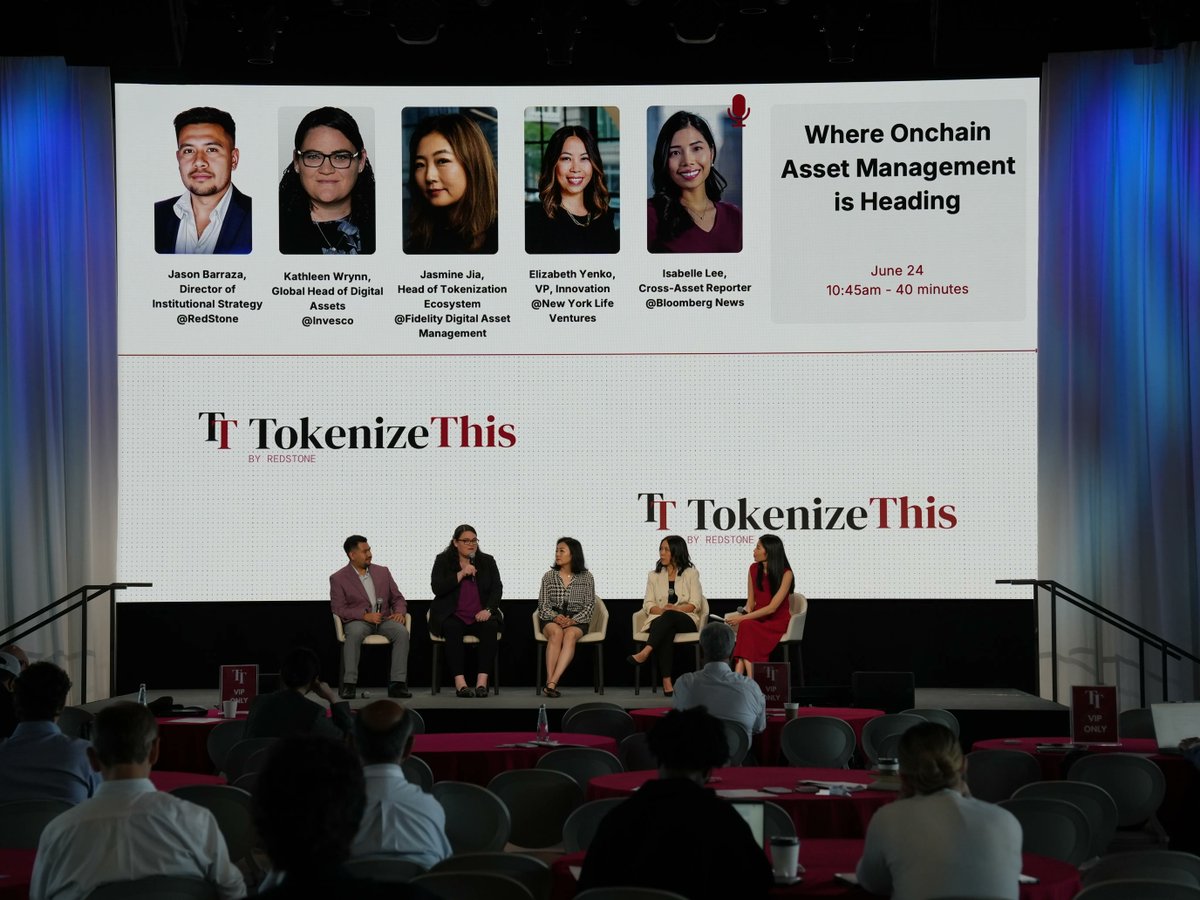
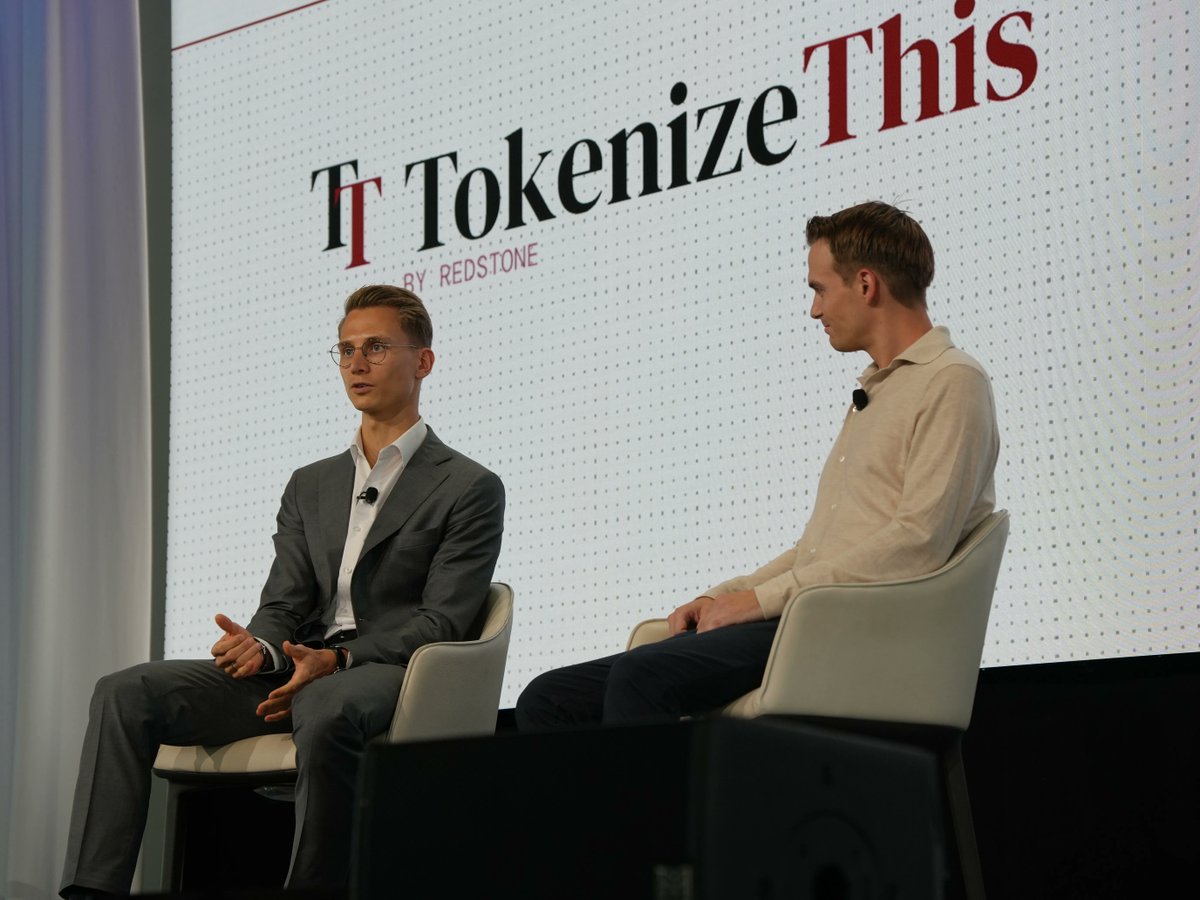
TokenizeThis NYC wrapped last week. 500+ attendees, 40+ speakers.
The questions on stage weren't about whether tokenization works. They were about execution: compliance, custody, liquidity, at institutional scale.
Thank you to everyone who made it the biggest yet.
Really enjoyed yesterday’s TokenizeThis 2026 panel on Operational Efficiencies in Tokenization.
Thank you to @MarcinRedStone, Co-Founder & COO at @redstone_defi, for moderating the conversation, and to Joseph Spiro, Director, Digital Assets Solutions at @The_DTCC, and @GregCig5, Head of Business Development at @ApexGlobalGroup, for bringing such practical perspective to the stage.
The part I keep coming back to is this:
Tokenization will not win because it gives the market better terminology.
It will win when it removes duplicate work, reduces operational uncertainty, and gives institutions cleaner ways to coordinate around ownership, movement, and control of assets.
That is less flashy than a new product launch.
But in capital markets, the less flashy work is often where the most durable infrastructure gets built.
.@CantonNetwork recently raised $355M led by a16z, with HSBC, BNP Paribas, Citadel, Apollo, and S&P Global among the backers.
RedStone has been the oracle layer for Canton's infrastructure since 2025.
DTCC processes $4.7 quadrillion in securities transactions a year.
Having their team members on stage sharing where tokenization goes is the signal.
Brilliant insights on Operational Efficiency of tokenization from Joseph (DTCC), Greg (ApexInvest), Peter (Computershare) and Joris (Fairmint).
Reconciliation. Reporting. Settlement. Collateral. Lifecycle management.
This is the unglamorous machinery that moves trillions every day, and it is exactly where blockchain strips out cost and time.
And that’s where the price and risk data play a crucial role.
New tokenized products get the headlines. The back and middle office is where the first real money gets saved.
One of shared takes: often boring means important for the grand scheme.