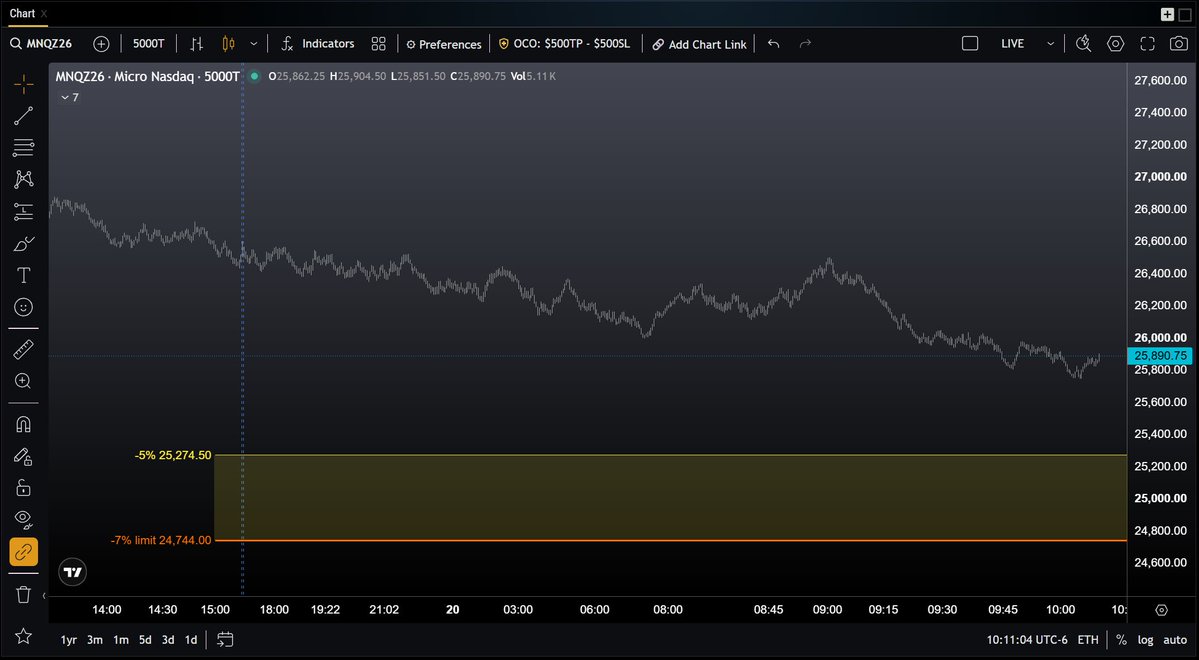
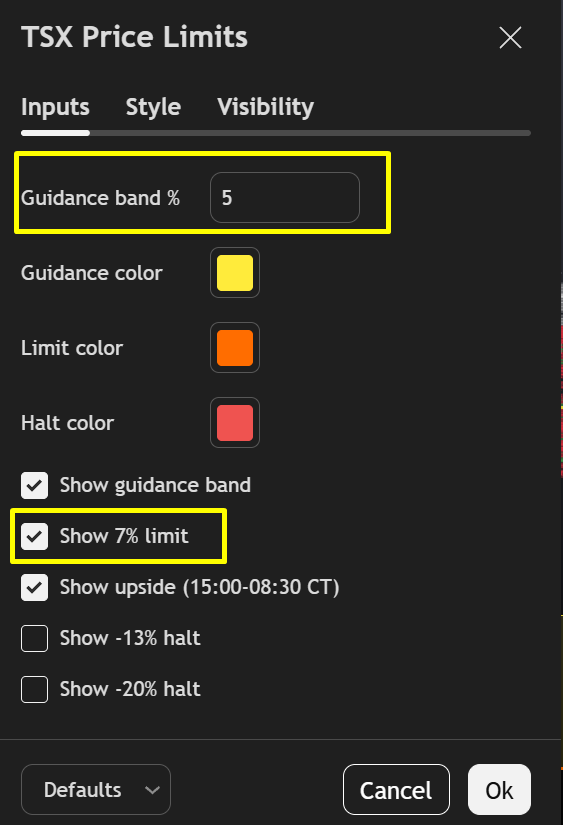
@ixatrades I think there are stats that shows gaps may get filled like 50% during the NY session that same day but that is too vague for me. That is why I try to see how it reacts to certain levels instead.
One thing I pay attention to every morning is the previous day's gap.
Does price look to fill it? How much of that gap gets retraced? Does it fill completely or reject before getting there?
I'm not looking to predict the move. I'm watching how price reacts at those levels and letting that guide my next decision.
Sometimes the best trade isn't the gap fill itself, but understanding what price does once it gets there.
Have a plan, stay patient, and let the market show its hand.
#FuturesTrading #PriceAction #TradingView
@TopstepRobert@Topstep That is why I don't like to copy trade accounts as then I can be X my size and my risk of ruin just increased. The goal is to survive drawdown periods and let your edge win out over the long term.
@mckeetrades We can backtest and see how often gap up/downs it gets filled. I also don't like to look at gap fills later in the day. Noticed that they either gets filled early or never during NY session.
Something for @Topstep traders to think about over the weekend. Where does your trading plan fit in?
Win/Loss Ratio: Compares winning trades to losing trades, expressed as 3:1, 2:1, or 1:1.
Probability (Win Rate): A value between 0 and 1, where 0 = 0% chance, 0.5 = 50% chance, and 1 = 100% chance.
Odds: Compares the probability of winning to the probability of losing. For example, 75% win probability = 3:1 odds in favor.
Risk/Reward Ratio: Compares potential loss to potential profit. For example, risking $100 to make $200 = 1:2.
Summary: Win/loss ratio and odds describe the frequency of wins versus losses, probability expresses the likelihood of an outcome, and risk/reward measures the money at stake.
One of the things I pay close attention to every morning is the RTH open relative to the prior day's range.
I want to know where we're opening:
Above the prior day's high
Below the prior day's low
Inside the previous day's range
From there, I watch how price reacts. Are we accepting outside the range, rejecting back inside, or looking to fill the gap?
The RTH open gives me context. The prior day's high and low give me reference points.
I'm not trying to predict every move. I'm letting price show its hand and looking for opportunities around those levels.
Context first. Execution second. 🎯