I’m here to promote democracy, I’m here to debacle populist ideas for holistic elections in Iran , without strongholds of social and institutional engagements.
Who has the capacity,or strategic intent?to challenge the Monroe Doctrine? In effect, the United States appears to be redirecting global energy flows through its blockade strategy. While this may seem counterintuitive at first glance, the underlying objective could be to👇
I have one advice for Iranian political opposition ,and one big old prediction. First thing first you need to learn English so you can find a job as an actual journalist in western world, my prediction , down the road budget cuts will come and can absolutely shock you all.
This was expected from the beginning of the war or even before that. New power balance is emerging and that’s the void everyone seek to fill in an environment full of surprises.
➖ منطق راهبردی پشت ائتلاف مکه
مصطفی نجفی، تحلیلگر مسائل بینالملل، در یادداشتی که در اختیار انصاف نیوز قرار داده است، نوشت:
جنگ آمریکا و اسرائیل علیه ایران بسیاری از مفروضات حاکم بر معادلات منطقه را به چالش کشید و نظم امنیتی و سیاسی منطقه را به مرحلهای تازه رساند. نتانیاهو در پی آن بود که به گفته خودش با حذف ایران و محور منطقهای آن، موازنه قدرت در خاورمیانه را به سود اسرائیل تغییر دهد و زمینه شکلگیری نظمی جدید را فراهم کند. اما تحولات جنگ نشان داد که این محاسبه با واقعیتهای پیچیده منطقه فاصله دارد.
ساختار سیاسی ایران پابرجا ماند، تهران توانست دامنه جنگ را فراتر از مرزهای خود گسترش دهد و با منطقهایکردن منازعه، هزینههای آن را برای سایر بازیگران افزایش دهد. ورود تنگه هرمز به معادله جنگ نیز نشان داد که در خاورمیانه، هیچ جنگ بزرگی را نمیتوان در یک جغرافیای محدود نگه داشت.
این وضعیت بیش از همه اعراب و مشخصا عربستان سعودی را نسبت به آسیبپذیریهای نظم امنیتی موجود حساس کرده است. ریاض طی دهههای گذشته امنیت خود را تا حد زیادی بر شراکت راهبردی با آمریکا بنا کرده بود، اما جنگ با ایران نشان داد که اتکا به یک قدرت خارجی الزاماً به معنای مصونماندن از تبعات جنگ نیست.
از این رو، نزدیکشدن عربستان به ترکیه و پاکستان را باید بخشی از راهبرد ریاض برای متنوعسازی شرکای امنیتی، کاهش وابستگی به یک محور و جبران کسری موازنه در برابر تهدیدهای احتمالی ایران و اسرائیل دانست.
بنابراین، توافق دفاعی میان عربستان، ترکیه و پاکستان نیز در همین چارچوب معنا پیدا میکند. برای عربستان، این توافق ایجاد یک لایه امنیتی جدید در کنار شراکت با آمریکاست؛ برای ترکیه، فرصتی برای تقویت نقش منطقهای و ایجاد موازنه در برابر افزایش نفوذ اسرائیل و برای پاکستان، ترکیبی از منافع اقتصادی، امنیتی و تلاش برای حفظ جایگاه خود بهعنوان یک قدرت نظامی مهم در جهان اسلام است.
به همین جهت، سه کشور با انگیزههای یکسان وارد این توافق نشدهاند، اما در یک نقطه اشتراک دارند و آنهم افزایش گزینههای خود در برابر محیط امنیتی متغیر منطقه است.
بر اساس توافق دفاعی مکه، حمله مسلحانه علیه هر یک از اعضا، حمله علیه تمامی اعضا تلقی میشود. با این حال، مسئله اصلی نه متن توافق، بلکه میزان آمادگی اعضا برای تبدیل این تعهد سیاسی و حقوقی به اقدام نظامی است.
پرسش اساسی این است که اگر در یک جنگ گستردهتر میان ایران، آمریکا و اسرائیل، تهران در واکنش به حملات آمریکا عربستان را هدف قرار دهد، آیا ترکیه و پاکستان نیز علیه ایران وارد جنگ خواهند شد؟ به نظر میرسد پاسخ منفی است و احتمال چنین سناریویی پایین باشد.
ترکیه، با وجود رقابتهای جدی با ایران، منفعتی در ورود به یک جنگ مستقیم و گسترده با تهران ندارد. ایران برای آنکارا همسایهای مهم و بازیگری تأثیرگذار بر محیط امنیتی و اقتصادی آن است و ترکیه ترجیح میدهد در معادلات میان ایران، عربستان، اسرائیل و آمریکا امکان مانور داشته باشد، نه اینکه خود را به یکی از طرفهای جنگ تبدیل کند. پاکستان نیز با توجه به محدودیتهای اقتصادی و چالشهای امنیتی خود، بعید است بخواهد با ورود مستقیم به جنگ با ایران، جبههای پرهزینه برای خود ایجاد کند.
بنابراین، اگر ایران به عربستان حمله کند، واکنش ترکیه و پاکستان احتمالاً در نقطهای میان «بیتفاوتی» و «ورود مستقیم به جنگ» قرار خواهد گرفت. حمایت سیاسی، همکاری اطلاعاتی، پشتیبانی دفاعی و لجستیکی، افزایش آمادگی نظامی و تلاش برای مهار بحران، گزینههایی محتملتر از ورود مستقیم و تمام عیار به جنگ با ایران خواهند بود.
از این منظر، قدرت واقعی ائتلاف مکه را باید بیشتر در تلاش برای تقویت بازدارندگی آن جستوجو کرد تا در توانایی اعضا برای ورود به یک جنگ مشترک.
اهمیت توافق در این نیست که عربستان مطمئن باشد ترکیه و پاکستان در هر شرایطی ارتشهای خود را وارد میدان خواهند کرد؛ بلکه در این است که ...
ادامهی این یادداشت را در لینک زیر بخوانید:
https://t.co/Wemz9j7YCG
@ensafnews
Iran’s play that card for its sovereignty and security more than its embedded economic incentive . However, down the road directly or indirectly Hormuz can play economic leverage when dust settles.
Interestingly, this has been one of the key points of debate in Iranian pro-government circles over the past few weeks. There is a growing acknowledgment that, after the recent #Iran-U.S. conflict, both regional states and global energy consumers are likely to accelerate their search for alternative export routes that bypass the Strait of Hormuz.
At the same time, however, they also argue that these alternatives - whether pipelines or overland transport corridors - would remain vulnerable to Iran's missile and drone capabilities, as well as those of its regional partners and proxy groups (they refer to the recent Houthi attacks on Saudi energy targets as an example).
As a result, there appears to be an increasing compartmentalization in Iranian strategic thinking.
On the one hand, control over the Strait of Hormuz is viewed primarily as a means of denying the United States the ability to rebuild and strengthen its military presence in the region, while also providing Tehran with leverage over neighboring GCC states. On the other hand, the capability to strike energy infrastructure and economic corridors beyond the Strait is increasingly seen as a separate but complementary deterrent that could be employed in the event of a renewed conflict.
In this sense, Iranian strategic thinking increasingly treats control of the Strait of Hormuz and long-range missile capabilities as complementary pillars of the country's evolving deterrence strategy rather than as separate instruments.
rational around Chabahar port and how they weren’t fully on board with Indian investments on that. Not to mention India thinks it can compete with China , question is through what strategic choke points? What strategic port? I honestly think India is barking under wrong tree
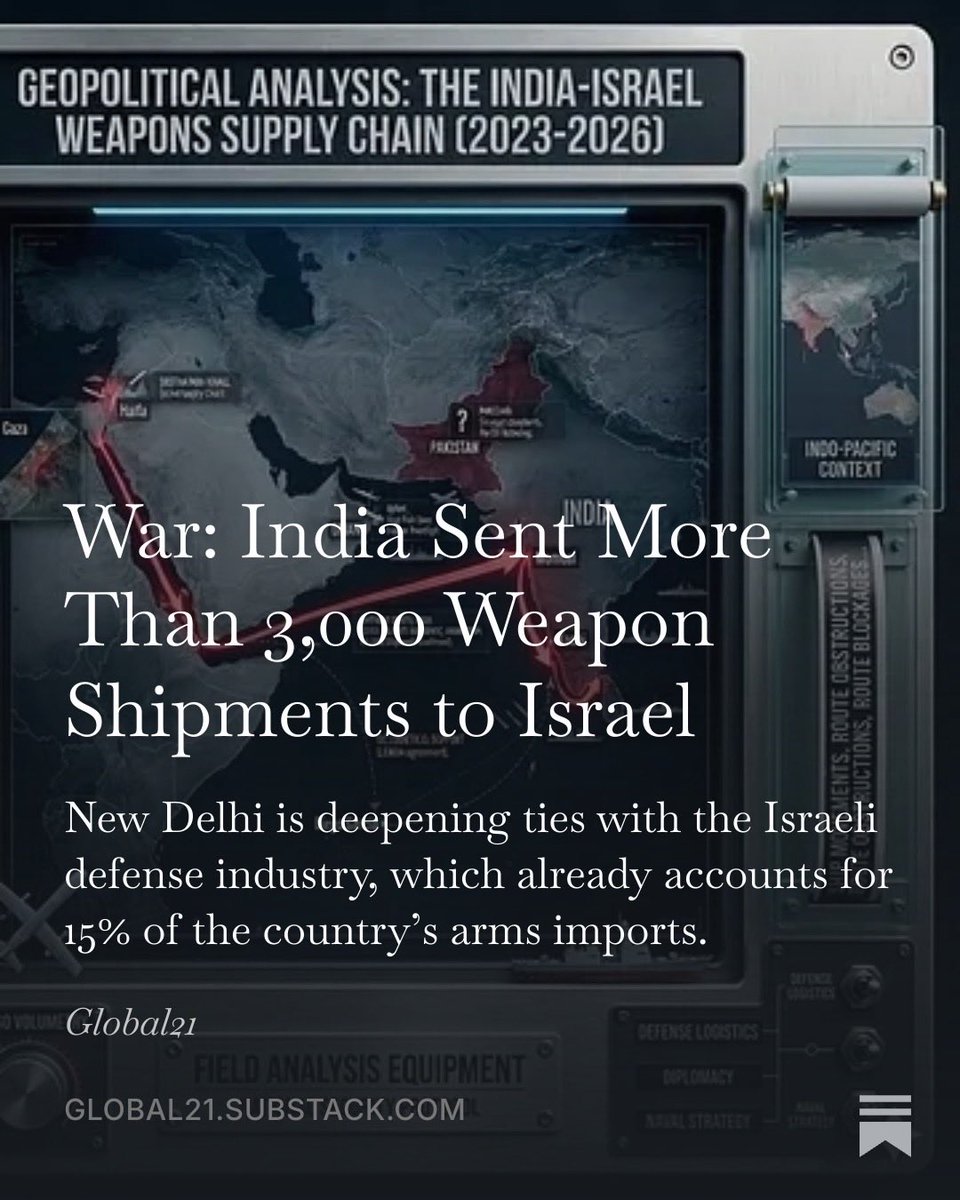
War: India Sent More Than 3,000 Weapon Shipments to Israel
A report by Amnesty International, confirmed by the Indian government, shows that Israel received 2,596 confirmed shipments of weapons between October 2023 and November 2025.
These transfers did not stop there. As the organization has confirmed that exports and joint supply chains remain active in 2026, even after repeated international warnings, I dare to state that the total number of shipments, including those conducted in secrecy and those from 2026, exceeds 3,000.
This places India’s military industry as an active participant in the devastation of Gaza, alongside those of the United States, Germany, the United Kingdom, and other European countries.
In June and July 2026, Amnesty International sent official notifications to the Indian state and to nine companies involved, demanding explanations. No response was received from the authorities by the time the document was published. Meanwhile, the partnership between India and Israel continues to consolidate.
In June 2026, senior officials from Israel’s Ministry of Defense made official visits to India to align regional security interests and strengthen industrial ties. Indian companies operate in partnership with Israeli defense giants such as Elbit Systems, producing armaments under the Made in India policy.
Cheap Indian labor is precisely what these corporations seek.
But the exports were not carried out solely by Israeli companies operating in India; they directly involved the Indian government and public-sector companies.
There were direct shipments of weapons manufactured by enterprises owned by the Indian state itself and controlled by the Ministry of Defense, such as MIL and Yantra.
Even when production is carried out by an Israeli company operating inside the country, these weapons cannot leave India without explicit approval from the government in New Delhi.
India’s Ministry of Commerce and its customs authorities had to issue specific military export licenses for each of the shipments sent throughout the conflict.
The Indian government has stated that the country maintains a robust export-control mechanism and that all military transactions comply with international obligations and laws.
However, there is no dispute over legality here, the core issue is the morality of the act itself.
New Delhi is deepening ties with the Israeli defense industry, which already accounts for 15% of the country’s arms imports.
Read more:
https://t.co/R8P7eOIcvh
@BrettErickson28 Not to mention cost and viability of alternative routes and risks associated with with them after all investments goes into them. They usually need huge pump stations that require constant maintenance which in return can handle only part of the production.
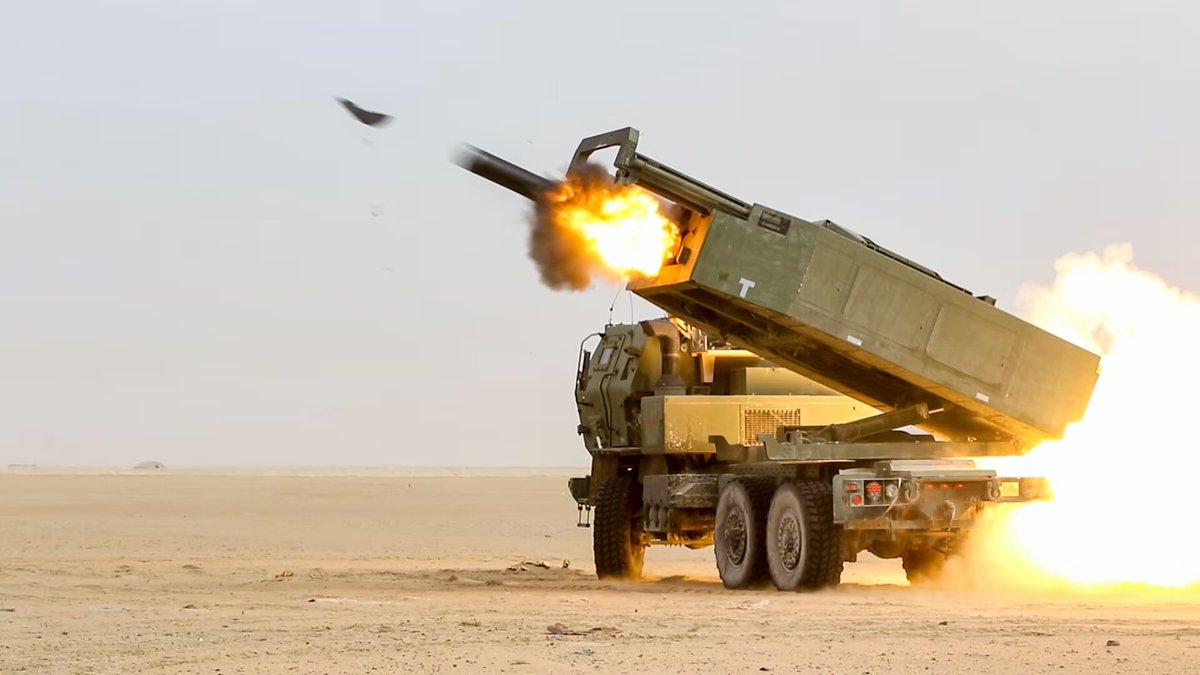
The US Army has used up much of its global stockpile of highly accurate long-range missiles during its five-month war with Iran, according to three people familiar with the data, raising concerns about the military's readiness for future conflicts https://t.co/rOaKf7L4xY
🚨 THE US GULF BASING NETWORK JUST COLLAPSED IN FIVE MONTHS:
The last time a superpower watched its forward bases go from "fully functional" to "uninhabitable" this fast, it was the fall of Da Nang.
– Before February 28, the US ran 13+ major bases across the Gulf — all fully functional, all forward-deployed within range of a rival for the first time in decades
– NYT, March 25: most of those bases are now "all but uninhabitable" — Kuwait's cluster hit hardest of all
– NYT's own mapping found at least 11 of those bases confirmed damaged, 17+ total US sites struck, several hit repeatedly
– Al Udeid Air Base, Qatar — the LARGEST US base in the Middle East, ~10,000 troops — early-warning radar destroyed, a building leveled by July
– NSA Bahrain / 5th Fleet HQ — comms gear, warehouses, satellite terminals hit — repair bill alone: $400,000,000
– Port Shuaiba, Kuwait — the Army's tactical operations center DESTROYED — 6 American service members killed in that single strike
– Prince Sultan Air Base, Saudi Arabia — refueling tankers and comms equipment damaged, troops killed and wounded
– Ali Al Salem and Camp Buehring, Kuwait — aircraft shelters, fuel depots, maintenance bays all hit
– Iran fired 1,770+ missiles and nearly 3,955 drones in retaliatory waves since February 28 — and strikes are STILL landing in August
– CFR's count: 17 Americans dead, roughly 500 wounded, billions in equipment lost — nearly all of it tied to base attacks
– Of the roughly 40,000 US troops stationed across the region, thousands were dispersed — some rerouted as far as Europe
– Land forces are now largely running the war from hotels and office buildings. Only the aircrews stayed on base.
– A retired US operator's warning came true almost immediately: "you're absolutely going to lose capability"
– Camp Arifjan sits 62 miles from Iran. The Bahrain fleet HQ sits 128 miles away. None of that basing map was built for weapons this precise, at this range.
The Pentagon doesn't call this a retreat. It calls it "expedient operations."
Whatever they call it — a basing network built over two decades to project American power across the Gulf just spent five months getting dismantled in real time, and it still hasn't been rebuilt.
I'll keep you updated. Turn on notifications. 🚨
I knew Iran would be a pain in the ass for the United States, but I never imagined it would turn into such a humiliation. Despite America's overwhelming technological, economic, and military superiority, Iran rubbed America's nose in the mud.
Now imagine the United States, in its current state, going up against China.
These increasingly dire warnings about how the US has largely depleted its anti-missile defense systems and even offensive weapons like these have been circulating in DC for 18 months at least.
The US gave them to Ukraine and Israel, and used them against Yemen and Iran, and to protect Israel and Persian Gulf dictatorships.
The US spends more on its military than any other country *by far.* And yet the Pentagon hasn't been able to pass an audit in many years, and doesn't have the weapons needed to fight a protracted war against Iran, to say nothing of doing something like defending Taiwan.
One can debate if that's a good or bad thing -- that's a separate question -- but the corruption and waste of US taxpayer money to fill the pockets of Boeing, Raytheon and Palantir is virtually unlimiated.
The U.S. Army has used up “virtually all” of its stockpile of highly accurate long-range missiles during the last five months since the start of the Iran War - munitions which would be crucial in any conflict with China - including most of its stock of Army Tactical Missile Systems (ATACMS) and Precision Strike Missiles (PrSM), three people familiar with the data tell Reuters.
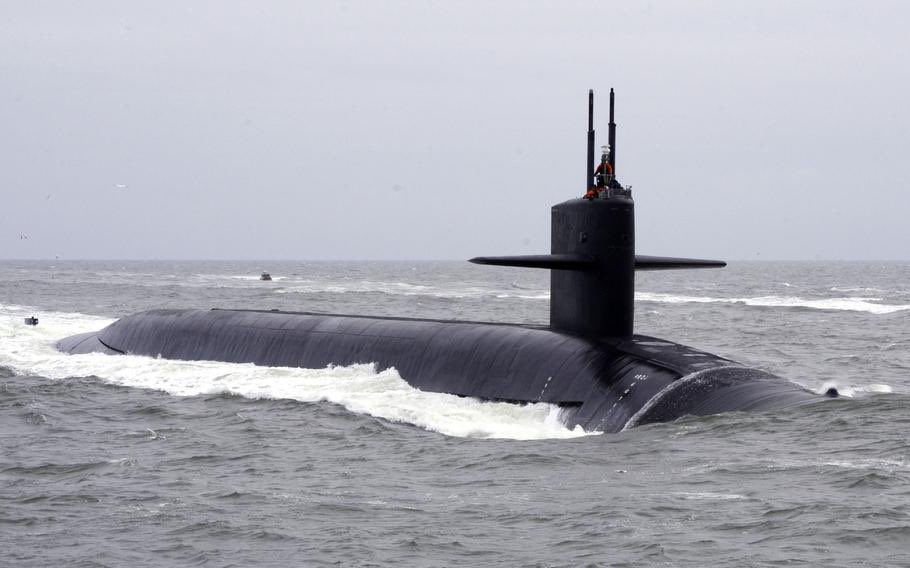
The U.S. Navy has announced that Cmdr. Joseph Sammur, the Commander of the Blue Crew of the Ohio-class nuclear-powered ballistic missile submarine USS West Virginia (SSBN-736), has been relived from command due to “loss of confidence,” by the Head of Submarine Squadron 20 (CSS-20), based out of Naval Submarine Base Kings Bay, Georgia.
🇮🇷🇮🇶 Iran has made a rare admission of ground operations inside Iraq’s Kurdistan Region, but left one crucial detail unanswered: when did they happen?
Brig. Gen. Mojtaba Jafari, adviser to Iran’s Army commander, claimed commandos from the 23rd NOHED Airborne Special Forces Brigade conducted 14 operations around Sulaymaniyah and Erbil against Iranian Kurdish opposition groups.
Jafari said an unspecified number of fighters were killed and others captured, while all Iranian troops returned without losses.
If recent, this would represent a serious escalation beyond Tehran’s missile and drone strikes, with Iranian soldiers physically crossing into Iraqi territory. Yet the statement gave no dates, precise locations, named targets or casualty figures, and there has been no independent confirmation from Baghdad or the KRG.
The omission of a timeline may be the most important part.
India’s foreign policy resembles Turkey and honestly speaking , is multipolar without special interests embedded in. That won’t be a consistent reliable ally for Israel . Israel needs to learn to act normal and baby steps his way on to walking on its own feet.
🇮🇱 Israel is LOSING TRUST in the 🇺🇸US… and now Officially BETTING BIG on India. 🇮🇳
🇺🇸 US: Leaders like Mamdani and their influence is creating REAL STRAINS!
🇺🇸 US: Public support for Israel is DECLINING fast in America!
🇮🇱 Israel: We know that…
🇮🇱 Israel: We must build more alliances… not only with you.
🇮🇱 Israel: That’s why I’m investing HEAVILY in our relationship with India.
🇮🇱 Israel: Modi is one of our GREATEST friends. The support is UNBELIEVABLE!
Context: Netanyahu said Israel needs to invest heavily in its relationship with India.
(Satire Warning: Fictional quotes)
🇮🇱 Israel is LOSING TRUST in the 🇺🇸US… and now Officially BETTING BIG on India. 🇮🇳
🇺🇸 US: Leaders like Mamdani and their influence is creating REAL STRAINS!
🇺🇸 US: Public support for Israel is DECLINING fast in America!
🇮🇱 Israel: We know that…
🇮🇱 Israel: We must build more alliances… not only with you.
🇮🇱 Israel: That’s why I’m investing HEAVILY in our relationship with India.
🇮🇱 Israel: Modi is one of our GREATEST friends. The support is UNBELIEVABLE!
Context: Netanyahu said Israel needs to invest heavily in its relationship with India.
(Satire Warning: Fictional quotes)
U.S. oil refineries are delaying maintenance and running at OVER 100% output through Q2 of this year.
If these refineries are not brought down for required maintenance very soon, they literally start to blow up and kill lots of workers.
There are MANY examples of this over the last 25 years or so: The BP explosion in Texas City, Texas. The Marathon Petroleum explosion in Galveston Bay, Texas. The Tesoro accident in Anacortes, Washington that blew up and killed 7 workers. The Chevron El Segundo, California fire in 2025 (which actually didn't kill anyone, thankfully).
Delaying maintenance on refineries is a risky gambit. It seems that Trump is pushing U.S. refineries to delay maintenance (that's my take on it, anyway) and maximize output to try to keep fuel prices low.
This casino-like attitude of pushing oil refinery equipment to its limits can end catastrophically. Explosions or fires can END refineries forever, or in other cases require years of major repairs.
I wonder how far Trump is going to push things in this vector, and I pray we don't see refineries start blowing up and killing workers.
Agreed. What long-held assumptions must be revised? Here is what we have learned since February:
A. The mature precision-strike regime is definitely here. The second missile age is strategically defense dominant in the sense that it is biased in favor of the situated power and against the power projection of the visiting world power. This is by definition a multipolar world.
B. The US command of the global commons is gone. There are now zones of denial near the great missile powers where the US does not enjoy unimpeded military access. These great missile powers are poles of the multipolar world.
C. The problem of base vulnerability has emerged as the paramount problem of US force posture. The US is in the process of closing down its bases within range of Iranian SRBMs because they are too vulnerable to Iranian precision strikes. The problem of base vulnerability is even more pronounced in the Western Pacific, given the scale of Chinese missile capabilities. Both the HAS solution advocated by the defense intellectuals and the air force's idea of agile combat employment (ACE) are mathematically challenged. All China needs to defeat HAS and ACE is field sufficient missiles and drones to neutralize both. I have shown how US bases in the region will not survive the first week of a Chinese counter-base campaign, even with their present limited missile order of battle.
D. Deterrence in Asia is dead. Not because the interceptor magazine is depleted, but because it was wildly insufficient to begin with. In the era of precision-mass, active base defense cannot work in the vicinity of the great missile powers.
E. The second missile age has ended the sanctuary era. Iran has proven that the US cannot count on in-theater rear-area sanctuaries. Given China's present and future conventional ICBM capabilities, there will be no sanctuary at all in a war with China. This means in particular that attacking launch sites on the Chinese mainland will almost certainly result in missile strikes on the US homeland.
F. Ultimately, all the foundations of the unipolar world have vanished. The US has a long way to go before the means and ends of US military policy and force posture are reconciled. The US needs to revert back to a grand-strategy of hemispheric defense. There is no recognition of this in the establishment although sane voices are beginning to emerge. But the imperial political culture means that the adjustment process will be long and painful.
https://t.co/S7E5asxN9Q
Iran has localized the production of more than 2,000 petrochemical components that were previously imported under sanctions.
ACECR says it has developed domestic designs and technical documentation for all of these parts, allowing Iranian manufacturers to begin mass production.
Iran is also preparing a roadmap to make the country's petrochemical industry more self-sufficient.
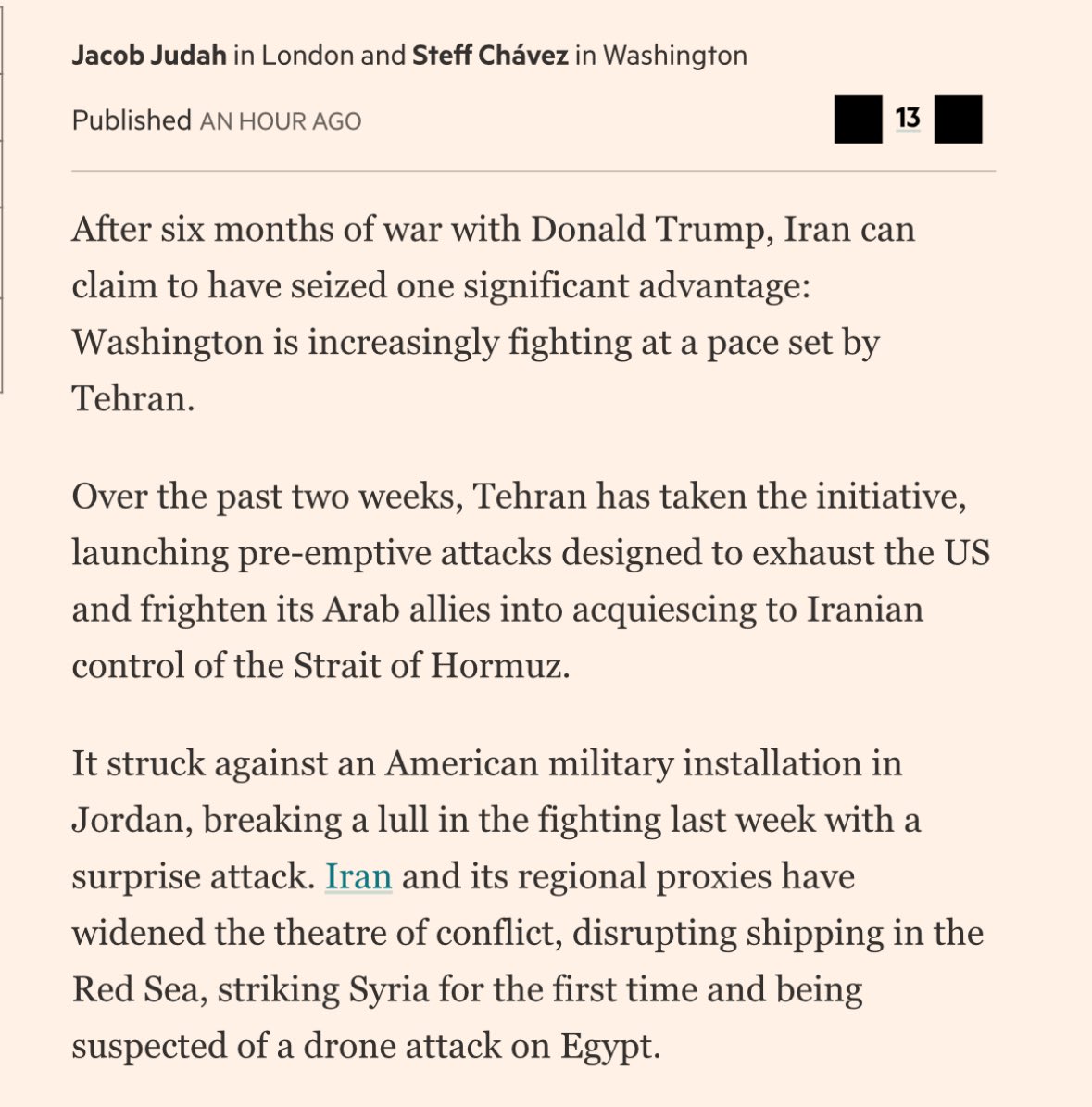
The FT confirms that the US has withdrawn its presence from Kuwait & Bahrain after Iranian attacks.
The US is now fighting at a pace that’s set by Iran.