Wait - what heck is a “non-practicing white”? I thought the whole point of “white privilege” is that you can’t help it. Now it’s something you can opt out of???
Liberals can’t even figure out their own ideology 🤣
At 35,000 feet, there is nowhere to run. No backup. No second chances. Just seconds between survival and catastrophe.
When terror tried to bring down an aircraft carrying 180 innocent souls, ordinary men refused to let evil win:
• Captain Smit Machchhar took the brunt of the violence, fighting off the attacker with raw willpower to break open the cockpit door.
• Asaf Redjuan charged straight into danger without hesitation to neutralize the threat.
• Tzvika Mans, a father protecting everyone on board, pinned the attacker down and bound him tight with a cable.
• Yaniv Hayon seized control of the cockpit amid sheer chaos, keeping the aircraft stable in the sky.
• Dr. Shota Musaev went straight to work under pure adrenaline, staunching the captain’s massive blood loss and keeping him alive.
No capes. No Hollywood script. Just five men, bound by duty and courage, who stood as a living wall between 180 passengers and total disaster.
They all went home safe.
Know your real Avengers. 🫡✈️
#RealHeroes #TrueCourage #AvengersInRealLife #Bravery #IncredibleStory
‘We can upgrade this as an altercation to an averted terrorist attack.’
GB News’ @CDP1882 brings an update on the Flydubai flight from the UAE to Tel Aviv having to make an emergency landing amid an ‘altercation’ on board.
NOW: Passengers have arrived safely at Ben Gurion Airport in Israel after HEROIC Indian captain Smit Machchhar fought back — opening the flight deck door so help could get in — while covered in blood after being stabbed by the Omani First Officer, who attempted to crash Flydubai FZ1073 into the ground.
Fox News: “The New York Post is identifying that hero pilot. They say he's an Indian national… Smit Machchhar… he's got nearly 10,000 hours in the air. He was credited with averting a possible terror attack on Tuesday. And he was the first one that alerted the crew and passengers aboard the plane that he needed help in the cockpit.”
@StephenMPinto The absurdity of our city is reverberating throughout the world. Eye rolls aside, I am frightened that we still have the mentally walking dead running our city government.
There is something deeply satisfying about watching the giant fog machine fail.
A judge does something absurd, dresses it up in the language of compassion and theory, then discovers that an American Senate hearing is one of those inconvenient places where someone may actually read the words aloud and ask what the hell they mean.
No euphemisms. No activist jargon. No institutional shrug.
You wrote it. You defended it. Now explain it in public.
More of this. Much more.
Day 3 | Sandie Peggie v Royal College of Nursing
Solidarity, subject to availability
Sandie Peggie belonged to the Royal College of Nursing for about thirty years. After her dispute over a man using the women’s changing room at NHS Fife, she might reasonably have expected her union to help defend her position. She is now challenging the union itself over its refusal of legal support. An expensive way to discover what your subscription covers.
Today’s witness was Norman Provan, the RCN’s associate director for employment relations and the man who refused legal assistance for her second tribunal claim. Questioned by David Hay KC, the union’s barrister, he said Sandie’s gender-critical beliefs had played no part. He had applied the rules.
Then Naomi Cunningham, Sandie’s barrister, opened the rulebook. An inconsiderate habit.
One reason for refusing help was that Sandie had already obtained independent legal advice. But the guidance said the RCN “may” decline representation. Cunningham pressed the difference between having discretion and having your hands tied.
Provan defended his interpretation, distinguishing legal assistance from the workplace representation the union had continued to provide. That distinction matters. So does Cunningham’s challenge: whether the union was genuinely prevented from helping or had chosen to refuse.
His other explanation concerned the relationship between Sandie’s claims. He thought she should amend the first rather than pursue a second. He had consulted legal advisers, he said.
He had, however, read neither the pleadings nor the disciplinary investigation report. He accepted that his understanding was more superficial than that of Sandie’s own legal team.
Nevertheless, advice was available. Funding, less so.
He had also described separating the claims as impossible. Under questioning, he accepted that “impossible” was too strong a word. It could be done; he thought joining them would be better.
An unfortunate shrinking of the obstacle. Sandie had been refused help on grounds which now required rather more delicate wording.
Cunningham also returned to Lisa Mackenzie, the former RCN employee investigated over outside work criticising prison policy. Provan spoke of reputational risk and relations with the prison service. Cunningham kept asking which publicly adopted RCN position Mackenzie had contradicted.
Apparently, identifying the forbidden opinion was considerably harder than investigating the woman who expressed it.
Provan accepted that social-media material from an active RCN student member was threatening towards people with gender-critical beliefs. It included encouragement to attack “TERFs”. He said he first saw the posts during this tribunal. Mackenzie’s concerns about that member’s access to her workplace made a grim accompaniment to the discussion of reputational sensitivity.
Then came the RCN’s supposed neutrality.
Cunningham examined its earlier clinical guidance on accommodating patients according to gender identity, corporate participation in Pride, and Pride merchandise. Provan distinguished clinical guidance from union policy, but accepted that the Pride event celebrated gender ideology. He could identify no comparable event for gender-critical members, though he said the union could stock a badge for them.
Women seeking recognition of biological sex can apparently look forward to a hypothetical accessory.
Meanwhile, Margaret Gribbon, Sandie’s solicitor, had asked why the RCN could write to the Darlington trust about single-sex facilities but not do likewise for Sandie and her colleagues.
Provan pointed to Scotland’s partnership machinery and the workforce and governance group known as SWAG. He denied the union had done nothing. The issue had been raised through the proper structures. His response to further pressure was that they were waiting for the Scottish Government.
Sandie needed help with the changing room she actually used. The committee was elsewhere.
Cunningham kept bringing the discussion back to what the union could actually do for its member. Provan stood by his decision. The discretion, the unread documents and the retreat from “impossible” remained.
Thirty years of membership ought to buy a woman more than an expertly explained refusal.
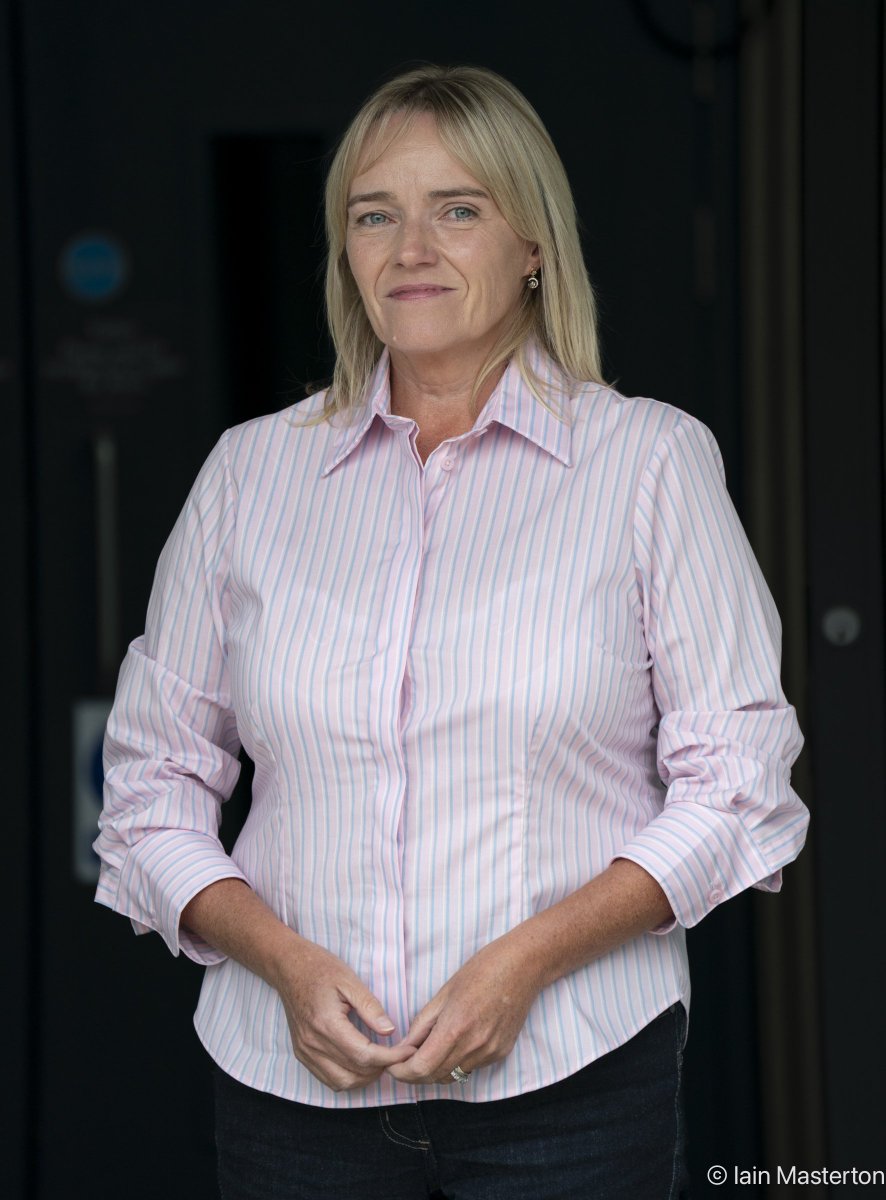
Photo: @iain_masterton
Good news you probably haven't heard:
The Great Barrier Reef's five best years of coral cover in the 40-year record are the five most recent.
After decades of predictions of its imminent demise, the reef stubbornly refuses to die.
My new @latimes op-ed:
https://t.co/YWYdK7CKuJ
Note no mention of how they died and who was responsible. No mention that they were innocent civilians starting their work day and first responders who went to save them.
No mention of the highjacking of the airplanes that were flown into the World Trade Center. No mention of murder or terrorism or who was responsible. Just a benign statement that a few thousand people died that day. He seems to imply they died of natural causes.
Now can you understand why the families don’t want @NYCMayor Mamdani at the 9/11 memorial?
An amazing video of Dolly Parton singing one of her most famous songs in Páidí Ó Sé’s pub in Ventry Co. Kerry 🇮🇪 in 1990
How did Páidí pull that coup off
#RIPDolly
“Ayaan Hirsi Ali was challenged over her views on Islam and Sharia law… but the debate quickly turned explosive.”
Speaker: Ayaan, you've been quoted as saying that if refugees are coming to this part of the world and bringing their misogynistic views on Sharia law, then they'd better just take a legal U-turn.
People have said Ayaan Hirsi Ali and Donald Trump are speaking the same language. So how do you feel about being on the same side as Trump?
Ayaan Hirsi Ali: I've been doing this for about the last 14 or 15 years, and maybe I'm allowed a sigh.
Because number one, I'm amazed at the betrayal of Muslim women who, for whatever reason, have had an education and are able to emancipate themselves from Islamic law, insisting that Islamic law is not what it is and that we don't understand it.
We live in the Information Age. We are literate. Any of us here can pick up the Holy Quran and read the Hadith.
And beyond that, because we live in this age of interconnectedness, we can take a look at the facts of where Islamic law is implemented, what it looks like for everyone, and typically what it looks like for women.
Saudi Arabia is a country that implements Sharia law.
Women are not allowed to drive. They have male guardians. Their testimony is worth half of that of men.
They are subjected to every possible humiliation that you can think of.
Ayatollah Khomeini, in 1979, with a great deal of public approval, became the Supreme Leader. He implemented Sharia law, Islamic law.
One of the first things that he did, he reduced the age of marriage to nine.
Everywhere where Islamic law is implemented, you have exactly that.
Speaker: Who's the "they"?
Ayaan Hirsi Ali: Those who are pushing for Sharia law and those who want to implement Sharia law.
Speaker: But none of us are, so that's not a matter of debate.
Ayaan Hirsi Ali: The Prophet Muhammad took Aisha, one of his wives after Khadijah died, when she was six, and had sex with her when she was nine.
That is Sharia law.
I do not understand how someone
Speaker: But this is not a debate about Sharia law.
Ayaan Hirsi Ali: But this is for Sharia law!
You want to get rid of child marriage? Get rid of Sharia law.
Speaker: Although it embarrasses me on a global stage to say this, child marriage is common in many cultures, including in Hindu societies.
Ayaan Hirsi Ali: That's why
Can I just get in?
Speaker: All right, I just want to bring in Farah and Hibaaq.
What you are saying, Ayaan, doesn't really make sense.
I'm glad that you have moved from calling for a war on Islam to saying maybe there is a possibility.
In 2007, when you had that interview with Reason magazine, you said we have to go to war with Islam.
That was shocking for a woman to be advocating for that.
Ayaan Hirsi Ali: Can I answer that?
Speaker: Let her have a sentence.
Hibaaq Osman: For someone who has actually asked for Islam to be defeated militarily, I am really surprised that you are still saying the same things.
And now you are backpedaling
Ayaan Hirsi Ali: Islamic law.
Ladies and gentlemen, this is
Islamic law
Hibaaq Osman: You cannot come here to talk about reform that does not exist.
Speaker: Okay, I'll tell you one thing: none of these women are constrained by their religion.
Hibaaq Osman: No, my point is you cannot reform anything if you don't have the credibility.
The fact that you said we have to defeat Islam, you surrendered your credibility.
Speaker: Okay, let me get my point in.
Hibaaq Osman: There's no time.
But the point is, those who claim to be able to reform their society have to be in their society.