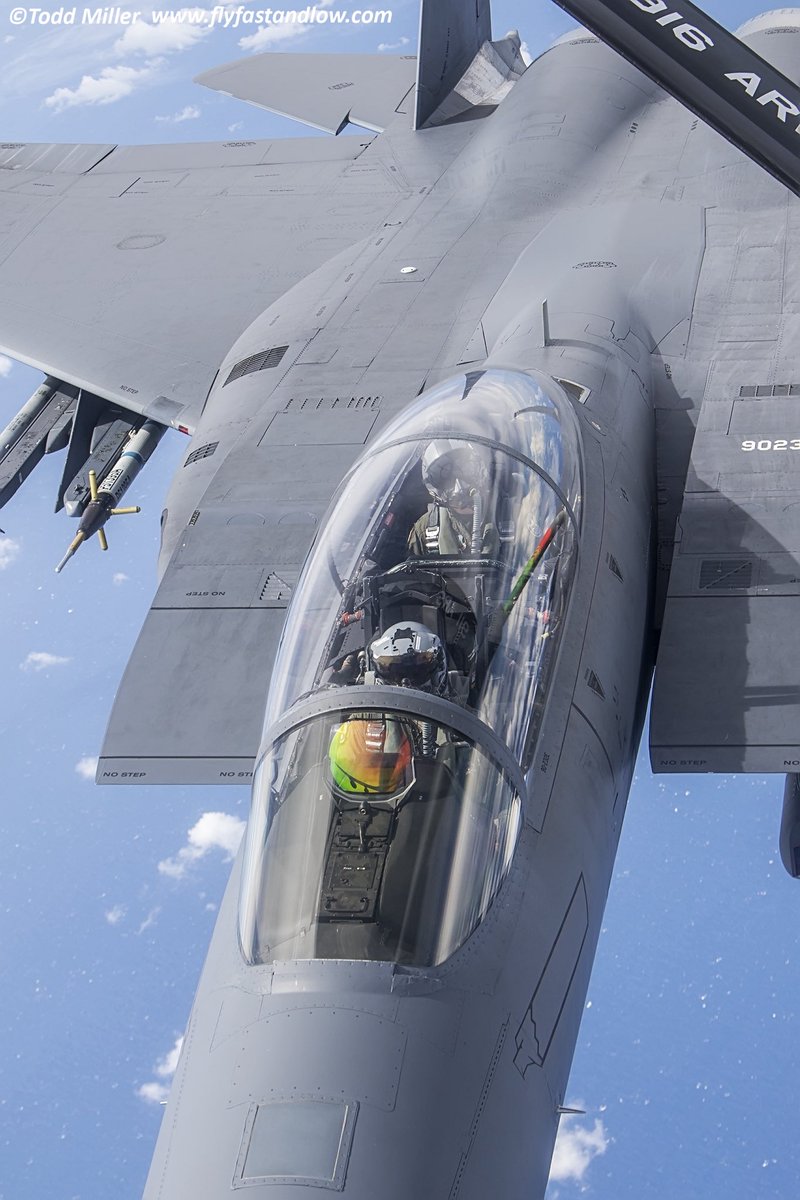
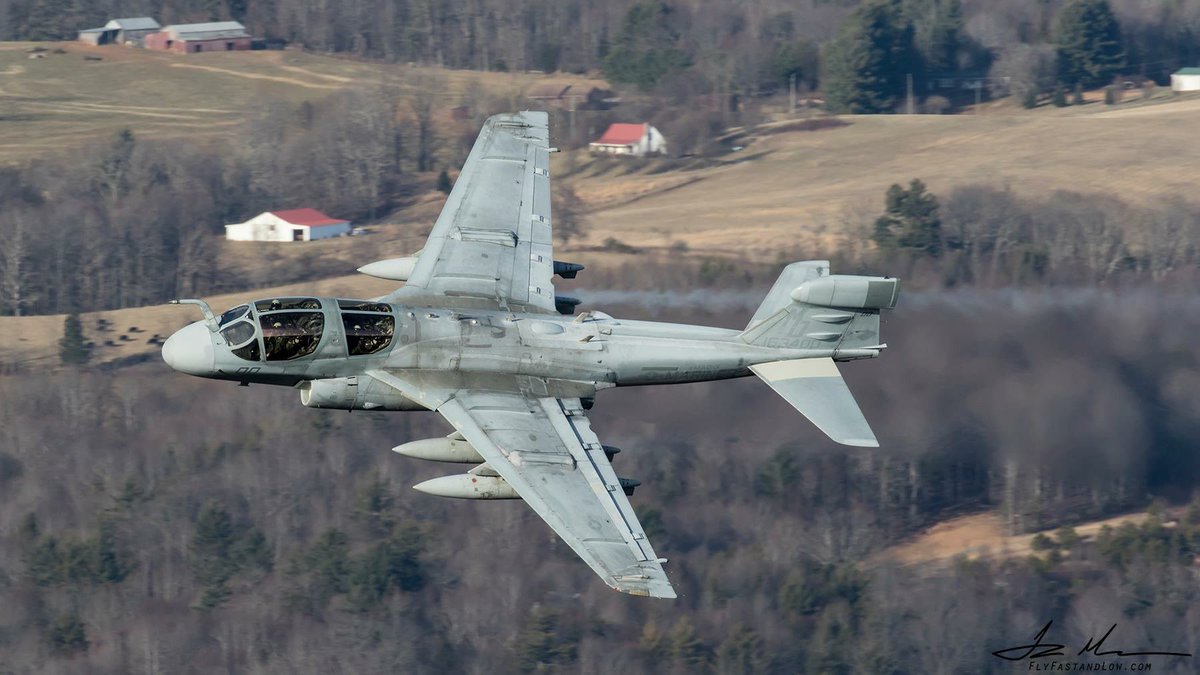
@realmikeglynn A solid insight - there’s nothing quite like the anticipation too, and the cat launch. Stops pretty fast too! All absolutely packed tight.
Survivability in Context: The A-10 in Operation DESERT STORM
“I haven’t had a day off since the shooting started. I have, as of [February 10], dropped 17 tons of Mk-82, 6 tons of Rockeye anti-tank CBU; fired 14 Maverick missiles, and shot 3.400 rounds of 30mm party mix at various tanks, APC’s, and artillery sites in Iraq and Kuwait. The A-10 is doing things no one ever anticipated, including deep strike/interdiction on mobile Scud launchers, Wild Weasel duty, armed recce, escort, air-to-air, cargo (mail delivery) and of course, SAR. I’ll be honest—70-80 miles behind enemy lines is no place for the Hog, but so far we’ve done o.k. They tell me this builds character. We can’t wait for the ground war to start so we can begin doing Close Air Support.”
--anonymous A-10 Pilot, Operation DESERT STORM
“I take back every bad thing I ever said about the A-10; I love ‘em—they’re saving our asses!”
--Gen Charles “Chuck” Horner, Combined Forces Air Component Commander
Depending on who’s writing the article, the A-10’s service record in Operation DESERT STORM is either immediately maligned or heralded. In response to the numerous detractors, I offer this in-depth and researched rebuttal to the claims that the Hog’s performance in 1991 proves its irrelevance in all major combat operations.
The quotations that open this discussion showcase the dichotomy of the situation. An author opining about the vulnerability or inappropriateness in the inventory seizes upon the opinion of the A-10 operating 70-80 miles behind the front. Indeed, the casualties that the Hog community took over the Republican Guard during this timeframe seem to support that contention, and represent the bulk of arguments against the A-10. Many pundits point out that the A-10s were “pulled back” after suffering catastrophic losses.
As always, a great deal of context must be applied to the historical record.
That context BEST comes from the compiled stories of the Hog Drivers themselves, which William Smallwood detailed exhaustingly in his work, “Warthog: Flying the A-10 in the Gulf War.” As one carefully looks into this context, the line from our opening quotation begins to shine as perhaps the most relevant: “The A-10 is doing things no one ever anticipated…”
The question that a discerning disciple asks comes as “WHY were A-10s tasked to operate 70-80 miles behind enemy lines against the most potent units of the Iraqi military?
In short-form, because no one else could get the job done.
That’s a knife-hand throat-punch that some might immediately dismiss as 30mm chest-thumping or peacocking. So let’s dive into the historical record and support the contention.
A-10s started losing aircraft in DS when they were tasked to do something beyond what they should have. Before the ground offensive launched, General Schwartzkopf needed 50% attrition of Iraqi units, especially those of the Republican Guard. Aircraft with the best sensors were providing inconclusive BDA, and General Horner knew that there was one community that he could rely on to get the answers;
You guessed it, the A-10s.
With nothing more than eyeballs and binoculars, they went up there and got the numbers... and lost a few of their own in doing so. Additionally, answering non-standard tasking, they were asked to set oil trenches ablaze, and that ended poorly, losing an A-10 after multiple passes attempting something in combat that equated to “making it up on the spot.” One A-10 pilot sacrificed himself by continuing to fight in the target area where his wingman was just shot down-- Steve Phyllis gave his life trying to protect his wingman- the only thing that could keep him from fighting for his brother, was his own death.
Also of extreme note, A-10s successfully accomplished direct attacks on SA-3s and SA-6 missile systems—again, because they were called up based both on their successes and the inabilities of other communities to get the job done! These events contributed to the labeling of the Hog as the RF-OA-10G during the war. William Smallwood illustrates the lead-up to this raid in the following passage:
“We were specifically tasked against an SA-3 site, but we learned later at the intel briefing that we were going to be near four SA-8s and two Rolands at Ali Al Salem, that we were going to be inside an SA-2 ring and kissing the edge of an SA-6 ring—plus being vulnerable to all the AAA they had in the area.”
The mission was successful, and “it just encouraged the guys in Riyadh to say, ‘Hey, guys, go on up north in Kuwait and strike those SA-6s.’”
Smallwood writes, “That is what they did, of course.”
NO A-10s were lost in those raids.
Nearly all hits were attributed to infrared missiles that were better able to acquire and engage the A-10s because they were still painted green and easier to see in the daytime, a limitation that USAF brass had been briefed upon prior to the war. "Bring 'em green or don't bring 'em” was what the community was allegedly told. Of the losses in Desert Storm, two A-10s flew as single ship without mutual support, and most occurred after a minimum of five passes in the same target area.
In an article for the Project on Government Oversight (POGO), Pierre Sprey and Winslow Wheeler write:
“In a 235 page unclassified report, GAO extensively assessed the Desert Storm Air War. That report evaluated the aircraft survivability data in some detail. The casualty figures cited above are indeed accurate, but GAO also found that the stealthy F-117 flew so few combat sorties and the A-10s flew so many that their survival rates were statistically indistinguishable: GAO found that "This calculation showed that 0 hits would be the most likely outcome for a non-stealthy aircraft [including the A-10] conducting 1,788 strikes [the number of missions performed by the F-117]. This indicates that although there were no F-117 casualties in Desert Storm, the difference between its survivability and other aircraft may arise from its smaller number of strikes as much as other factors."
GAO also found the total casualty rate of the A-10 (for aircraft both shot down and damaged) was extremely low, just 0.0023 aircraft per sortie, and that it was zero for the missions the A-10 flew at night-the only environment the F-117 operated in. Significantly, the A-10 flew sorties more frequently at night than did the F-117, and it faced both daytime and nighttime defenses more lethal than the type deployed around "downtown Baghdad" that the F-117 typically flew against, according to GAO.
Both the A-10 and the F-117 also flew in the Kosovo Air War in 1999 against Serbia. In that conflict, one F-117 was shot down, and one was significantly damaged. Flying a greater number of sorties, no A-10 was shot down.
--POGO.org, “Chuck Hagel’s A-10 Legacy” Pierre Sprey and Winslow Wheeler
https://t.co/9f4sDspHMn
A similar discussion on actual A-10 casualties can be found on John Q. Public’s site:
https://t.co/2y1Y25VoB4
The key takeaway from this initial discussion balances two points: first, the A-10 as a weapon system was CRITICAL during the execution of Operation DESERT STORM: the 144 A-10s deployed represented about 17 and 30% of the total sorties (depending on source and data) but accounted for MORE THAN 50% of the total damage inflicted on the Iraqi military. The A-10s and their Hog Drivers were asked to do nearly impossible things, and they got it done. They took some significant hits, lost some friends, but most importantly:
THEY DID WHAT THEY WERE ASKED TO DO AND WERE SUCCESSFUL IN ACCOMPLISHING THE TASKS GIVEN TO THEM.
That fact CANNOT be overstated, and returns the discussion to the quotation by General Horner. A reputed critic of the A-10, he bellowed that now infamous quotation in the heat of battle as the venerable Warthog answered his challenge and “saved [their] asses.” Later, he would return to the ceaseless criticism of the platform, but when the cards were down, he admitted what the A-10 community already knew. They’d do the job that was asked of them, no matter the cost.
Fast-forward 22 years: A-10s were assigned to a very risky mission of escorting C-130s and C-17s conducting the airborne assault on Saddam International airport. The Hogs were assigned the task of trolling the route for air defenses, and the threat level was deemed so high that planners expected to lose 25% of the airlifters, and up to 50% of the A-10s. The kicker is that the Hogs would fly the mission TWICE—once the night before to begin finding, fixing, and eliminating the defenses, so pilots assigned to this mission were accepting a 25% chance of survival (according to the planners). Not a single one flinched or asked to be removed from the mission. The mission was never flown as ground forces overran the airport more quickly than originally envisioned. Every pilot assigned to that mission may have been anxious, but their first thoughts were for the airlifters and paratroopers aboard those heavies—each loss there would claim between fifty and seventy-five Americans, and the A-10 pilots took the responsibility of escorting that formation with the utmost seriousness.
We can journey further into the details of this rabbit hole and prove that the A-10 is far more survivable than acknowledged, and when compared to all other fighters as a class comparison, it more than holds its own.
In conducting research on EVERY A-10 casualty, the numbers actually support the viability of the Hog, not the other way around.
1991. 13 "fast-movers" were shot down before the first A-10 got bagged. 13. Including 2x F-15Es and 2x F-16s. Also in that list were the F/A-18, A6E, AC-130, OV-10, F-14, AV-8 and F-4.
Admittedly, context matters-- target location... threat environment... package composition... etc. However, as mentioned earlier, A-10s were tasked specifically against Surface to Air Missile sites themselves, and executed those missions without casualties.
4 A-10s were shot down, 2 of which were single ship with no visual mutual support and had spent extensive time over the same target area. One loss was an aircraft that executed a belly landing after FIVE passes attacking oil trenches and trying to light them on fire, and another was lost on an attempted landing with significant battle damage.
Interestingly: If A-10s only ever accomplished one attack and then returned to base, the loss rate would be ZERO. Not a SINGLE ONE SHOT DOWN, EVER.
Better yet... if A-10s had ever only accomplished TWO passes in the target area, the loss rate would still be ZERO.
Caveat: one FAC-A shot down never rolled in, but did spend 40 minutes in the same area, descending from 17,000' down to 8-9K with no support, and limiting his own lookout by using binoculars to identify targets. Perhaps another article describing the lessons of each individual loss might be appropriate; the researching of these events has led us to the conclusion that the root cause more often involved the selection (or requirement) of particular tactics rather than any particular vulnerability of the airframe itself.
Let's talk loss rates: The Hog had one of the lowest loss and getting-hit rates of Desert Storm. Depending on the source referenced, there exists a few differing statistics on sorties: conservatively, A-10s flew 8,100, though that number has been published also at just above 8,600. Statistically, the loss rates change by a fraction of a hundredth, and for this we'll go with 6 aircraft lost due to battle damage, though only 4 were shot down.
A-10 loss rates then are at .07. Let's compare that to the F-15E, which lost 2 jets (both before the first A-10 was shot down), which was credited with flying 2,200 sorties. That's a loss rate of .09. Most strike eagle sorties were also of the one-target, one pass, armed interdiction type. A footnote exists in official USAF after-action reports when it comes to loss rates-- they did not account for multiple passes accomplished by the A-10, so one sortie was attributed to one attack.
As quoted in official Desert Storm after-action materials, The A-10 is the only aircraft that this was done for in this manner due to record keeping.
14 A-10s suffered appreciable damaged during the war, which some like to use as their "Ah- HA!" moment. That statistic, as mentioned earlier, buttresses the survivability of the platform, not the vulnerability.
We can then turn to casualty rates for DS, including aircraft "hits." Again, A-10s are attributed with one strike per sortie, so including all hits, that means that A-10s had a hit rate of .23% per attack. F-16s by contrast, with 11,698 sorties (or up to 13,500 depending on the source), had 7 casualties (3 shot down) for a hit rate of .06. Seems like it really favors the Fighting Falcon, right? Well, let's adjust those hit rates by exposure, which the original data did not do. If we assume that A-10s made 2 passes per sortie, that hit rate halves-- .115. At three passes (most-likely scenario with Hogs shooting both mavericks and one bomb pass), it drops to .076. Now, add one gun pass (4 passes per sortie is very likely), and the A-10 passes the F-16 with a .057 hit rate per attack. Now, that's just playing with statistics-- there were some sorties with no ordnance expended, and some sorties with more passes. Sorties with shootdowns occurred on the sixth pass, 9th pass of the formation, and the 3rd pass in a row of trying to ignite oil trenches with rockets. Again, if Hogs never accomplished a third attack in the same target area, their loss rate would be ZERO.
Caveat to the F-16 data: via research on https://t.co/AWiErStfXa, we discovered a link to discussion that analyzed EVERY F-16 casualty and loss, and the numbers are actually worse for the Fighting Falcon than listed above when all factors are considered. Via those sites, we found four shootdowns during ODS: one by an SA-6 (pilot POW), one by an SA-3 (pilot POW), one by an SA-8 (pilot recovered) and one by an unidentified SAM (pilot POW, but an even sadder ending since the rescue helicopter was also shot down).
Additionally, ten total F-16s suffered catastrophic losses during this timeframe; in Desert Shield, a pilot flew into the ground (controlled flight into terrain) due to disorientation at night; a MK-84 detonated immediately after release (pilot recovered); one aircraft destroyed on landing at Al Dafra (pilot killed); engine fire off target—unfortunate timing (pilot rescued); engine exploded ivo Diyabakur—pilot ejected and was recovered. Post war in theater, an electrical failure led to an ejection and recovery. Ten total losses in the same timeframe referenced for the A-10s supposed “vulnerability.”
If we want to play with statistics, we can apply the total losses of fast-movers against the A-10, a comparison that’s completely comparable and relevant since so many pundits like to place the A-10 in a class of its own. Compiled from numerous sources, the list reads as follows:
A-10s lost in Desert Storm: 6 (4 shootdowns)
All others: 25 (10x F-16s, 2x F-15Es, 1x EF-111, 1x F-4, 2x F-18, 3x A-6E, 1x F-14, and 5x AV-8B (4 shot-down, 1 hit and crashed on landing).
For USAF tactical aircraft, fast-movers are lost at three times the rate of A-10s. For all joint US fighters, it’s four times. That statistic plays out once all casualties are included for Operations ALLIED FORCE, IRAQI FREEDOM, and ENDURING FREEDOM. Interestingly, the same comparison can be made in Ukraine when the SU-25 is compared to all other fast-movers, though the ratio is closer to 2:1 fast-movers to mud-movers. While interesting in the foreign comparison, the extreme difference in equipment, tactics, and experience ultimately makes it more irrelevant in applying those lessons to US aircraft and aircrews.
Playing with statistics on the opposite side, the total number of damaged A-10s has been listed as high as 70 during ODS, a figure that a former CSAF dangled before the media in his defense of divestment. However, as described on the 2951st Combat Logistics Support Squadron’s website, many of these were extremely MINOR instances; single bullet holes or even damaged attributed to occurrences such as bomb arming lanyards scratching the sheet metal of pylons. While detractors flock to this high number of “casualties,” this figure actually supports the incredible thought that went into the design of the A-10, including expedient field repairability, ease of maintenance, and most importantly:
SURVIVABILITY.
Desert Storm represents a turning point in the history of the A-10. The aircraft evolved overnight from a European theater, 100’ fighter to adapting the tactics of medium-altitude employment. She went from an iron-sighted, technologically empty platform and began moving in the slow direction that become the digitally upgraded and advanced A-10C that we know today. Devoid of advanced sensors and optics, the Hogs of Desert Storm used their eyeballs, binoculars, and (at night) parachute flares to find, fix, and destroy more than half of all targets engaged by coalition forces.
When one is willing to truly dive deeply into the statistics and context of the war, they surface with similar statements to General Horner in the heat of battle:
Take back the bad things you’ve said about the A-10—she’ll save your ass!
Again.
@aviationbrk The aircraft held up well to the wet grass, thankfully not soft. Will be interesting to learn what got them so out of sorts to start with.
@Hush_Kit Crazy to see this photo! As a kid, I was there alongside the field the day this took place. Boeing brought a 737 up to Hope BC to demonstrate/trial operations from a grass runway.
I was perhaps 8 or 9 yrs old at the time.
@TomcatJunkie@LocalPeddler Got it. There’s definitely something to be said about a camera with an exceptional low light performance. I suspect it was actually much darker than it appears. I know that feeling!







![ThunderCrate6's tweet photo. Survivability in Context: The A-10 in Operation DESERT STORM
“I haven’t had a day off since the shooting started. I have, as of [February 10], dropped 17 tons of Mk-82, 6 tons of Rockeye anti-tank CBU; fired 14 Maverick missiles, and shot 3.400 rounds of 30mm party mix at various tanks, APC’s, and artillery sites in Iraq and Kuwait. The A-10 is doing things no one ever anticipated, including deep strike/interdiction on mobile Scud launchers, Wild Weasel duty, armed recce, escort, air-to-air, cargo (mail delivery) and of course, SAR. I’ll be honest—70-80 miles behind enemy lines is no place for the Hog, but so far we’ve done o.k. They tell me this builds character. We can’t wait for the ground war to start so we can begin doing Close Air Support.”
--anonymous A-10 Pilot, Operation DESERT STORM
“I take back every bad thing I ever said about the A-10; I love ‘em—they’re saving our asses!”
--Gen Charles “Chuck” Horner, Combined Forces Air Component Commander
Depending on who’s writing the article, the A-10’s service record in Operation DESERT STORM is either immediately maligned or heralded. In response to the numerous detractors, I offer this in-depth and researched rebuttal to the claims that the Hog’s performance in 1991 proves its irrelevance in all major combat operations.
The quotations that open this discussion showcase the dichotomy of the situation. An author opining about the vulnerability or inappropriateness in the inventory seizes upon the opinion of the A-10 operating 70-80 miles behind the front. Indeed, the casualties that the Hog community took over the Republican Guard during this timeframe seem to support that contention, and represent the bulk of arguments against the A-10. Many pundits point out that the A-10s were “pulled back” after suffering catastrophic losses.
As always, a great deal of context must be applied to the historical record.
That context BEST comes from the compiled stories of the Hog Drivers themselves, which William Smallwood detailed exhaustingly in his work, “Warthog: Flying the A-10 in the Gulf War.” As one carefully looks into this context, the line from our opening quotation begins to shine as perhaps the most relevant: “The A-10 is doing things no one ever anticipated…”
The question that a discerning disciple asks comes as “WHY were A-10s tasked to operate 70-80 miles behind enemy lines against the most potent units of the Iraqi military?
In short-form, because no one else could get the job done.
That’s a knife-hand throat-punch that some might immediately dismiss as 30mm chest-thumping or peacocking. So let’s dive into the historical record and support the contention.
A-10s started losing aircraft in DS when they were tasked to do something beyond what they should have. Before the ground offensive launched, General Schwartzkopf needed 50% attrition of Iraqi units, especially those of the Republican Guard. Aircraft with the best sensors were providing inconclusive BDA, and General Horner knew that there was one community that he could rely on to get the answers;
You guessed it, the A-10s.
With nothing more than eyeballs and binoculars, they went up there and got the numbers... and lost a few of their own in doing so. Additionally, answering non-standard tasking, they were asked to set oil trenches ablaze, and that ended poorly, losing an A-10 after multiple passes attempting something in combat that equated to “making it up on the spot.” One A-10 pilot sacrificed himself by continuing to fight in the target area where his wingman was just shot down-- Steve Phyllis gave his life trying to protect his wingman- the only thing that could keep him from fighting for his brother, was his own death.
Also of extreme note, A-10s successfully accomplished direct attacks on SA-3s and SA-6 missile systems—again, because they were called up based both on their successes and the inabilities of other communities to get the job done! These events contributed to the labeling of the Hog as the RF-OA-10G during the war. William Smallwood illustrates the lead-up to this raid in the following passage:
“We were specifically tasked against an SA-3 site, but we learned later at the intel briefing that we were going to be near four SA-8s and two Rolands at Ali Al Salem, that we were going to be inside an SA-2 ring and kissing the edge of an SA-6 ring—plus being vulnerable to all the AAA they had in the area.”
The mission was successful, and “it just encouraged the guys in Riyadh to say, ‘Hey, guys, go on up north in Kuwait and strike those SA-6s.’”
Smallwood writes, “That is what they did, of course.”
NO A-10s were lost in those raids.
Nearly all hits were attributed to infrared missiles that were better able to acquire and engage the A-10s because they were still painted green and easier to see in the daytime, a limitation that USAF brass had been briefed upon prior to the war. "Bring 'em green or don't bring 'em” was what the community was allegedly told. Of the losses in Desert Storm, two A-10s flew as single ship without mutual support, and most occurred after a minimum of five passes in the same target area.
In an article for the Project on Government Oversight (POGO), Pierre Sprey and Winslow Wheeler write:
“In a 235 page unclassified report, GAO extensively assessed the Desert Storm Air War. That report evaluated the aircraft survivability data in some detail. The casualty figures cited above are indeed accurate, but GAO also found that the stealthy F-117 flew so few combat sorties and the A-10s flew so many that their survival rates were statistically indistinguishable: GAO found that "This calculation showed that 0 hits would be the most likely outcome for a non-stealthy aircraft [including the A-10] conducting 1,788 strikes [the number of missions performed by the F-117]. This indicates that although there were no F-117 casualties in Desert Storm, the difference between its survivability and other aircraft may arise from its smaller number of strikes as much as other factors."
GAO also found the total casualty rate of the A-10 (for aircraft both shot down and damaged) was extremely low, just 0.0023 aircraft per sortie, and that it was zero for the missions the A-10 flew at night-the only environment the F-117 operated in. Significantly, the A-10 flew sorties more frequently at night than did the F-117, and it faced both daytime and nighttime defenses more lethal than the type deployed around "downtown Baghdad" that the F-117 typically flew against, according to GAO.
Both the A-10 and the F-117 also flew in the Kosovo Air War in 1999 against Serbia. In that conflict, one F-117 was shot down, and one was significantly damaged. Flying a greater number of sorties, no A-10 was shot down.
--POGO.org, “Chuck Hagel’s A-10 Legacy” Pierre Sprey and Winslow Wheeler
https://t.co/9f4sDspHMn
A similar discussion on actual A-10 casualties can be found on John Q. Public’s site:
https://t.co/2y1Y25VoB4
The key takeaway from this initial discussion balances two points: first, the A-10 as a weapon system was CRITICAL during the execution of Operation DESERT STORM: the 144 A-10s deployed represented about 17 and 30% of the total sorties (depending on source and data) but accounted for MORE THAN 50% of the total damage inflicted on the Iraqi military. The A-10s and their Hog Drivers were asked to do nearly impossible things, and they got it done. They took some significant hits, lost some friends, but most importantly:
THEY DID WHAT THEY WERE ASKED TO DO AND WERE SUCCESSFUL IN ACCOMPLISHING THE TASKS GIVEN TO THEM.
That fact CANNOT be overstated, and returns the discussion to the quotation by General Horner. A reputed critic of the A-10, he bellowed that now infamous quotation in the heat of battle as the venerable Warthog answered his challenge and “saved [their] asses.” Later, he would return to the ceaseless criticism of the platform, but when the cards were down, he admitted what the A-10 community already knew. They’d do the job that was asked of them, no matter the cost.
Fast-forward 22 years: A-10s were assigned to a very risky mission of escorting C-130s and C-17s conducting the airborne assault on Saddam International airport. The Hogs were assigned the task of trolling the route for air defenses, and the threat level was deemed so high that planners expected to lose 25% of the airlifters, and up to 50% of the A-10s. The kicker is that the Hogs would fly the mission TWICE—once the night before to begin finding, fixing, and eliminating the defenses, so pilots assigned to this mission were accepting a 25% chance of survival (according to the planners). Not a single one flinched or asked to be removed from the mission. The mission was never flown as ground forces overran the airport more quickly than originally envisioned. Every pilot assigned to that mission may have been anxious, but their first thoughts were for the airlifters and paratroopers aboard those heavies—each loss there would claim between fifty and seventy-five Americans, and the A-10 pilots took the responsibility of escorting that formation with the utmost seriousness.
We can journey further into the details of this rabbit hole and prove that the A-10 is far more survivable than acknowledged, and when compared to all other fighters as a class comparison, it more than holds its own.
In conducting research on EVERY A-10 casualty, the numbers actually support the viability of the Hog, not the other way around.
1991. 13 "fast-movers" were shot down before the first A-10 got bagged. 13. Including 2x F-15Es and 2x F-16s. Also in that list were the F/A-18, A6E, AC-130, OV-10, F-14, AV-8 and F-4.
Admittedly, context matters-- target location... threat environment... package composition... etc. However, as mentioned earlier, A-10s were tasked specifically against Surface to Air Missile sites themselves, and executed those missions without casualties.
4 A-10s were shot down, 2 of which were single ship with no visual mutual support and had spent extensive time over the same target area. One loss was an aircraft that executed a belly landing after FIVE passes attacking oil trenches and trying to light them on fire, and another was lost on an attempted landing with significant battle damage.
Interestingly: If A-10s only ever accomplished one attack and then returned to base, the loss rate would be ZERO. Not a SINGLE ONE SHOT DOWN, EVER.
Better yet... if A-10s had ever only accomplished TWO passes in the target area, the loss rate would still be ZERO.
Caveat: one FAC-A shot down never rolled in, but did spend 40 minutes in the same area, descending from 17,000' down to 8-9K with no support, and limiting his own lookout by using binoculars to identify targets. Perhaps another article describing the lessons of each individual loss might be appropriate; the researching of these events has led us to the conclusion that the root cause more often involved the selection (or requirement) of particular tactics rather than any particular vulnerability of the airframe itself.
Let's talk loss rates: The Hog had one of the lowest loss and getting-hit rates of Desert Storm. Depending on the source referenced, there exists a few differing statistics on sorties: conservatively, A-10s flew 8,100, though that number has been published also at just above 8,600. Statistically, the loss rates change by a fraction of a hundredth, and for this we'll go with 6 aircraft lost due to battle damage, though only 4 were shot down.
A-10 loss rates then are at .07. Let's compare that to the F-15E, which lost 2 jets (both before the first A-10 was shot down), which was credited with flying 2,200 sorties. That's a loss rate of .09. Most strike eagle sorties were also of the one-target, one pass, armed interdiction type. A footnote exists in official USAF after-action reports when it comes to loss rates-- they did not account for multiple passes accomplished by the A-10, so one sortie was attributed to one attack.
As quoted in official Desert Storm after-action materials, The A-10 is the only aircraft that this was done for in this manner due to record keeping.
14 A-10s suffered appreciable damaged during the war, which some like to use as their "Ah- HA!" moment. That statistic, as mentioned earlier, buttresses the survivability of the platform, not the vulnerability.
We can then turn to casualty rates for DS, including aircraft "hits." Again, A-10s are attributed with one strike per sortie, so including all hits, that means that A-10s had a hit rate of .23% per attack. F-16s by contrast, with 11,698 sorties (or up to 13,500 depending on the source), had 7 casualties (3 shot down) for a hit rate of .06. Seems like it really favors the Fighting Falcon, right? Well, let's adjust those hit rates by exposure, which the original data did not do. If we assume that A-10s made 2 passes per sortie, that hit rate halves-- .115. At three passes (most-likely scenario with Hogs shooting both mavericks and one bomb pass), it drops to .076. Now, add one gun pass (4 passes per sortie is very likely), and the A-10 passes the F-16 with a .057 hit rate per attack. Now, that's just playing with statistics-- there were some sorties with no ordnance expended, and some sorties with more passes. Sorties with shootdowns occurred on the sixth pass, 9th pass of the formation, and the 3rd pass in a row of trying to ignite oil trenches with rockets. Again, if Hogs never accomplished a third attack in the same target area, their loss rate would be ZERO.
Caveat to the F-16 data: via research on https://t.co/AWiErStfXa, we discovered a link to discussion that analyzed EVERY F-16 casualty and loss, and the numbers are actually worse for the Fighting Falcon than listed above when all factors are considered. Via those sites, we found four shootdowns during ODS: one by an SA-6 (pilot POW), one by an SA-3 (pilot POW), one by an SA-8 (pilot recovered) and one by an unidentified SAM (pilot POW, but an even sadder ending since the rescue helicopter was also shot down).
Additionally, ten total F-16s suffered catastrophic losses during this timeframe; in Desert Shield, a pilot flew into the ground (controlled flight into terrain) due to disorientation at night; a MK-84 detonated immediately after release (pilot recovered); one aircraft destroyed on landing at Al Dafra (pilot killed); engine fire off target—unfortunate timing (pilot rescued); engine exploded ivo Diyabakur—pilot ejected and was recovered. Post war in theater, an electrical failure led to an ejection and recovery. Ten total losses in the same timeframe referenced for the A-10s supposed “vulnerability.”
If we want to play with statistics, we can apply the total losses of fast-movers against the A-10, a comparison that’s completely comparable and relevant since so many pundits like to place the A-10 in a class of its own. Compiled from numerous sources, the list reads as follows:
A-10s lost in Desert Storm: 6 (4 shootdowns)
All others: 25 (10x F-16s, 2x F-15Es, 1x EF-111, 1x F-4, 2x F-18, 3x A-6E, 1x F-14, and 5x AV-8B (4 shot-down, 1 hit and crashed on landing).
For USAF tactical aircraft, fast-movers are lost at three times the rate of A-10s. For all joint US fighters, it’s four times. That statistic plays out once all casualties are included for Operations ALLIED FORCE, IRAQI FREEDOM, and ENDURING FREEDOM. Interestingly, the same comparison can be made in Ukraine when the SU-25 is compared to all other fast-movers, though the ratio is closer to 2:1 fast-movers to mud-movers. While interesting in the foreign comparison, the extreme difference in equipment, tactics, and experience ultimately makes it more irrelevant in applying those lessons to US aircraft and aircrews.
Playing with statistics on the opposite side, the total number of damaged A-10s has been listed as high as 70 during ODS, a figure that a former CSAF dangled before the media in his defense of divestment. However, as described on the 2951st Combat Logistics Support Squadron’s website, many of these were extremely MINOR instances; single bullet holes or even damaged attributed to occurrences such as bomb arming lanyards scratching the sheet metal of pylons. While detractors flock to this high number of “casualties,” this figure actually supports the incredible thought that went into the design of the A-10, including expedient field repairability, ease of maintenance, and most importantly:
SURVIVABILITY.
Desert Storm represents a turning point in the history of the A-10. The aircraft evolved overnight from a European theater, 100’ fighter to adapting the tactics of medium-altitude employment. She went from an iron-sighted, technologically empty platform and began moving in the slow direction that become the digitally upgraded and advanced A-10C that we know today. Devoid of advanced sensors and optics, the Hogs of Desert Storm used their eyeballs, binoculars, and (at night) parachute flares to find, fix, and destroy more than half of all targets engaged by coalition forces.
When one is willing to truly dive deeply into the statistics and context of the war, they surface with similar statements to General Horner in the heat of battle:
Take back the bad things you’ve said about the A-10—she’ll save your ass!
Again.](https://pbs.twimg.com/media/HMvnMMzW0AAQzmg.png)