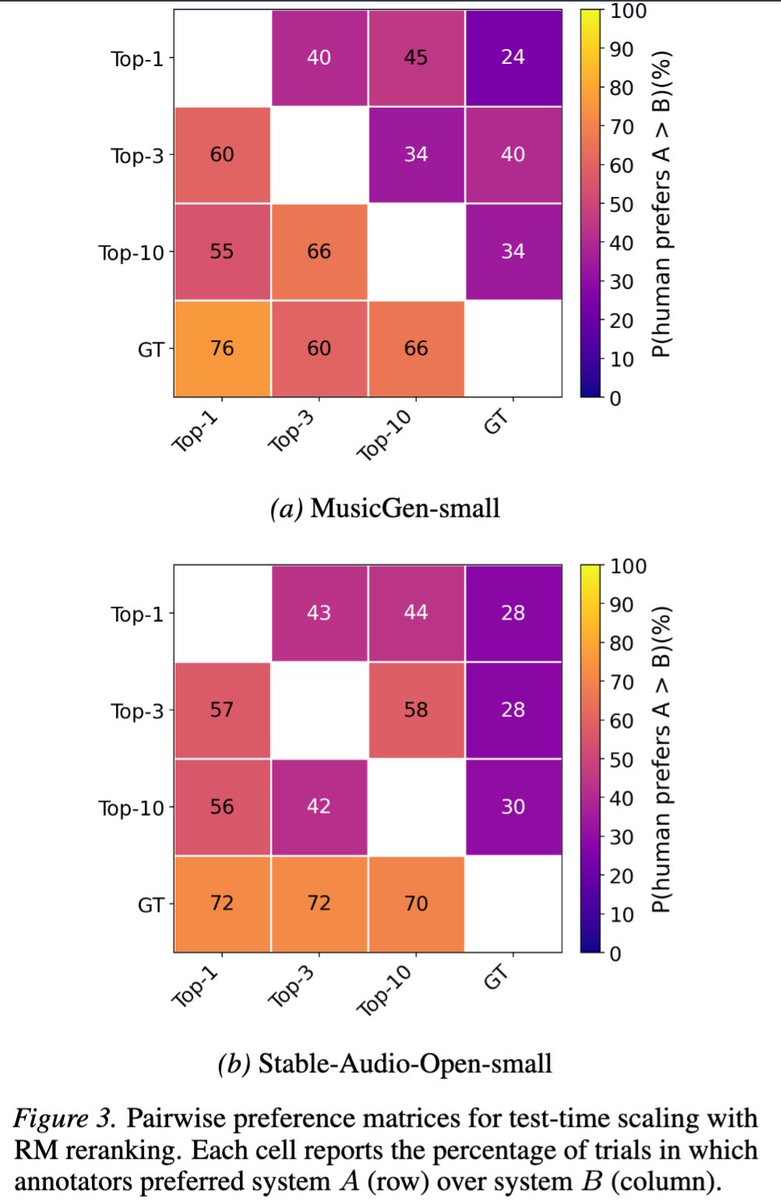
Sungkyun Chang, Keshav Bhandari, Simon Dixon, Emmanouil Benetos, "Synthesis and editing of multi-instrument audio mixtures using scalar-quantised latents with MIDI Span conditioning" https://t.co/sCkMOsmLMg
[7/n] We hope CMI-RewardBench helps push forward:
🎼 music foundation models
🧠 multimodal alignment research
🎧 AI systems that truly understand music
etc.
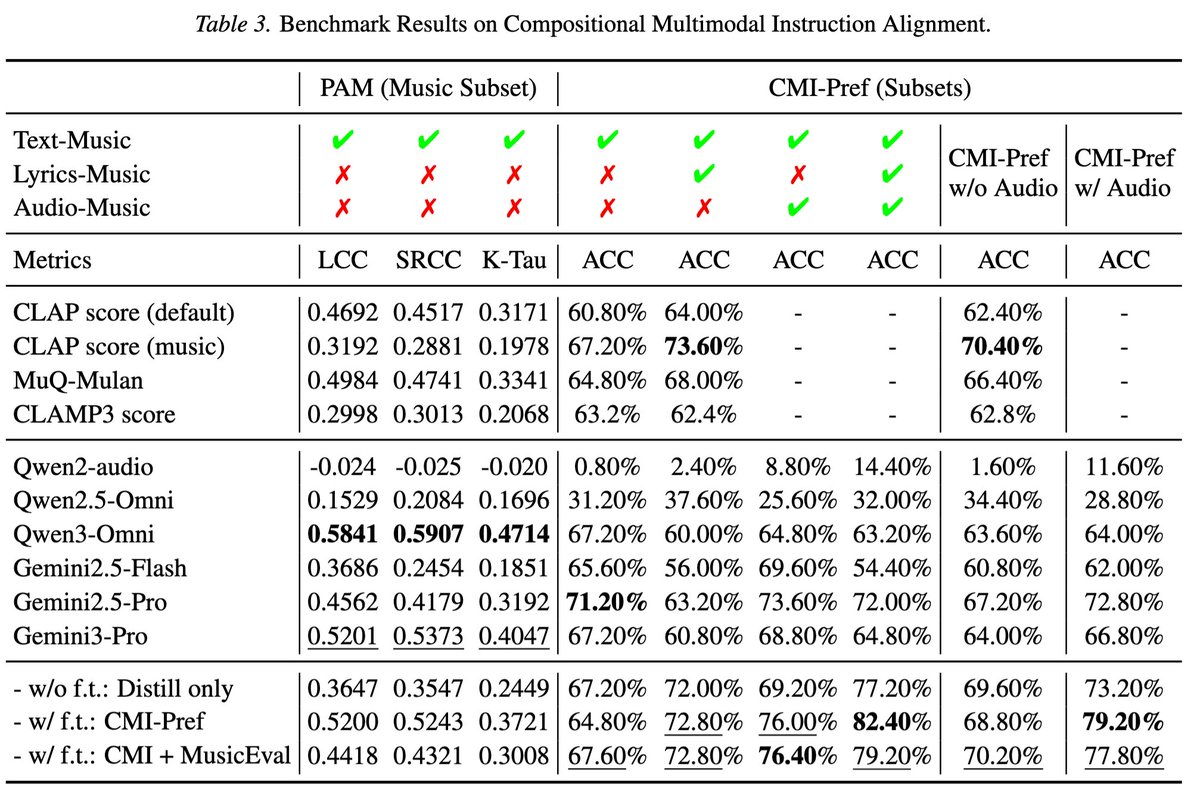
[5/n] We find even frontier multimodal LLMs struggle to judge music well.
Example accuracy on CMI-Pref:
• Gemini-3-Pro → ~65%
• Qwen3-Omni → ~60%
Our lightweight 30M parameter reward model reaches ~78% human agreement.
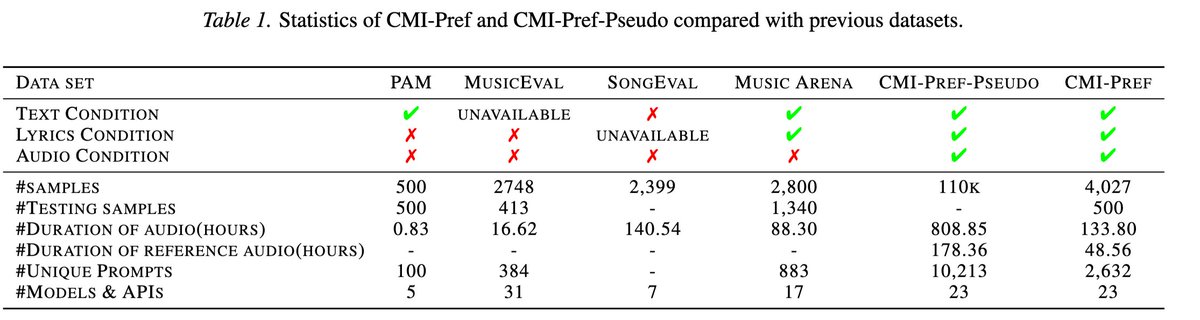
[3/n] To address this, we build a dataset ecosystem for music reward modeling:
1️⃣ CMI-Pref-Pseudo https://t.co/aM2skQWiBt
• 110k preference pairs
• pseudo-labeled via multimodal LLM judging
2️⃣ CMI-Pref https://t.co/zcAkV4Vlhf
• 4k human annotated comparisons by 31 experts
[1/n]🎵 How do we evaluate AI-generated music under complex prompts (e.g. w/ lyrics & input audio etc.)?
📊 We introduce CMI-RewardBench, a unified benchmark for evaluating music reward models under Compositional Multimodal Instruction (CMI).
🧵👇 Paper: https://t.co/spHj99dblZ
Sungkyun Chang, Simon Dixon, Emmanouil Benetos, "RUMAA: Repeat-Aware Unified Music Audio Analysis for Score-Performance Alignment, Transcription, and Mistake Detection," https://t.co/iSPDuLx3cS
@EzraSandzer@EzraSandzer
Thanks for testing and providing feedback on the paper's demo. However, if you look (and listen) closely, you'll see the MIDI files appear different. Here are some places in your example where there are noticeable differences. Perhaps you could give it another go.