A Stanford neuroscientist warns chronic cortisol is murdering your sleep, swelling your fear center, and trapping you in survival mode.
If I wanted to fix it naturally, I'd do these 8 things every day:
1. Hum at a low pitch for 2 minutes.
Low mood says: withdraw, stay in bed, disconnect.
Sometimes opposite action is:
opening the curtains,
feeling the air outside,
making tea mindfully,
texting one safe person,
or moving before the motivation arrives.
Emotions are real. They’re not always instructions.
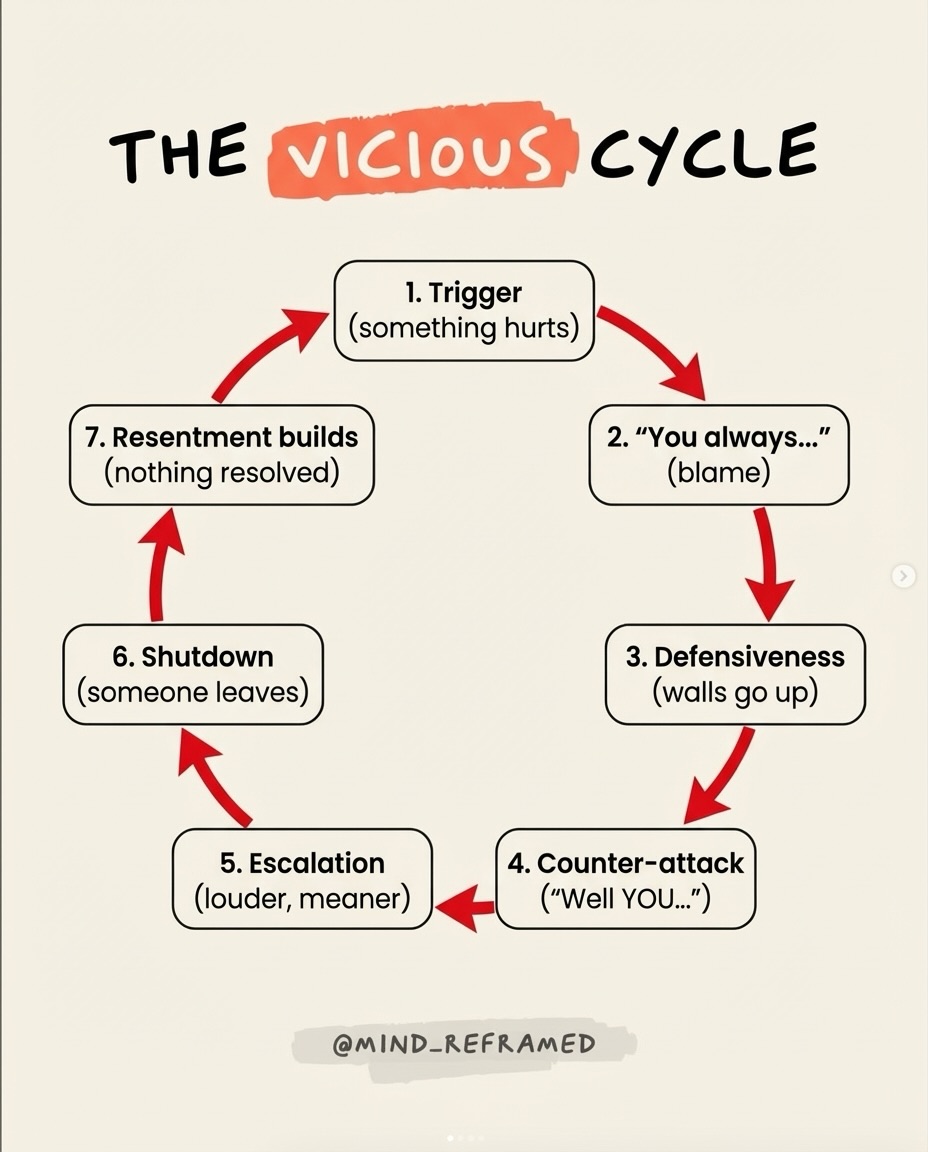
It’s not what you say but what your nervous system does when you feel hurt.
A trigger hits �� your body goes into survival.
Now you’re reacting, not choosing. They feel it → they defend or pull away. Now both of you are in it.
The shift is in the pause.
Right after the trigger.
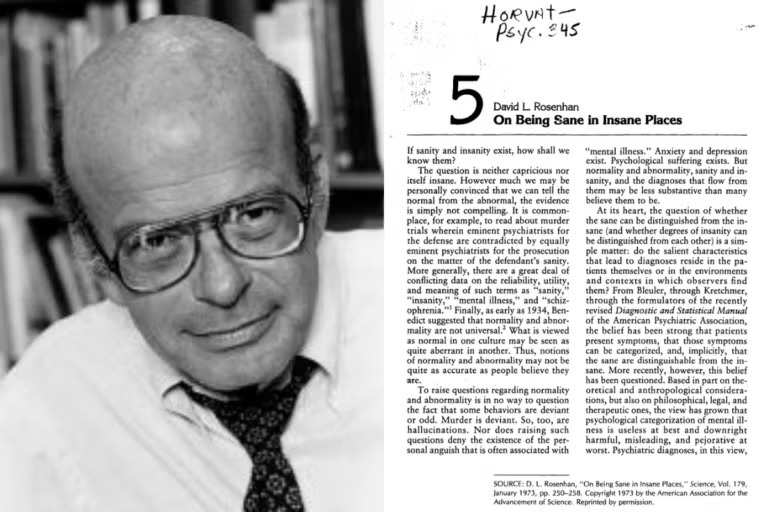
In 1973, Stanford psychologist David Rosenhan ran one of the boldest experiments in history.
He sent 8 healthy people into psychiatric hospitals to see if doctors could tell they were sane.
Not one was detected...
What he found exposed psychiatry's darkest secret:
When you criticize your body (it’s shape, size, function) you’re denying how hard it’s fought to survive. Instead of hating your body, hate what it experienced. Respect it for hosting pain in a world that uses bodies to make money & blames those who don’t adapt well.
My personal truths as a clinical psychologist:
#101 Arriving at, and applying new insights requires safety. People cannot see themselves clearly when they are bracing themselves in their habitual ways for judgment, rejection, or abandonment.
People don’t realize that you can actually push someone so far that they no longer want anything to do with you anymore. This applies to friendships, relationships, or even family. Sometimes, people assume that because you love them, whether as a friend, partner, or family member you will continue to tolerate anything, disrespect, neglect, hurtful actions , lack of effort, or emotional stress.
Everyone has limits, and there is only so much one person can take before they choose peace over connection.
Even the most patient, kind-hearted person can reach their breaking point. When someone continuously feels unappreciated, misunderstood, or mistreated, they can reach a place where they emotionally disconnect. And once someone emotionally disconnects, it is very hard to repair that relationship.
Replacing “What’s wrong with me?” with “What is this feeling trying to show me?” is a quiet revolution. Your emotions aren’t flaws. They’re information.
At Mind Reframed, we believe everyone deserves to see themselves clearly, without the weight of shame or self-doubt. Explore how our trauma-informed therapies can help you reconnect with your true self: https://t.co/Ulcfa3xlYR
Shame can feel like a weight we carry, but it doesn’t define who we are. Did you know that recognising shame is the first step to reclaiming clarity? You are worthy of seeing yourself clearly.
Shame can make it hard to see ourselves clearly, but there’s a way out. In this short clip, we share a simple tool to help you reconnect with your true self. Watch now!
Shame distorts how we see ourselves, but it doesn’t have to define us.
If you’ve ever felt like you’re not enough or that shame is clouding your view, this article is for you. Dive into ways to reclaim clarity, and self-compassion.
🌟 https://t.co/jIAEF5ZDI6
My personal truths as a clinical psychologist:
#86 Neurons that fire together wire together. Healing requires repetition. Corrective experiences must be repeated across time to consolidate change.
When I consult on cases where psychotherapy feels stuck, the problem nearly always comes down to the same thing.
From the get go, therapist and patient never reached a *shared* understanding about the purpose of the therapy—let alone clarified what the patient desires to change about themselves, that psychotherapy can realistically help them to change.
It’s as if therapist and patient depart on a journey without a destination or map and wonder why they keep getting lost.
Some elaboration:
If a patient comes for (say) anxiety or depression, therapist and patient may mistakenly think they have a shared understanding of the the purpose of the work.
They do not.
They have not clarified what the patient desires to change about themselves.
Relief from anxiety or depression is a desired *outcome*—but it does not speak to psychological change.
Of course the patient wants to feel better.
The meaningful questions is: what would the patient need to change about themselves to make it possible for them to feel better?
So the purpose of psychotherapy cannot come into focus until therapist and patient can articulate together what it is about the person’s psychology that is giving rise to the anxiety or depression. What is driving it? Is it something psychotherapy could realistically help to change? And is it something the patient desires to change?
Reaching a mutual understanding and agreement takes skill on the part of the therapist, and serious work for both parties.
It requires developing a clinical case formulation that’s specific to the patient, that links their symptoms or distress to *underlying psychological causes*—which are rarely obvious at the outset.
Thus, three things are inseparable:
1️⃣ a sound clinical case formulation,
2️⃣ a shared understanding of the purpose of therapy, which follows from the case formulation
3️⃣a working alliance between clinician and patient around that shared purpose, as well as the methods to achieve it
This is the foundation of all effective psychotherapy.
When psychotherapy feels stuck, one way to get un-struck is to go back to the basics—and consider whether therapist and patient ever established a sound foundation to build from.
“The goals in therapy are a collaborative effort in which therapist and patient together identify what is distressing to the patient, what the patient would like to change, and what is realistically possible to change in the course of psychotherapy.”
—Glen Gabbard
I asked some of my followers on Facebook to comment if DBT saved their life.
19 people commented saying it saved their life, or another therapy helped them first and adding DBT skills improved their lives even more. Some of them I know very personally and have seen the changes they've made.
I don't care how many people say DBT is useless. My everyday conversations with people in the BPD community tell me otherwise. It's by far the most mentioned treatment modality when people credit their progress to something.
*** I do not think DBT is for everyone. I do not think DBT is even the best treatment modality above all others.
But it's helping a lot of people.