The findings “should act as a wake-up call to developers on how easy it is to use LLMs to produce misleading and low-quality scientific research”
https://t.co/6v67HNM7MR
"Losing my institutional email address felt like losing a small but vital piece of the scientist I had become." #ScienceWorkingLife https://t.co/cfQrbNAf1M
A model of dissent and self-censorship finds that with sufficiently draconian punishments, everyone self-censors, but as a moderate authority begins to crack down on dissent, a population’s boldness determines whether the suppression succeeds. In PNAS: https://t.co/c6yFE7Lh9J
Friendly reminder!🤗
You wouldn't be you without what you do🫶🏻
When you're stressed to the max bc of impending deadlines,
remember to look back on what you've already accomplished🏆
'Done' is a great source of last minute ⛽ when you have some remaining to-dos💪🏻
If a sitting US president cannot be tried in a criminal court, why is one allowed to pursue other litigation?
E.g., lawsuits against companies, essentially allowing for augmentation of existing mechanisms by which the executive branch might strong-arm non-gov entities
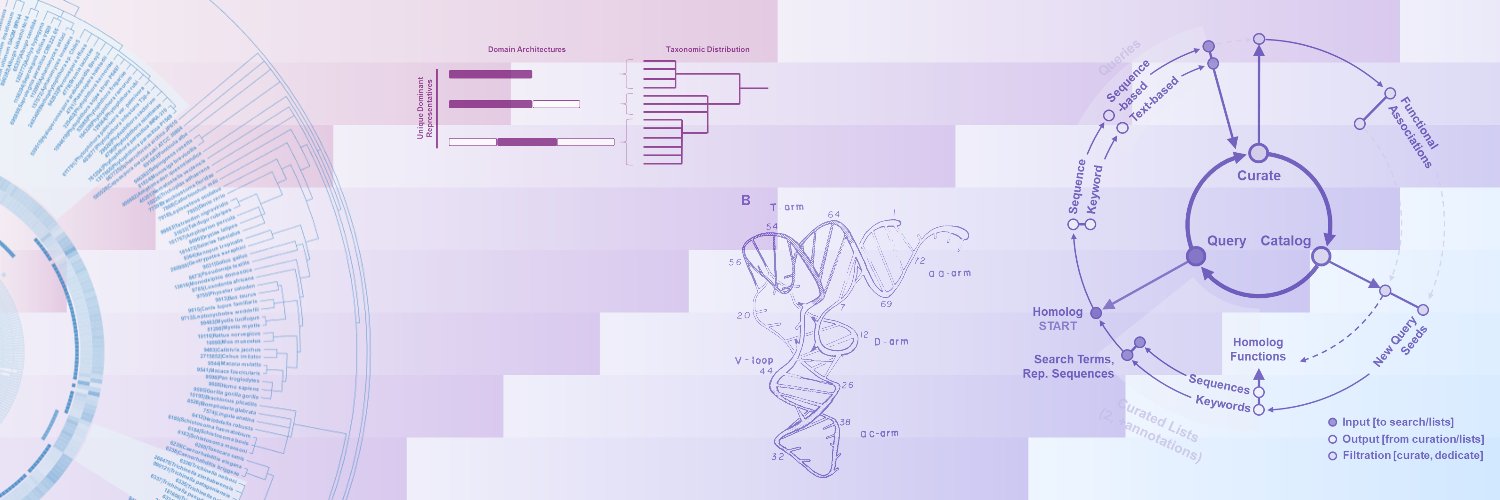
"Only ~0.02%-3.1% of [a cell's] genome" is being transcribed at any given moment.
Other interesting takeaways from this new paper:
> If you pool together a bunch of cells of the SAME type (like primary immune cells from a mouse's spleen), and you measure the transcription for each of them, you'll find that ~67% of the genome is active collectively.
But at a SINGLE cell level, only like 0.04% of the genome is active. There is huge heterogeneity between cells, even of the same type. This heterogeneity disappears when we do bulk RNA-seq and measure cells together.
> About 31% of a cell's transcription comes from known protein-coding genes. The rest of transcription happens in regions that don't make proteins. In other words, more "non-coding" DNA is transcribed than "coding" DNA.
> There is a surprising disconnect between RNA production & decay at the single-cell level.
If you look at thousands of cells together, the rate of RNA production (how fast genes are transcribed) usually matches the rate of RNA decay (how fast old transcripts are degraded). This makes sense, because cells presumably would want to keep a fairly steady balance of RNA levels.
But when scFLUENT-seq was used to look at individual cells, this "rule" broke down! For a given mRNA, some cells were making a lot of new copies even if old copies weren’t being degraded much, while other cells had the opposite. So transcription and decay don't seem to be tightly matched within a single cell at a given time after all. The balance between production + decay is only true in bulk.
I have to say that I appreciate UK police procedurals so much more than those set in the US.
It's much easier to cheer on a cop when they aren't armed with over-kill gear against suspects who at most might have a knife
#controversialopinion
"The import of this history has never been clearer than in this moment when the hard question must be asked: If you would look away from the words of Charlie Kirk, from what else would you look away?"
https://t.co/HBnj8n98CF
Charlie Kirk is asked about the number of mass shootings that have happened over the past 10 years.
Kirk answers this with a question: "Counting or not counting gang violence?"
He is then fatally shot.
Within the same hour, 3 are shot at a Colorado high school 470mi away.
Looks like Florida is voluntarily rolling back to "developing nation" status for its public health... 😐
Pathogens don't care about your politics.
The vulnerable will suffer.
Remember who is responsible.


![NikoMcCarty's tweet photo. "Only ~0.02%-3.1% of [a cell's] genome" is being transcribed at any given moment.
Other interesting takeaways from this new paper:
> If you pool together a bunch of cells of the SAME type (like primary immune cells from a mouse's spleen), and you measure the transcription for each of them, you'll find that ~67% of the genome is active collectively.
But at a SINGLE cell level, only like 0.04% of the genome is active. There is huge heterogeneity between cells, even of the same type. This heterogeneity disappears when we do bulk RNA-seq and measure cells together.
> About 31% of a cell's transcription comes from known protein-coding genes. The rest of transcription happens in regions that don't make proteins. In other words, more "non-coding" DNA is transcribed than "coding" DNA.
> There is a surprising disconnect between RNA production & decay at the single-cell level.
If you look at thousands of cells together, the rate of RNA production (how fast genes are transcribed) usually matches the rate of RNA decay (how fast old transcripts are degraded). This makes sense, because cells presumably would want to keep a fairly steady balance of RNA levels.
But when scFLUENT-seq was used to look at individual cells, this "rule" broke down! For a given mRNA, some cells were making a lot of new copies even if old copies weren’t being degraded much, while other cells had the opposite. So transcription and decay don't seem to be tightly matched within a single cell at a given time after all. The balance between production + decay is only true in bulk.](https://pbs.twimg.com/media/G2CFMG2a4AAGWYL.png)





![NikoMcCarty's tweet photo. "Only ~0.02%-3.1% of [a cell's] genome" is being transcribed at any given moment.
Other interesting takeaways from this new paper:
> If you pool together a bunch of cells of the SAME type (like primary immune cells from a mouse's spleen), and you measure the transcription for each of them, you'll find that ~67% of the genome is active collectively.
But at a SINGLE cell level, only like 0.04% of the genome is active. There is huge heterogeneity between cells, even of the same type. This heterogeneity disappears when we do bulk RNA-seq and measure cells together.
> About 31% of a cell's transcription comes from known protein-coding genes. The rest of transcription happens in regions that don't make proteins. In other words, more "non-coding" DNA is transcribed than "coding" DNA.
> There is a surprising disconnect between RNA production & decay at the single-cell level.
If you look at thousands of cells together, the rate of RNA production (how fast genes are transcribed) usually matches the rate of RNA decay (how fast old transcripts are degraded). This makes sense, because cells presumably would want to keep a fairly steady balance of RNA levels.
But when scFLUENT-seq was used to look at individual cells, this "rule" broke down! For a given mRNA, some cells were making a lot of new copies even if old copies weren’t being degraded much, while other cells had the opposite. So transcription and decay don't seem to be tightly matched within a single cell at a given time after all. The balance between production + decay is only true in bulk.](https://pbs.twimg.com/media/G2CFMS2bIAA07DE.png)