I maintain and update the templates to quickly deploy Odoo community via Docker Compose, did it anually since Odoo 10.
And today, introducing “odoo-20-docker-compose” . Get Odoo 20 with one-liner command:
$ docker-compose up -d
https://t.co/W5VyvvcANd
I followed PrismML’s instructions and successfully deployed the latest model, “Ternary-Bonsai-2-27B-gguf.” The model is really intelligent and runs on a GPU with only 16GB of VRAM.
I packaged the deployment in Docker Compose to make the process easier. It’s here:
https://t.co/zAu9Kak7D9
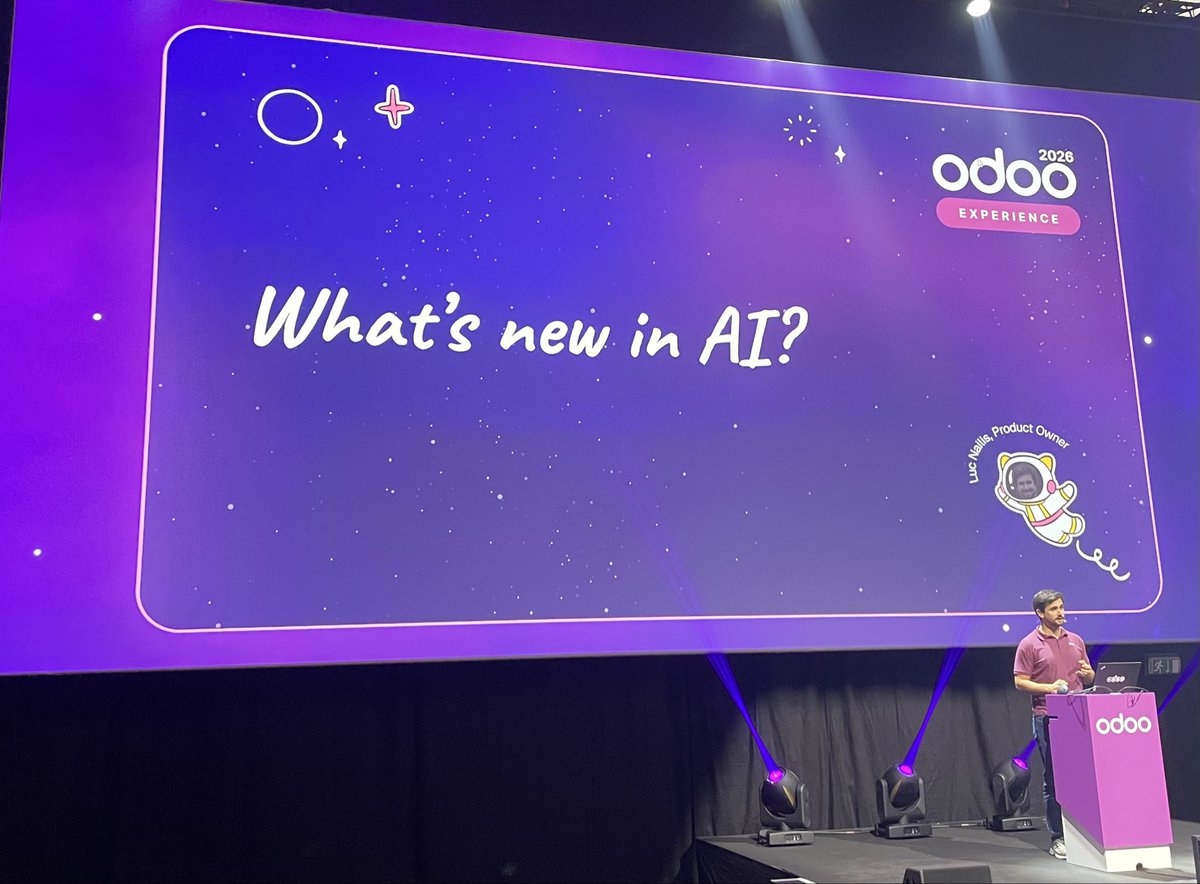
🚀 Odoo 20: What’s new in AI?
Agentic automation, image gen, AI SEO & more!
The AI features in Odoo 20 will help you work more efficiently.
🎥 Full Odoo 20 video: https://t.co/S0SfHe3riT
🔥 Take it to the next level today on https://t.co/AUVvilTLn7
#OdooExperience
Hermes Agent holds its position as OpenClaw keeps sliding — Pi quietly rising!?
OpenClaw (390k+ Github★), the king of open-source agent harnesses, keeps losing website traffic. It's in a downtrend — the hype is over.
While OpenClaw slides, Hermes Agent (248k+ Github★) has overtaken it and settled into stability, holding its position in monthly traffic. This shows stability rather than temporary "hype."
Meanwhile Pi (109k+ Github★) is quietly accumulating, with exploratory traffic up nearly 6x from 0.4M → 2.11M over 5 months. The key lies in its minimal design philosophy: every "personalization" bolted onto Pi's core is a plugin — lean, light, not clunky or complex. For devs tired of heavyweight tools, this could be the new direction.
OpenClaw pioneered fast virality and fell fast too. Hermes Agent "wins" through steady growth, Pi stands out for its minimal design philosophy. The hierarchy of open-source agents is being reshuffled — and the game for AI agents has only just begun! 👾
@USASmarTekAI Yes, Superpowers is so powerful. It turns any plain agent harness into a “real” senior developer. That’s the reason why it quickly gets ~300k stars.
Superpowers ✨ lets AI Agents do brainstorming 🧠
Only after using Superpowers did I see how truly powerful it is — well worth its 290k★ on GitHub.
This is a skill framework for AI agents, turning a plain agent into one that thinks instead of diving straight into work.
I gave it a coding task: a "settings" page to configure a web app. The interesting part is that after brainstorming, Hermes Agent didn't code immediately — it presented a design approach first → then implemented it. And here are 2 benefits I clearly see:
1. Read it back to confirm the agent understood correctly — like a quick sanity check
2. Approve the design (with extra notes if you want) before the agent starts coding
Another good point: if the task is short and clear, the agent will start implementing right away without waiting for design approval — it's flexible, not rigid.
> ps. Superpowers is a very worthwhile "judgment" layer, an effectiveness I've verified — knowing when to ask back, when to just do it. Still researching more to apply it to multi-agent workflows.
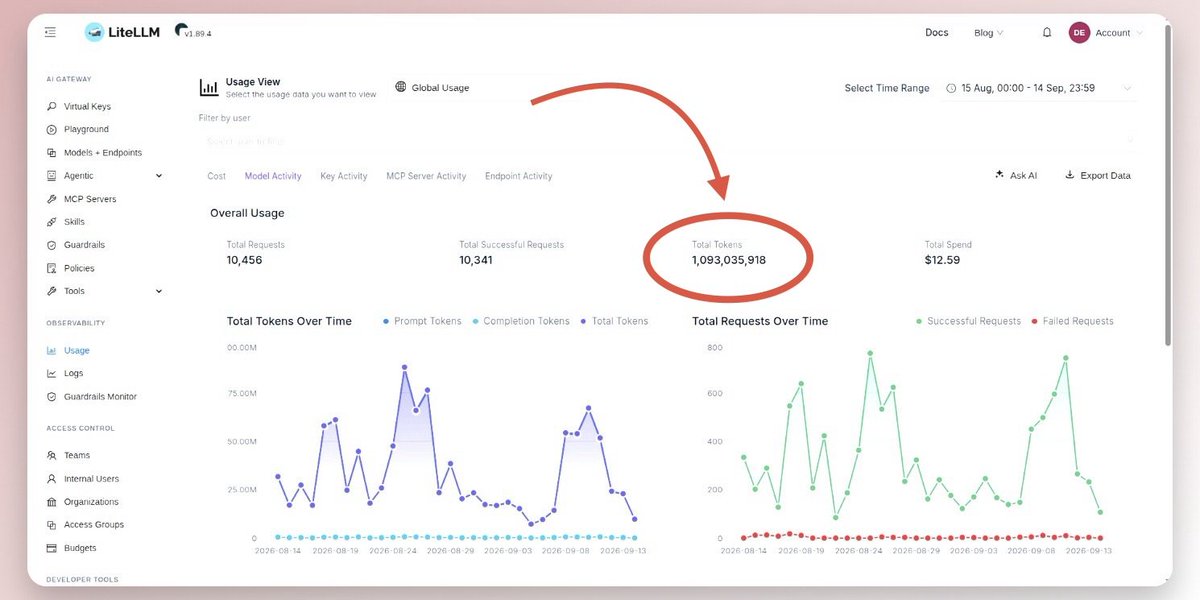
Burned 1 billion tokens in 30 days with Hermes Agent 💸 — here's what I built
Not an enormous number compared to many others, but 1 billion tokens in 30 days — and 3 months back I hit my first 100M token milestone for those who've been following. But tokens are just the fuel that runs the AI machine; what matters is what they burn into. For me, that's: the entire backend (using Odoo) and frontend for the Hermes Agent course — coded entirely by co-working with Hermes Agent, with me holding the role of content quality gatekeeper. No longer a demo, but a real product serving real students reliably.
Over those 30 days I also pushed to turn Hermes Agent into a more complete agent harness. On the UI side: tried every strongest UI-drawing skill I know — diagram-design, taste-skill, hallmark — each skill its own school of thought; combined, the product comes out exactly in the taste I wanted. On the brain side: set up Honcho memory so the agent remembers like an insatiable disk. On the coding side: loaded the Superpowers skill, ast-grep, and other specialized skills — the agent doesn't just write code, it also knows how to refactor and audit its own code.
And one small thing I love most: an automated morning news digest cron. Every morning I sit down at my desk and a briefing is already waiting. The agent does the "scrolling for me" part. It's the kind of utility that doesn't "wow" in a demo, but after 30 straight days of use, you simply can't go back to the old way of reading news.
1 billion tokens sounds like a lot, but spread out it's only 30M+ tokens a day. The nice part is those tokens didn't go into useless chat — they went into building a practical course, a memory system, and a morning habit.
> Those who know how to exploit it: 1 billion tokens is a month of work; those who don't: it's just a billing invoice.
Equipped Hermes Agent with Superpowers 🦸 — coding that follows real software development process
Continuing the coding journey with Hermes Agent, I just integrated Superpowers (284k+ ★ GitHub) into Hermes Agent. The initial results are well worth exploring further.
Superpowers is a skill framework & software development methodology for AI coding agents — turning the agent from coding on "instinct" into an engineer with process and standards:
- TDD: write the test first → watch it fail → code the minimum → watch the test case pass → commit. No more writing code first and adding tests afterward.
- Systematic debugging, no directionless guesswork.
Break work into small 2-5 minute tasks.
-Child agents run in parallel, two-stage review: spec compliance → code quality.
-Proper merge/PR process.
Expected results: Hermes Agent codes more professionally — with process, more standardized, no more coding on instinct.
> Ps. Superpowers originally supported Claude Code, OpenCode, Code. Only in August 2026 did an official PR arrive to support Hermes Agent. If it runs well, this could be a "must-have" framework to turn Hermes Agent into a real programmer!
🧬 The 5 stages of AI Agent Engineering evolution
Software → Prompt (1) → Context (2) → Harness (3) → Loop (4) → Graph (5)
This is the roadmap from Bojie Li's "AI Agents in Depth" — a free book on Github. Each stage expands the sphere of control outward from the model.
Software Engineering — the classic foundation. System design, architecture, testing, deployment. This is the layer AI agents must run on top of.
1. Prompt Engineering — Optimize natural-language instructions to improve output quality. But it only focuses on the input instructions for the model.
2. Context Engineering — Realize that prompts alone aren't enough. You must systematically manage system instructions, tools, relevant supplemental knowledge, and conversation history.
3. Harness Engineering — Expands from "what the model receives" to "what system the model runs inside". Includes constraints, validation methods, loop feedback, fault tolerance.
4. Loop Engineering — Further expands from a single run to sustained iterations that keep a steady working rhythm. The agent plans → executes → figures out what's next → knows what counts as done → verifies results.
5. Graph Engineering — Combine multiple nodes, each node can be a loop, a script, or an event; the graph has state, branches by conditions (edges), and includes human review → forming an execution graph.
> ps. Advanced AI agents already cover all the above ideas: Claude Code, Codex, OpenClaw, Hermes Agent, ...
> ps2. Every time I delegate work, I carefully prepare context (2) and polish prompts (1) so the AI agent works efficiently and tokens don't get burned wastefully.
✨ HERMES AGENT (★239k) v2026.8.31 • v0.21.0 ─ The Pantheon Release
This release bundles all patch tags v0.20.1–v0.20.6: ~5,800 commits, ~2,475 PRs, ~869,000 insertions, ~135,000 deletions, ~2,100 issues closed, 760+ contributors.
🤖 Bot Mode — built-in feature for multi-agent
- Bot Mode is now built into the desktop app: previously Nous Research wrote it as a separate desktop plugin, but archived the repo (https://t.co/F0tingORyr) after just a few days → each profile now has a name and avatar.
- Create Discord-style group chats — multiple bots and you talk in one room, @-mention any bot, name the room and set its image.
- "Multi-agent" used to be infrastructure software; now it looks like a chat app with your AI colleagues / employees.
`hermes peer` — private bot-to-bot messaging
- Any Hermes agent can message another agent, across profiles and gateways, from the CLI or inside a conversation.
- Hand off work from a research bot to a coding bot, results land exactly where you can read them — saved in Bot Chat, nothing gets lost.
Cron jobs that remember (memory + continuity)
- Scheduled jobs load and update persistent memory just like any other agent.
- `continuity=true` carries the previous run's results into the next one (monitors can dedupe what was already reported).
- Every job has a persistent notepad scratchpad; monitor-mode skips the LLM when nothing changed; output can be dumped into Bot Chat.
> 👉 Hermes Agent cron jobs keep getting tastier — especially deduping what the previous run already reported =))) and not calling the LLM when nothing changed. Crawler folks will love this.
Steering subagents while they're running
- `delegate_task` can now orchestrate directly: list running children, slash /steer a subagent, or stop early and keep partial results.
- Added JSON-schema validation for outputs, per-delegation cost, and raised default limits (250 iterations, 10 concurrent children).
> 👉 If that JSON-schema bit looks familiar, it's exactly the junction in the Agent-flow pattern I shared in an earlier post.
MCP control center
- MCP servers + catalog merged into one consistent desktop page, drag-and-drop "paste" to import.
- Background health checks prompt re-auth before tool calls break; cost/usage overlay (token estimates + 30-day usage stats); `hermes://` deep link for installation.
Agent can use the desktop's browser
- The in-app browser is no longer a look-only window: Hermes navigates, clicks, and reads directly; can pop out to the system browser.
6 new providers + model catalog
- Meta Model API (Muse Spark), CommandCode, Tencent TokenPlan, Nebius Token Factory, Ramp Router, Actual Computer.
- Catalog adds GLM-5.3-Flash, qwen3.8-max/flash, Gemini 3.7 Flash, MiniMax M3 free, Nemotron 3.5 Lightning; `model_overrides` auto-patches context window/pricing without waiting for a release.
Security upgrades
- Protected instruction files (AGENTS.md, skills, memory) always require write approval — prompt injection can't silently rewrite commands.
- Sensitive info redacted in terminal errors, when reading `.env` files, checkpoints, and ACP logs; dangerous commands blocked on Windows; on macOS, TCC identity persists across all updates.
ps. From "can talk, can communicate" (v0.20.0) to "becoming a society" (v0.21.0) — Hermes Agent is evolving into a true multi-agent entity. Follow me for more useful Tech Stack content :D
An AI agent generates 29k LoC for me in less than 30 days:
- Bentora note for daily use: 9k LoC in 3 weeks → get acquainted with coworking with AI agent
- Codemy (a learning management system): 20k LoC in only 5 days
Living in agentic era is not easy, we have to effictively cowork with agents ... and multi-agents for the coming wave.
It's easier than ever to run Honcho locally. One command: honcho start
Same machine as your agents. Choose from local or cloud models.
Prerequisites:
- Install Docker
- Install Honcho CLI v0.1.4
- LLM access (local or cloud)
- Run honcho start --setup basic