If you want to know who I am and the great cause of Civilization that I support, start👇. Subscribe to my Substack. And join the cause. Humanity and Mother Earth, whose riches we share, need us to make better decisions. https://t.co/xDAO08junN
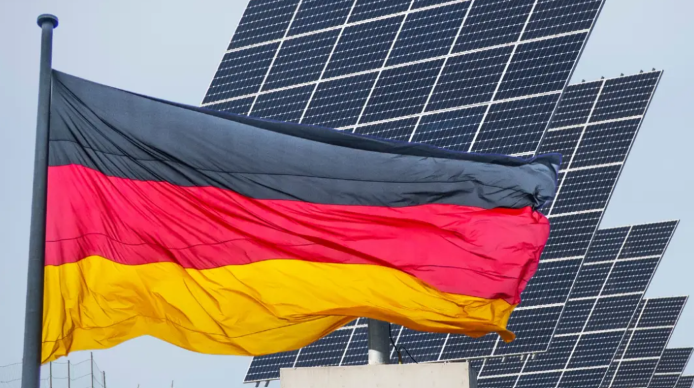
Tyska soljätten Enerparc har ansökt om insolvens i Tyskland.
Bolaget äger och driver mer än 500 solcellsanläggningar.
Kvar står ett skuldberg på 33 miljarder kronor:
https://t.co/6Jy58d9KtQ
Can we finally stop pretending nuclear is "unreliable" because of droughts and heatwaves?
New study: across 500+ reactor-years in Europe, heat & drought reduced output by just 0.6% (max 1.3% in any country). That's peanuts.
Solar and wind are FAR more weather-dependent and thus less reliable year-round, even during droughts. Heatwaves often bring still air, so low wind is common exactly when it's hottest. Nuclear's capacity factor is ~90.9%, way steadier.
And the fixes work: French river-fleet heat losses dropped 91% (5.5→0.5 TWh) since 2003 through cooling upgrades.
(Voor @MelissaDepr, dat is precies het punt dat ik eerder maakte.) https://t.co/r1e0iCy41O
New Onward report “Firm Foundations” challenges the Net Zero orthodoxy and proposes firm power (gas + nuclear) instead of more intermittent wind & solar. Supported by Claire Coutinho. A welcome first step – but not nearly enough to reduce electricity prices. A thread 🧵 (1/10)
@RichardOllingtn@StandUp4Nuclear Each does not have its place. They are mutually exclusive approaches. Wind and solar provide 0 benefit on a nuclear grid. Zilch. Nada.
@JaneAFlegal Agreed. Fission produces so much energy from so few resources for such a long time that it has no natural constituency. To the contrary it has many natural constituencies against it.
But even LWRs have a breeding rate at about 0.6%, right? Plus spent fuel is about 1% U235… So there seem to be good reasons to reprocess used LWR fuel. But it would be fantastic to take advantage of all that U238…. On a related question what do you make of the ANNEEL fuel cycle?
The Energy Department has selected 5 states to host potential Nuclear Lifecycle Innovation Campuses — securing the domestic nuclear fuel cycle.
These campuses will generate billions of dollars in economic activity, expand domestic manufacturing, and create thousands of jobs.
When EBR-II scientists reflected on shutting it down, they cried.
They had demonstrated a reactor with "walk away" safety, the ability to use nuclear waste as fuel, and just how economical sodium cooled reactors could be.
But they had to shut it down.
The story in videos: 🧵
Reactors are expensive because of the scope and scale of the physical material costs in the same sense that Hoover Dam was expensive. Also the financing window is 30 years while the asset will operate for 80 years. If we were to amortize the capital expense over the useful life of the asset, reactors are rock bottom cheap.
Electricity is only 20% of global energy demand. The rest is primary for travel or heating / cooling, etc.
We aren’t anywhere close to an “energy transition.”
The full data tell a very different story.
This is what 45 years of spent nuclear fuel looks like safely stored at Dominion Energy’s North Anna nuclear power plant.
Each cask generated around 5 billion kilowatt hours of electricity — enough to power nearly half a million homes each year.