The Most Overlooked Opportunity in Nuclear?
Why Nuclear Power Plant Uprates Beat Everything Else in the Race for New Capacity.
Recent conversations about the budding nuclear renaissance often begin with the same list. Microsoft restarting Three Mile Island, tech companies partnering with advanced nuclear reactor vendors or the proposed Japanese funded US AP1000 fleet build.
These announcements generate headlines, volatile valuations and investor decks.
Meanwhile, forty Westinghouse pressurized water reactors (PWR) sit at roughly the same thermal power output they were commissioned at decades ago, operating within design margins calculated on transistorized computers before integrated circuits existed.
Together, these plants hold between 6-10GW of additional capacity, the equivalent of eighteen to thirty 300MW SMRs, that could be unlocked faster and cheaper than any other nuclear source and perhaps even faster than new gas.
My conversation with returning guests Robb Stewart (@nuclear_robb) and James Krellenstein (@jbkrell), CTO and CEO of Alva Energy (@alvaenergyio), made the case that power uprates at existing PWR plants represent the lowest-hanging fruit in the sector, bypassing the megaproject risks and nuclear supply chain rebuilding that make new nuclear construction so daunting for utilities.
The components turn out to be far more manageable and anticlimactic than new build nuclear: non-safety-related secondary side equipment such as feedwater heaters and condenser tube bundles, alongside nuclear-grade steam generators that the fleet has already learned to replace during their month long scheduled outages using well-rehearsed industrial choreography.
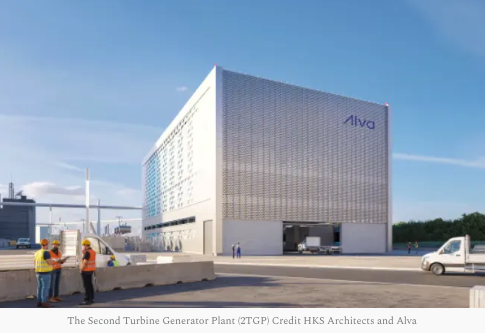
Alva’s approach avoids the traditional uprate bottleneck by building a separate standardized 250MW Second Turbine Generator Plant (2TGP) building diverting incremental steam from an uprated core without touching the existing turbine centerline.
Most of the construction happens on a conventional, non nuclear island using mature supply chains and firm fixed price engineering, procurement, and construction contracts, leaving the outage window limited to a short tie in during a normal refueling cycle.
Compared to a cohort of first of a kind nuclear steam supply system startups that accessed public markets through SPAC mergers and achieved substantial valuations in the hundreds of millions on compelling nuclear narratives this approach sounds deliberately boring.
But perhaps boring is what our current moment demands. The question is whether the American nuclear zeitgeist can resist the allure of novelty long enough to pluck the low hanging gigawatts hiding in plain sight.
In the AI age: Economic Capacity = Power capacity. The US has under delivered for many years on power expansion. Power is the limiting factor for the AI era. @alvaenergyio unlocks gigawatts of clean, always-on nuclear from existing plants -- faster, lower cost, and at scale.
Exclusive: The startup Alva Energy says it knows how to kick-start the slumbering nuclear-power industry—and former Intel CEO Pat Gelsinger is backing its efforts https://t.co/CDumz6pUEg
Applications for the Activate Fellowship open on September 9— and we have two upcoming webinars to help you get ready!
September 9: Learn about the Entrepreneurial Fellowship Opportunity
September 10: Activate Application 101 #1
Register below:
https://t.co/knNkFmJODJ
@cornoisseur@Dr_A_Stein I think e-beam welding is done under vacuum which limits the diameter due to vacuum chamber size. It could be done, but it would be a big investment
@Dr_A_Stein Koroush and I explicitly model e-beam welding in NCET. It is only through this type of manufacturing innovation that SMRs get anywhere near large LWRs on NSSS $/kWe
This complicates the theory of learning rates, but its good news for the future of nuclear. We should have high expectations for FOAK projects. They can be done well! History proves this.
Learning-by-doing, the sought after but never achieved cost-reduction path for new nuclear. Let's unpack some key factors that @Dr_Keefer and I discussed on @DecoupleMedia:
At Alva, our view is that with proper upfront planning, all 3 can actually be done at the FOAK. This is why we see the FOAK ABWR as the fastest nuclear build in world history.