Arkadaşlar kadın erkek farketmez şu seriyi kaydedin 5-10 gün 20 gün 50 gün ne zaman tam anlamı ile yapabilirseniz yapın 24 saniyede vücuttaki her kasınızı çalıştırır sizi makina yapar
7 supplements with actual human trial evidence for aging, ranked by proof strength:
1. GlyNAC (Glycine + NAC), $0.50/day
Baylor RCT, 24 adults, 16 weeks. Corrected 7 hallmarks of aging: oxidative stress down 70%+, mitochondrial dysfunction, insulin resistance, genomic damage, senescence. Glutathione up 164%. Gait speed improved.
2. Creatine, $0.10/day
Meta-analysis of 22 RCTs (n=721 older adults): improved lean mass and muscle function. WHICAP cohort (n=2,900): dementia risk down ~30%.
3. Urolithin A (Mitopure), $2/day
Nature Aging (Nov 2025), 50 adults, 28 days: expanded naive CD8+ T cells, reduced T-cell exhaustion, improved CD8+ fatty acid oxidation +14.7pp. Separate RCT: 12% muscle strength gain.
4. NMN, $1-2/day
GeroScience 2023, 80 adults, 60-day multicenter RCT: blood biological age held flat across all doses while placebo aged (p<0.05). NAD+ rose (p≤0.001). Six-minute walk improved.
5. Spermidine, $0.30/day
20-year Graz cohort: lower mortality. 1-year pilot in MCI (n=100): 42% showed cognitive improvement vs decline in placebo.
6. Alpha-Ketoglutarate (Ca-AKG), $0.50/day
42-person study (2022): ~8-year biological age reduction on Horvath clock. ABLE trial (NCT05706389, 120 adults, 6-month RCT): results pending.
7. Taurine, $0.15/day
Science 2023: 10-12% lifespan extension in mice and worms. Blood levels drop ~80% from youth to old age. Zero human aging RCTs completed. NCT05930210 ongoing.
The honest ranking: creatine has the most RCT replications. GlyNAC has the most hallmarks corrected. Taurine has the most promising animal data and the least human evidence. I'd start with creatine.
6 years in the gym taught me this: Gut Health Changes Everything.
If you want to fix your gut health, here's every tip I could come up with:
1. Stop drinking alcohol.
12 Books That Will Transform Your Life in 2026:
1) The Pathless Paul by Paul Millerd
This book is an invitation to a curious, creative, and meaningful life for anyone reflecting on work’s life impact. It offers new learning's and self-discovery.
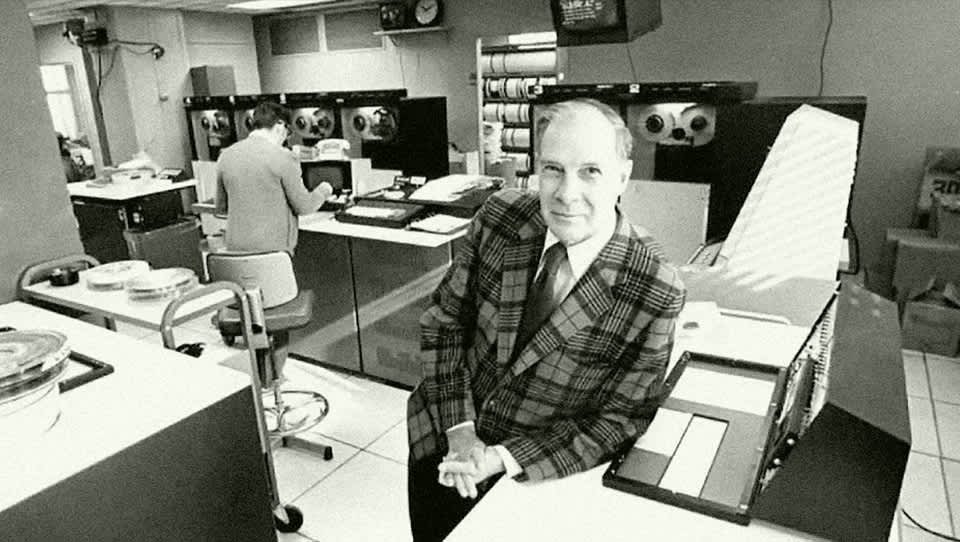
A mathematician who shared an office with Claude Shannon at Bell Labs gave one lecture in 1986 that explains why some people win Nobel Prizes and other equally smart people spend their whole lives doing forgettable work.
His name was Richard Hamming. He won the Turing Award. He invented error-correcting codes that made modern computing possible. And he spent 30 years at Bell Labs sitting in a cafeteria at lunch watching which scientists became legendary and which ones faded into nothing.
In March 1986, he walked into a Bellcore auditorium in front of 200 researchers and told them exactly what he had seen.
Here's the framework that has been quoted by every serious scientist for the last 40 years.
His opening line landed like a punch. He said most scientists he worked with at Bell Labs were just as smart as the Nobel Prize winners. Just as hardworking. Just as credentialed. And yet at the end of a 40-year career, one group had changed entire fields and the other group was forgotten by the time they retired.
He wanted to know what the difference actually was. And he said it wasn't luck. It wasn't IQ. It was a specific set of habits that almost nobody is willing to follow.
The first habit was the one that hurts the most to hear. He said most scientists deliberately avoid the most important problem in their field because the odds of failure are too high. They pick a safe adjacent problem, solve it cleanly, publish it, and move on. And because they never swing at the hard problem, they never hit it. He said if you do not work on an important problem, it is unlikely you will do important work. That is not a motivational line. That is a logical one.
The second habit was about doors. Literal doors. He noticed that the scientists at Bell Labs who kept their office doors closed got more done in the short term because they had no interruptions. But the scientists who kept their doors open got more done over a career. The open-door scientists were interrupted constantly. They also absorbed every new idea passing through the hallway. Ten years in, they were working on problems the closed-door scientists did not even know existed.
The third habit was inversion. When Bell Labs refused to give him the team of programmers he wanted, Hamming sat with the rejection for weeks. Then he flipped the question. Instead of asking for programmers to write the programs, he asked why machines could not write the programs themselves. That single inversion pushed him into the frontier of computer science. He said the pattern repeats everywhere. What looks like a defect, if you flip it correctly, becomes the exact thing that pushes you ahead of everyone else.
The fourth habit was the one that hit me the hardest. He said knowledge and productivity compound like interest. Someone who works 10 percent harder than you does not produce 10 percent more over a career. They produce twice as much. The gap doesn't add. It multiplies. And it compounds silently for years before anyone notices.
He finished the lecture with a line I have never been able to shake.
He said Pasteur's famous quote is right. Luck favors the prepared mind. But he meant it literally. You don't hope for luck. You engineer the conditions where luck can land on you. Open doors. Important problems. Inverted questions. Compounded hours. Those are not traits. Those are choices you make every single day.
The transcript has been sitting on the University of Virginia's computer science website for almost 30 years. The video is free on YouTube. Stripe Press reprinted the full lectures as a book in 2020 and Bret Victor wrote the foreword.
Hamming died in 1998. He gave his final lecture a few weeks before. He was 82.
The lecture that explains why some careers become legendary and others disappear is still free. Most people who could benefit from it will never open it.
WHY YOU SHOULD DO BREATHWORK EVERY DAY:
drops stress and anxiety faster than meditation:
Stanford RCT (2023, Cell Reports Medicine): 5 min/day of structured breathing reduced anxiety more than mindfulness meditation over 28 days (p < 0.05)
improves heart rate variability (HRV):
Same Stanford study: daily breathwork significantly increased HRV measured via WHOOP. HRV is the #1 biomarker for stress resilience and longevity
lowers resting respiratory rate:
Breathwork group saw measurable drops in resting breathing rate vs meditation group, meaning your baseline nervous system state shifts calmer
activates the parasympathetic nervous system in under 90 seconds:
Slow breathing at 5.5 breaths/min stimulates the vagus nerve, shifting you from fight-or-flight to rest-and-digest within 1-2 minutes (Lehrer & Gevirtz, 2014, Frontiers in Psychology)
improves sleep quality:
The Stanford study found daily breathwork improved sleep disturbance scores (PROMIS scale) over the 28-day period
lowers blood pressure:
Slow breathing training at 6 breaths/min significantly reduced systolic and diastolic BP in hypertensive patients and improved cardiac autonomic function (Yuenyongchaiwat et al., 2024, RCT)
the only voluntary control you have over your autonomic nervous system:
You can't willpower your heart rate down. You can't think your way out of a cortisol spike. But you can breathe your way out. Breath is the one manual override.
build the habit on the Coherence app:
(use my code JACK14 for 2 weeks free)
https://t.co/tXO5iKGhiw
To: Admitted Students on Ivy Decision Day
From: UATX
Congratulations. Getting in was hard and you should be proud. Now here’s some unsolicited advice so you don’t waste the next four years.
Go to class. We know this sounds obvious. But as the New York Times reported recently, Harvard students routinely skip class, rarely speak up when they're there, and focus on their devices instead of the discussion. Faculty say few students do enough preparation to contribute meaningfully. The average college student spends about 20 hours a week on class and studying combined. At UATX, we aim for 50. That’s the difference between a part-time commitment and a full-time job. You (or your parents) are about to spend upwards of $90K a year. If you don't show up, you're paying roughly $250 per skipped lecture for the privilege of sleeping in.
Read the books yourself. Your generation is the first to arrive at college post-literate — raised on short-form video, dependent on algorithms, and increasingly incapable of sitting with a difficult text long enough to let it change your mind. Ninety percent of college students use AI academically. This makes you more reliant on the authority of others. Most professors will also stand between you and the text. They’ll tell you what Marx “really meant,” what Aristotle “failed to see,” as though an academic in 2026 has outsmarted minds that shaped civilizations. The good professors do the opposite: they put you in front of the book and they work with you to find what a great mind has to teach us directly. Find those professors, and read everything yourself.
Say what you actually think. Seventy-three percent of conservative students report withholding their political views in class out of fear their grades will suffer. Our advice isn't political; it's intellectual. If you spend four years learning to say what's expected instead of what's true, you’ll graduate roughly where you started — just older, more credentialed, and more practiced at self-censorship. One study finds that nearly half of students show no measurable gains in “critical thinking” after two years in college. Keep this in mind as you make decisions about which professors to take and how to do your assignments. Taking a small hit on your paper to gain integrity and wisdom is usually worth it.
Ask for real grades. Sixty percent of Harvard undergraduate grades are now A’s. Twenty-five years ago, it was 20%. It got so bad that the legendary Harvard professor, Harvey Mansfield, started giving students two grades: the official one for their transcript, and a private one reflecting what they actually earned. He called the official grades “ironic.” So here's a suggestion: Take your A, but also ask your professors for a “Mansfield grade” so that you know where you stand. And don’t avoid difficult courses to keep your transcript clean for law school.
Get work experience before you graduate. Forty-two percent of recent college graduates are working jobs that don't require a degree. Many employers are projecting the next few years to be the worst college grad job market in years. A degree alone — even from an Ivy — is not a job guarantee. Seek out apprenticeships, internships, and real work starting freshman year. The students at UATX are connected with entrepreneurs and business leaders from day one. Many will graduate with four years of work experience alongside their degree. You can build something similar at your school, but you'll have to do it yourself.
Understand how debt shapes your life. If you're paying full freight or even half, do the math with your eyes open. Your decision to take on debt will quietly reshape the trajectory of your adult life through countless small surrenders: the job you take because it’s safe instead of starting the company. The city you choose to live in. The relationship you delay and the kids you don’t have. For women, a $1,000 increase in student loan debt lowers the odds of marriage by 2% per month in the first four years after graduation. None of that shows up in the college brochure. If you're going to take on debt, treat it like the constraint it is from day one: save aggressively and make sure every dollar is buying something that will actually compound in your favor.
Find the people who take school seriously. The best thing about a great school isn't the lectures or the library. It's the handful of professors and students who are genuinely there to learn — who read ahead, argue in good faith, and push you to be sharper. Find them. UATX is a small community of those who seek a serious education. At a larger university, you have to build this community yourself.
*
The most dangerous thing about an elite university is that it is very easy to do nothing for four years and still come out looking successful. The transcript will say you excelled. The diploma with the fancy crest will open certain doors. Your parents will be proud. And yet you will have coasted — through inflated grades, unread books, and borrowed opinions.
Getting in is an accomplishment. Making the next four years worth it will be harder, and the right decisions will change everything.
We wish you luck.
10 books recommend by Vinod Khosla:
1) From Bacteria to Bach and Back by Daniel Dennett
"Another of my favorites this year. Long but worth every page."
A MIT professor who spent 50 years studying how people solve problems said something that I haven't been able to stop thinking about.
He wasn't giving a commencement speech. He was being interviewed about a book he wrote after decades of teaching at one of the most meticulous institutions on earth.
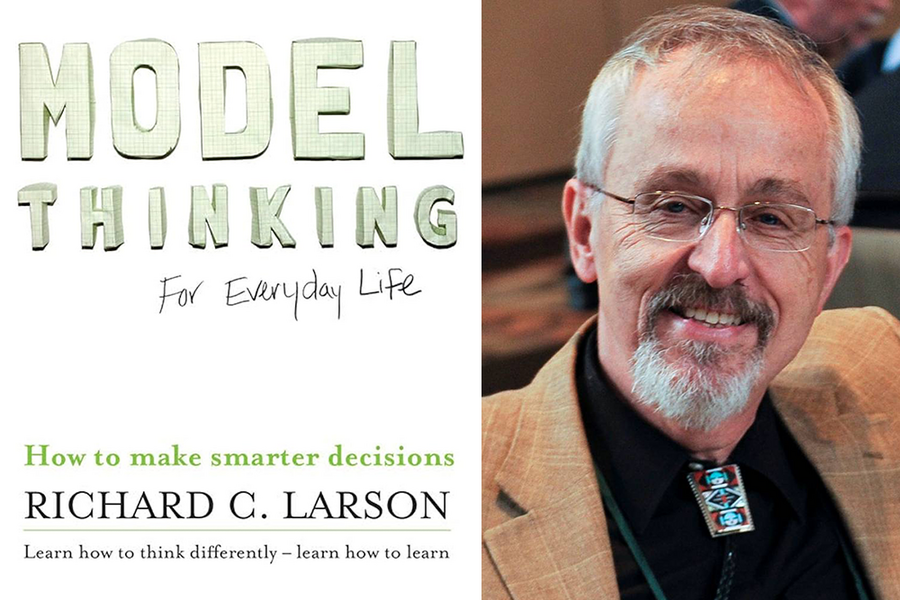
His name is Richard Larson, and MIT knows him as "Dr. Q" the world's leading expert on queuing theory and complex systems.
Here's what he said: "Many of us in the age of instant Google searches have lost the ability or perhaps the patience to undertake multistep problems."
That sentence diagnoses something most people feel but can't name. We've optimized for answers and completely forgotten how to think.
Here's the framework he spent his career teaching MIT students instead.
He calls it "Model Thinking," and the core insight is that every person on earth already uses mental models constantly without realizing it. When you plan the most efficient route for your errands, you are solving the traveling salesman problem from operations research. When you decide how much food to buy at the grocery store, you are running an inventory management model in your head. The question is never whether you use models it's whether you use them intentionally or accidentally.
The first skill he drills into students is problem framing. He argues that most people fail not because they can't solve problems but because they frame the problem wrong from the start. Before you attempt any solution, your entire job is to define what the actual problem is using first principles, not assumptions.
The second skill is accounting for uncertainty in every decision. He uses a simple example: if the ferry leaves at 2pm and the drive takes 30 minutes on average, what time do you leave? Most people say 1:30. Model thinkers account for traffic outliers, the asymmetry of consequences, and the difference between an average and a guarantee. They leave earlier, not because they're anxious but because they understand how uncertainty compounds.
The third skill is the one he says matters most: doing the thinking yourself instead of immediately searching for an answer. He marks every exercise in his book with a pencil and blank paper icon, because the act of working through a problem is where the actual learning happens. Reading a solution teaches you nothing. Struggling toward one teaches you everything.
His most powerful line came near the end of the interview: "Teaching a difficult topic is our best way to learn it ourselves."
MIT doesn't just train students to find answers. It trains them to understand problems well enough to teach them to someone else.
That gap is where most people's thinking stops, and where MIT students are just getting started.