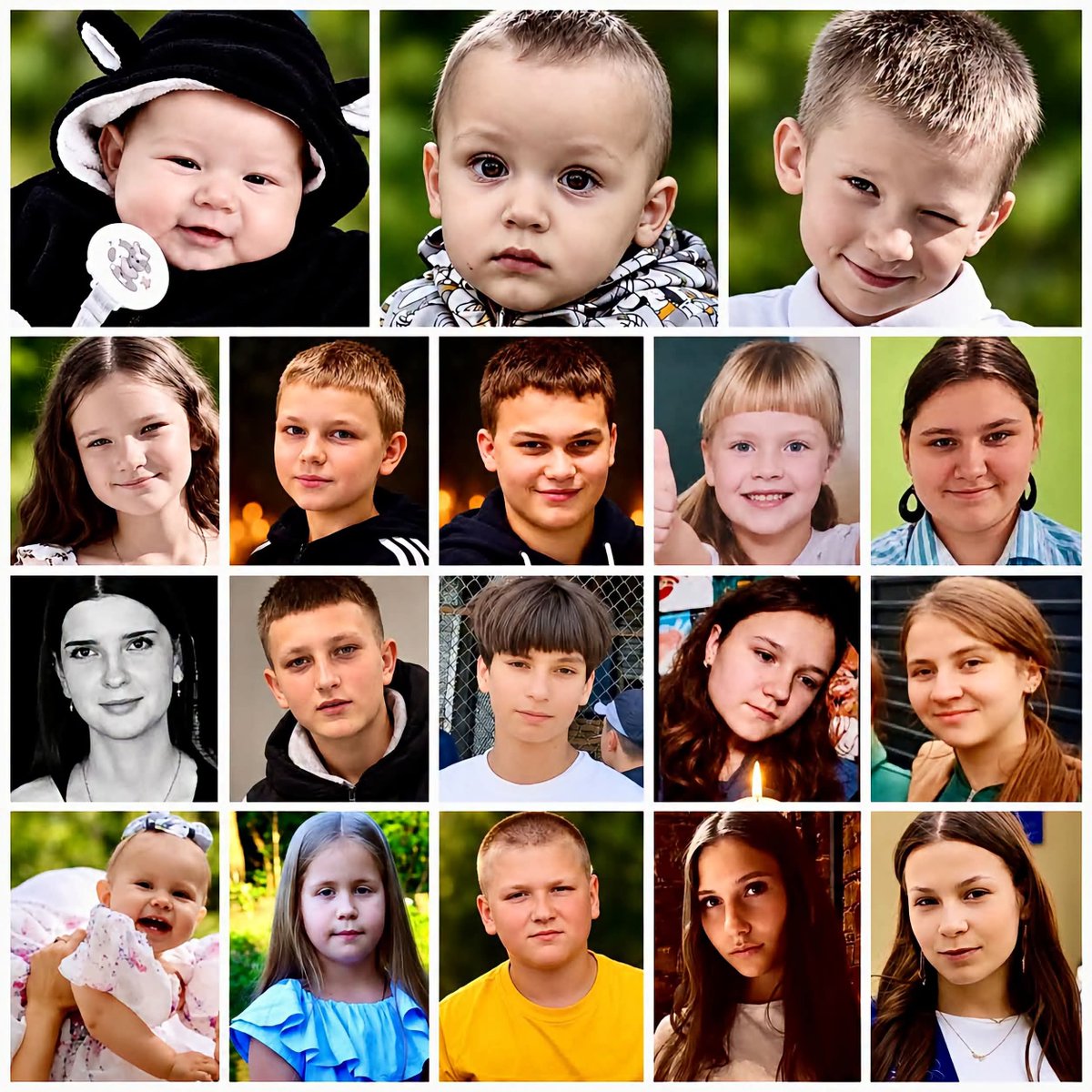
And now, here is the Ukrainian side of the story of Oleshky 🇺🇦💔
An incredibly painful interview with women who lived through Russian occupation.
One woman says:
“We waited so long for Ukraine to come back to Oleshky. But in the end, it was Oleshky that came to Ukraine.”
And then she asks a heartbreaking question:
“If Oleshky is Ukraine, and this is Ukraine too, why should we have to flee our own land?”
Another woman describes how she struggles to hold back her tears.
She says she tries to dance to cope with the pain. And when she can no longer dance, she starts singing.
Then she remembers how they left occupied Oleshky.
“As we were leaving Oleshky, everyone on the bus quietly sang the Ukrainian national anthem.”
Quietly.
Why quietly?
“Because under occupation, we became used to doing everything quietly. We wanted to live. We didn’t want to be killed.”
And then come the words that stay with you:
“But the most important thing is that, after all this time, we never forgot the Ukrainian national anthem in Oleshky.”
Think about that.
People were forced to leave their homes, their memories, and the places where they had built their lives.
They had learned to speak quietly, sing quietly, and hide their feelings in order to survive.
But they had not forgotten who they were.
They were not leaving Ukraine behind. They were carrying Oleshky with them.
And this brings me to something that deeply troubles me.
Why are Ukrainian civilians, volunteers, and journalists still carrying so much of the burden of documenting these experiences through social media and personal testimonies?
Where is the systematic, accessible, survivor-centred documentation that every victim of occupation deserves?
The United Nations, the International Committee of the Red Cross, the International Criminal Court, and other international mechanisms have different mandates and responsibilities. Some are already documenting violations, while others face serious restrictions on access.
But that cannot be the end of the conversation.
These testimonies must be preserved, independently investigated, and, wherever legally appropriate, used to support accountability.
Every interview may contain evidence of displacement, persecution, threats, or other violations of international humanitarian law.
Not every painful testimony proves a specific crime. But every testimony deserves to be heard, assessed carefully, and preserved with the survivor’s informed consent.
Why should survivors have to depend on whether their suffering goes viral before the world pays attention?
Why should a grandmother’s whispered national anthem, a family’s forced departure, or a civilian’s fear of being killed become just another fleeting video on someone’s feed?
The international community should be morally shaken by these stories — and that shock must translate into sustained documentation, protection, investigation, and accountability.
We cannot allow the history of occupied Ukrainian communities to disappear into social media algorithms.
This is the human reality behind the word occupation.
Not just territory on a map.
Not just political statements.
But people who still call their occupied hometown Ukraine, even when they can no longer safely live there.
Oleshky is Ukraine.
And its people deserve to return home in safety and freedom.
Slava Ukraini! 💔
#Oleshky #KhersonRegion #OccupiedUkraine #UkrainianVoices #RussianOccupation #DocumentWarCrimes #HumanRights #InternationalJustice #ICRC #UnitedNations #ICC #Ukraine #StandWithUkraine #SlavaUkraini
Sikorski: After each major Russian attack in Poland, I closed down one Russian consulate. We brought back Cold War-style restrictions on Russian diplomats.
All Russian citizens traveling to the West should have biometric passports, so their identities can be established. 6/
Le président polonais tente un putsch institutionnel, c’est effectivement grave. Pour la délinquante Marine Le Pen l’illibéralisme n’est qu’un détail de l’Histoire.
A ce jour, j'ai pu identifier en sources ouvertes 27 comptes d'influenceurs Maga affiliés à Storm-1516 qui ont primo-diffusé du contenu ciblant la France depuis juin 2026, et 1/3 de ces comptes ont été suspendus hier par X. Il ne faut pas perdre de vue que ce que l'on appelle en France "Magasphère" est bien souvent, et de longue date, une "Poutinosphère".
Manifester est un droit fondamental dans notre République. S’en prendre physiquement aux forces de l’ordre est en tous points inacceptable.
👉 À Paris, Rennes, Lyon, Lille, comme à Marseille, les violences commises contre les policiers et les gendarmes ne sauraient être banalisées ni justifiées par une quelconque revendication politique ou sociale.
👉 Les forces de l’ordre ne sont pas les adversaires de la démocratie. Elles sont chargées de protéger les personnes, les biens et l’exercice des libertés publiques.
👉 On peut contester l’action du Gouvernement, critiquer les institutions et exprimer son désaccord. C’est même le signe d’une démocratie vivante et en bonne santé. Mais aucune revendication ne confère un droit à la violence.
👉 La liberté de manifester ne saurait devenir un permis de s’en prendre à ceux qui assurent la sécurité de tous.
🇫🇷 Le respect de l’État de droit n’est pas négociable. Jamais.
#Manifestation31octobre
She was just 33. russia murdered her.
On October 29, Anna Braha shielded her niece during a russian missile strike on Kremenchuk, saving her life. Anna didn't survive.
She died saving a child. Her own 4-year-old twins, Yehor and Ksyusha, are now left without their mother.
On this day in 1942, a 42 year old Polish woman perished in Auschwitz after being incarcerated for 1 month and 7 days. Her name was Irena Popow
Please support @AuschwitzMuseum
La limitation du smartphone pour les lycéens a déclenché le même scénario que celle à 80 km/h pour les automobilistes. Frustration, colère, revendications, politisation brutale, libération de la violence, extase des médias. Résultat nul sur le fond mais folles dépenses publiques.
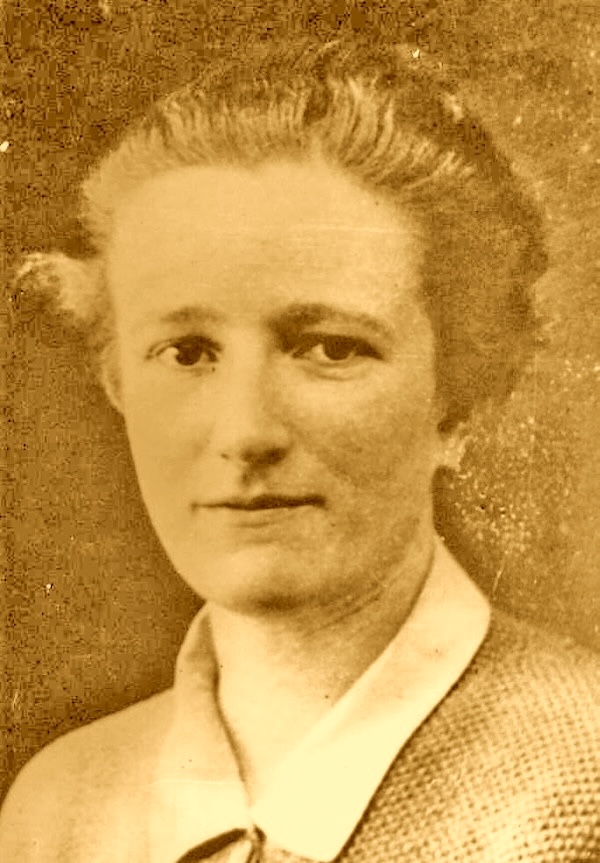
1943. Lübeck. Une syndicaliste lance à ses juges : "Je n’ai fait que mon devoir de française vis-à-vis de ma patrie et de communiste vis-à-vis de l’humanité. J’ai toujours agi sans aucune haine pour le peuple allemand [...]". Elle est guillotinée le 1er novembre. Suzanne Masson.
🇫🇷🇷🇺 L’affaire des étoiles de David bleues : anatomie d’une déstabilisation à quelques centaines d’euros.
Au petit matin du 31 octobre 2023, les habitants de plusieurs arrondissements parisiens et de communes de la petite couronne découvrent, médusés, de curieux graffitis sur les façades de leurs immeubles. Au pochoir, à la peinture bleue, près de deux cent cinquante étoiles de David recouvrent les murs de la capitale.
Dans le contexte d’effroi et de très vive tension internationale qui suit les attentats de masse commis par le Hamas en Israël trois semaines plus tôt, le choc est immédiat. L’émotion submerge le pays.
Pourtant, derrière les bombes de peinture et les pochoirs, la réalité qui s’est révélée quelques jours plus tard n’avait rien d’un accès de haine spontané d’acteurs locaux. Il s’agissait d’une opération d’ingérence clandestine, financée depuis Moscou et exécutée sur le sol français par des intermédiaires rémunérés.
Je raconte les coulisses de cette affaire ce nouvel épisode de "Sous le seuil", ma série consacrée aux ingérences et à la guerre hybride.
👉 Lisez la suite ici et abonnez-vous à mon Substack : https://t.co/asiEaPlqHx
🇫🇷 J'ai besoin de vous !
J'ai choisi de consacrer une grande partie de mon engagement à la lutte contre la guerre hybride russe, à la lutte informationnelle face à nos adversaires stratégiques et au réveil des somnambules européens.
Chaque jour, je publie sur :
Les atrocités commises par le régime de Poutine en Europe et en Afrique, pour que le monde sache.
Les raisons pour lesquelles il est crucial de soutenir l'Ukraine.
La menace stratégique que représente la Russie pour les Européens.
La défense européenne, pour faire de l'UE une puissance et non un simple marché.
Nos armées, pour faire rayonner l'engagement de celles et ceux qui risquent leur vie pour leur pays.
La social-démocratie, pour montrer que la gauche et les questions régaliennes ne sont pas antinomiques.
Mais pour faire entendre ces idées au-delà de X, j'ai besoin de votre soutien !
Retrouvez mes analyses, mes articles et mes vidéos sur :
📰 Substack : https://t.co/B7gRpd6OBq
🦋 Bluesky : https://t.co/8zRjan9wNY
📸 Instagram : https://t.co/iRiBJ1aepw
📘 Facebook : https://t.co/fJdCdUwMSw
💬 Threads : https://t.co/L7zcwYqpyS
🎬 TikTok : https://t.co/NPStpzOAJM
💼 LinkedIn : https://t.co/10rKtgicxR
Un abonnement, un partage, un relais : chaque geste compte pour donner davantage de portée à ce travail.
Merci à tous ! 🙏
After six years of Nazi persecution Gerda Weissmann was so weak she could barely stand. At just twenty years old she weighed around sixty pounds and her hair had turned white from starvation. Then in May 1945 a young American soldier opened a door for her. Gerda would remember that moment for the rest of her life.
It was May 7, 1945, in the Czechoslovakian town of Volary. Gerda was struggling to survive after a brutal death march. When American military vehicles began appearing she stood near an abandoned factory barely able to remain conscious. A young American lieutenant approached her. His name was Kurt Klein. He was twenty-five and spoke fluent German. He opened the door and stepped aside so she could enter first.
Gerda later recalled that he was the first person in six years to open a door for her. Kurt asked whether she was Jewish. When she said yes he quietly told her that he was Jewish too. He made sure she received medical attention. He continued visiting her as she received treatment. Their conversations grew into a friendship and that friendship gradually became love.
In June 1946 she wore a white wedding dress in Paris. Gerda and Kurt moved to the United States and settled in Buffalo, New York. They raised a family and devoted much of their lives to preserving the memory of those who had not survived. Gerda wrote *All But My Life*. Their marriage lasted fifty-six years. Kurt died in 2002. Gerda continued sharing her experiences until her death in 2022 at the age of ninety-seven.
One of her most cherished memories remained that brief encounter in 1945 when Kurt opened a door for her.
What would you do if someone threw acid in your face or shot you in the eyes with a shotgun?
Look at these beautiful women. Yes, bravery is beautiful. Bullets took their eyesight. Acid scarred their faces. But they are still fighting not just for themselves but to protect all women from Islamists terrorists.
On November 9, these women will enter the German Parliament. They will stand alongside courageous women who have survived prison, torture, persecution, and authoritarian regimes.
This gathering is deeply personal to me.
In 2025, during Berlin Freedom Week, I met Julia Klöckner, President of the German Bundestag. Our conversation inspired a vision that is now taking shape.
Evelyn Zupke, Germany’s Federal Commissioner for the Victims of the SED Dictatorship, is hosting our Women Summit.
The participation of Julia Klöckner the President of Bundestag and Yaël Braun-Pivet, President of the French National Assembly, brings an important international parliamentary dimension to our shared commitment to women’s freedom.
Women from Iran, Afghanistan, and other authoritarian countries who have been denied education, erased from public life, imprisoned, flogged, sexually assaulted, and sentenced to death for demanding freedom and security.
#LetUsTalk
31 October 1930 | A German Jewish girl, Ruth Helene Henriette Lilienfeld, was born in Kalkar. She emigrated to The Netherlands.
She was deported to #Auschwitz in January 1944 and murdered in a gas chamber after the selection.
---
A short video about gas chambers and crematoria of the Auschwitz camp: https://t.co/AENjcRS04c
Claudine Halaunbrenner was only five years old.
Born in Paris in 1939, she and her older sister, Mina, were sent to the Maison d’Izieu in 1943 after their mother could no longer find a safe place to hide them.
Claudine was one of the youngest children there. She had a little cloth doll that she carried everywhere—to meals, to lessons and even to bed. Each night, she would carefully tuck her doll in beside her. The older girls would braid her hair for her each morning.
She was a little girl who should have been worrying about toys, friendships and growing up.
But on April 6, 1944, everything changed.
Gestapo officers, acting under the orders of Klaus Barbie, raided the home. Claudine was taken away with her sister Mina, the other children and the adults who cared for them.
They were transported through Montluc prison in Lyon and Drancy before being deported to Auschwitz-Birkenau.
Claudine was murdered in the gas chambers shortly after arriving. She was just five years old.
Her life was stolen because she was Jewish. Her little doll, her childhood and all the years she should have had were taken from her.
Claudine was one of the 42 children from Izieu murdered during the Holocaust.
Today, we remember her not as a number, but as a little girl who loved her doll, who had her hair braided by the older girls and who deserved a lifetime of happiness.
May Claudine, Mina and all the children of Izieu never be forgotten.
Never forget. Never again.
OMNIPRÉSENTS DANS LES MÉDIAS : L'ARNAQUE DES SYNDICATS LYCÉENS - Ils sont omniprésents sur les plateaux télévisés, dans les reportages et les témoignages consacrés à l'actualité scolaire. De France Inter à BFM TV, en passant par Le Monde, les représentants des prétendus « syndicats lycéens » sont régulièrement sollicités pour exprimer les revendications et donner le sentiment de porter la voix de toute une génération. Le problème : ces organisations sont en réalité des associations, et leur représentativité est pour le moins discutable. L'Union syndicale lycéenne revendique ainsi 3 500 adhésions, un chiffre déclaratif qui ne fait l'objet d'aucune vérification indépendante publique. « Les Lycéens ! » et Renouveau lycéen ne publient pas davantage de données consolidées permettant de mesurer leur implantation réelle (qui est visiblement très faible).
DES ÉLECTIONS AUX RÉSULTATS ÉLOQUENTS
Regardons les élections de 2025 des quatre représentants lycéens au Conseil supérieur de l'éducation. Le corps électoral comptait 1 356 grands électeurs, issus des instances académiques de la vie lycéenne. Seulement 462 ont participé au scrutin, soit 34 % de participation. Les deux listes arrivées en tête, soutenues par l'association « Les Lycéens ! », ont recueilli respectivement 167 et 108 voix. La première liste n'a donc obtenu que 167 suffrages, soit 36,78 % des 454 suffrages exprimés. Rapportés aux 2 261 100 lycéens recensés en France à la rentrée 2025, ces 167 votes représentent 0,0074 % de la population lycéenne. Plus embarrassant encore : le tribunal administratif de Paris a annulé le 30 juillet 2026 les opérations électorales, estimant qu'une irrégularité dans la campagne avait été susceptible d'en fausser les résultats.
L'OMNIPRÉSENCE MÉDIATIQUE EN GUISE DE LÉGITIMITÉ
Voilà le véritable paradoxe : alors que ces associations ne disposent d'aucune représentativité nationale établie à la hauteur de leur exposition médiatique, leurs dirigeants sont régulièrement présentés comme les porte-parole de la jeunesse lycéenne. Les journalistes de l'audiovisuel public, notamment sur France Inter, France Culture et Franceinfo, leur accordent une place considérable dans les débats, interviews et reportages. Le problème n'est évidemment pas qu'ils puissent s'exprimer, mais que leur statut de représentants de toute une génération ne soit jamais questionné. Combien d'adhérents ? Quelle implantation réelle ? Quelle légitimité démocratique ? Autant de questions que les journalistes devraient systématiquement poser avant de leur tendre un micro. Une poignée de militants ne constitue pas, à elle seule, la voix de 2,26 millions de lycéens.
Grâce à une alliance plus étroite entre le Canada et l’UE, les familles auront plus de choix et paieront moins cher. Les entreprises auront accès à de nouveaux marchés d’exportation. Les jeunes auront plus de possibilités de vivre, de travailler et d’étudier où ils le souhaitent.