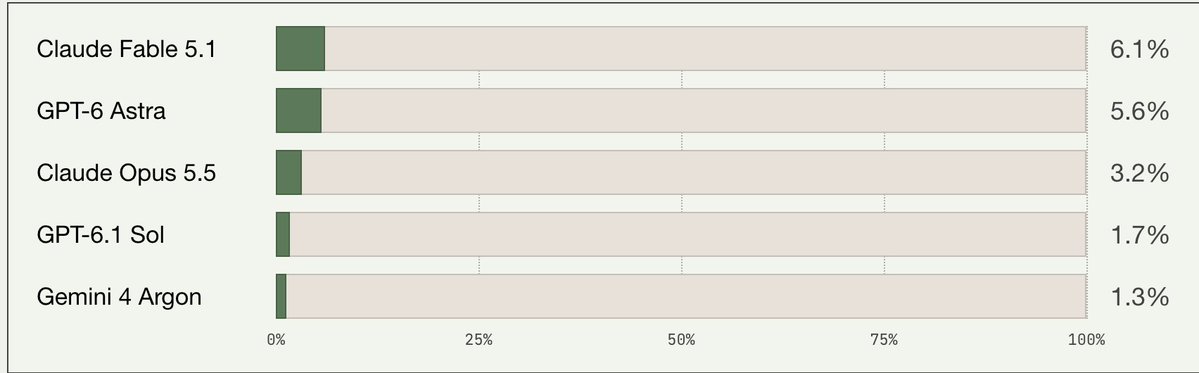
I used Shortcut to cut EPS forecast errors by 20% vs. Wall Street consensus.
I did this by backtesting Q2 2026 earnings forecasts for 113 small caps covered by 3+ analysts on Shortcut with Sol medium effort. Even after raising consensus by 2.7%, the best simple adjustment I found in hindsight, it only cut median errors by 4%, versus Shortcut’s 20%.
The reason I’m exploring this is because I believe that agents will give investors a starting point for companies they might not have previously had time to research. I used Shortcut’s generated spreadsheet models from the backtest to inspect, beyond just the final EPS estimate, which approaches held up. In 40% of forecasts, agents built up to EPS from revenue, costs, taxes, and share count. For that group, median forecast errors were 32% lower than the Street’s.
I also dug around to see how others are approaching earnings prediction. LSEG’s StarMine improves on consensus by giving more weight to recent estimates and historically accurate analysts. A 2024 paper I found reported that GPT-4 outperformed analysts at predicting whether annual earnings would rise or fall, but that was later withdrawn after a co-author found inconsistencies in the data and analysis during replication.
That made how I test just as important as the forecasts. So I realized I needed to limit the agent to information available before each earnings report and account for what it might already know from training.
I chose Q2 reports to reduce the in training-data risk since Sol was trained on data up to mid February. For web search, I restricted access to information from before each report and used TypeSafe’s Jev to screen pages for leaked results, which I found more reliable than Haiku in my tests. I’m now moving to Exa Snapshot to retrieve pages as Exa stored them at the cutoff.
These controls help, but forecasting before results exist is the real test. October earnings season seems like a great time to expand and publish forecasts.
This is still an early experiment, and I’d love to hear what y’all think I should try next and whether this could be useful :)
In San Fran this week, a few observations:
- Per head alcohol spend at the mixer 40% below NYC
- Never seen traffic in the city this gnarly. 45 minute Uber from SOMA to Presidio
- Real energy around AI use cases for public equity investors. This vertical is becoming real, quickly. Opus 5.5 threshold moment and people mentally preparing for Opus 6,7,8 and eventual open weight parity. Most common conversation is how you build something to stay out of the Claude path (there are lots of ideas that I believe do this)
- Consensus that public equity investing is one of the hardest AI use cases to crack “if AI comes for us, imagine what has happened to accountants”
- Still no one reliably arguing AI has bent the curve of alpha (but many now hopeful over next 6-12 months; particularly on short books). But broad consensus on the dramatic productivity uplift from Claude.
- Fun conversations on how awful Claude is as a stock picker (despite emerging super human capabilities in the junior analyst workflow stack), and fun ideas on how to fix that
- Fun conversations on the trading alpha emerging from fading “dumb Claude”
- My priors shifted on the inability to reliably backtest a Digital Investor. Which has exciting implications. Post training, training data and eval dominating conversations.
- The median AI conversation with investors in NYC is still “how do i set up my Skills”. The median AI conversation in SF is “how many worlds do I need to simulate to calibrate the 3 year IRR forward for a stock”.
- AI smacks you in the face wherever you go. Billboards, overheard conversations at coffee shops.
- This is so fun. Forgot I do this for work and feels like exciting play. Have to come back here regularly.
SpaceX delivered 2.7× the Street’s EPS estimate. Shortcut had already called for 1.7×. Shortcut is now 9–2 against Wall Street this week.
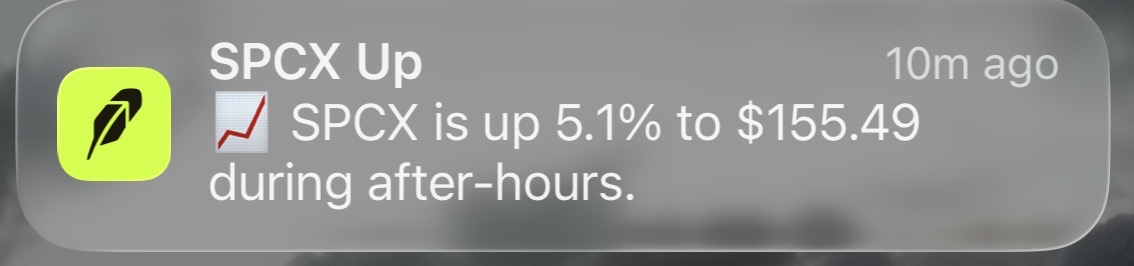
$SPCX reported $0.35 EPS, above Shortcut’s $0.22 forecast and well above the Street’s $0.13 consensus. I bought three shares ahead of earnings based on that forecast.
The Shortcut model forecast about $468m in Bitcoin gains, close to the $475m implied by the filings. Those gains explain roughly 17% of the EPS beat before tax effects.
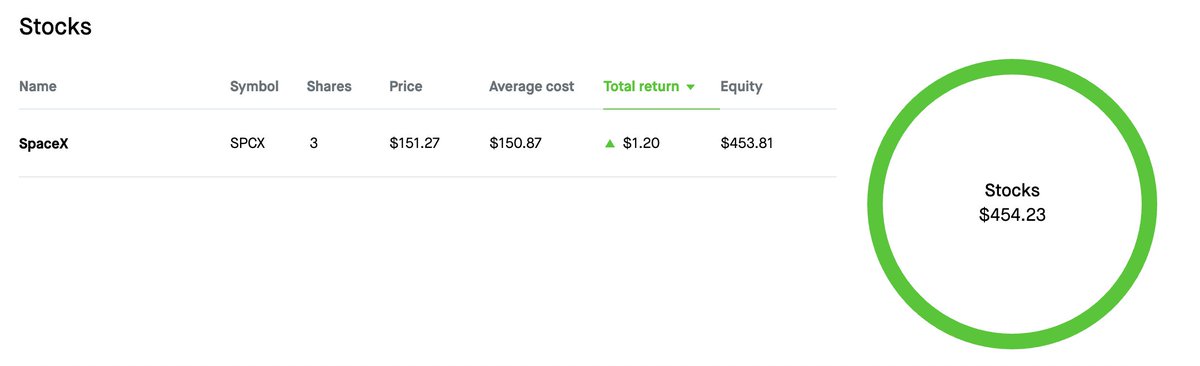
I bought 3 shares of $SPCX, about $450, ahead of earnings.
My Shortcut model predicts about $0.22 EPS versus the Street's $0.13, roughly 68.5% higher. It's the largest EPS gap in this week's forecasts.
Part of the agent's thesis is that gains on SpaceX's roughly 18,700 Bitcoin could provide a bigger earnings boost than the Street's headline estimate suggests. The assumed gain contributes about $0.04 per share.
I'm testing whether that forecast can translate into a profitable trade.
My $APLD trade only made a few cents despite the model correctly predicting a large earnings beat. I exited at market close the following day, which didn't capture the surprise the way I'd hoped. Earnings accuracy and entry and exit timing are not trivial.
Last week, Shortcut went 17–7 against Wall Street. This week, it's 5–1 so far.
I'm forecasting 38 companies this week, including $TSLA, $SPCX, $META, $NFLX, and $IBM, using Opus 5.5 in Shortcut.
I’m still a novice investor. Imagine what someone with years of experience could do with these tools.
All 38 forecasts and financial models are public:
https://t.co/kkhXUzvvTs.
the team has been hard at work
not on traditional engineering but on architecting a system that allows us to ship 10x faster
this is our first prod release since. check out everything we built in a week
New features on Shortcut shipped this week
Review mode: You can now mark up your workbook and give Shortcut comments, like you would an analyst.
Remote agent access: Connect Codex, Claude Code or your other favorite AI agents to Shortcut
Cloud runs: Need to close your laptop? Hand off your task to a Shortcut cloud agent
Recurring runs: schedule work for cloud agents to execute autonomously
Full details: https://t.co/cBlEJj1E77
We're open-sourcing Muse Spark Open!
This is an important release which is the most capable US open-weight model yet. 🇺🇸
- 816B parameters (42B active)
- 1M token context window
- Built for coding and long-horizon agents
- Runs locally on two Apple M5 Ultra Mac Studios
More here: https://t.co/ylGmz7BNg0
@navuud How'd you setup the verification side of the stack beyond having another agent review the code? Do you ever find yourself fighting fires or is the loop fast enough to catch any added regressions?
Shortcut + Opus 5.5 went 10/10 against Wall Street last week, with 24% lower median EPS error.
Its EPS predictions were closer to reported earnings than the Street’s on all ten companies that reported. NRIX reported today and is tracked with this week’s results.
Opus 5.5 performed better in my StreetBench backtest, and last week was an encouraging start to its forward forecasting. Sol 6 ran alongside it as a shadow model and was closer than the Street on 8/10. My next 24 forecasts and their financial models are now live, including major banks like $JPM, $BAC, $C, and $GS.
I also took the experiment one step further last week by putting $100 into $APLD before earnings and selling at market close the following day. This was just a start and as I grow my confidence in my agent's trading abilities, I'll invest more of my capital.
That trade emphasized the importance of entry and exit strategies surrounding earnings surprises. Even though I correctly predicted a large earnings beat for $APLD, my trade still ended flat.
My forecasts are also now live on @_openstocks, where Shortcut is the first verified contributor. Until now, I’ve focused on EPS. OpenStocks tracks revenue and operating profit too, so those predictions will get more attention moving forward.
Imagine what financial experts could do with these agents if a novice investor can already put up a fight.
This week’s predictions and models:
https://t.co/kkhXUzvvTs.
Shortcut is stepping into the OpenStocks arena as its first verified contributor. Our forecasts have focused on EPS so far. OpenStocks brings revenue and operating profit into the picture, and we’re taking on that challenge next.