China is a conglomerate willing to use its GDP and power to cross-subsidize any internal business that benefits from scale economies and network effects, until that business achieves a global supply monopoly.
There are only three types of investors. One- those who are only wearing sunglasses bought into Lenscart IPO day one , two - who are myopic and three who have cataract . The latter two may buy on the opening trade and after lock up expiry respectively by then Lenscart would have entered new markets and solutions . Where do you stand ?@1shankarsharma@LuckyInvest_ARK
Did you have chutney with any of your meals today?
Chutney is this week's word of Indian origin commonly used in English
Where does the word come from, what does it mean, is it different from pickle....Read on 👇
A chutney is a sauce or relish typically associated with the cuisines of the Indian subcontinent. It is often made from both sweet and sour ingredients of fruits and herbs, with spices and other seasoning added for flavour. It is usually eaten as an accompaniment to the main meal, often served as a condiment in the margins of one's plate.
The first known use of chutney in English appears in 1792. It comes from the Hindi word chaṭnī, deriving from chāṭnā - 'to lick' or 'to eat with appetite'. Beginning in the 17th century, fruit chutneys were shipped to various European countries as luxury goods.
Like a pickle, a chutney is served in small quantities to supplement other items in a meal, to enhance the flavour of the food. Both pickles and chutneys contribute a bit of taste and zing to a meal. But pickles are processed foods that are often matured under the sun for weeks, and can be preserved for months if not years. Most chutneys are prepared fresh with a life of a few days or slightly more when kept in a refrigerator. They can be preserved by using vinegar, salt and sugar.
Chutneys were traditionally prepared by grinding fruits, vegetables, and spices using a mortar and pestle. Commonly used ingredients in chutneys in different combinations are coriander, mint, tamarind, dates, tomatoes, ginger, mango, lemon, coconut, onion, red and green chillies, peanut, prunes and cumin. Different regions of India use ingredients based on the regional biodiversity and flavour preferences.
A common chutney variant used in Anglo-Indian cuisine uses tart fruit such as apples and rhubarb. English-style chutneys use malt or cider vinegar to preserve the chutney and give it an even longer shelf-life. In Western cuisine, chutneys are often eaten with hard cheeses or cold cuts of meat.
To add some chutney means to add some zest or spice. Maybe this is how the chutney style of dance and music that originated in Indo-Caribbean communities in Trinidad & Tobago, Guyana and Suriname got its name. Chutney songs are traditionally performed by women during weddings and childbirth and have provocative lyrics and dance moves.
So what are your favourite chutneys? Mine are mango, tamarind, coriander/mint and coconut. Do you like to eat chutneys with meals?
Some have questioned if American Exceptionalism was real or projected? News and events of past three days have confirmed that American Exceptionalism is real and very much alive . Just not in Silicon Valley but in Washington and Florida #TariffWar
Now that Tariffs are set , the French can export luxury like Berlin and Kelly Bags and need to import lots of Le Big Macs to reset the deficit 🤯#Pulpfiction#tariffs
Seersucker doesn't see or suck, but is worn across the world. It is today's word of Indian origin 🇮🇳 commonly used in English. But it took Ivy Leaguers to adopt it before it was considered "cool".
Where did it come from and why is it popular summer clothing? Read on👇
Seersucker fabric is woven from linen, cotton or silk on twin-beam looms that weave it at different speeds. This gives seersucker its typical stripes and wavy texture.
The fabric was originally imported from India by the East Indian Company in the 17th century. Traders in the Middle East gave this cloth a Persian name "shiroshakkar" for its striped pattern, which literally translates to "milk and sugar". This comes from Persian shir for milk and shakkar for sugar, which itself comes from the Sanskrit words ksiram for milk and sarkara for sugar. Milk and sugar is a reference to the smooth and wrinkled (rough) surfaces of the fabric. The name was anglicized to seersucker. During the colonial period the fabric made its way from Europe to the US where it gained the most popularity.
The uneven seersucker fabric doesn't stick to the skin and so facilitates heat dissipation and circulation of air. The breathability helps it dry quickly. The wrinkles are a part of the texture of the fabric and so ironing isn't necessary. So clearly a very practical fabric.
Initially, seersucker was a working-class fabric, used for its durability and breathability, especially in hot climates. In 1909, Joseph Haspel, a New Orleans clothier, reimagined seersucker as a lightweight summer suit, making it a symbol of Southern American style. But the American South was considered backward and its influence over style and fashion was limited. Around the 1920s and 1930s some Princeton students adopted colourful seersucking clothing and this spread to the other colleges, slowly becoming a part of preppy style. Over time it gained in popularity across the US. Even the US Senate has a tradition of "Seersucker Thursday" where members wear seersucker suits during the hot summer months in Washington DC.
So have you ever owned a piece of seersucker clothing? What do you like about it? Do you feel cool wearing it?
Speaking of like, if you like this post, you might also enjoy my other posts on my timeline on words of Indian origin that are commonly used in English. Some of the words I have written about are: musk, juggernaut, curry, dekko, shampoo, orange, candy, loot, thug, dungarees, pajama, cummerband, bandana, nirvana, avatar, cheetah, mongoose, catamaran, dinghy, Java, Singapore, guru, pandit, pepper, jungle, khaki, cashmere, shawl, catamaran and dinghy...I promise you'll be seen as cool if you know more about these words!
He’s Bollywood royalty who started an acting dynasty 📽️…
…but was most influential as a joker 🤡 and a tramp
Why did he mix eroticism with socialism...
This week’s Famous Dead Indian 🇮🇳 is Raj Kapoor, our 10th in this series. Read on 👇
Wow! That’s dramatic….Bollywood royalty huh?
Indeed. Kapoor has been called “the great showman”. He produced some of the most watched films anywhere in the history of the medium.
He was born to a landed wealthy family in Peshawar, British India (now in Pakistan) on December 14, 1924. Kapoor’s career began as an actor, but he was drawn to directing and producing films. His first stage role was when he was 5. At age 23 he became the youngest film director of his time anywhere in the world and opened his own studio, RK Films. He went on to act, direct and produce about 70 films, in some of which he played all three roles. No pun intended, and proof that this isn’t written by AI!
He did have some advantages to build his career on. He came from a family deeply rooted in the arts. His father was an accomplished stage and film actor, and his grandfather was a famous theatrical personality as well.
Aha….so born with a silver spoon in his mouth….a nepo baby!
Far from it. If anything Kapoor was the one who made the mainstream Indian movie audience before the term Bollywood was ever thought of. He was influential in making Punjabi song and dance a staple for entertainment in India. Kapoor introduced Indian cinema to a global audience and laid the foundations for Bollywood.
He also laid the foundations for a dynasty. Both his brothers became actors, and married actresses. His 3 sons were actors, two of whom married actresses and were regularly given acting roles in his films. Among his 3 grandchildren 2 are Bollywood’s current top stars and both are also married to actors, and collectively continue to keep the family legacy alive. His successors, while talented, might be nepo babies, but he certainly wasn’t.
Ok, he’s royalty alright…but why would the great showman want to play a joker and tramp?
Kapoor created a very unique on-screen image inspired partly by Charlie Chaplin’s ‘Little Tramp’. His Chaplinesque style was also evident in Mera Naam Joker (My Name is Joker) where he played a clown. He typically portrayed a lovable but down-on-his-luck common man struggling against social injustice. His characters were often seen in a trademark look of a slightly shabby coat, a hat, and a naive expression.
This was ironic given his family’s historical wealth and his privileged upbringing.
It has been argued that his purpose was driven by the conditions and context of a young and recently Independent India that was not meeting its post-Independence promises to the masses.
The class analysis portrayed in his films focused on the spirit of the underprivileged, with the recurring theme that their faults and condition were due to the wrongs of the rich. The audience found it easy to relate to the messaging in his populist films.
But his political skepticism didn’t dilute his patriotism for a nation that was still finding its feet despite all the wobbles. One of his best known songs, Mera Joota Hai Japani, is a patriotic anthem where he as the on-screen actor asserts pride in being Indian despite all his clothes and accessories being from other countries.
Some of Kapoor’s best known films have deep meaning. Awara (meaning tramp or vagabond) was about mass unemployment and corruption in the criminal justice system. Shree 420 was about upper-class corruption and the challenge for the poor to behave ethically in a world rigged against them. The film name was derived from section 420 of the Indian Penal Code.
H.E.A.V.Y….you want me to believe that an unequal society and unmet promises were killer storylines?
I do! And here's why. Kapoor’s genius was in blending entertainment with socially relevant themes. He sugared his social concerns with sauciness, music and melodrama.
His films brought romance, sexuality, song and soul to Indian socialism in its heyday. His brand of escapism suggested that one could love one’s way towards equality and dignity, or love one’s way around the structural problems of society.
Kapoor’s cinematic formula of celebrating the underdog worked overseas too. He understood the power of music in his narratives. His clever integration of lyrics and dance into the scripts also landed well with an international audience as they touched the right emotions on universal themes of love, inequality and the desire to lift oneself into a better economic class.
It is estimated that in 1954 some 64 million people in Russia alone bought tickets to his movie Awara. Just imagine how many TikTok views he’d have gotten in today’s world! Kapoor was equally popular in Eastern Europe, North and East Africa, Middle East and China, where Chairman Mao was said to be a fan and once named Awara his favourite film. His movies’ songs became top hits in these countries and in Turkey some have even been converted into modern hip-hop tunes.
R.E.S.P.E.C.T….but what’s with his thing for eroticism in the middle of all this socialism?
Kapoor saw eroticism as central to Indian tradition right from the erotic sculptures on what all of ancient Indian temples like in Khajuraho to the practice of temple dances. He dated his own interest in it to bathing as a child with his beautiful mother.
He redefined the cinematic portrayal of love. His heroines weren’t passive love-objects and didn’t hold back from exhibiting their lust. Kapoor and a leading heroine of the day, Nargis, had legendary recurring pairings in his movies largely because of their sexual chemistry. She was also his muse.
His later works explored more complex subjects that were ahead of their times. Prem Rog (Sickness of Love) examined sexual assault through the lens of social conservatism, Satyam Shivam Sundaram (Truth, God, Beauty) focused on female desire, and Mera Naam Joker featured an adolescent’s sexual awakening. Many of his movies have explicit scenes focusing on the female form.
His last film is today mainly remembered for an iconic scene where the heroine’s transparent white saree is drenched under a waterfall, a scandalous moment in Indian cinema when it was released in 1985.
Kapoor wasn’t afraid of pushing the boundaries.
A pioneer indeed….someone should make a movie on his life.
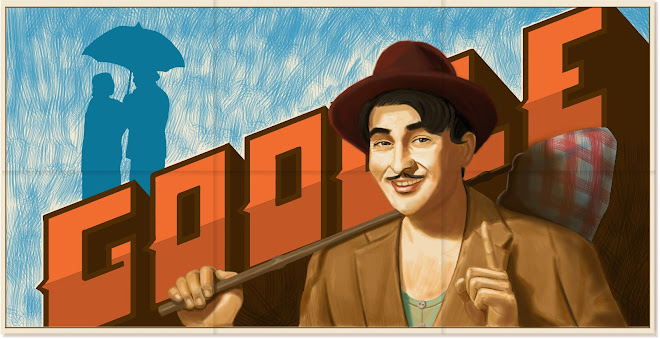
Haha…I see what you did here! India Post made a stamp commemorating him in 2001. Google celebrated him with a doodle on what would have been his 90th birthday in 2014.
In 1971, he won one of India’s highest civilian awards, the Padma Bhushan, and in 1988 he won the highest award in Indian cinema, the Dadasaheb Phalke Award. Time Magazine named Awara as one of its Top 100 movies of all time.
He has been described as more than the primal star of Indian cinema. To most of the planet, he was India in all its vitality, humanity and poignancy. Kapoor deserves to be a Famous Dead Indian.
If you like this post please repost and share with your friends so they can also find their inner movie star. If you want to learn more on Kapoor’s life, I’d recommend eminent historian Sunil Khilnani’s profile on Kapoor, which I have also used as a source for the above.
Other Famous Dead Indians we have written about in the last few weeks are Freddie Mercury (rockstar), Mother Teresa (saint), Verghese Kurien (world's greatest milkman), PC Sorcar (magician), Aryabhata (invented zero), Rabindranath Tagore (Nobel winner, author of national anthems), Osho (controversial spiritual guru) Shakuntala Devi (human computer) and Dr Vikram Sarabhai (rocket scientist). You can find them on my timeline.
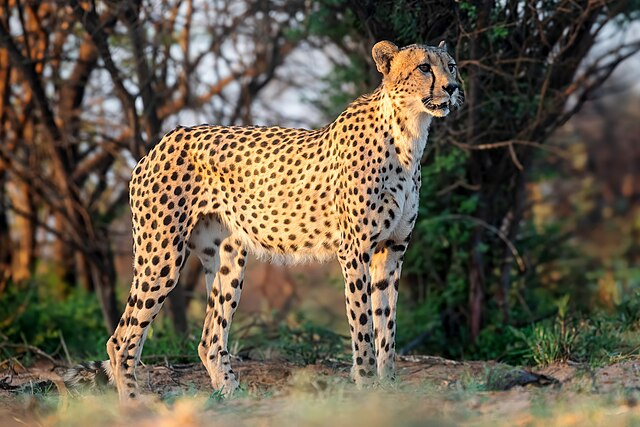
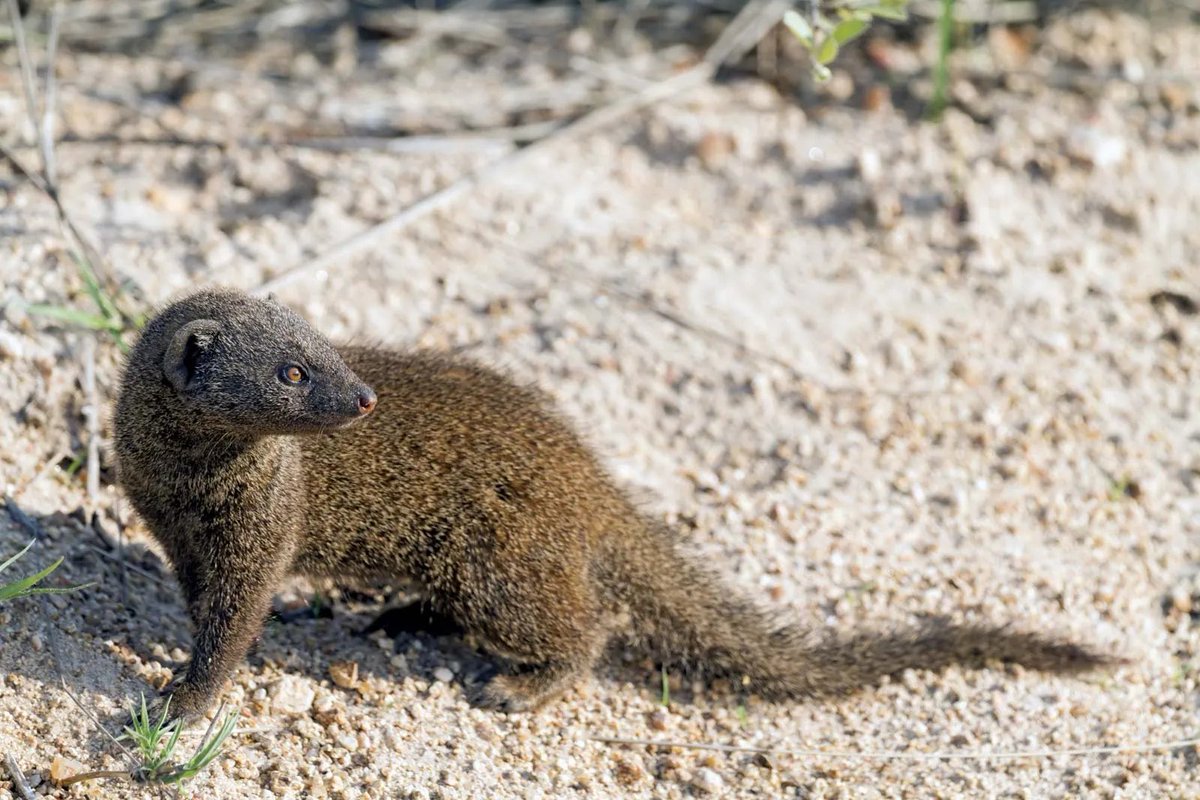
Today we visit the animal kingdom for our words of 🇮🇳 Indian origin commonly used in English. Read on to find out where Cheetah and Mongoose got their names from 👇
CHEETAH: You know it as a large cat and the fastest land animal. The word "cheetah" is derived from the Hindi word cītā, which means "spotted one". This Hindi term itself originates from the Sanskrit word citra, meaning "variegated", or "speckled". This describes the cheetah's distinctive coat, which features numerous black spots on a light background. The appearance of the cheetah influenced its name. In the past, the cheetah was often called "hunting leopard" because they could be tamed and used for coursing during hunting.
MONGOOSE: You know it as a small terrestrial carnivorous mammal that feeds on rodents, birds, reptiles, frogs, insects, and worms. Some species attack venomous snakes, as was popularised in Rudyard Kipling's The Jungle Book. The word "mongoose" originates from several Indian languages: Marathi muṅgūs, Sanskrit madguśa and Telegu muṅgisa; so clearly it has variations among various languages on the Indian subcontinent. The term entered English possibly via Portuguese mangusto. Despite having no actual connection to the word "goose", the English term was changed to this more familiar ending around the start of the 18th century due to popular usage. Thereafter it was spelled mungoose in the 18th and 19th centuries.
I don't know of any known fights between cheetahs and
mongooses but do let me know if you are familiar with any 😀
@thekaipullai What about fast till 12 noon, then eat only legumes and plant protein while standing on one leg, facing West, while day trading, to extend your lifespan?