@Super70sSports Anybody know how the writers came up with the name “Frank Lyman” from Amherst? There is a plaque underneath a bridge on route 9 in the town of Amherst honoring the real Frank Lyman. Did one of the writers go to Amherst College?
@atrupar Reducing funding to the IRS, as the Republicans want, does not change the tax laws. It simply hurts the ability to enforce existing law so maybe Scalise should have been pressed to explain his position. Is he saying he wants to make it easier for people to cheat on their taxes?
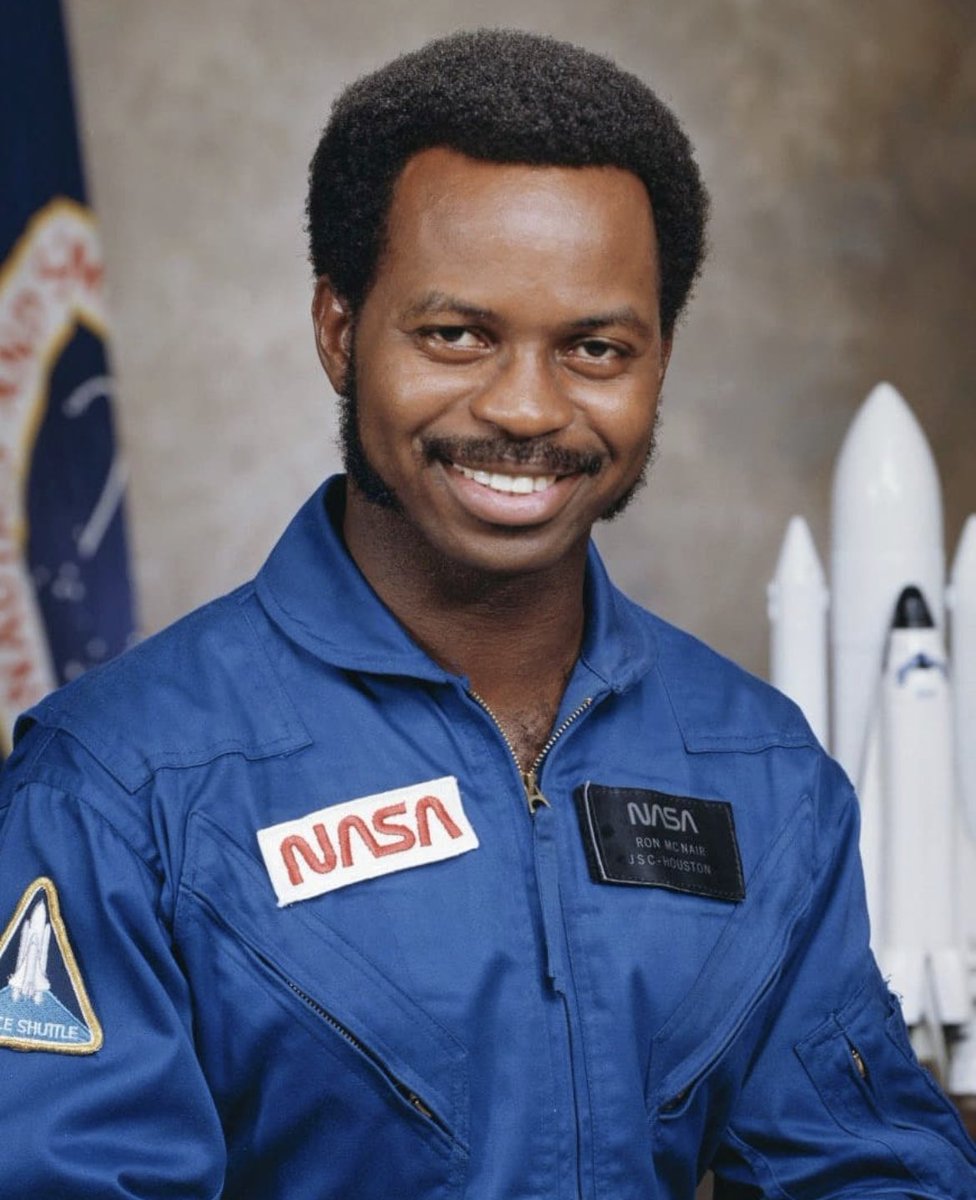
In 1959, 9-year-old Ronald McNair went to a public library in Lake City, South Carolina because he was looking for more advanced books on science.
Ronald's older brother, Carl, describes what happened next:
“So, as he was walking in there, all these folks were staring at him - because they were white folk only and they were looking at him and saying, you know, 'Who is this Negro? So, he politely positioned himself in line to check out his books. Well, this old librarian, she says, 'This library is not for coloreds.' He said, 'Well, I would like to check out these books.' She says, 'Young man, if you don't leave this library right now, I'm gonna call the police.' So he just propped himself up on the counter, and sat there, and said, 'I'll wait.'”
Ronald McNair eventually went on to get a PhD in Physics from MIT and was one of the 7 astronauts onboard the space shuttle Challenger when it was destroyed in flight in 1986. He was only 35 years old.
Today, the library that refused to lend him books is now named after him.
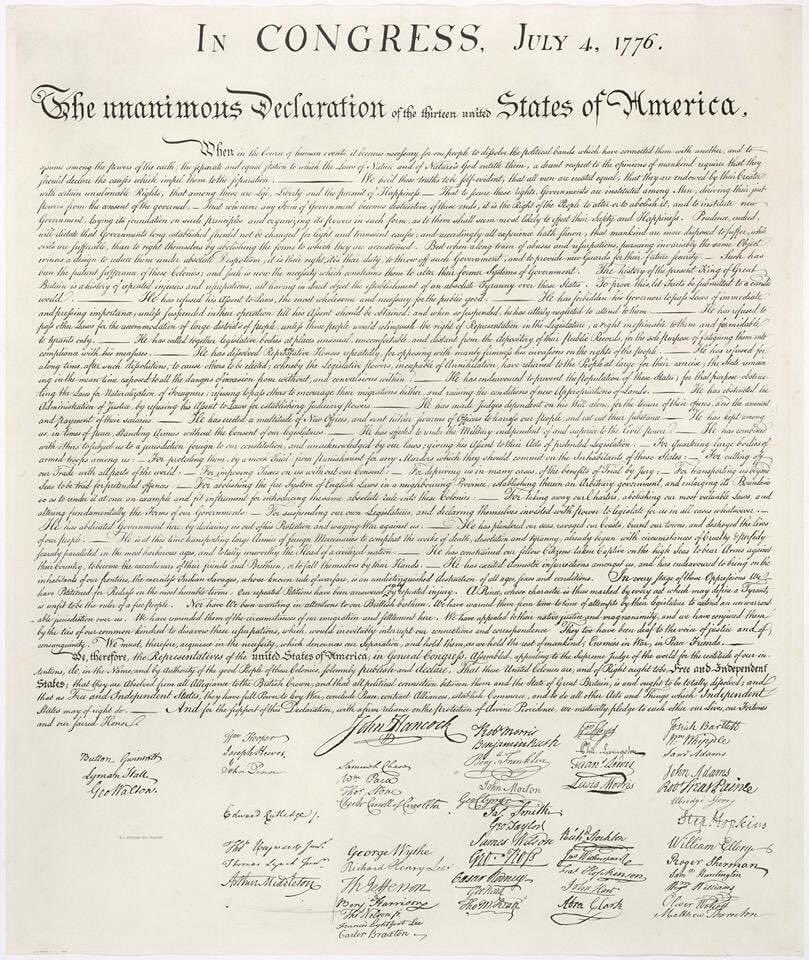
“Have you ever wondered what happened to the 56 men who signed the Declaration of Independence?
Five signers were captured by the British as traitors, and tortured before they died. Twelve had their homes ransacked and burned. Two lost their sons in the revolutionary army, another had two sons captured. Nine of the 56 fought and died from wounds or hardships of the revolutionary war.
They signed and they pledged their lives, their fortunes, and their sacred honor.
What kind of men were they? Twenty-four were lawyers and jurists. Eleven were merchants, nine were farmers and large plantation owners, men of means, well educated. But they signed the Declaration of Independence knowing full well that the penalty would be death if they were captured.
Carter Braxton of Virginia, a wealthy planter and trader, saw his ships swept from the seas by the British Navy. He sold his home and properties to pay his debts, and died in rags.
Thomas McKeam was so hounded by the British that he was forced to move his family almost constantly. He served in the Congress without pay, and his family was kept in hiding. His possessions were taken from him, and poverty was his reward.
Vandals or soldiers or both, looted the properties of Ellery, Clymer, Hall, Walton, Gwinnett, Heyward, Ruttledge, and Middleton.
At the battle of Yorktown, Thomas Nelson Jr., noted that the British General Cornwallis had taken over the Nelson home for his headquarters. The owner quietly urged General George Washington to open fire. The home was destroyed, and Nelson died bankrupt.
Francis Lewis had his home and properties destroyed. The enemy jailed his wife, and she died within a few months.
John Hart was driven from his wife’s bedside as she was dying. Their 13 children fled for their lives. His fields and his gristmill were laid to waste. For more than a year he lived in forests and caves, returning home to find his wife dead and his children vanished. A few weeks later he died from exhaustion and a broken heart. Norris and Livingston suffered similar fates.
Such were the stories and sacrifices of the American Revolution. These were not wild eyed, rabble-rousing ruffians. They were soft-spoken men of means and education. They had security, but they valued liberty more. Standing tall, straight, and unwavering, they pledged: ‘For the support of this declaration, with firm reliance on the protection of the divine providence, we mutually pledge to each other, our lives, our fortunes, and our sacred honor.’”
Michael W Smith
@RichardHaass 2. If Congress wants to undo spending that had been legally adopted, it should have to pass a new law undoing that previously adopted law. Instead we have this “political game” which defies common sense and is bad for the nation regardless of which party is in the majority.
@RichardHaass 1 of 2. Would it be so bad if we had a system where once a spending bill became law, we did not then require a second law to be adopted to pay for that spending that had already been approved?
On the last day of regular season, Joe Carter pranked rookie Derek Bell by driving Bell’s Jeep onto the field as part of a mock “raffle” to give it away to a fan.