SpaceX just acquired xAI in a deal valuing the combined entity at $1.25 trillion.
Elon says it's about building "data centers in space."
But let me translate what's really happening here...
xAI is burning through $1 billion per month.
The company generated $107 million in revenue last quarter while hemorrhaging $1.46 billion in losses. It burned nearly $8 billion in cash through the first nine months of 2025.
That's not a business.
SpaceX meanwhile generated $8 billion in profit on $15-16 billion of revenue last year. It's the ONLY Musk company that actually prints money.
So what do you do when your AI startup is drowning in red ink ahead of your mega-IPO?
You fold the cash-burner into the entity that can still raise absurd amounts of capital.
And we've literally seen this exact thing before:
In 2016, Tesla acquired SolarCity for $2.6 billion.
SolarCity was bleeding cash, drowning in debt, and trading near all-time lows.
Tesla - the only Musk company at the time that could access the capital markets - absorbed it.
Wall Street analysts called it a "bailout dressed as synergy." Tesla's stock dropped 10% on the announcement.
The SpaceX/xAI deal is the same playbook.
Musk's stated rationale - that AI compute will be cheaper in space within 2-3 years - is the kind of thing that sounds visionary until you think about it for 5 seconds...
SpaceX builds rockets. xAI trains large language models.
These are wildly different businesses with zero operational overlap.
Imagine Microsoft acquiring a cement and steel conglomerate and claiming "tilt-up concrete slabs are essential for data centers."
That's the level of logic we're working with here.
The real play is simple: prop up xAI's insane burn rate with SpaceX's funding access ahead of what could be the largest IPO in history.
And xAI isn't alone in this capital-devouring spiral.
The entire AI sector has become a web of companies cross-subsidizing each other's losses.
OpenAI squeezes billions from Microsoft. Nvidia invests billions in xAI while selling them chips.
Everyone's propping everyone else up.
The investment thesis across the industry has devolved into:
"Please keep the Ponzi spinning long enough for someone else to be left holding the bag."
Meanwhile, the end product - AI - delivers marginal productivity gains for trillions in capex, soaring power costs, and balance sheet carnage.
If these services were priced to reflect their true economic cost, most users would find negative value.
But investors stopped reading balance sheets and cash flows long ago.
The AI models probably can't read them either.
What a time to be invested.
So what's the play?
AVOID the AI infrastructure complex.
When everyone's propping everyone else up, you don't want to be holding the bag when the music stops.
Look instead at sectors that have suffered from years of underinvestment: energy and commodities.
While trillions have been funneled into AI infrastructure, capital spending in oil, gas, and metals has been starved.
That's how cycles work - underinvestment leads to supply constraints, which leads to rising returns on capital.
Tech has the opposite problem. Overinvestment is destroying returns.
When you're burning $1 billion a month to generate $107 million in revenue, that's not a business model - it's a wealth transfer from investors to chip manufacturers.
Emerging markets are also attractive here.
They've been ignored while capital chased the Mag 7, and valuations reflect that neglect.
The Mag 7 now represent roughly a third of the S&P 500.
When this unravels - and it will - capital will rotate into the parts of the market where returns on capital are rising, not collapsing.
Energy. Commodities. Emerging markets.
POSITION ACCORDINGLY
Mike Tyson fight with YouTuber-turned-boxer Jake Paul has been postponed after Tyson fell ill on a recent flight. The duo, who were scheduled to fight on July 20, said they'll announce a new date next week.
https://t.co/vnfsJh6obt.
This @VisualCap graphic shows credit card delinquency rates across 50 U.S. states, as of Q3 2023; data comes from @wallethub study published in January 2024 examining proprietary user data on average number of delinquent credit card tradelines—also known as credit accounts—across states
Loved your article “6 Questions to Ask at the Midpoint of Your Career”@knightrm Thank you for the encouraging deeper questions!
https://t.co/d85tGmE9Yx
America 2.0:
- brainwash kids for 8 hours a day until they’re 18
- tell them they have to go to college and go $100,000+ in debt or they’ll never succeed
- make student loan debt unforgiveable, more expensive yearly, and yet give their parents' tax dollars to those same schools
- make illegal unpaid internships where you actually learn to do rather than to theorize
- pressure top performers to go into 2 most uncreative jobs, consulting & Wall St
- or idolize startups that will require sleeping on floors and racking up massive debt from VCs so 1 out of 10 of them can be on the cover of Fortune
- get mad at them for not working “hard enough” and quiet quitting when they can’t afford houses, hate their jobs, and their loans keep stacking
- if that doesn’t keep their heads down, then send them to war in a foreign land
I wonder why so many young people don’t trust the system.
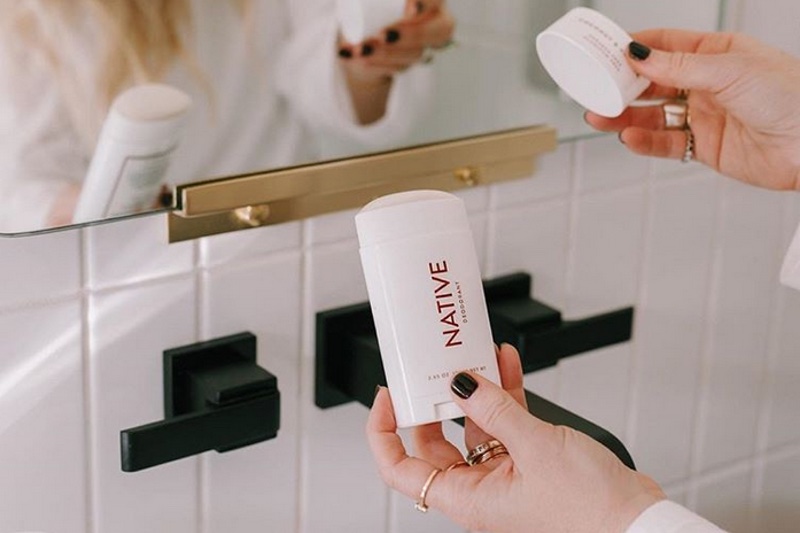
Ever heard of Native deodorant?
Their story's wild:
• Exited for $100M
• Within 2.5 years
What's even crazier:
• They ONLY raised $500k total
It's the kind of biz that inspires you to just *start* something... Here's the story:
Moiz Ali got the idea for Native after reading the back of an Axe can.
He had no idea what the majority of ingredients actually were.
At the time, Moiz knew that 'natural' products were on the rise (natural deodorant was the number 1 product on Etsy in 2015).
And so...
He decided to start a natural deodorant company.
Bear in mind - at this point, Moiz knows NOTHING about deodorant.
His reaction is one of the reasons I love this story – it shows how important mindset is in business:
“I know nothing, and in six months, I’m going to become one of the world’s leading experts on deodorant. I’m just going to spend my time learning, and I’m going to figure it out.”
So - how did Moiz make the first bar of Native?
He went on Etsy, found the best makers of natural deodorant & asked them to white label their product.
This was smart because on Etsy, Minimum Order Quantities (MOQs) are ~100 (rather than 1000s with manufacturers).
And as is often the case, it took dozens of no's before one woman agreed to make their product.
At this point, Moiz launched on Product Hunt. With no deodorant in-hand, he sold his first 60 virtual units.
That's when he ACTUALLY put in the first order.
This is a theme in business success stories: lowering risk by testing the market before committing.
The worst possible case?
He's in the hole a couple hundred $.
FAR better than taking out a huge loan, ordering 5,000 units from a manufacturer & then realizing no one wants to buy them.
Another thing Moiz did right?
Hyper-focus on customers.
Despite early traction, he quickly realized the first product wasn't great.
So he spent the first year fine-tuning the product – by sending out free samples & iterating on feedback.
The results?
Native went from a 4-star rating & 25% repeat order rate to a 4.7 rating & 50% repeat order rate.
We know repeat orders are king in D2C. Coupled with killer A/B testing on FB ads, Moiz scaled the biz from $50k revenue in Jan 2016 to $1M in Nov of the same year.
Other ways they grew so fast:
• Launching subscription plans
• Asking for video customer testimonials & using these as ads
• Sending humanized, fun emails & cards with purchases (i.e. upgrading customer experience)
In 2017, Native had hit between $25-35M in revenue – with ONLY 8 fulltime employees (5 in customer service, 1 in ops, 1 in marketing & 1 working closely with Moiz).
They were acquired by P&G for $100M.
This was the first purchase P&G had made in 10 years.
Moiz says there were 4 main reasons he went with P&G:
• Value alignment during negotiation (no over-the-top diligence requests & respecting Moiz's vision)
• The dedication that P&Gers showed toward their work
• Alignment on brand & creative
• Resources for future growth
I love this founding story – I'm inspired by:
• Moiz knowing nothing about deodorant but picking a simple biz model
• His obsession with customers
• How insanely fast they grew
• The care behind the exit
It's one of those stories that makes you think... "I could make it if I just took the leap."