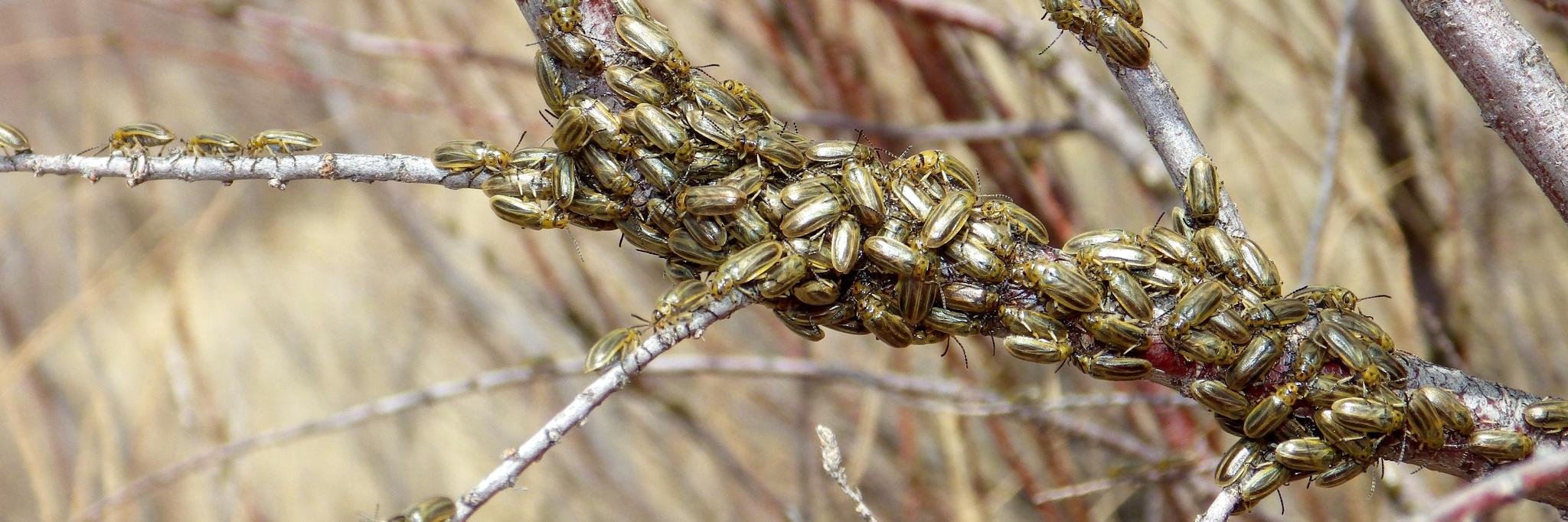
Dan Smith at Kelley Bean Company shares this image and noted several dry edible bean fields with spidermite infestations this week. This prolong August heat and dryness is driving an amazing abundance of 2-spotted spidermites throughout western Nebraska and surrounding region!
Here’s the latest #sugarcaneaphid#SCA map for sorghum in Kansas. Many areas increasing except in drought stricken dryland sorghum where they are dying off. @kansasbugs @KStateRschExtn @KStateAgron
#Sugarcaneaphids#SCA are showing up in western Kansas sorghum now. Some fields have reached threshold (conservative threshold: 40 aphids per leaf/30% plants for KS) and have been sprayed. Report infested counties to your county agents! @KStateRschExtn https://t.co/ufmRyskJUS
#Cornleafaphids make a mess and seem scary in #sorghum but they bring in those beneficial insects!Rarely, if ever, do they need to be sprayed. The honey dew should dry up shortly after they are eaten by predators! @kansasbugs @KStateRschExtn @KStateAgron
What do fireflies, moths, stoneflies, mayflies, fishflies, aphids, scorpionflies, and lacewings have in common?
They're all flying insects I filmed for this new video: https://t.co/JpRgADpWUq
Free registration is open for our 2020 Virtual Fall Field Day for both Hays and Garden City! Come see the newest research updates and how we can help your farm! https://t.co/5XBvjQXgaj @kansasbugs@KStateAgron @KStateRschExtn
Check out the latest findings for your farm at our Western Kansas Ag Research Centers Virtual Fall Field Day on Aug 26th & 27th. Join one or both days-free! Register here https://t.co/5XBvjQXgaj @kansasbugs@KStateAgron @KStateRschExtn
Did you know there is a gall midge that lives in our native prairie coneflower? It’s Asphondylia ratibidae - #Prairie Coneflower #GallMidge! @KSUEntomology