@help_delhivery@help_delhivery what merchant you want me to contact? I am the sender.. and I am the receiver. No return is initiated from my end. This is pathetic.
@help_delhivery My package with awb 2827793790243 was supposed to arrive on 6th August. I arrived in Bangalore now it is in Andhra Pradesh. Please look into it asap.
@Airtel_Presence Got a new airtel wifi 100mbps, sales executive promised 699+gst, but the thanks app shows 799+gst. Raised concern over phone, but no resolution.
@MagicbricksHelp Hi I have MB prime pro plus plan and most of the property owners I contacted said it is already rented out/ number switch off/ incoming call not available. Very much frustrating and disappointing. Happening with more than 50% of contacts so far.
@flipkartsupport@flipkartsupport same thing happening again with another order now. Please take a look.. not delivered since a week. Customer care always tells me to wait 24 hrs!
@flipkartsupport Order a product with promised delivery as today. No delivery. Customer care says they can't do anything. Can't connect with warehouse, logistics. Can't take any complaint. Why are they even customer care, when they don't even care!! Extremely frustrating :(
@HDFCERGOGIC Hi team, I have been following up over email for my policy renewal since 25th Feb, but still I have been kept on hold with no replies. Can you please help expedite the issue?
@whirlpool_india I have a washing machine for which I raised first repair request via phone call on 17th Dec 2025. After that I have raised multiple requests but no solution has been provided so far inspite of my machine being in AMC warranty.
Last one on this topic, and I have been holding this in myself for a while.
For centuries, class divides kept the labor of the poor invisible to the rich. Factory workers toiled behind walls, farmers in distant fields, domestic help in backrooms. The wealthy consumed the fruits of that labor without ever seeing the faces or the fatigue behind it. No direct encounter, no personal guilt.
The gig economy shattered that invisibility, at unprecedented scale.
Suddenly, the poor aren't hidden away. They're at your doorstep: the delivery partner handing over your ₹1000+ biryani, late-night groceries, or quick-commerce essentials. You see them in the rain, heat, traffic, often on borrowed bikes, working 8–10 hours for earnings that give them sustenance. You see their exhaustion, their polite smile masking frustration with life in general.
This is the first time in history at this scale that the working class and consuming class interact face-to-face, transaction after transaction. And that discomfort with our own selves is why we are uncomfortable about the gig economy. We want these people to look our part, so that the guilt we feel while taking orders from them feels less.
We aren't just debating economics. We are confronting guilt. That ₹800 order might equal their entire day's earnings after fuel, bike rent, and app cuts. We tip awkwardly, or avoid eye contact, because the inequality is no longer abstract. It's personal.
Pre-gig era, the rich could enjoy luxury without moral discomfort. Labor was out of sight. Now, every doorbell ring is a reminder of systemic inequality. That's why debates explode. It's not just policy. It's emotional reckoning. Some defend the system (“they choose it”), others demand change (“this isn't progress, its exploitation”).
And here’s the uncomfortable twist: the unsaid ask of clumsy ‘solutions’ isn’t dignity. It is about returning to invisibility.
Ban gig work and you don’t solve inequality. You remove livelihoods. These jobs don’t magically reappear as formal, protected employment the next day. They disappear, or they get pushed back into the informal economy where there are even fewer protections and even less accountability. Over-regulate it until the model breaks, and you achieve the same outcome through paperwork instead of slogans: the work evaporates, prices rise, demand collapses, and the people we claim to protect are the first to lose income.
And then what happens?
The rich get their old comfort back. Convenience returns without faces. Guilt dissolves. We go back to clean abstractions and moral posturing from a distance. The poor don’t become safer, they become invisible again: back in cash economies, back in backrooms, back in shadows where regulation rarely reaches and dignity isn’t even debated.
The gig economy just exposed the reality of inequality to the people who previously had the luxury of not seeing it. The doorbell is not the problem. The question is what we do after opening the door.
Visibility is the price of progress. We can either use this discomfort to build something better (which we keep doing continuously as delivery partners are our backbone), or we can ban and over-regulate our way back into ignorance. One of those choices improves lives. The other simply helps the consuming class feel virtuous in the dark.
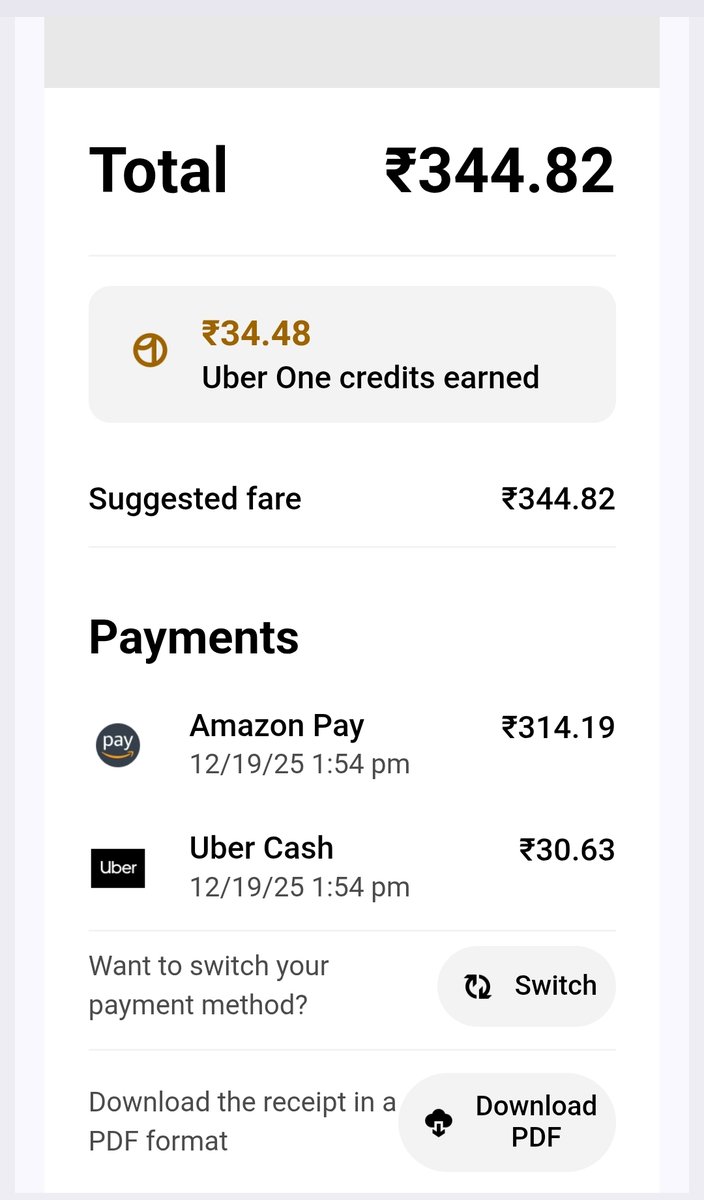
@Uber_India Took a trip with uber and had an online payment, but the driver asked for money in cash mentioning that his device is not showing online payment. Please have a look and refund my money.