Not part of the earlier thread, but directly related to #tornado data quality …
Documentation of errors, oddities and artifacts in U.S. tornado data (preprint from the last Severe Local Storms Conference):
https://t.co/yQPpXTlGaI
Now in early online release!
Tropical cyclones in the GEOS-S2S-2 subseasonal forecasts https://t.co/cLSRXAxQDh
Can current forecasts predict TCs 2-to-3 weeks in advance? Does the MJO help?
Click and find out!
Delighted to welcome @SimonLeeWx to the facility of Earth and Environmental Sciences @univofstandrews! Simon brings expertise at the interface of weather & climate, and excellence in public comms.
Another new position in Earth surface processes now open: https://t.co/b0sqWhseSK
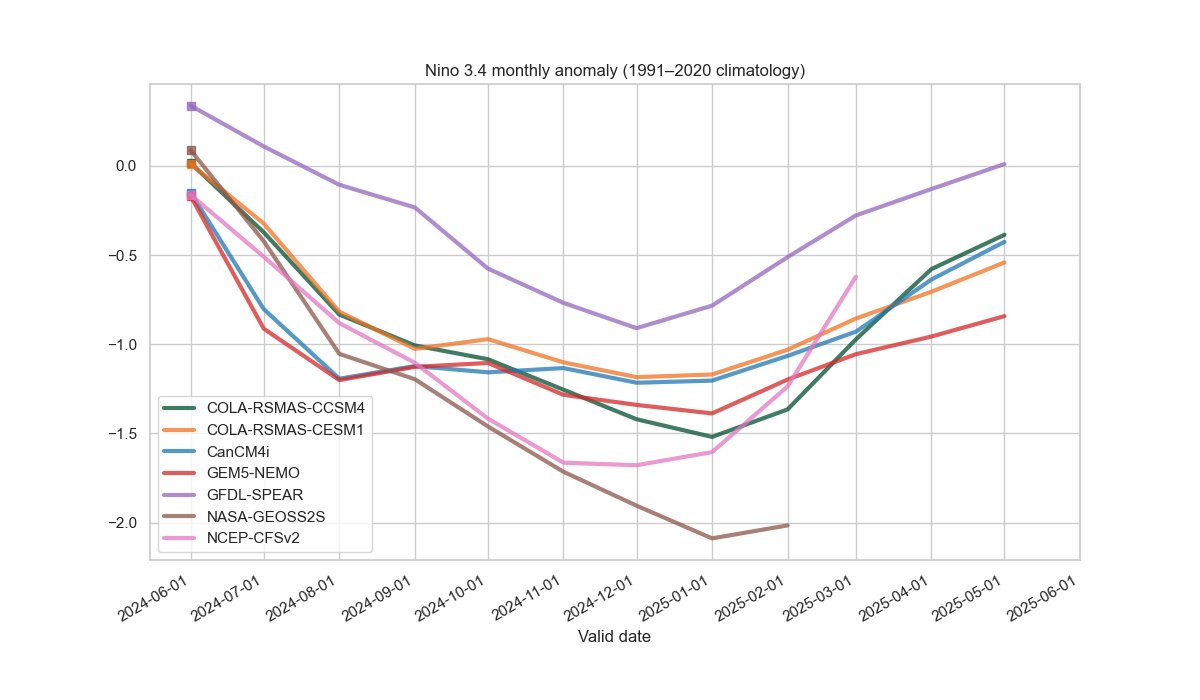
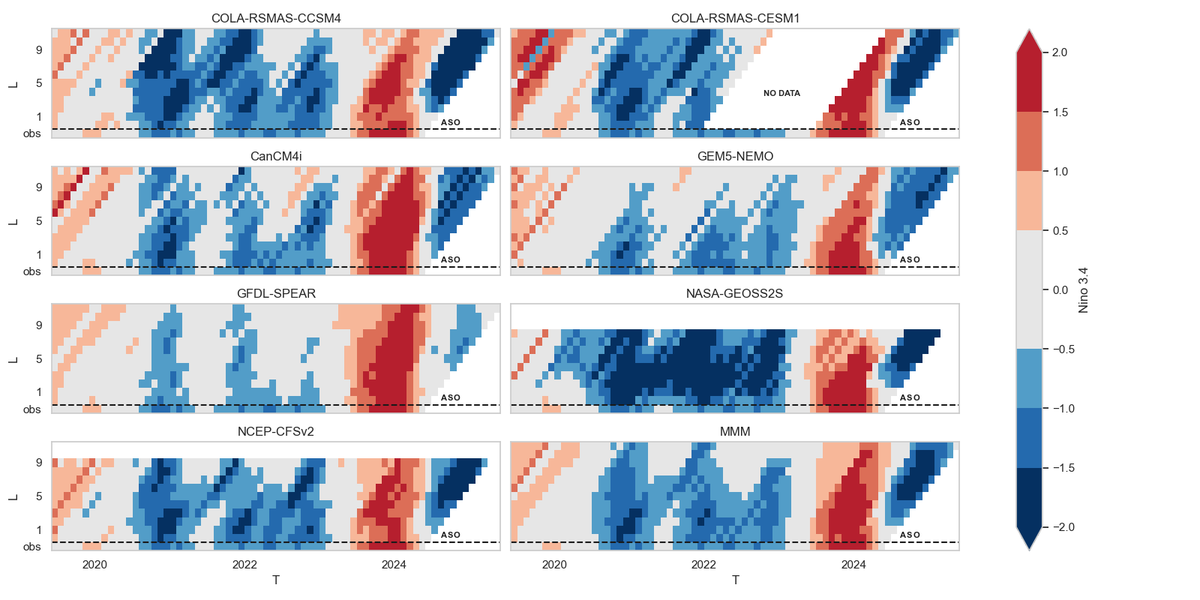
Interesting that Fig. 1 shows SPEAR Nino 3.4 forecasts being too cool? I thought they were too warm, though I'm not seeing the base period used for the anomalies
New Earth-2 @nvidia preprint about AI forecasting for seasonal timescales including interactive ocean coupling. The generated El Niño looks realistic including its subsurface thermal structure. Internship project led by @wang_chenggong and @JaideepPathak. https://t.co/LwCZfOE2aG
Searching and applying for Earth or environmental science postdocs soon? 🌊☁️🌳 @ClareESinger and I wrote up the guide we wish we had this time last year - including a timeline, lists of opportunities, and email templates!
https://t.co/RUgdbr3S13
Job alert! @LamontEarth seeks postdoc to work with experts @profadamsobel, @SCamargo, Chia-Ying Lee, and @mkTippett (@CUSEAS) on tropical cyclone hazard and risk modeling, including relationship to climate variability and change. #DEIA Please RT! ➡️Info: https://t.co/ahYutMnQ2M
Excited to announce that I'll be starting an Assistant Professor position with Univ. of Delaware Dept. Geography & Spatial Sciences starting Jan 2025. My lab will focus on predictable climate variability and its applications, e.g. S2S predictability/prediction and climate risk.