Just published in #JACCINT: SCAI/ASE/HRS/SIR/SVS Expert Consensus Statement, led by @RizikMd, advises training, monitoring, and calls for mandatory implementation of enhanced radiation protection devices to meet #ALARA standards.
Read the full text here: https://t.co/XrVjM2FUKt
Impact of empagliflozin and dapagliflozin on sudden cardiac death: A systematic review and meta-analysis of adjudicated randomized evidence
https://t.co/bM1lhX1WXt
If you have time to read the entire new HRS/PACES statement on antiarrhythmic drugs, go for it.
https://t.co/LslxUttOhq
If you don’t—and just want the meat of it—I asked ASTRA-6 to summarized the highest-yield, practice-changing points below.
And if you haven’t started using AI to keep up with the nonstop explosion of medical knowledge, try it today.
#EPeeps #Electrophysiology #AIinMedicine
ASTR-6 in electrophysiology......
Conduction system pacing explained visually — with the dynamic ECG changes in V1 and V6 as you move from septal capture to CSP.
Full animation in the first comment + HTML file so you can pause it and go step by step.
If you’re in EP and not using AI to learn, teach, or visualize concepts like this… start today.
I’ve started a Substack: The Dependent Variable.
X is great for short-form discussion, but it’s not ideal for building a coherent archive.
This will be the home for longer-form writing on cardiovascular physiology, haemodynamics, fluids, shock, ultrasound and critical care reasoning. All in one place, easier to follow and return to.
First post: https://t.co/om8CMEgs6W
Congrats - important clinical message and very much in line with our experience. We have also seen that a pathogenic TTN mutation is often diagnosed only after patients have undergone several AF/VT ablation procedures. @gasperettimd@KrishnaAragam
Thrilled to share our latest study in @CircAHA: we ran one of the largest comparative safety analyses of #PFA vs radiofrequency #ablation for #AF, performed
@BIDMChealth (>1,500 #PVI/year). We found a significantly higher stroke risk with PFA. Read on👇
https://t.co/sFECm0SFaY
Ethanol infusion of the vein of Marshall in catheter ablation of persistent atrial fibrillation in patients with mitral valve replacement
https://t.co/1gSiG9hz3I
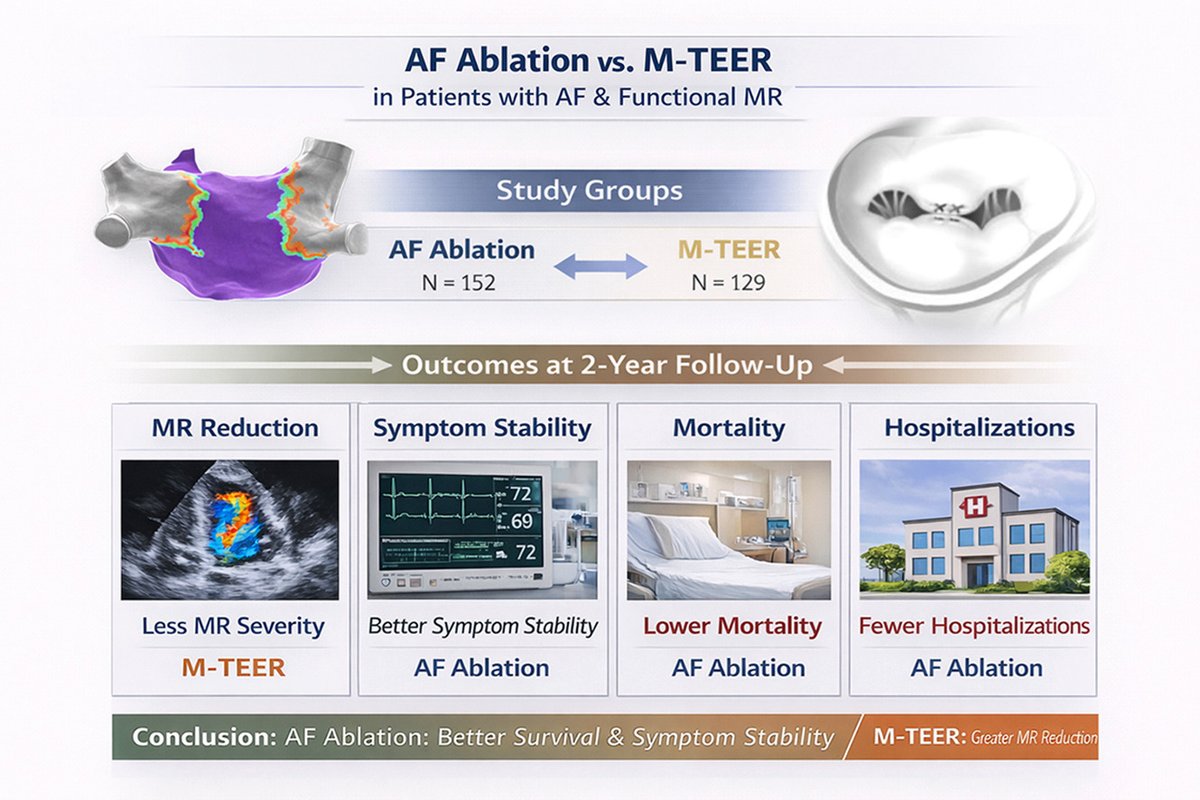
Clinical Outcomes of Catheter Ablation versus Transcatheter Edge-to-Edge Repair as the Initial Intervention Strategy in Patients with Atrial Fibrillation and Functional Mitral Regurgitation #OpenAccess@Hassan_Shirbiny
https://t.co/AwONkHHUd3
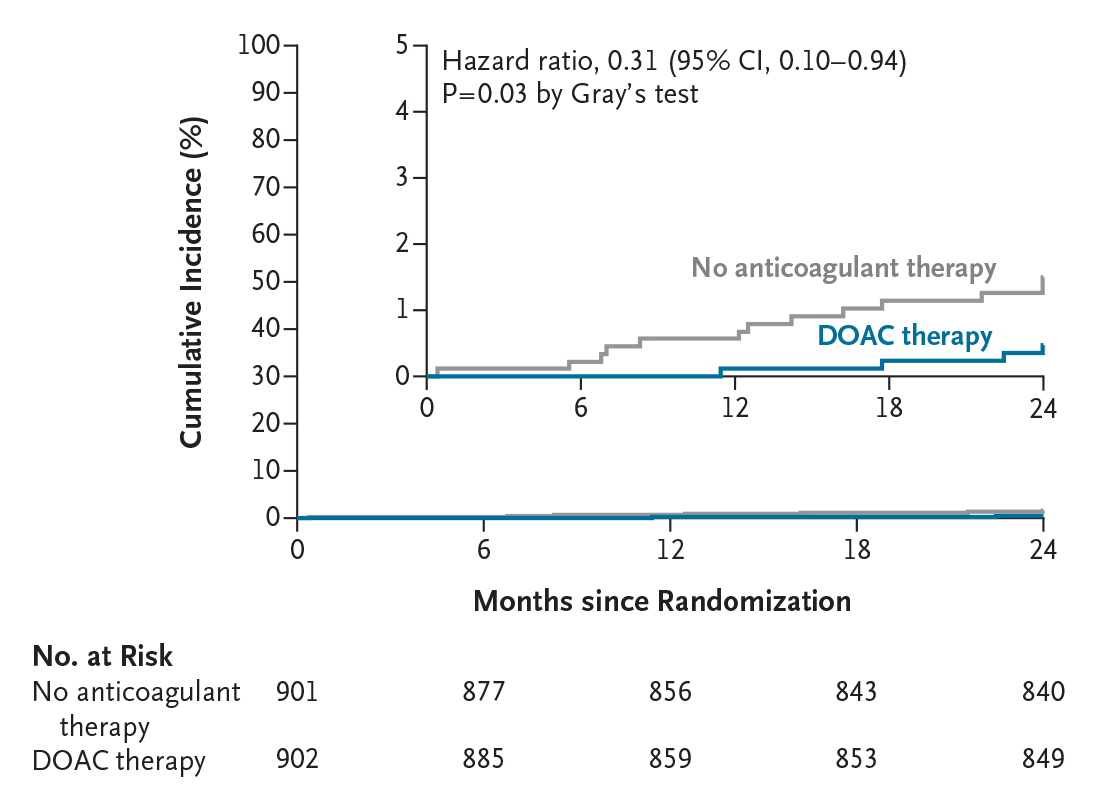
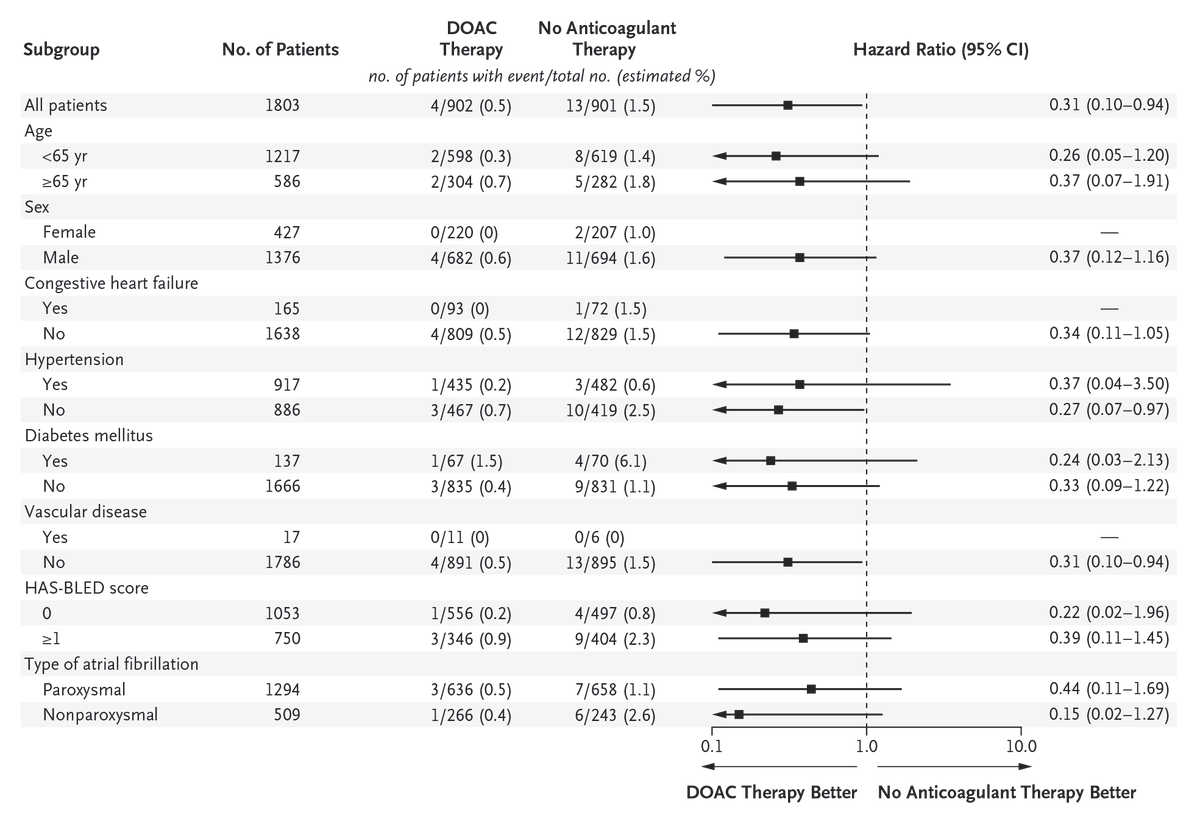
Original Article: Anticoagulation for Atrial Fibrillation with Intermediate Stroke Risk (SINGLE-AF trial) https://t.co/fsN8QZhgYh
Editorial: Anticoagulation for Atrial Fibrillation with a Single Risk Factor for Stroke https://t.co/RX8U46dRZb
#ESCCongress | @escardio
A major development in the 2026 ESC Heart Failure Guidelines is the move toward a simpler EF cutoff: HF with LVEF <50% versus HF with LVEF ≥50% — moving away from the traditional three-way separation of HFrEF, HFmrEF, and HFpEF.
And within this new framework, the guidelines send another clear message:
AF in heart failure is no longer just a rate-control problem.
➡️ When #AFib is driving LV dysfunction, restoring sinus rhythm is recommended, with catheter ablation playing a central role.
➡️ In selected patients with #AFib and HFrEF, catheter ablation should be considered to reduce heart failure hospitalization and improve survival.
➡️ In HFpEF, the evidence gap remains, and treatment decisions should be individualized.
The guidelines also highlight an old friend: digoxin. Once pushed to the sidelines, it again has a role in rate control for patients with AF and heart failure, particularly when other agents are ineffective, contraindicated, or poorly tolerated.
The key message for patients is simple: AF may be a driver of heart failure, not merely a consequence. Recognizing and treating it early could improve symptoms and outcomes.
The next frontier is clear: can eliminating AF change the natural history of HFpEF? #CASTLEHFpEF
#ESC2026 #ESCCongress #AtrialFibrillation #HeartFailure #HFrEF #HFpEF #Ablation @lamcardio@Phiso_de@chris_sohns@shivkumarmd@S_NarayanMD@drjohnm@TulaneTriad@TulaneHeart
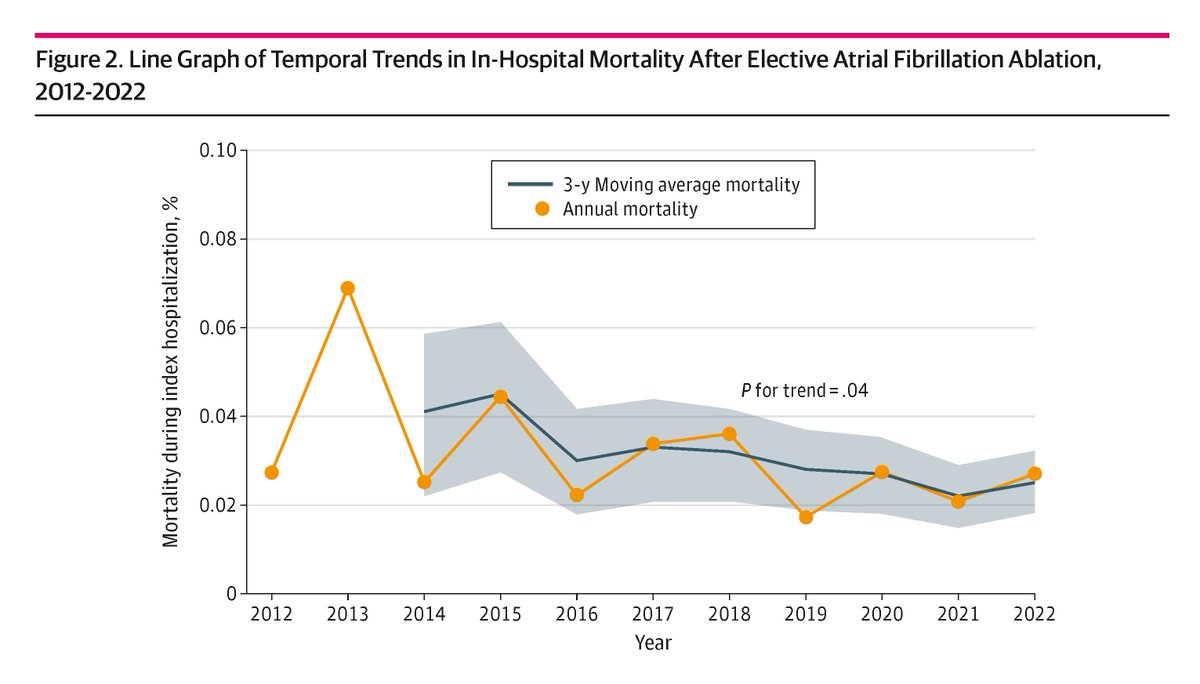
Presented at #ESCCongress from @JAMANetworkOpen:
Among 412 947 elective #AtrialFibrillation ablation procedures in Japan, in-hospital mortality was 0.029% and remained low during a decade of rapid growth in procedural volume and the number of hospitals performing ablation.
These findings indicate no evidence of a diffusion-related safety penalty during nationwide expansion of elective catheter ablation.
https://t.co/JRJsCGyp6d
Presented at #ESCCongress:
Among patients with symptomatic persistent #AtrialFibrillation, adding posterior wall isolation to pulsed field ablation-based pulmonary vein isolation did not significantly reduce recurrence of atrial tachyarrhythmia compared with pulmonary vein isolation alone.
Continuous implantable cardiac monitor follow-up showed recurrence in about half of patients receiving posterior wall isolation and in more than half receiving pulmonary vein isolation alone.
🔗 https://t.co/0nnzLSfwCH
CHAMPION-AF and CLOSURE-AF: reconciling contrasting results. Read this viewpoint about left atrial appendage closure #LAAC in #EHJ
👉 https://t.co/YNkpLl4s62
@RoccoMontone@ehj_ed