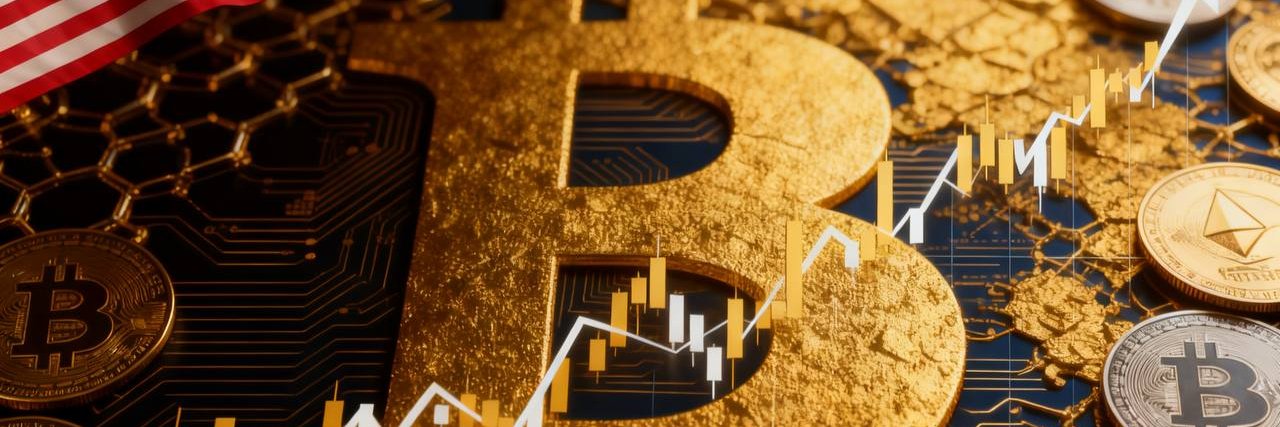
🇺🇸 Trump is accused of being involved in a "conflict of interest" regarding stablecoins, but the Stablecoin Act still enjoys bipartisan support.
The politicians are arguing.
The capital is entering the market. 💰
When even presidents are discussing who can issue stablecoins,
it shows that cryptocurrency is no longer just a market, but a political weapon. ⚡️
✅ Stablecoin compliance = Funding channels officially opened
✅ US institutions, RWA, and the mainstream cryptocurrency ecosystem will usher in new liquidity
The next market trend will not be technology-driven, but politically driven. Leave me a message if you want to truly understand when political driving forces will emerge.
I sincerely want to say this: the crypto world is never short of geniuses, it's short of retail investors who can survive.
Many people rush into the crypto world with a few hundred or a few thousand dollars, dreaming of getting rich overnight or betting on a dark horse. But the reality is—the dream of getting rich quick often starts with a wipeout. Those who truly make money in the crypto world are never the most aggressive traders, but those who can survive.
I once led a group of people, each with $10,000. I told them to avoid altcoins and high leverage, focusing only on mainstream coins like BTC, ETH, and BNB. For the first three months, they barely made any money, but they didn't lose either. Later, when the market rallied, I guided them to position themselves for the main upward wave, steadily adding to their positions. As a result, each person's account grew to over $50,000.
In fact, the secret to cryptocurrency trading is very simple: Don't be greedy, don't be impatient, don't gamble.
Only look at the direction, wait for the signal before acting.
Check the market three times a day, paying attention to trends, policies, and celebrity news—news from figures like Musk and the Trump administration are often market indicators.
I take profits decisively at 10% or 20%, never fantasizing about getting rich quick.
The crypto world isn't about intelligence, but about who can maintain composure.
If you want to make money, you must first learn not to lose. Survive the volatility, and the market will naturally lead you to wealth.
I have many more practical trading insights to share on this account.
If you're also in the crypto world, follow me; let's exchange ideas and grow together.
Sometimes, what truly helps you progress isn't the market, but the equally clear-headed people around you.
📉【How Long Can the BTC Frenzy Last?】
BTC has been soaring recently, and market greed has reached its peak.
At this point, the question you should ask yourself isn't—
“How much higher can it go?”
But—
“When should I take some profits?”
🧭 My attitude towards BTC: Cautiously optimistic, but never blindly optimistic.
📊 Data shows:
While funds are flowing in continuously, contract leverage is also rising rapidly.
When the market is overheated, even a small pullback can trigger a chain reaction of liquidations.
Smart investors aren't those who predict price movements,
but those who can steadily secure profits during an uptrend.
💡 My recommended conservative approach:
1️⃣ Phased liquidation:
When you've already made a good profit, realize 30%-50%.
Having profits in hand gives you the confidence to weather market fluctuations.
2️⃣ Preserve Cash Flow: Keep some cash on hand to re-enter the market during the next sharp drop or panic.
This allows you to truly be "greedy when others are fearful."
3️⃣ Don't Chase Highs or Go All In: The current upward trend is like a cup of hot coffee—it looks delicious,
but drinking it when it's too hot is often the easiest way to burn yourself.
📈 In short:
True masters never gamble on the direction,
but make money through timing and risk control.
Don't let short-term gains cloud your judgment;
let your profits run and allow your mind to settle.
🧭 Old Mindset vs. New Mindset — The Gap Is Bigger Than You Think
Billions of people are struggling to make ends meet, combat inflation, and keep their jobs, resulting in a widening wealth gap.
But this time, the gap isn't just about the amount of money; it's about different attitudes towards opportunity and risk.
Old Mindset: Continue to seek stability—read more books, work overtime, put money into traditional retirement accounts, and pin your hopes on companies and retirement plans.
New Mindset: Take the initiative—start businesses, invest in real scarce assets (gold, silver, BTC, ETH), and let time and compound interest work their magic.
Reality is validating this divergence: governments have begun to incorporate Bitcoin and digital assets into national discourse (discussions and policy actions at the White House and Congress regarding a "strategic Bitcoin reserve"). This isn't a small-circle affair; it's a systemic signal.
The market is also echoing this: Bitcoin and Ethereum have recently experienced structural volatility—prices are in a key range, and long-term holders haven't withdrawn, indicating that "real players" are betting with time. (For example, BTC fluctuated around $100,000 in early November, while ETH hovered around $3,000.)
The current context is: inflation and employment data continue to influence policy pace, and labor market corrections and inflation trends will amplify the divide between winners and losers.
Bureau of Labor Statistics
The conclusion is simple yet brutal:
Those with an old mindset fear failure and await redemption;
Those with a new mindset respect risk but treat it as the price of opportunity.
If you're still hesitating, these two questions are worth asking yourself immediately:
Are you afraid of "failure" or "success" right now?
Looking back five years from now, which side of the canyon would you rather be standing on?
Take care.
🧭 Trump's Cryptocurrency Policy Summary | November 2025 Edition
In March 2025, the Trump administration signed an executive order establishing the "Strategic Bitcoin Reserve" and the "United States Digital Asset Reserve," recognizing Bitcoin as a reserve asset and stipulating unified management of seized digital assets.
The policy states that in addition to Bitcoin, Ethereum and other mainstream cryptocurrencies, such as Solana (SOL), Cardano (ADA), and Ripple (XRP), may also be included in the reserve asset scope, symbolizing the government's recognition of cryptocurrencies as national assets.
In March 2025, Trump hosted the first "Cryptocurrency Summit" at the White House, publicly announcing the end of the government's "war" on cryptocurrencies and advocating for friendly regulatory policies and lowering regulatory thresholds.
However, at the same time, the interests of Trump and his family in the cryptocurrency industry have also sparked controversy, including the launch of "meme coins" (such as $TRUMP) and the chain of interests between his companies and investors.
My Observations and Opinions
First, this is a policy turning point: the government's attitude has shifted from suppression and ambiguity to openly embracing cryptocurrencies, which is conducive to improving overall market confidence.
However, this policy is not entirely driven by "technological innovation," but rather by a complex interplay of political and commercial interests: Trump and his family already wield significant influence in the cryptocurrency space.
For those of us working in or observing the cryptocurrency market, this means two things:
Opportunities exist during periods of policy incentives: if the government does indeed purchase or support cryptocurrencies as reserve assets, crypto assets could benefit.
Risks cannot be ignored: because when policies are intertwined with interests and transparency is lacking, some cryptocurrencies or projects may simply be passively used as political/commercial tools, losing their purely technological value.
My assessment is: if Trump does indeed "choose to announce or support a certain cryptocurrency" as a reserve or state-level asset in the short to medium term, that cryptocurrency is likely to be anticipated by the market and reflected in its price.
We invite you to consider/comment: What are your thoughts?
👉 If the government does include a certain cryptocurrency in its reserves, is that cryptocurrency still just a flash in the pan?
👉 This could be an entry opportunity, but it also foreshadows the greatest risks.
Which major currency do you think Trump might "support" or "name" next?
Or do you think this is just a political stunt with limited real impact?
Please leave your thoughts in the comments section.
Why is the biggest difference between the wealthy, successful people, and ordinary people perhaps not intelligence, but rather "emotional decision-making ability"?
I've worked in the domestic A-share market and served developers in the international cryptocurrency space. I've seen too many intelligent people choose to run away at crucial moments because of "fear of failure."
Meanwhile, I've consistently held Bitcoin (BTC) and Ethereum (ETH) for the past few years, experiencing significant account losses and hundreds of thousands of dollars in paper losses.
But looking back today: my trading software shows millions of dollars in accumulated assets.
My friends only see "how much I lost," but I see "the results of my persistence are still growing."
📉 Latest market data also reminds us—
· BTC is currently hovering around US$110,000, facing resistance at around US$112,500. A break above this level could lead to US$120,000+.
· Meanwhile, long-term holders haven't sold off, indicating that "real players" are accumulating positions, and market fears may be turning into the next structural opportunity.
The mindset of successful people isn't "I will never fail," but rather "I know what failure is, and I know how to make failure serve success."
Because: Those who fear failure would rather remain stagnant forever;
Those who truly grow their assets maintain rationality amidst fear and clarity amidst greed.
If you want to be wealthy, don't chase rising stocks first, but master—
👉 I'm willing to lose, and I'm willing to hold;
👉 I'm willing to make mistakes, and I'm willing to see rebounds;
👉 I'm willing to take "temporary losses" lightly, and I value "long-term growth" more.
💬 What about you?
Do you run away at the sight of unrealized losses, or do you hold on to value?
Welcome to tell me in the comments: What are you most afraid of right now, "failure" or "success"?
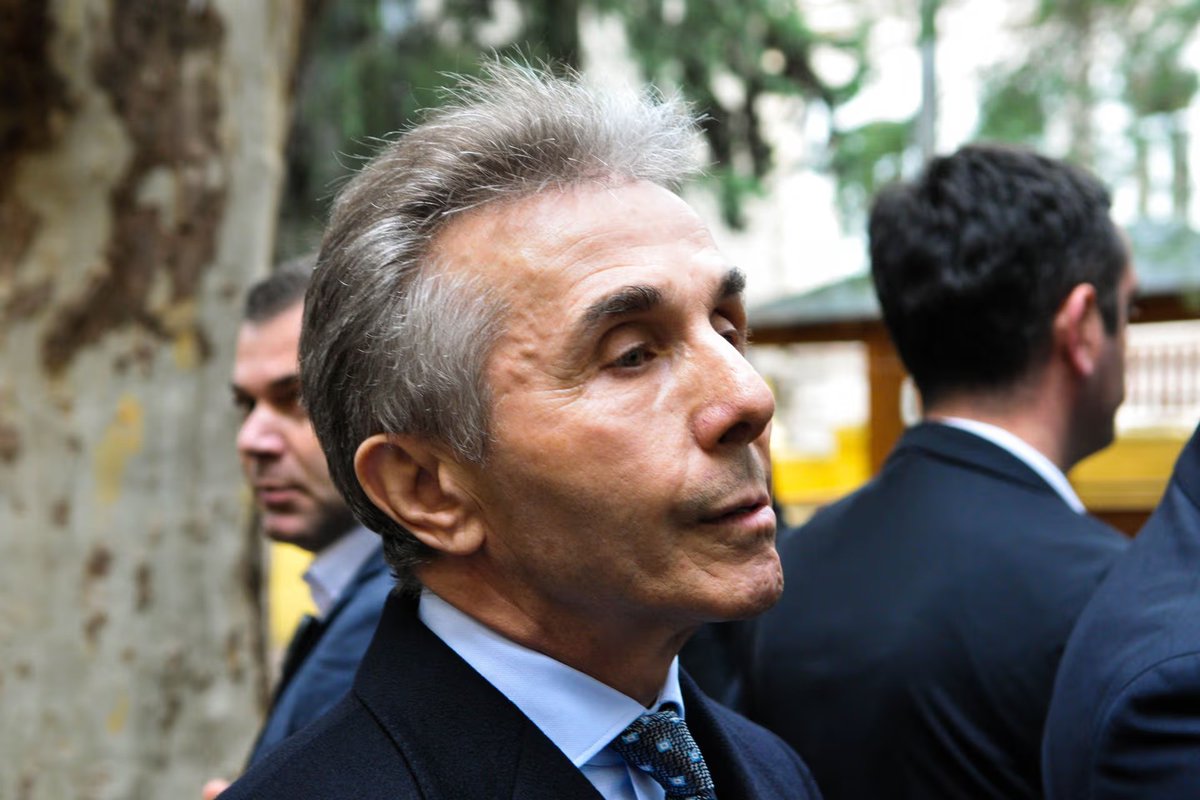
Georgia's "shadow president" wants to reclaim $1 billion worth of Bitcoin.
He missed his chance ten years ago,
and ten years later, he wants his money back.
This is more than just a lawsuit;
it's a signal: even established elites are beginning to reassess the value of crypto assets.
When politicians, the wealthy, and financiers all want to "turn back,"
what does this mean?
Perhaps the real cycle for Bitcoin has just begun.
Do you see it as a signal? Or the final climax of a bubble?
The recent whale investments are so interesting.
They seem to have known something in advance.
Their moves are sharp and precise—
Even the market is wondering if this is some kind of "Trump-style hint"? 😉
I'm not sure if the insider information is true or not,
But I do know one thing:
The smart money always moves first.
I'm increasingly skeptical of the word "decentralization."
When Myriad launches automated markets on BNB Chain and https://t.co/65ED4JCBkf sells predictions on Trump media outlets,
is the essence of decentralization being re-enlisted by centralized narratives?
Perhaps the crypto market isn't a rebellion at all, but rather a new disguise for capital.
Those who dare to refute, come on. 😇
#Crypto #BNBChain #Web3