One small but indicative example of the carelessness of Apple’s software:
searching for “storage” in the iPhone settings doesn’t take you to the device’s storage page.
Also, don’t have a screenshot but the first time I tried this a few hours ago, it showed no results at all.
This by Anthropic seems both right & a condemnation of many “agentic solutions” & harnesses being built at companies. Rather than a sprawl of specialized subagents built by different teams, you often get better & cheaper results using one agent to do it all https://t.co/0dkBHZzUiU
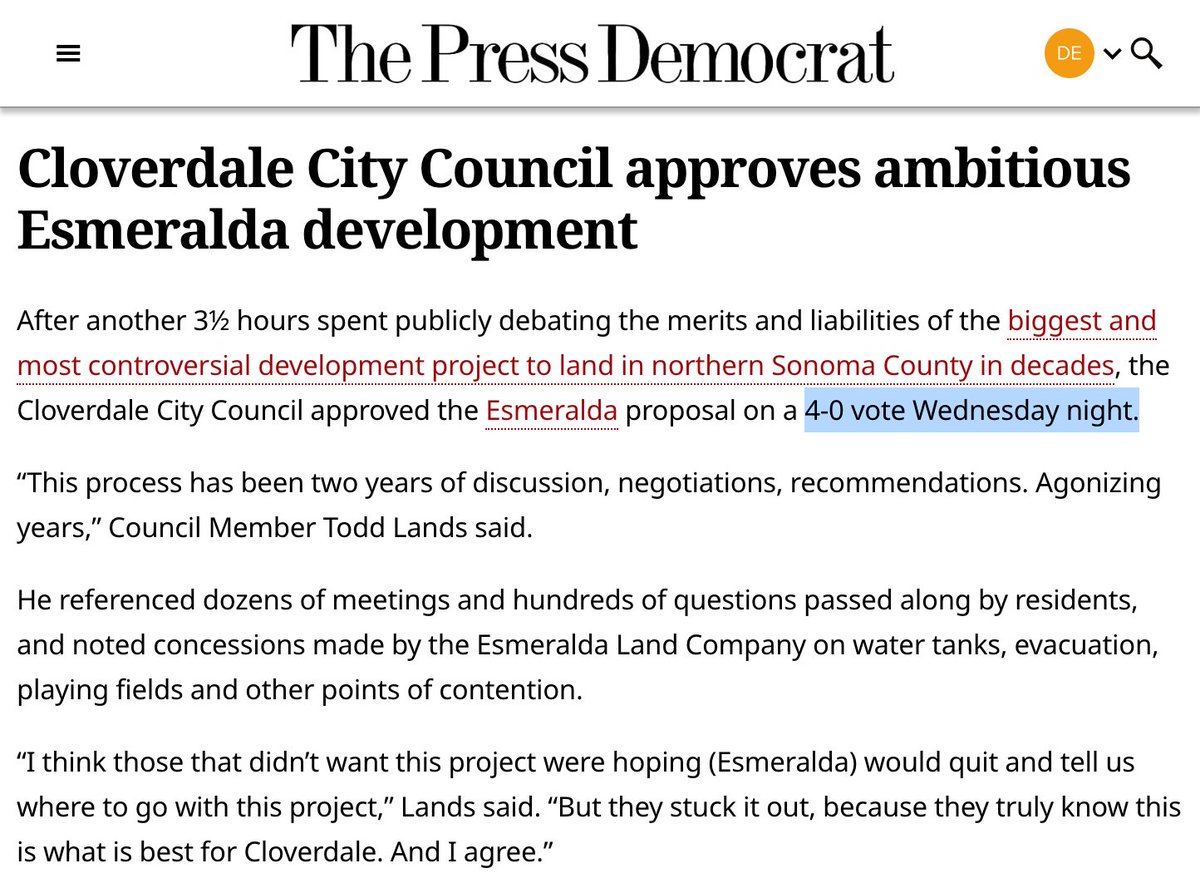
WE DID IT! Esmeralda just secured its final approval, with a unanimous 4-0 vote!
Approvals of this magnitude are extraordinarily rare in California. This has been a long, intense journey
I am proud of our team's tenacity. Most of all, I'm deeply grateful
https://t.co/NX913YYPQv
tried this demo, it's a really neat idea. very much agree with the theses that a) chat is not the universal (visual) interface and b) that talking it out via voice is better than writing.
but if I'm editing a doc with GPT live (not sure what they're using but assume it's that) for 30 mins, how much does that call cost browser co? $1? $2? how do you make the economics work out there for a consumer product?
The @browsercompany has been prototyping at the intersection of (a) full-duplex voice models & (b) traditional software GUIs. “Chat” just feels too limiting for most tasks.
We stumbled upon something interesting & wanted you to be able to play with it. Demo below (audio on):
there's a reason that most live AI voice demos are of a customer service call:
1. they're short (quality breaks down over time)
2. they stay on script (usually dumber than text models)
3. they have a clear ROI (live models are expensive)
IMO, the reason there isn't as much experimentation in consumer products that use live voice is because these trade-offs are hard to overcome, particularly for a small team who can't subsidize the cost like a lab.
Mercedes has unveiled its new "point-to-point" driving assistance system that it will launch in the U.S. in 2027, allowing vehicles to navigate from start to destination, including through city streets.
The system can:
• Turn at intersections
• Stop & accelerate at traffic lights
• Change lanes and merge into traffic
• Navigate highway exits
• Follow a route through dense urban traffic
The system uses 10 cameras, 5 radar sensors, 12 ultrasonic sensors. The required hardware is already installed in certain eligible 2027 vehicles.
Mercedes is also launching hands-free highway driving at speeds up to 85 mph.
Select California customers will get early access to both starting next month, with a broader U.S. rollout in 2027.
Video below of this new https://t.co/GK5yNPI3vR ASSIST PRO system being used in San Francisco:
Introducing AgentPaint, an oil painting environment in the browser for AI agents (and humans)
We've seen how great frontier models like Fable 5.2 are at painting directly in code. AgentPaint takes a different approach to exploring models' visual and creativity abilities, by giving them control of a paintbrush in the browser, on a digital canvas designed to simulate physical oil painting.
Agents can only paint by moving the brush on the canvas, and they can only get the colors they want by mixing existing paints. They can't manipulate pixels directly or render the painting as code. Here's a few examples of different models painting the same prompt in @AsideAI (no affiliation, it's just a great model-agnostic browser/agent)
/1 Van Gogh's The Starry Night, from memory
It’s like dark mode: you only focus on it once the core stuff is covered. OpenAI is clearly not on their game atm. So yes, them focusing on this right now would get (correctly) roasted.
it's crazy how the reaction to a feature launch from an AI lab is COMPLETELY dependent on how good their current models are
if OpenAI launched this feature they would've been crucified in the comments
"where's the models"
"astra 6.2?"
"still mogged by opus 5.5"
"models??"