We created this podcast-style video with AI voice actors using Google NotebookLM! 🤯
The results are truly mind-blowing!
Check out this snippet and share your thoughts! 👇
Even though I’m a much better Python than JavaScript developer, with AI assistance, I’ve been writing a lot of JavaScript code recently. AI-assisted coding, including vibe coding, is making specific programming languages less important, even though learning one is still helpful to make sure you understand the key concepts. This is helping many developers write code in languages we’re not familiar with, which lets us get code working in many more contexts!
My background is in machine learning engineering and back-end development, but AI-assisted coding is making it easy for me to build front-end systems (the part of a website or app that users interact with) using JavaScript (JS) or TypeScript (TS), languages that I am weak in. Generative AI is making syntax less important, so we can all simultaneously be Python, JS, TS, C++, Java, and even Cobol developers. Perhaps one day, instead of being “Python developers" or “C++ developers,” many more of us will just be “developers”!
But understanding the concepts behind different languages is still important. That’s why learning at least one language like Python still offers a great foundation for prompting LLMs to generate code in Python and other languages. If you move from one programming language to another that carries out similar tasks but with different syntax — say, from JS to TS, or C++ to Java, or Rust to Go — once you’ve learned the first set of concepts, you’ll know a lot of the concepts needed to prompt an LLM to code in the second language. (Although TensorFlow and PyTorch are not programming languages, learning the concepts of deep learning behind TensorFlow will also make it much easier to get an LLM to write PyTorch code for you, and vice versa!) In addition, you’ll be able to understand much of the generated code (perhaps with a little LLM assistance).
Different programming languages reflect different views of how to organize computation, and understanding the concepts is still important. For example, someone who does not understand arrays, dictionaries, caches, and memory will be less effective at getting an LLM to write code in most languages.
Similarly, a Python developer who moves toward doing more front-end programming with JS would benefit from learning the concepts behind front-end systems. For example, if you want an LLM to build a front end using the React framework, it will benefit you to understand how React breaks front ends into reusable UI components, and how it updates the DOM data structure that determines what web pages look like. This lets you prompt the LLM much more precisely, and helps you understand how to fix issues if something goes wrong. Similarly, if you want an LLM to help you write code in CUDA or ROCm, it helps to understand how GPUs organize compute and memory.
Just as people who are fluent in multiple human languages can communicate more easily with other people, LLMs are making it easier for developers to build systems in multiple contexts. If you haven’t already done so, I encourage you to try having an LLM write some code in a language you’d like to learn but perhaps haven’t yet gotten around to, and see if it helps you get some new applications to work.
[Original text: https://t.co/NdjaPgwwuk ]
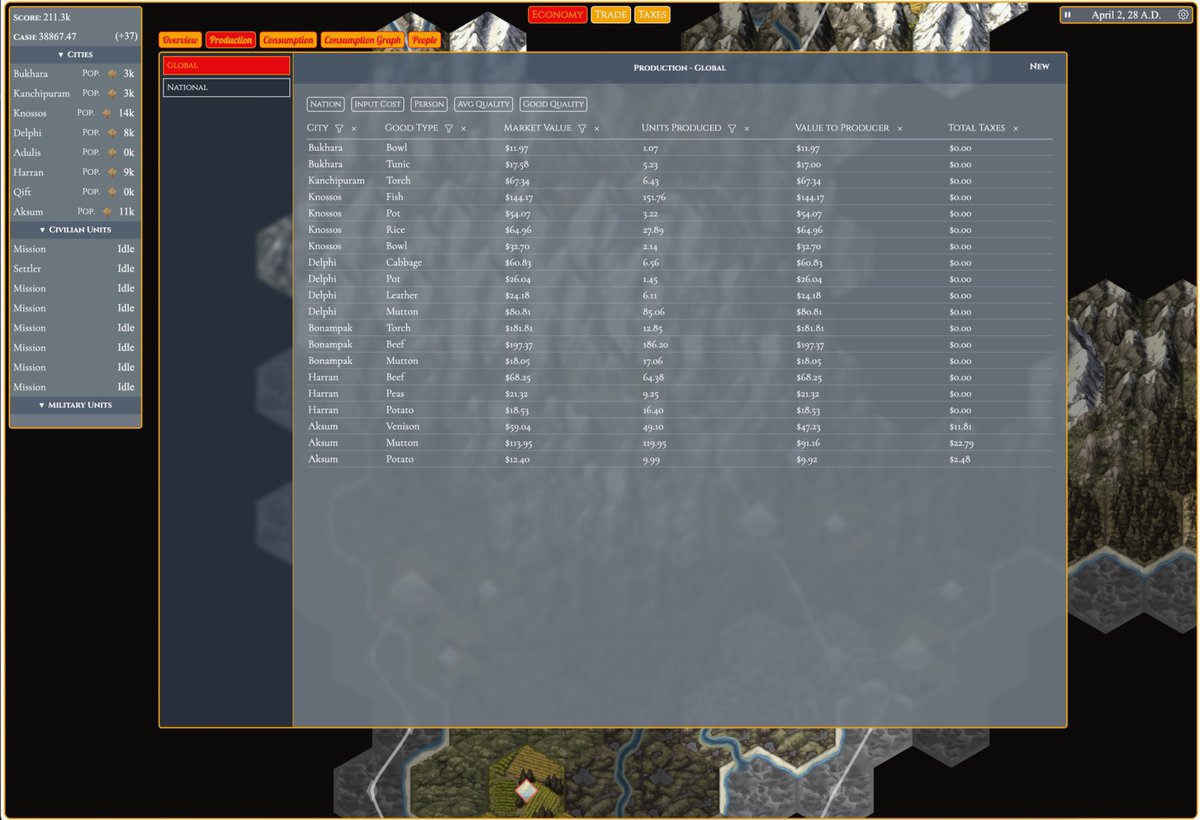
my husband solo built a VERY complex game that lets you act as a central state planner. unlike in Civ, you control taxes, but individual citizens are free to choose what to produce. you can introspect the choices they make based on your economic policies, like an econ experiment
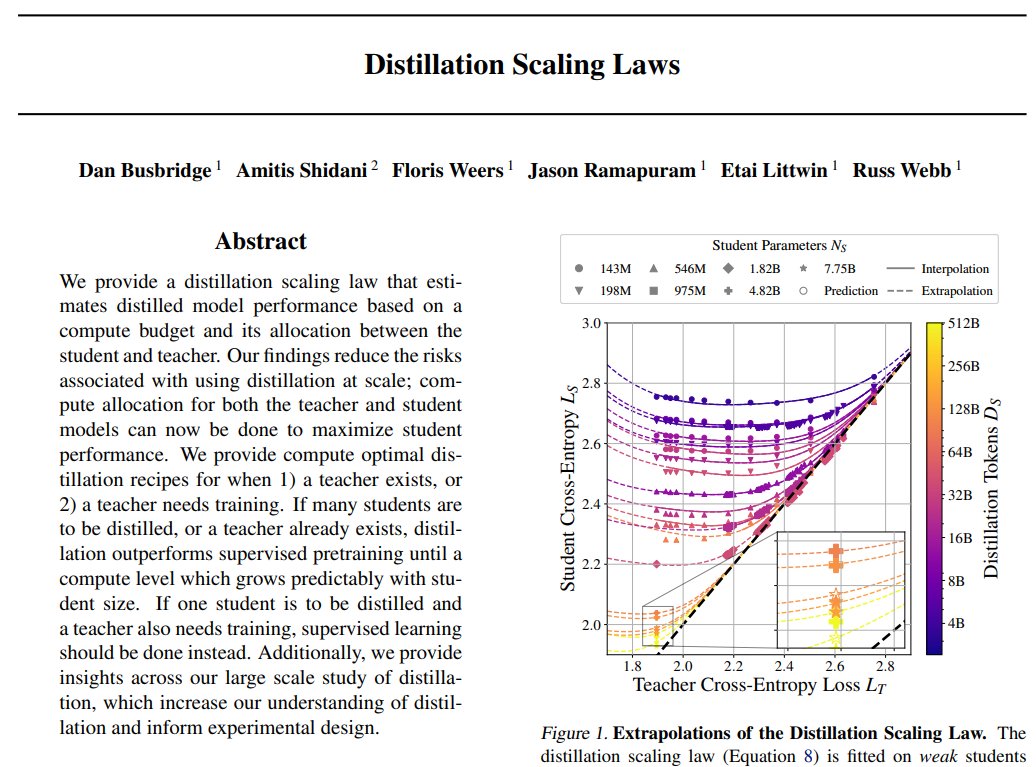
Apple presents:
Distillation Scaling Laws
Presents a distillation scaling law that estimates distilled model performance based on a compute budget and its allocation between the student and teacher
Today is the day I’ve been looking forward to for almost a year now…
Say hello to Gemini 2.0 Flash, Gemini 2.0 Flash-Lite, and Gemini 2.0 Pro, our strongest lineup of models ever, available to all developers. 🧵
https://t.co/kjkPTTqyLZ
Today we are launching our next agent capable of doing work for you independently—deep research.
Give it a prompt and ChatGPT will find, analyze & synthesize hundreds of online sources to create a comprehensive report in tens of minutes vs what would take a human many hours.
Today we’re rolling out a beta version of tasks—a new way to ask ChatGPT to do things for you at a future time.
Whether it's one-time reminders or recurring actions, tell ChatGPT what you need and when, and it will automatically take care of it.
the deepseek v3 671B parameter model release 🤯
this 100% open source model is extremely cost-effective and ranks better than claude sonnet 3.5 and gpt-4o according to benchmarks👇