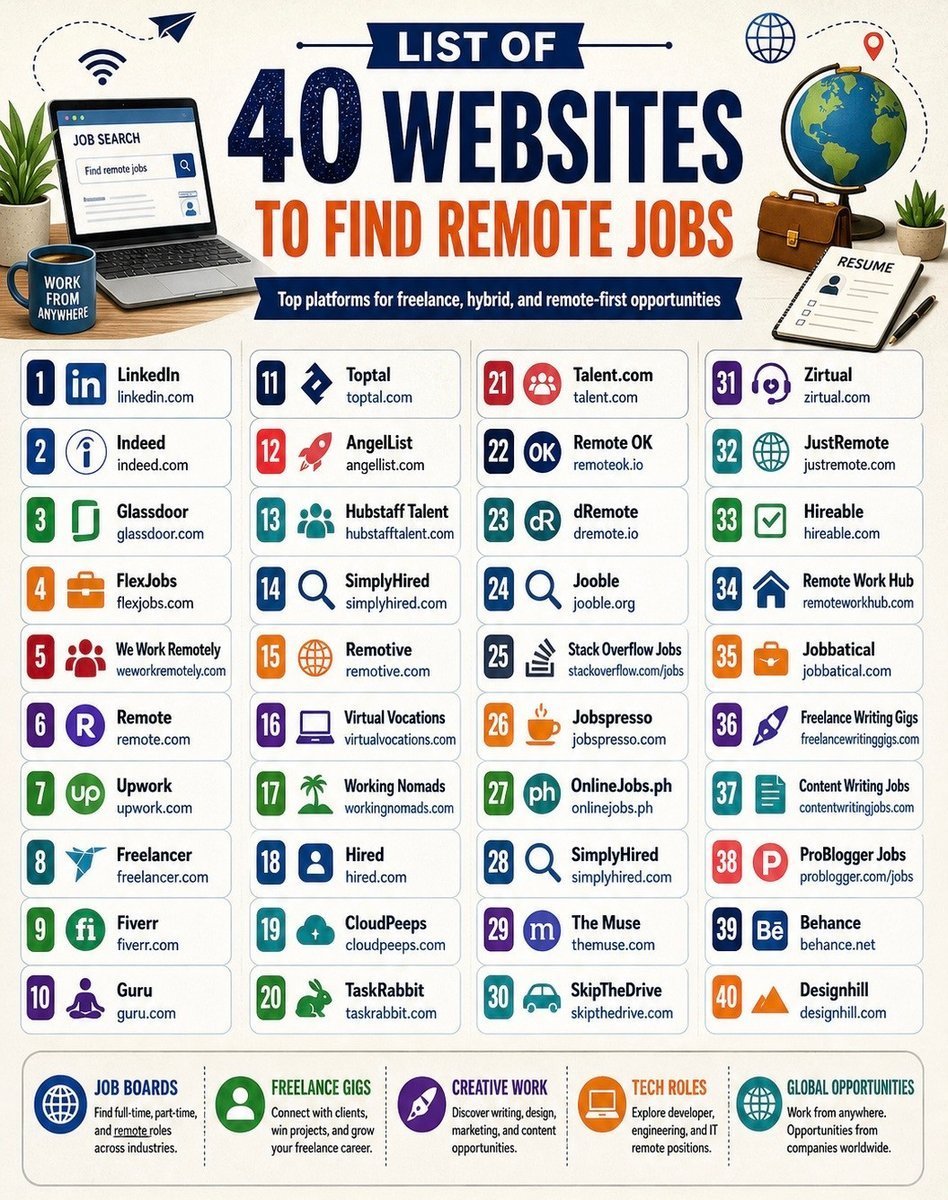
LIST OF 40 WEBSITES TO FIND REMOTE JOBS
1. Linkedin. com
2. Indeed. com
3. Glassdoor. com
4. FlexJobs. com
5. weworkremotely. com
6. Remote. com
7. Upwork. com
8. Freelancer. com
9. Fiverr. com
10. Guru. com
11. Toptal. com
12. AngelList. com
13. Hubstafftalent. com
14. Simplyhired. com
15. Remotive. com
16. Virtualvocations. com
17. workingnomads. com
18. Hired. com
19. cloudpeeps. com
20. taskrabbit. com
21. talent. com
22. remoteok. io
23. dremote. io
24. jooble. org
25. stackoverflow. com/jobs
26. jobspresso. com
27. onlinejobs. ph
28. simplyhired. com
29. themuse. com
30. skipthedrive. com
31. zirtual. com
32. justremote. com
33. hireable. com
34. remoteworkhub. com
35. jobbatical. com
36. freelancewritinggigs. com
37. contentwritingjobs. com
38. problogger. com/jobs
39. behance. net
40. designhill. com
Follow me @Bhanusinghyede
21 Skills That Will Pay You Forever
1. Ability to sell and negotiate.
2. Ability to convey what you think and feel.
3. Ability to break a process down into smaller steps.
4. Ability to shut up, listen and learn from others.
5. Ability to adapt, improvise and overcome obstacles.
6. Ability to read, understand and memorize.
7. Ability to walk away.
8. Ability to manage time effectively.
9. Ability to stay positive and optimistic.
10. Ability to understand what others feel.
11. Ability to speak in front of large audiences.
12. Ability to keep trying even after failure.
13. Ability to invest money in myself.
14. Ability to do things irrespective of situation.
15. Ability to self-analyse.
16. Ability to learn how to learn.
17. Ability to ask for help.
18. Ability to remain consistent.
19. Ability to master your thoughts.
20. Ability to write words to persuade and influence others.
21. Ability to make decisions based on facts not based on emotions.
MASTER ANY NEW LANGUAGE FASTER!!!!
1. Learn Common Words First.
Focus on the 300-500 most frequently used words in any language. These cover roughly 80% of daily conversation, so mastering them early gives you the fastest return on your time.
2. Skip Grammar Rules Early.
Don't get stuck memorizing tables before you can speak. Grammar makes far more sense once you've absorbed how the language actually sounds and flows in real use.
3. Watch Shows, Subtitled.
Watching content in your target language with subtitles trains your ear to natural rhythm, tone, and slang that textbooks rarely teach.
4. Speak Before Ready.
Waiting until you feel "prepared" delays real progress. Speaking imperfectly and getting corrected teaches you faster than silent studying ever will.
5. Shadow Native Speakers.
Repeat sentences right after a native speaker says them, matching their pace, rhythm, and pronunciation. This builds muscle memory for accent and flow.
6. Label Your House.
Sticking labels on everyday objects at home creates constant passive exposure, so vocabulary sinks in without extra study sessions.
7. Think In Language.
Practice narrating your day in your head using the new language. This forces retrieval practice, which cements words far better than passive reading.
8. Use Spaced Repetition.
Apps that show you words right before you'd naturally forget them are proven to lock vocabulary into long-term memory far more efficiently than cramming.
9. Find A Language Partner.
Regular conversation with a native speaker, even 15 minutes a week, gives you real feedback and accountability that solo study can't replicate.
10. Learn Phrases, Not Words.
Memorizing full phrases instead of isolated words means you learn grammar and vocabulary together, and you can use them immediately in conversation.
11. Change Your Phone Language.
Switching your phone's system language forces constant, low-effort exposure to practical vocabulary you already understand the context for.
12. Set A Daily Minimum.
Even 10 focused minutes a day beats a rushed two-hour session once a week, since consistency builds retention better than intensity.
13. Embrace Mistakes Openly.
Fear of sounding wrong is the biggest block to fluency. Native speakers almost always appreciate the effort over perfect grammar.
14. Travel If Possible.
Full immersion accelerates learning dramatically, since you're forced to use the language for real needs like food, transport, and directions.
15. Track Words Learned.
Keeping a visible count of vocabulary mastered creates momentum and shows tangible progress, which keeps motivation high over the long run.