@trq212 “Swapping the dice” in legal and technical contexts is playing with fire. High entropy is where "may" vs. "shall" or "terminate" vs. "rescind" live. To Claude, they might be near-identical choices. Not to a lawyer or a court.
@lawheroezV2 "Where an exact output is required—where there isn’t a choice, and something would be factually wrong or a piece of code would break if a different term was chosen—the watermark isn’t applied." Hope this holds true for verbatim quotations from legal sources and the case records
@mattpocockuk I have been using /handoff for this. Pause at the next natural break point and /handoff to a fresh session. Works fairly well. Would you rather push it into the dumb zone/spin up subagents?
@mattpocockuk Hey Matt! Loving your skills! Is there a good programmatic way to stay in the "smart zone" while plowing through issues? After the /to-issues skill, my workflow is usually: 1. "Tackle Issue # n"; 2. /clear; 3. Repeat. Works, but too much HITL for AFK Issues. Thx!
@adamdavidlong@AnthropicAI Same experience. Opus 4.7 is delusional, paranoid, and lazy. Its default writing also resembles GPT's latest style: engineer-like shorthand instead of beautiful prose. Adding insult to the injury, it's way more expensive. I keep going back to Opus 4.6 for serious legal work.
@adamdavidlong Agreed. And the step most people skip: context engineering. A brilliant lawyer with no access to the file is just guessing. Same with an LLM. Task decomposition = how to think. Context engineering = what to think with. Skip either one and you get GIGO with extra steps.
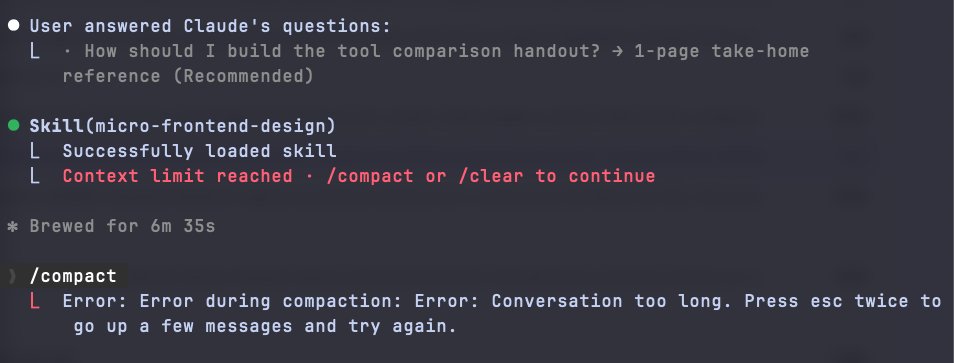
@trq212 Hey Thariq! I keep getting this "Error during compaction" after 45min+ of work. When trying to resume in a new session, it doesn't even find the plan or the task list, so all work is lost. Would appreciate any ideas on how to avoid or fix this. Thx!
@CorteSupremaJ Ok la inadmisión por deficiencias técnicas. Lo preocupante es legitimar un software comercial que la comunidad científica ha desacreditado y que probablemente nunca ha sido puesto a prueba con textos en español jurídico. Todo ello, en un caso donde ni siquiera se necesitaba.
@PereiraYPereira@CorteSupremaJ@E_Procesal La Corte cita la "precisión del 99.98%" que reporta... el propio Winston AI. Es como citar al acusado como testigo de su propia inocencia.
Weber-Wulff (2023), uno de los estudios más citados en la materia, concluyó que estas herramientas "no son ni precisas ni confiables." (1/3)
@PereiraYPereira@CorteSupremaJ@E_Procesal Al margen del peso que ello haya tenido en la decisión, preocupa que nuestra Corte esté calificando la confiabilidad de una herramienta tecnológica con un folleto de marketing. (3/3)
@PereiraYPereira@CorteSupremaJ@E_Procesal Y peor: hasta donde sé, ningún estudio independiente ha validado estos detectores para prosa jurídica en español. Un estudio de la supuesta precisión para detección de IA en texto en inglés (seguramente no jurídico) no es extrapolable al español (y mucho menos al jurídico).
@AndrewWarner@sama@OpenAI@openclaw@mckaywrigley This might be different from what I think you had in mind ("including the Agent SDK — is not permitted"). A little worrying... https://t.co/YS7LedtEKd