How to Create Your First Private Plan with Mnemosphere !
Learn how to create an encrypted private continuity plan with Mnemosphere.
This beginner tutorial shows you how to:
➡️Connect and sign in with your EVM wallet
➡️Add a recipient and an optional trusted helper
➡️Select the asset categories you want to document
➡️Choose a check-in schedule and grace period
➡️Encrypt and save your private plan
➡️Record your first check-in
What Is Mnemosphere?
Mnemosphere helps you organize important information about your wallets, digital assets, documents, trusted contacts, and personal instructions.
Your private plan gives someone you trust clear context if you are ever unable to manage this information yourself.
Mnemosphere does not automatically transfer assets or give your recipient access to your wallet, accounts, or funds. A check-in only records that you are still actively managing your plan.
Important Security Reminder
Never include:
🚫Seed phrases
🚫Private keys
🚫Wallet passwords
🚫One-time passwords
🚫Authentication codes
Whenever possible, document the location and recovery process instead of storing sensitive credentials directly.
Preserve context. Protect continuity.
https://t.co/CNAWjB1L2L
The Long-Term Mnemosphere Vision
Building a Verifiable Continuity Layer
Digital ownership is growing, but long-term continuity remains fragmented. Wallets protect assets, encryption protects information, and blockchains verify transactions but users still need a private way to organize context and prove that important instructions existed.
Mnemosphere is building toward a continuity layer that combines encrypted planning, wallet-controlled actions, optional public verification, and transparent infrastructure boundaries. $MNOS can support specific paid infrastructure services while core safety and custody actions remain accessible without requiring token ownership.
Verification Receipts are the first active $MNOS utility, not the final destination. The long-term vision is a privacy-first ecosystem where users can preserve context, verify revisions, coordinate future actions, and maintain control without surrendering sensitive information to a centralized intermediary.
The Privacy Principle Behind Mnemosphere
Public Proof Without Publishing Private Information
Mnemosphere is built around a clear privacy principle: users should be able to prove that important encrypted information existed without placing that information on a public blockchain. Verification Receipts provide this proof through cryptographic commitments rather than readable personal data.
A receipt does not publish the plan’s plaintext, encrypted payload, CID, contacts, beneficiaries, vault details, claim instructions, or asset information. The blockchain records only the wallet transaction, domain-separated commitments, and the time associated with the confirmed block.
$MNOS makes this optional verification action possible without becoming a requirement for private planning or asset safety. The user keeps control of the encrypted plan, while the public receipt provides permanent evidence that a specific encrypted revision existed.
Learn how to create, activate, fund, and check in to a vault using mnemosphere on Robinhood Chain Mainnet.
This step-by-step tutorial covers:
➡️Connecting an EVM wallet
➡️Creating a private continuity plan
➡️Creating and activating an on-chain vault
➡️Funding the vault safely using the deposit function
➡️Completing an on-chain check-in
➡️Understanding why regular vault check-ins are important
After funding your vault, you do not need to make another deposit. The important next step is to complete an on-chain check-in before the configured deadline. Private plan check-ins and smart-contract vault check-ins are separate actions.
mnemosphere helps users create encrypted continuity plans with optional native ETH vault custody on Robinhood Chain. $MNOS
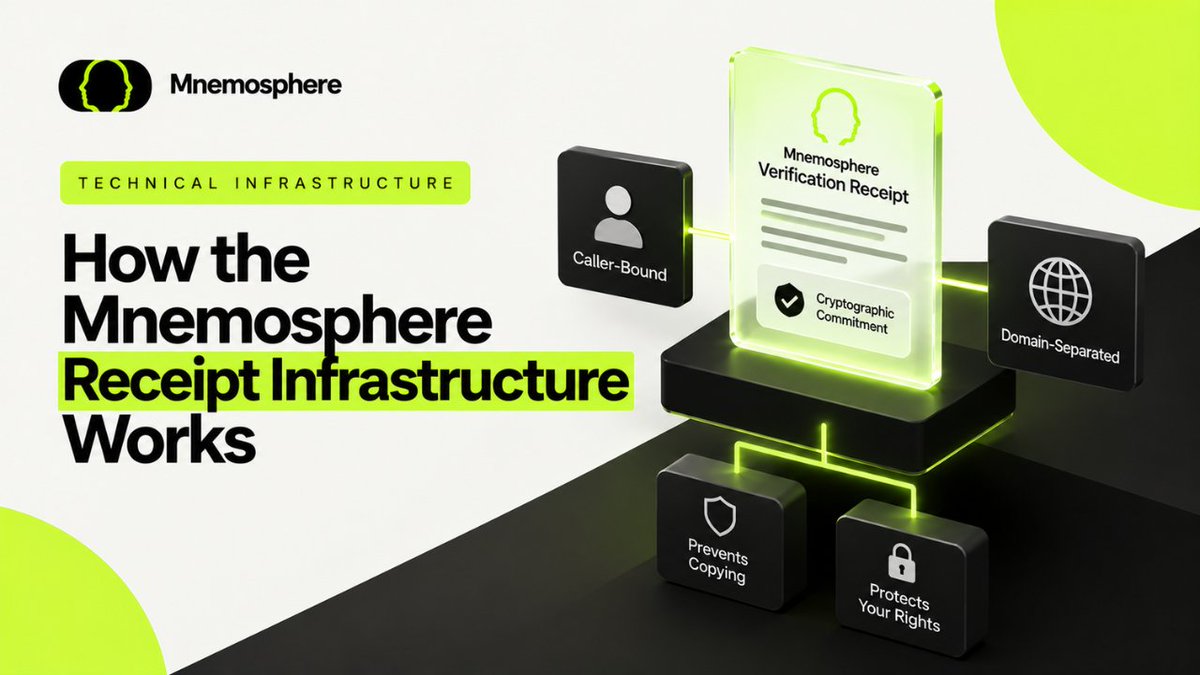
How the Mnemosphere Receipt Infrastructure Works
Mnemosphere Verification Receipts use caller-bound and domain-separated cryptographic commitments. This architecture helps prevent another wallet from copying public transaction data and using it to block the original user from publishing a valid receipt.
Before requesting a $MNOS payment, the application verifies the Robinhood Chain ID, deployed registry bytecode, canonical $MNOS contract, governance Safe, treasury address, and exact receipt fee. The API then validates the transaction sender, registry event, transaction status, block number, block hash, and canonical finalized block.
The result is infrastructure designed to fail closed whenever critical configuration or blockchain evidence does not match. Users do not have to trust a dashboard status alone the receipt must be supported by verifiable on-chain evidence before Mnemosphere marks it as finalized.
The Future Utility of MNOS: Powering Continuity Infrastructure.
MNOS is being designed for utility.
In the future, MNOS may serve as an optional service credit within the broader mnemosphere infrastructure. Its purpose would be to support independent providers that perform measurable continuity services while keeping private plans encrypted.
Potential MNOS utilities include:
➡️Encrypted archive renewal
Use MNOS credits to extend the storage period of an encrypted private plan and replicate it across independent providers.
➡️Storage verification
Providers may earn MNOS after submitting verifiable receipts showing that encrypted data remains stored and retrievable.
➡️Private notification delivery
MNOS may pay for encrypted notifications, delivery attempts, and timestamped receipts when a continuity event requires a trusted participant to be contacted.
➡️Version receipts
When a private plan is updated, MNOS may be used to create timestamped receipts for the latest encrypted version without publishing its private contents.
➡️Provider infrastructure
Independent storage and notification providers could receive MNOS after completing verified work not simply for holding tokens.
MNOS will not be required to create a private plan, fund a vault, complete a check-in, withdraw ETH, or initiate a valid claim. Core vault operations will remain independent of token ownership.
This infrastructure is still under development. These utilities are planned concepts and are not currently active within the mnemosphere application.
Learn more: https://t.co/CNAWjB1L2L
$MNOS Verification Receipts Are Now Live
$MNOS now has its first active utility within the Mnemosphere infrastructure: optional Verification Receipts deployed on Robinhood Chain Mainnet. Users can create a permanent on-chain record proving that a specific revision of their encrypted private plan existed at a particular point in time.
Each receipt costs 20,000 $MNOS. The registry uses the canonical $MNOS token contract and transfers payment directly from the user’s wallet to the configured Mnemosphere treasury. The registry does not hold $MNOS, manage user balances, or introduce staking and passive yield.
This is a focused first step for $MNOS utility: a real payment connected to a specific and verifiable infrastructure action. Core Mnemosphere functions including encrypted plans, vault deposits, check-ins, emergency withdrawals, and claims remain independent of $MNOS ownership.
UPDATE : $MNOS Verification Receipts Are Now Live on Mnemosphere Infrastructure
MNOS now has its first active utility within the Mnemosphere ecosystem: Verification Receipts on Robinhood Chain Mainnet.
A Verification Receipt allows a user to create an optional, permanent on-chain record proving that a specific revision of their encrypted private plan existed at a particular point in time. The receipt publishes only domain-separated cryptographic commitments. It does not expose the plan’s plaintext, encrypted payload, content identifier, contacts, beneficiaries, vault details, or asset instructions.
Each receipt costs 20,000 $MNOS. Payment is transferred directly from the user’s wallet to the Mnemosphere treasury through the canonical $MNOS contract. The receipt registry never holds user funds or MNOS balances.
Verification Receipts remain separate from Mnemosphere’s core planning and vault functions. $MNOS is not required to create or manage a private plan, fund a vault, perform a check-in, make an emergency withdrawal, or complete a claim. A receipt does not grant ownership, governance, beneficiary, vault, claim, or asset-transfer rights.
Infrastructure for Future Use Cases
From Verification Receipts to Digital Continuity
Verification Receipts establish an early foundation for future digital-continuity services. A cryptographic record can help demonstrate that an encrypted document, instruction set, ownership record, or continuity plan existed in a specific version without revealing its underlying contents.
Over time, related infrastructure could support independently verified archive renewal, encrypted notice delivery, document-version commitments, recovery coordination, and owner-authorized continuity workflows. These services would require separate provider systems, monitoring, professional security reviews, and clear operational safeguards before activation.
The opportunity for $MNOS is larger than a single receipt product. It can become a payment and coordination layer for specific, measurable infrastructure services while Mnemosphere preserves the separation between public verification, private information, and wallet-controlled authority.
Poorly designed inheritance automation can be dangerous.
A missed notification, lost phone, wallet issue, or temporary illness should not immediately transfer someone’s assets.
mnemosphere uses a staged lifecycle instead:
➡️Active The owner controls the vault and can check in.
➡️Grace The initial deadline has expired, but recovery time remains.
➡️Claimable The configured inactivity and grace periods have passed.
➡️Settling An authorized owner or heir starts the settlement process.
➡️Distributed All registered assets and ETH have been resolved.
Settlement is not automatic. An authorized party must submit an on-chain transaction.
This design creates time to respond while keeping the final lifecycle transparent and verifiable.
Continuity should be deliberate not instant. $MNOS
@kaoriisays $MNOS is now live as the payment token for optional Mnemosphere Verification Receipts public proof that an encrypted plan revision existed, without exposing the private data.
UPDATE : $MNOS Verification Receipts Are Now Live on Mnemosphere Infrastructure
MNOS now has its first active utility within the Mnemosphere ecosystem: Verification Receipts on Robinhood Chain Mainnet.
A Verification Receipt allows a user to create an optional, permanent on-chain record proving that a specific revision of their encrypted private plan existed at a particular point in time. The receipt publishes only domain-separated cryptographic commitments. It does not expose the plan’s plaintext, encrypted payload, content identifier, contacts, beneficiaries, vault details, or asset instructions.
Each receipt costs 20,000 $MNOS. Payment is transferred directly from the user’s wallet to the Mnemosphere treasury through the canonical $MNOS contract. The receipt registry never holds user funds or MNOS balances.
Verification Receipts remain separate from Mnemosphere’s core planning and vault functions. $MNOS is not required to create or manage a private plan, fund a vault, perform a check-in, make an emergency withdrawal, or complete a claim. A receipt does not grant ownership, governance, beneficiary, vault, claim, or asset-transfer rights.
The Future Utility of MNOS: Powering Continuity Infrastructure.
MNOS is being designed for utility.
In the future, MNOS may serve as an optional service credit within the broader mnemosphere infrastructure. Its purpose would be to support independent providers that perform measurable continuity services while keeping private plans encrypted.
Potential MNOS utilities include:
➡️Encrypted archive renewal
Use MNOS credits to extend the storage period of an encrypted private plan and replicate it across independent providers.
➡️Storage verification
Providers may earn MNOS after submitting verifiable receipts showing that encrypted data remains stored and retrievable.
➡️Private notification delivery
MNOS may pay for encrypted notifications, delivery attempts, and timestamped receipts when a continuity event requires a trusted participant to be contacted.
➡️Version receipts
When a private plan is updated, MNOS may be used to create timestamped receipts for the latest encrypted version without publishing its private contents.
➡️Provider infrastructure
Independent storage and notification providers could receive MNOS after completing verified work not simply for holding tokens.
MNOS will not be required to create a private plan, fund a vault, complete a check-in, withdraw ETH, or initiate a valid claim. Core vault operations will remain independent of token ownership.
This infrastructure is still under development. These utilities are planned concepts and are not currently active within the mnemosphere application.
Learn more: https://t.co/CNAWjB1L2L
A trader is more than a wallet address, and a portfolio is more than numbers on a screen.
When someone dies or becomes permanently unavailable, their crypto can remain on-chain while their family is left without context, instructions, or a safe way to continue what they built.
@RobinhoodApp already recognizes the importance of beneficiary planning. Its current guidance explains that crypto assets are not yet directly covered by its beneficiary process and may instead become part of the owner’s estate.
This is why digital ownership needs privacy-preserving continuity infrastructure.
mnemosphere is building on @RobinhoodCrypto with:
Encrypted private planning
A predefined heir and optional guardian
An optional on-chain ETH vault
Recurring wallet-control check-ins
A transparent lifecycle for prolonged inactivity
Private instructions should not be permanently exposed on-chain. Seed phrases should not need to be shared while the owner is still active.
A check-in confirms that the authorized wallet still controls the vault. If check-ins stop, a staged process creates time before an eligible heir can initiate settlement.
A life cannot be replaced. But with thoughtful preparation, the value someone created can remain useful to the people they care about.
Protect the person. Preserve their privacy. Prepare their assets for continuity.
Robinhood beneficiary guidance:
https://t.co/yLWR6zC4md
The Future Utility of MNOS: Powering Continuity Infrastructure.
MNOS is being designed for utility.
In the future, MNOS may serve as an optional service credit within the broader mnemosphere infrastructure. Its purpose would be to support independent providers that perform measurable continuity services while keeping private plans encrypted.
Potential MNOS utilities include:
➡️Encrypted archive renewal
Use MNOS credits to extend the storage period of an encrypted private plan and replicate it across independent providers.
➡️Storage verification
Providers may earn MNOS after submitting verifiable receipts showing that encrypted data remains stored and retrievable.
➡️Private notification delivery
MNOS may pay for encrypted notifications, delivery attempts, and timestamped receipts when a continuity event requires a trusted participant to be contacted.
➡️Version receipts
When a private plan is updated, MNOS may be used to create timestamped receipts for the latest encrypted version without publishing its private contents.
➡️Provider infrastructure
Independent storage and notification providers could receive MNOS after completing verified work not simply for holding tokens.
MNOS will not be required to create a private plan, fund a vault, complete a check-in, withdraw ETH, or initiate a valid claim. Core vault operations will remain independent of token ownership.
This infrastructure is still under development. These utilities are planned concepts and are not currently active within the mnemosphere application.
Learn more: https://t.co/CNAWjB1L2L
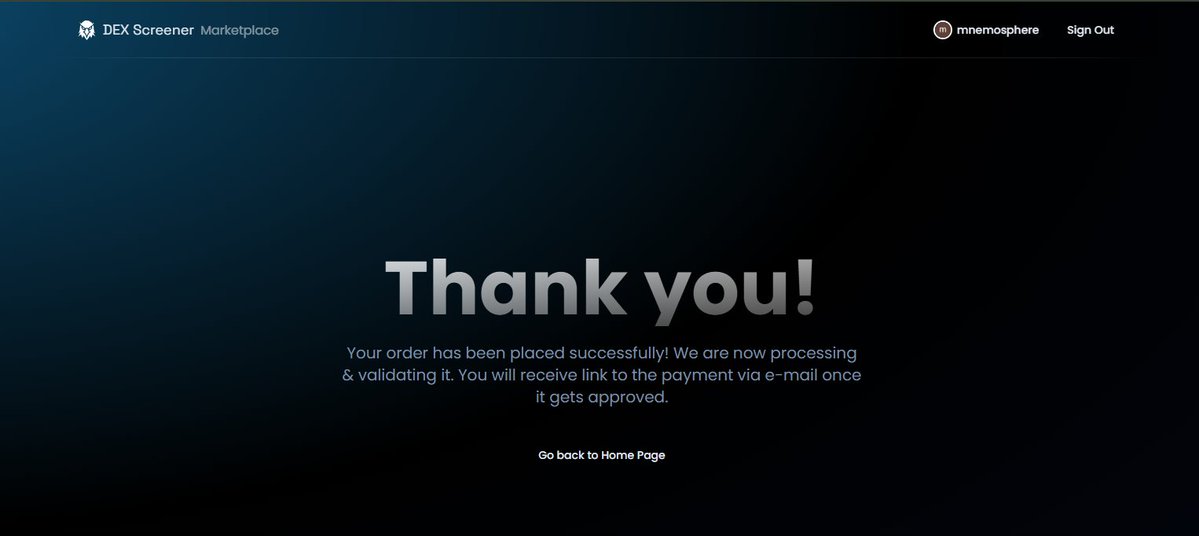
The official $MNOS profile update on @dexscreener has been submitted and paid.
Updated project information, branding, website, and community links are now being processed and validated by DEX Screener. Changes may take some time to appear publicly while the review is completed.
This is another step toward making MNOS more transparent, accessible, and easier to verify across the Robinhood Chain ecosystem.
Official $MNOS contract:
0x9d8071990ad5132437759d54228a8b1dfcce1667
Website: https://t.co/CNAWjB1L2L
Telegram: https://t.co/S7ov501ZwE
Infrastructure first. Utility next. The mnemos
$MNOS Permanently Burned 🔥
In response to community feedback and to support a stronger, more transparent ecosystem, we have permanently burned the entire $MNOS allocation previously held in the development wallet.
33,482,913.358646876 $MNOS, representing approximately 3.3483% of the original supply, has been sent to the public dead address and permanently removed from developer control.
This decision strengthens community alignment while preserving our long-term vision for $MNOS.
Future $MNOS utility will be introduced through dedicated smart contracts designed for the mnemosphere ecosystem, including encrypted archive services, storage verification, private notification delivery, verifiable service receipts, and infrastructure-provider coordination.
Core vault operations including deposits, check-ins, emergency withdrawals, and valid claims will remain independent of token ownership.
Community feedback shaped the decision.
On-chain execution made it permanent.
MNOS infrastructure utility comes next.
Verify the burn on Robinhood Chain:
https://t.co/OzRgEQMgf3
Degens Manage Liquidation Risk But Ignore Continuity Risk
Crypto users monitor leverage, liquidation prices, smart-contract risk, token unlocks, and market volatility.
But one risk is frequently ignored:
What happens if the only person who understands the portfolio becomes permanently unavailable?
A wallet can contain ETH, tokens, NFTs, LP positions, lending positions, and access to multiple protocols. The private key alone may not explain how those positions should be managed.
mnemosphere gives crypto users a place to prepare encrypted instructions and optionally place native ETH inside an on-chain continuity vault.
The owner remains in control and can:
➡️Check in before the deadline
➡️Update authorized roles
➡️Deposit through the vault function
➡️Start emergency withdrawal before distribution finishes
Risk management should include more than protecting today’s positions. It should also include preparing for prolonged inactivity.
Private Instructions Do Not Belong on a Public Blockchain
A continuity plan may contain highly sensitive information:
➡️Asset references
➡️Trusted contacts
➡️Instructions for family
➡️Account context
➡️Personal messages
➡️Intended participants
Publishing that information directly on-chain would create permanent privacy risks.
mnemosphere separates privacy from execution.
The private plan is encrypted before storage. The service handles encrypted ciphertext not readable instructions.
The blockchain is used for the parts that benefit from public verification:
➡️Vault ownership
➡️Lifecycle state
➡️Check-in transactions
➡️Configured deadlines
➡️Guardian and heir permissions
➡️Settlement activity
Private context stays encrypted. Verifiable rules remain on-chain.
Not everything needs to be public for infrastructure to be transparent.
Why Mnemosphere Matters ?
Digital wealth is growing faster than the systems used to pass it between generations. Wallets, brokerage accounts, online identities, and tokenized assets are often scattered across different platforms with no clear continuity record.
Mnemosphere creates a private place to organize that information. Wallet authentication proves control of the plan, while browser-side encryption prevents the backend from reading the user’s private instructions.
The planning workspace does not move assets or replace a legal will. Its purpose is to reduce uncertainty, help trusted recipients understand what exists, and provide a verifiable continuity process for supported on-chain assets.
Ownership should not end simply because important information was never organized.
Poorly designed inheritance automation can be dangerous.
A missed notification, lost phone, wallet issue, or temporary illness should not immediately transfer someone’s assets.
mnemosphere uses a staged lifecycle instead:
➡️Active The owner controls the vault and can check in.
➡️Grace The initial deadline has expired, but recovery time remains.
➡️Claimable The configured inactivity and grace periods have passed.
➡️Settling An authorized owner or heir starts the settlement process.
➡️Distributed All registered assets and ETH have been resolved.
Settlement is not automatic. An authorized party must submit an on-chain transaction.
This design creates time to respond while keeping the final lifecycle transparent and verifiable.
Continuity should be deliberate not instant. $MNOS
Why Does a Vault Need a Heartbeat?
A mnemosphere heartbeat is not proof that someone is biologically alive.
It is something more precise:
A signed on-chain action showing that the authorized wallet still controls the vault.
When the owner completes a check-in, the smart contract resets the vault’s inactivity deadline.
If check-ins stop, the lifecycle can progress through:
Active → Grace → Claimable
A designated guardian may provide one bounded grace extension. If the full inactivity and grace periods expire, the designated heir can become eligible to initiate settlement.
The contract does not need to guess what happened to the owner. It only enforces the timeline the owner configured.
One transaction can separate normal inactivity from a defined continuity process.
That is why the heartbeat matters.
Learn how to create, activate, fund, and check in to a vault using mnemosphere on Robinhood Chain Mainnet.
This step-by-step tutorial covers:
➡️Connecting an EVM wallet
➡️Creating a private continuity plan
➡️Creating and activating an on-chain vault
➡️Funding the vault safely using the deposit function
➡️Completing an on-chain check-in
➡️Understanding why regular vault check-ins are important
After funding your vault, you do not need to make another deposit. The important next step is to complete an on-chain check-in before the configured deadline. Private plan check-ins and smart-contract vault check-ins are separate actions.
mnemosphere helps users create encrypted continuity plans with optional native ETH vault custody on Robinhood Chain. $MNOS
Crypto gave us direct ownership but direct ownership creates a new responsibility.
If a wallet owner becomes unavailable, their family may not know:
➡️Which assets exist
➡️Where those assets are held
➡️Who should be contacted
➡️What instructions should be followed
➡️Whether inactivity is temporary or permanent
mnemosphere is building a continuity layer for this problem.
Users can create an encrypted private plan, designate an heir and optional guardian, deploy an ETH vault, and maintain control through recurring on-chain check-ins.
The private plan is not published on-chain. The vault follows transparent smart-contract rules.
Crypto infrastructure should not stop at ownership. It should also help owners prepare for continuity.
Built on @RobinhoodCrypto Chain.
How to Create Your First Private Plan with Mnemosphere !
Learn how to create an encrypted private continuity plan with Mnemosphere.
This beginner tutorial shows you how to:
➡️Connect and sign in with your EVM wallet
➡️Add a recipient and an optional trusted helper
➡️Select the asset categories you want to document
➡️Choose a check-in schedule and grace period
➡️Encrypt and save your private plan
➡️Record your first check-in
What Is Mnemosphere?
Mnemosphere helps you organize important information about your wallets, digital assets, documents, trusted contacts, and personal instructions.
Your private plan gives someone you trust clear context if you are ever unable to manage this information yourself.
Mnemosphere does not automatically transfer assets or give your recipient access to your wallet, accounts, or funds. A check-in only records that you are still actively managing your plan.
Important Security Reminder
Never include:
🚫Seed phrases
🚫Private keys
🚫Wallet passwords
🚫One-time passwords
🚫Authentication codes
Whenever possible, document the location and recovery process instead of storing sensitive credentials directly.
Preserve context. Protect continuity.
https://t.co/CNAWjB1L2L
Ledger asks one of crypto’s most important questions:
What happens to your crypto when you die?
Self-custody gives us ownershipbut ownership without continuity can leave assets permanently inaccessible.
That is the use case mnemosphere is building for on Robinhood Chain:
➡️Create an encrypted private continuity plan
➡️Define an heir and optional guardian
➡️Fund an optional on-chain ETH vault
➡️Confirm continued control through recurring check-ins
➡️Enable a transparent settlement path after prolonged inactivity
Just private planning, owner-controlled check-ins, and verifiable on-chain continuity.
The next generation of self-custody will not only protect assets today. It will prepare them for tomorrow.
Your keys secure your assets.
mnemosphere helps secure their continuity.
@Ledger
https://t.co/UxsvUME70I