@hubermanlab@hubermanlab the scientists at zoe have done a podcast about why seed oils are not necessarily bad and tried to debunk all the myths around their harmful effects. Worth checking.
https://t.co/NRS9yoC469
Airbnb founder Brian Chesky on how to interview and reference check new hires
Brian’s first piece of advice comes from Steve Jobs:
“Start with the results and work backwards to the people. Most people start with resumes. They start with brands — ‘Oh, this person worked at Google.’ But you should actually ask yourself: What products do I admire? And then who built those products?”
With respect to actually interviewing them, Brian’s first tip is to ask follow-up questions:
“Ask them to explain how they did something, and then the key is to ask two follow-ups. You never want the first answer. You always want the third answer. And if people don’t know what they’re talking about, they struggle. They might be able to follow-up, but the second follow-up, they become absent of details.”
But more important than interviewing, Brian argues, is references:
“I prioritize references over interviewing, especially with executives who have more experience BSing you than you have experience detecting their BS.”
Brian recalls that Andreessen Horowitz would tell him to do 8 hours of reference checks per employee:
“[That’s] probably over the top, but you should probably spend as much time referencing as you do hiring.”
He also believes the CEO should interview and reference check new hires as long as possible. Brian interviewed the first 400 people at Airbnb, but he wishes he interviewed longer.
And with respect to tactics for reference checks, Brian offers the following advice:
“A lot of people are polite. They’re afraid of the feedback getting back. So the first thing to say when you start the call is that everything is off the record — and it should be off the record. It should never be attributed to them. The more it’s unattributed to them, the more honest they’re going to be.”
On this topic, Brian recommends avoiding disqualifying questions:
“A lot of people don’t want to say somebody sucks or is not good… Say, ‘Okay, separate from this topic, I just want to know who’s the best person you’ve ever worked with?’ Do they say the person’s name you just asked about? They usually tell the truth and if they don’t say that person’s name, they’re not the best, right?”
And then ask for specifics:
“They said they’re amazing — well why are they amazing? What would you point to? If they have no specifics, maybe they weren’t really good… Then ask questions like, ‘Okay, what do I need to watch out for if I were to hire them?’ or ‘What’s the one area of development you would give them?’ If you say that, they have to tell you something because they’ll feel like they’re not thoughtful enough…. And then you ask them at the end who else you should talk to: ‘Can you give me two more names?’ And then you use that to build a network.”
Brian believes recruiting should be more like building a talent network than a sales pipeline.
Une pensée profonde ce soir pour tous les prisonniers d'opinion en Tunisie, pour qui l'attente doit être interminable. Nos idéologies diffèrent, mais nous partageons tous l'espoir que ce cauchemar prenne fin. Vous n'êtes pas oubliés, chers concitoyens. Force et honneur✌️🏼
Hamas and Hezbollah have long claimed that their “resistance” got Israel to withdraw from southern Lebanon in 2000 and the Gaza Strip in 2005. Both groups, backed by the Islamic Republic of Iran, alleged that their model clearly demonstrated the efficacy of the armed resistance narrative in liberating Arab lands from occupation, giving both legitimacy, popularity, and credibility as political players in their respective nations. Quickly, however, both pivoted to using their “resistance” ethos in seeking political power, disrupting a fragile internal balance of power in Lebanon and Palestine, carrying out assassinations against their political opponents, engaging in internal civil wars that destabilized and divided their societies and dragged their people along destructive and detrimental political projects.
Hezbollah assassinated Rafik Hariri, Lebanon’s former Prime Minister, and began taking over state institutions to serve the interests of Syria’s al-Assad regime and act as a proxy for the Islamic Republic. Hamas weakened and battered the Palestinian Authority, squandered Palestinian resources, and turned Gaza into a terror hub from which it engaged in nefarious actions that harmed Israelis and Palestinians alike.
Fast forward to today, the “resistance” in Lebanon and Gaza are both reversing their own alleged “achievements” through grave miscalculations. Gaza has been effectively reoccupied by Israel following the 10/7 massacre, and Hezbollah is about to get southern Lebanon reoccupied by Israel, which is determined to eject the Iranian proxy from territories south of the Litani River. This is what war, for the sake of war and without careful consideration, has done to Arab nations: displacement, death, destruction, and loss of territories.
Lebanon was effectively a failed state before 10/7, and Gaza had one of the worst humanitarian and unemployment in the world – yet both groups decided to allocate their resources, know-how, and strength in pursuit of destruction and chaos instead of development, prosperity, and a renaissance that could have uplifted both societies. The Palestinian and Lebanese people are now paying a heavy price for choices made by Hamas and Hezbollah. Both groups have narrow interests and goals that are antithetical and in opposition to what their people want and aspire for.
It’s time to expose the fraud and disaster that is “resistance,” which has become a trojan horse for domination, control, theft of resources, and external agendas that harm the people of the Middle East. Suicidal adventurism against a powerful adversary like Israel is impractical, unethical, destructive, harmful, and outright stupid. It's time for Hamas and Hezbollah fans in the Western world, especially those who promote “anti-colonial” narratives, to realize the disaster that the “resistance” has inflicted upon the Palestinian and Lebanese people. Peace, coexistence, development, pragmatism, and common sense are courageous and necessary evolutions to save and improve lives. Islamic “resistance” movements are cowardly imbeciles who consistently lead to failures, defeats, losses, and setbacks.
Hamas and Hezbollah are the enemies of the Palestinian and Lebanese people – they are worthy of contempt, condemnation, critique, and abandonment – not admiration or respect.
The murder of 7 Israeli civilians in Jaffa by an assailant who is allegedly from the West Bank is a criminal, vile, and heinous terror act. Random acts of violence against women, children, and innocent bystanders are the height of cowardly terrorism, not “heroic resistance,” as Hamas is boasting. Shame on anyone who celebrates or tolerates such senseless violence and promotes revenge and retribution as a strategy.
"My perception of the Jews was constructed by Hassan Nasrallah,"Syrian-Lebanese peace activist @RawaneOsmane tells @EylonALevy. Now she is focused building positive relationships between Arabs and Jews.
Full episode can be found here: https://t.co/t3IvCv2JKH
@CollinRugg This generation is going to find out pretty quickly just how difficult it was to maintain the infrastructure they've taken for granted their whole lives.
They have no idea how much was, and still is, maintained by skilled and competent people produced by meritocracy.
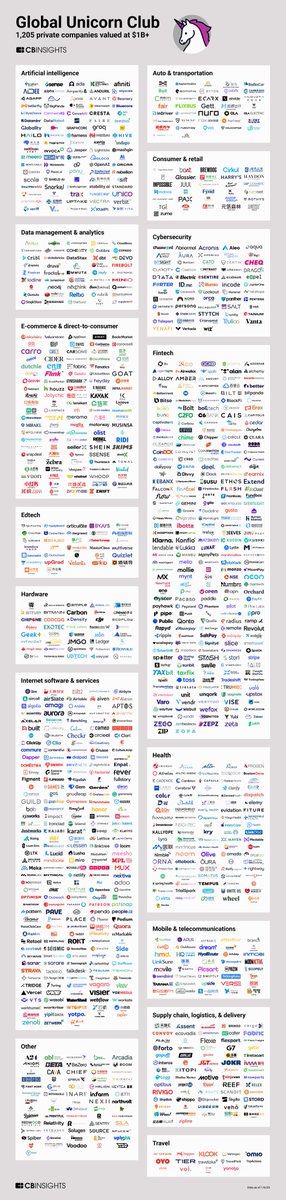
The striking thing about this list, to me, is the preponderance of software companies. Making physical stuff is hard. But don't let that deter you, if that's what you're interested in. If things go right for Helion, it could be the biggest of the lot.
@harleyf@HowIBuiltThis one of the best by far! Every single episode is a gem. Loved their “resilience “ series talking to founders about how they dealt with covid
Help is on its way.
The MHRA has formally authorised the Pfizer/BioNTech vaccine for Covid-19.
The NHS stands ready to start vaccinating early next week.
The UK is the first country in the world to have a clinically approved vaccine for supply.