🚨new paper🚨
invasive guppies show within-pop variation in their tendency to associate w/ conspecifics or native heterospecifics🐟, enhancing survival in changing conditions. check the paper here 👇
https://t.co/EY8OL1WT59
@AFOjanguren
@WileyEcolEvol
@uniovi_info@UNAM_MX
(1) Fresh out the Science oven! 🔥 My 4th (final-ish) PhD chapter is published in @WileyEcolEvol! We found small founding populations are better predicted when we factor in landscape & timing. @MonashBiol@chapple_lab@mo_cace#invasionBiology
https://t.co/GxIRPB4eds
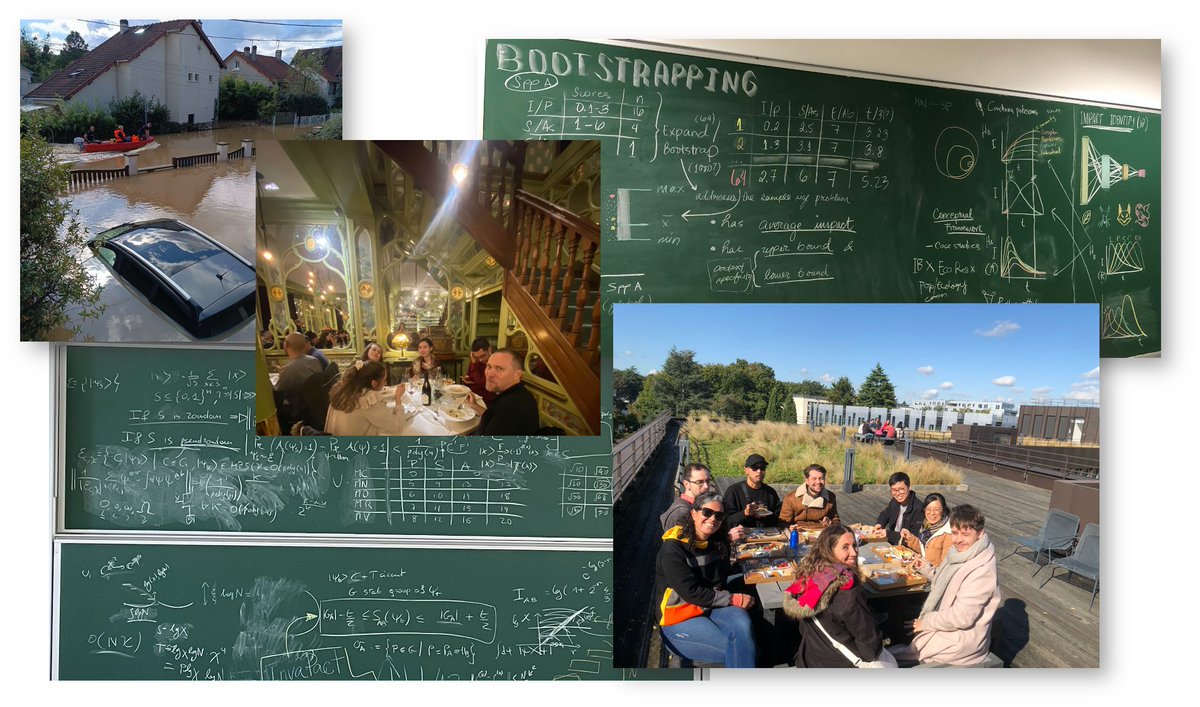
The Workshop #InvaPact II, on the ecological impacts of biological invasions, is now over.
A few # about it:
3 weeks of work, ≠ groups every week
58 scientists, from 25 countries
40% women, 78% Early #AcademicCareer
~6000 preliminary data
> 50 group meetings
>100 study projects
End of the 2nd week of the #InvaPact II Workshop, a flood of ideas, food for thought, great scientific and social interactions with new colleagues from around the 🌏, and a program that continues to progress!
Next! 😄
First week of 3 #InvaPact II Workshop, Saclay, France: some tested veterans, some new talents, a great group and an exciting week!
Thank you all for your participation!
PM or give your handle below, people, so that I can tag you
happy birthday, gorg! 🎉 so happy to spend your special day at #InvaPact talking science 😊 thanks for the excitement and all the great discussions!
PS your boards are THE best
@arman_pili
the new science adventure involves data for over 170k fishes! 🤯🐠🐟🐡🐠🐟🐡🐠🐟🐡🐠🐟🐡🐠🐟🐡🐠🐟🐡🐠🐟🐡🐠🐟🐡🐠🐟🐡🐠🐟🐡🐠🐟🐡🐠🐟🐡🐠🐟🐡🐠🐟🐡🐠🐟🐡🐠🐟🐡🐠🐟🐡🐠🐟🐡🐠🐟🐡🐠🐟🐡🐠🐟🐡🐠🐟🐡🐠🐟🐡🐠🐟🐡🐠🐟🐡🐠🐟🐡🐠🐟🐡🐠🐟🐡🐠🐟🐡🐠🐟🐡🐠🐟🐡
#chroniclesofthesoutherncone
Una personalidad más sociable contribuye al éxito de un pez invasor
Within‐population variation in an invasive fish’ sociability when associating with conspecifics or heterospecifics - Camacho‐Cervantes - 2024 - Ecology and Evolution - Wiley Online Library https://t.co/FhJx3KFk8i
This is a summary of findings from the most comprehensive global assessment of nonnative species ever conducted. The study by the IPBES provides unequivocal evidence of the major & growing threat of invasive species worldwide. https://t.co/Ho7wj1uzLX