Dave Chapple's Research Group - Monash Uni, Australia. We are a research lab investigating the evolutionary ecology of environmental change. #lizard#skink
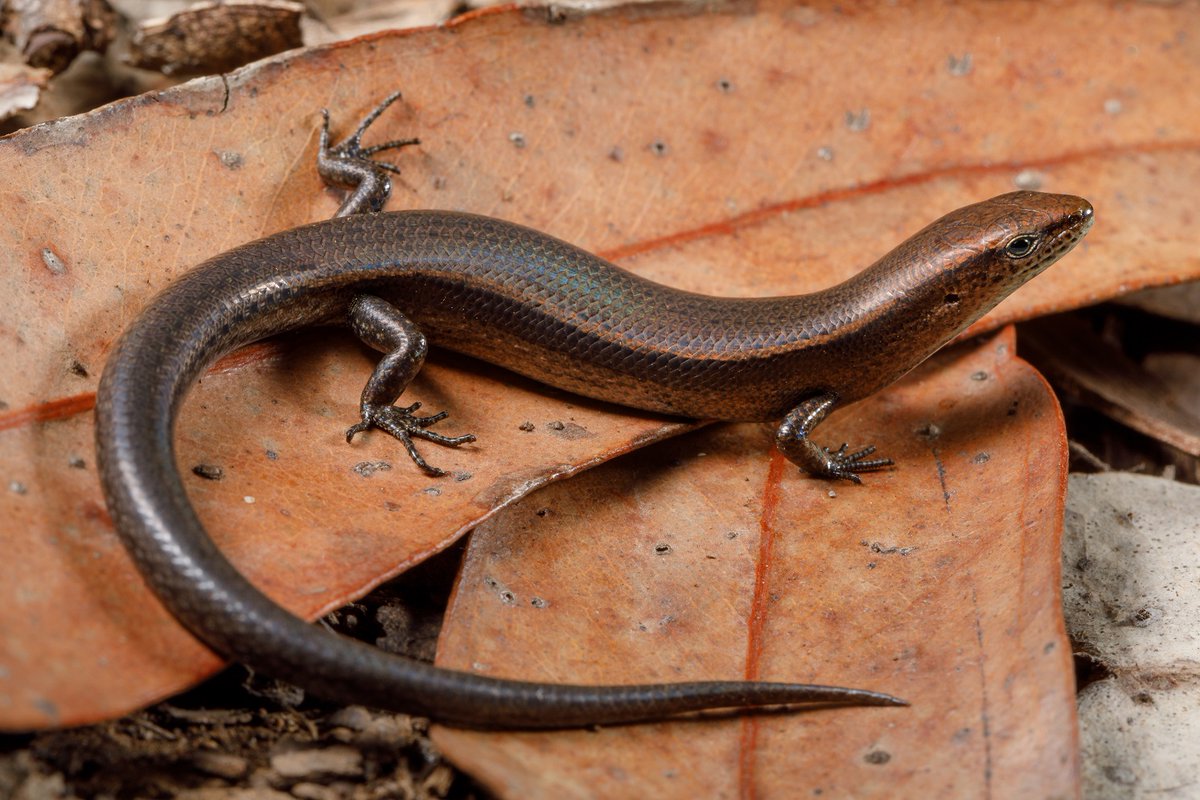
Ever seen a Bluetongue skink?
What about a Monkey-tailed skink?
No? Well, let me tell you a little about these guys and what we've learned from studying their evolution.
Sidenote: check out our new paper in @CurrentBiology https://t.co/NgauZM7v37
...
Is this you? We are seeking to appoint multiple new colleagues who will cultivate and demonstrate excellence in both research and teaching within the field of Ecology. We welcome applicants from any area of Ecology, but see more details here: https://t.co/W3vG3E4Oza
⭐️NEW🗞️in @evoecology
We show that #activity is more reliable than other behavioural traits in estimating individual differences in behaviour that are stable over a good portion of the animals' life... 🦎 in this case
👉https://t.co/51G808aNZ9
Madeleine de Jong et al found only partial support for hypothesis that different incubation temperatures would result in phenotypes characterised by a ‘cool’ or ‘hot’ thermal type in the delicate skink. https://t.co/qIfdd6Ysiw @chapple_lab@BBM_Wong @Craig_R_White
Please RT! Continuing (tenured) academic position (starting at Lecturer or Senior Lecturer) in Water Science. Join our excellent, inclusive & welcoming team @MonashEAE. @MonashUni is a global top 50 university and Aus/Melbourne is wonderful! Closes 15 Nov. https://t.co/zQ4gmZIAHx
Temperament and territory 🦎🌏: Extraversion enables greater success for invasive species, as discovered in a @MonashBiol international study in @NatureComms which compares native Australian and international invasive populations of the delicate skink: https://t.co/UiiZGkdnit
1/4 🧵Does the invasion process favour extroverts? Our new @NatureComms paper shows how selective filtering of behavioural traits can mediate the success of alien species.
https://t.co/enFMtyClFA
📸Jules Farquhar @FarquharJules
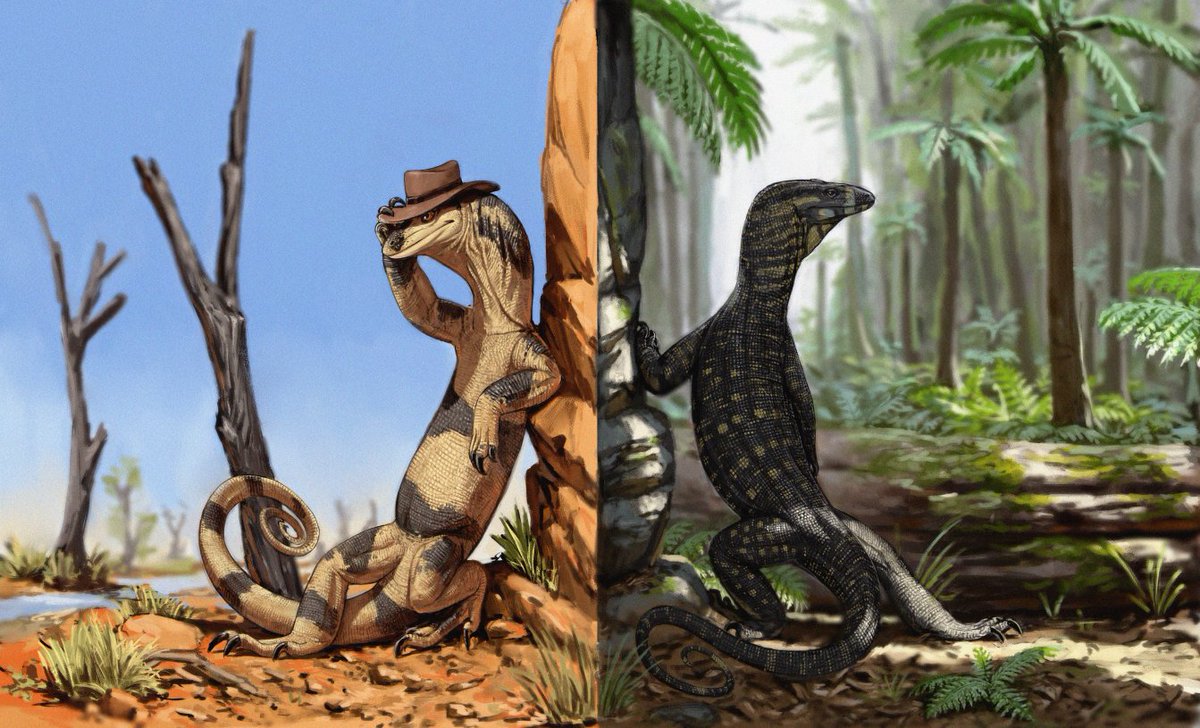
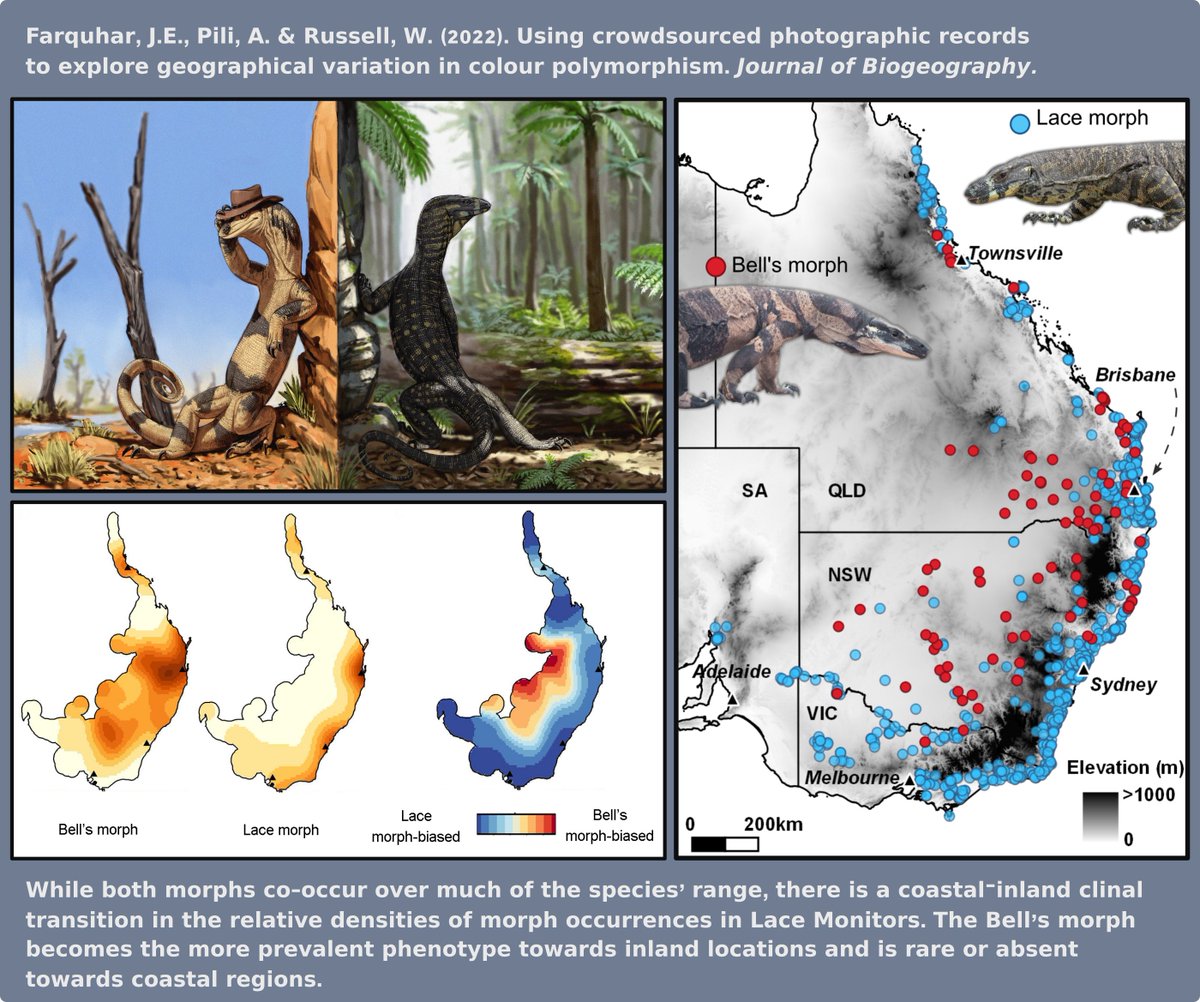
Georeferenced photographs obtained from #iNaturalist to study geographical variation in colour polymorphism reveals a mesic–arid gradient in the Lace Monitors (Varanus varius).
https://t.co/F1I5flyYeE
@FarquharJules@arman_pili@russell_wyn
very happy to annunce a cool new paper from Anna Zimmin and #GARD: A global analysis of viviparity in squamates highlights its prevalence in cold climates https://t.co/A5LsMSk0Ip
I am proud to share this paper with you all, published today. The results are quite surprising: in females, #ornaments have equal potential to be #adaptive by acting as honest signals as in males, regardless of their tendency for reduced elaboration....
https://t.co/E96ypFr4bH
When is a creature extinct? It might seem a straightforward question—but it’s not always easy to answer. You have to be certain it isn’t out there, somewhere.
Dr Jane Melville hopes this is the case for Melbourne’s missing dragon.
Continue reading 🔗 https://t.co/ZOvu87SI54
This week I published a paper – along with @arman_pili and Wyn Russell – in @JBiogeography exploring geographical variation in Lace monitor colour (A thread)
Paper: https://t.co/sPVwsrhGby
(We had @webvein create the Lace monitor artwork for us. Check out their other artworks!)
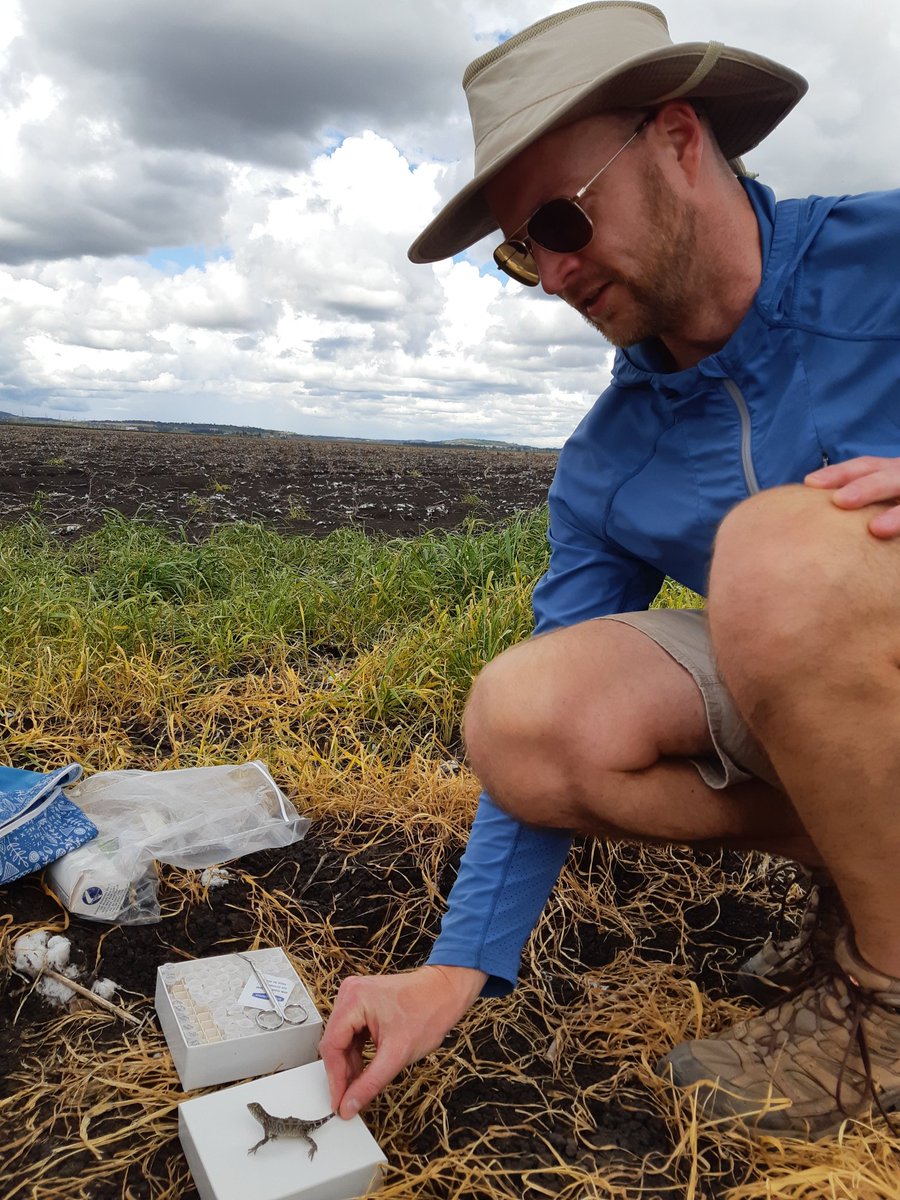
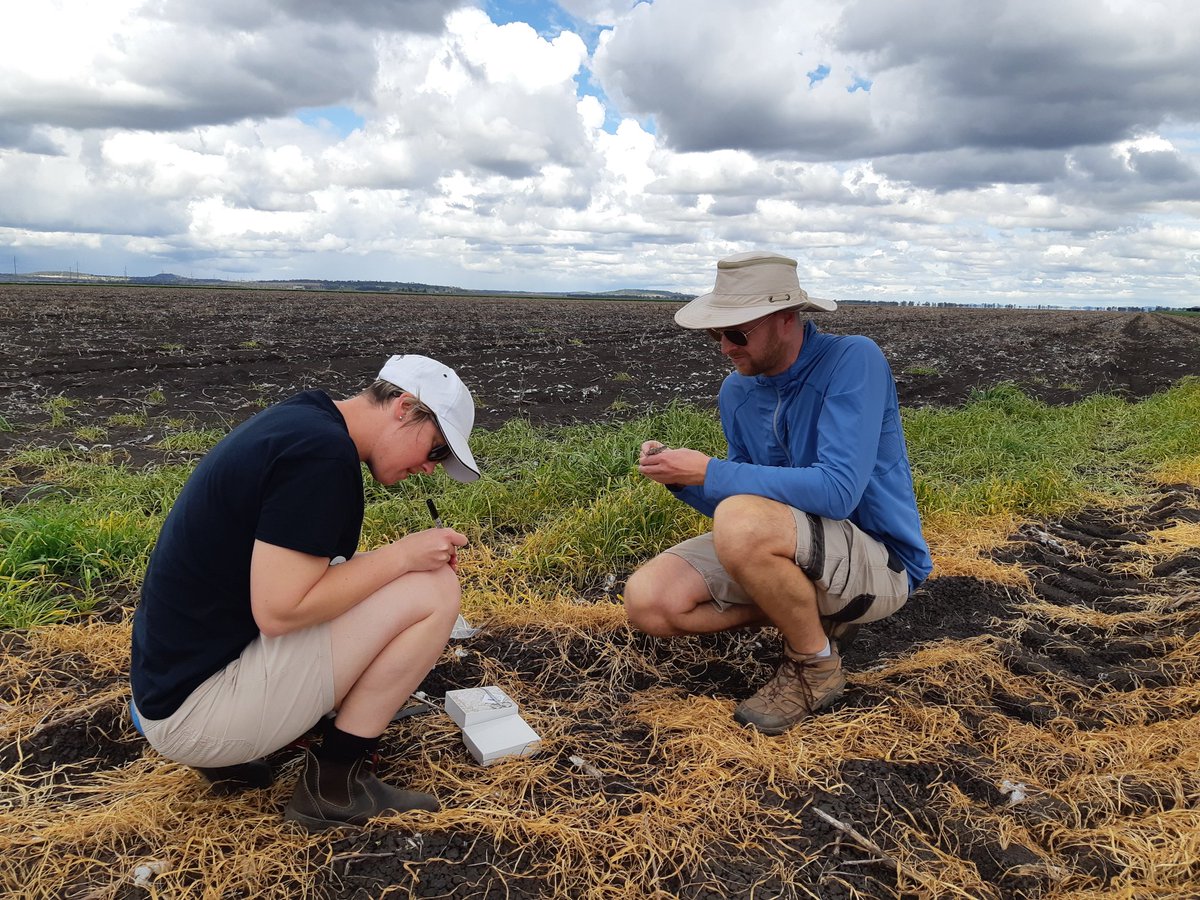
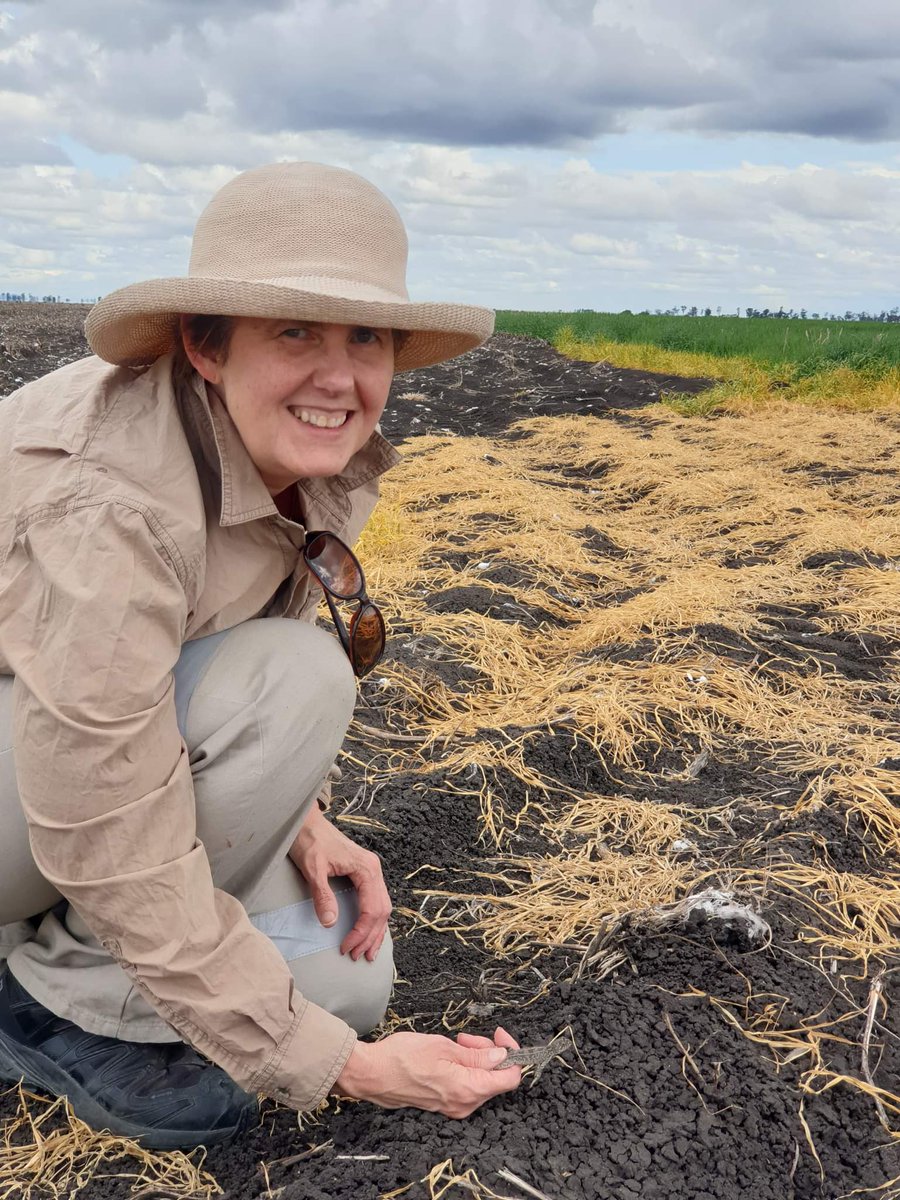
Last day on Darling Downs. Comdamine Earless Dragon is one of Australia's most threatened lizards. A grassland species but less than 1% of native grasslands remaining here. Crop and road verges are so important for this beautiful dragon @museumsvictoria@MonashBiol@chapple_lab
Last official day as a Monash employee CTscanning all Australian species of lizards! We managed to scan 711 spp, that's more than 83% of them all! Plus hundreds for collaboration projects🦎🐍🐸
Thank you! @chapple_lab#australianlizards@monash_uni @melbourne_uni @melbournemuseum
New paper from my PhD out in Oecologia! We find that the social context mediates the expression of animal personality traits in the delicate skink. Big thanks to @annieNaimo@mrmic1@Martin_J_M_34 Andrew Sih @BBM_Wong & @chapple_lab. Check it out here 👉 https://t.co/kGGCDtvdcL