When people (correctly) point out that RW perspectives have no traction outside a relatively small bubble, they get no engagement. Habitual chants of "nobody watches/trusts the MSM" regularly get massive approval. Reinforcing the bubble with every round.
Bleak.
My uncle is the kind of guy who would vote for him and he lives in Provo. There is absolutely no way for the right to reach him because he is not on X and does not watch Fox or use YouTube.
He is white small business owner with left libertarian leanings.
We have no way to reach him in the current right wing media environment. Just absolutely no way. But we have to.
19.
The tool to fix it all is a poll. The poll solicits sources. You ask questions like these:
- Which sources provide the best analysis of the possible origins of COVID-19?
- Which sources give the best explanation of the latest decision of the Supreme Court?
- Which sources provide the most reasonable predictions for the state of the Russian-Ukrainian conflict at the end of 2024?
- Which sources provide the best explanations of how humor works?
- Which sources provide the best advice on how to get to the point faster?
@MikeBenzCyber There will always be a way to benefit. There are probably systems (temporarily) less prone to galloping corruption.
https://t.co/FOgX0DUIZJ
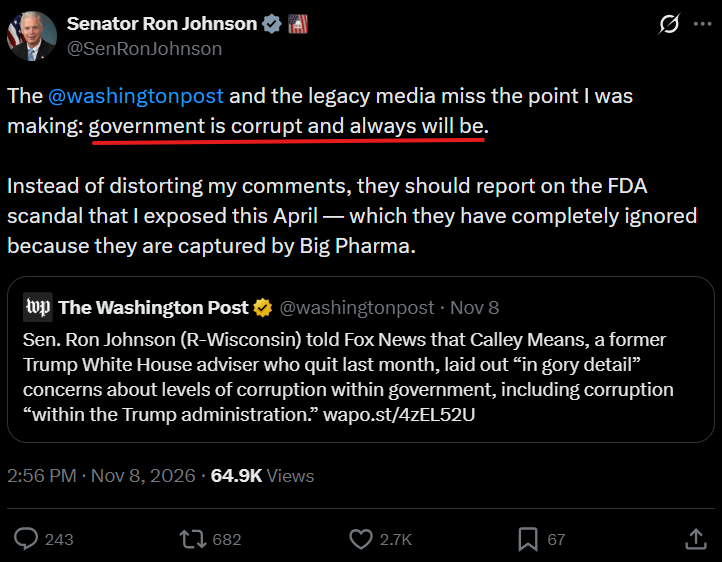
The @washingtonpost and the legacy media miss the point I was making: government is corrupt and always will be.
Instead of distorting my comments, they should report on the FDA scandal that I exposed this April — which they have completely ignored because they are captured by Big Pharma.
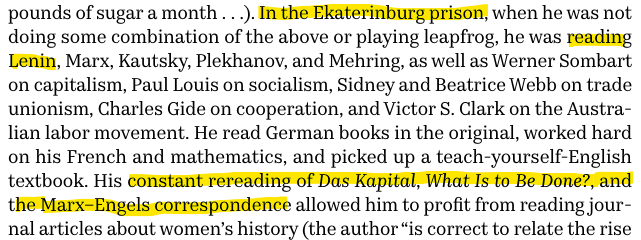
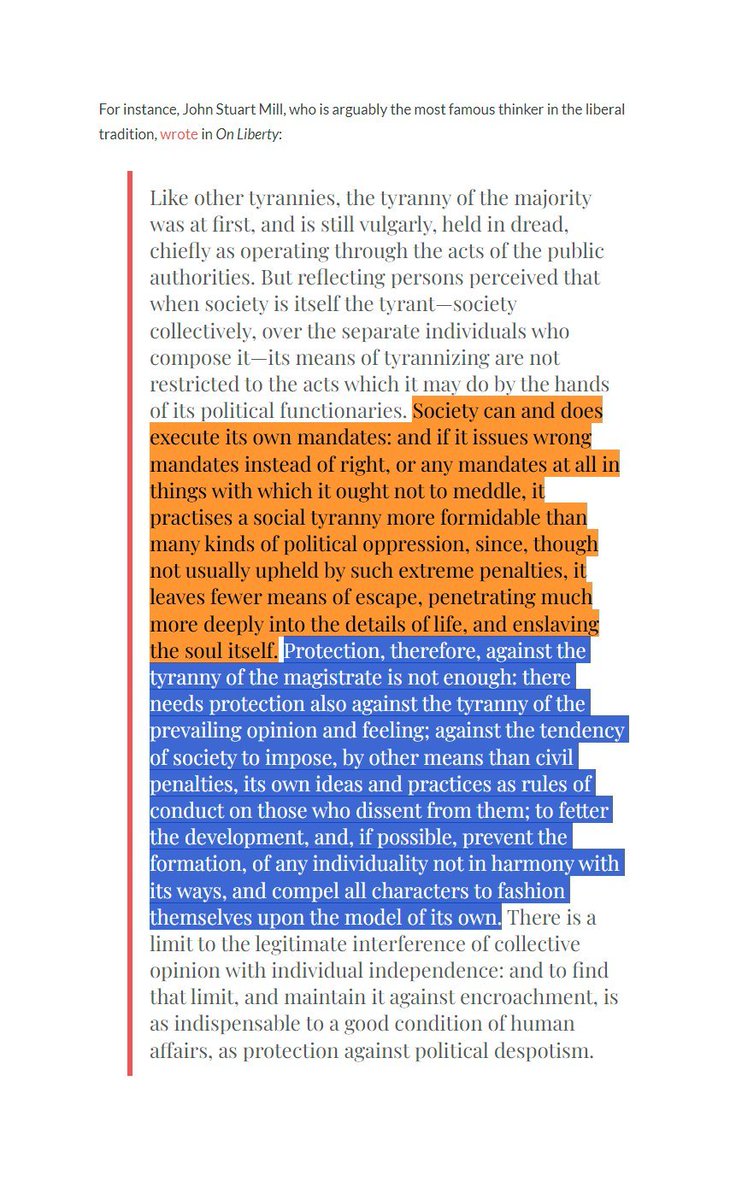
Pushed to the limit, freedom of speech easily leads to no freedom of speech. Yakov Sverdlov, the first long-term head of state of Communist Russia, as many others, enjoyed remarkable access to information in tsarist prisons.
Soviet prisons were different.
@kriptoleidi I see the language as indicative of the mindset in general.
Life insurance cost depends of one's age and whether male of female. These things also can't be changed. Why should young male drivers pay significantly more than young female drivers with the same record? etc.
Imagine having a perfect driving record, not a single accident, and a spotless reputation on the road. Yet your car insurance still costs more than someone else's. Not because of how you drive, but because your credit score dropped or you happen to live in the "wrong" ZIP code.
This is exactly the kind of controversial practice that US lawmakers are now trying to challenge.
For years, major insurance companies in the United States have relied on two less obvious factors when calculating auto and homeowners insurance premiums:
1. Credit-based insurance scores
This isn't the same as a standard bank credit score. It's a separate rating system insurers use to predict how likely a customer is to file a claim, based on their financial history.
The irony is that losing your job, dealing with a serious illness, or missing a credit card payment can end up making your insurance more expensive. None of those things makes you a worse driver, but your premium may still go up.
2. ZIP code
Where you live can sometimes matter more than your actual driving record. Insurers factor in neighborhood-wide crime rates, accident frequency, and vehicle theft statistics when calculating individual premiums.
As a result, two drivers with identical cars and equally clean records can receive dramatically different insurance quotes simply because they live on opposite sides of a ZIP code boundary.
But there's a serious argument on the other side.
Insurance companies insist that the numbers speak for themselves. Decades of actuarial research have found statistical links between lower credit-based insurance scores, neighborhood characteristics, and the frequency of insurance claims. From the industry's perspective, this is about calculating risk, not discriminating against customers.
And that's what makes the issue more complicated than simply demanding a ban on two pricing factors.
Where does objective risk assessment end, and where does penalizing people for circumstances beyond their control begin?
Insurance has to rely on probabilities and hard data. But how fair is it to turn financial hardship and the address on your driver's license into a hidden tax that follows you around?
Absolutely hilarious dialogue:
- doesn't make sense that they started the war with Iran
- you can steelman the case based on the official communications
- so, how does it go?
- it's complicated
WHY isn't there a known steelman case for the war available ALREADY? With a link.
You are an insanely independent thinker, but even so I think you're in a bubble. Genuinely take the time to steelman the case for the war based on literally what the administration has actually said, especially Rubio and Bessent, and see where you land. I personally am persuaded it was necessary and have been so confused that so many people I admire do not. So either I'm missing something or they are. Normally, i'd think it was me. But I genuinely think you and others like Bret Weinstein and Rod Dreher might very well be in a bubble that you don't perceive.
I hope this was not the case. My most benevolent explanation goes something like this. Ukr-Ru and Is-Pal were heading nowhere (or nuclear for the former). Adding Iran allowed changing the board completely. Also allowed to claim "we've own stuff going; don't pester us with those other things."
I don't think there any way of selling this to the public.
https://t.co/RGAsAxRPWf
It was a gamble, based on bad intel, that the Iranian people would rise up quickly after a hard surprise first strike decapitated regime leadership.
But it was a gamble. And we will lose 2028 if the GOP is defending John Bolton while Democrats run on affordability & corruption
Haven't seen good answers to two questions.
1. If the war was not _really_ needed, why did they proceed anyway?
2. If it was needed, is it possible to do it without sacrificing the closest upcoming election?